

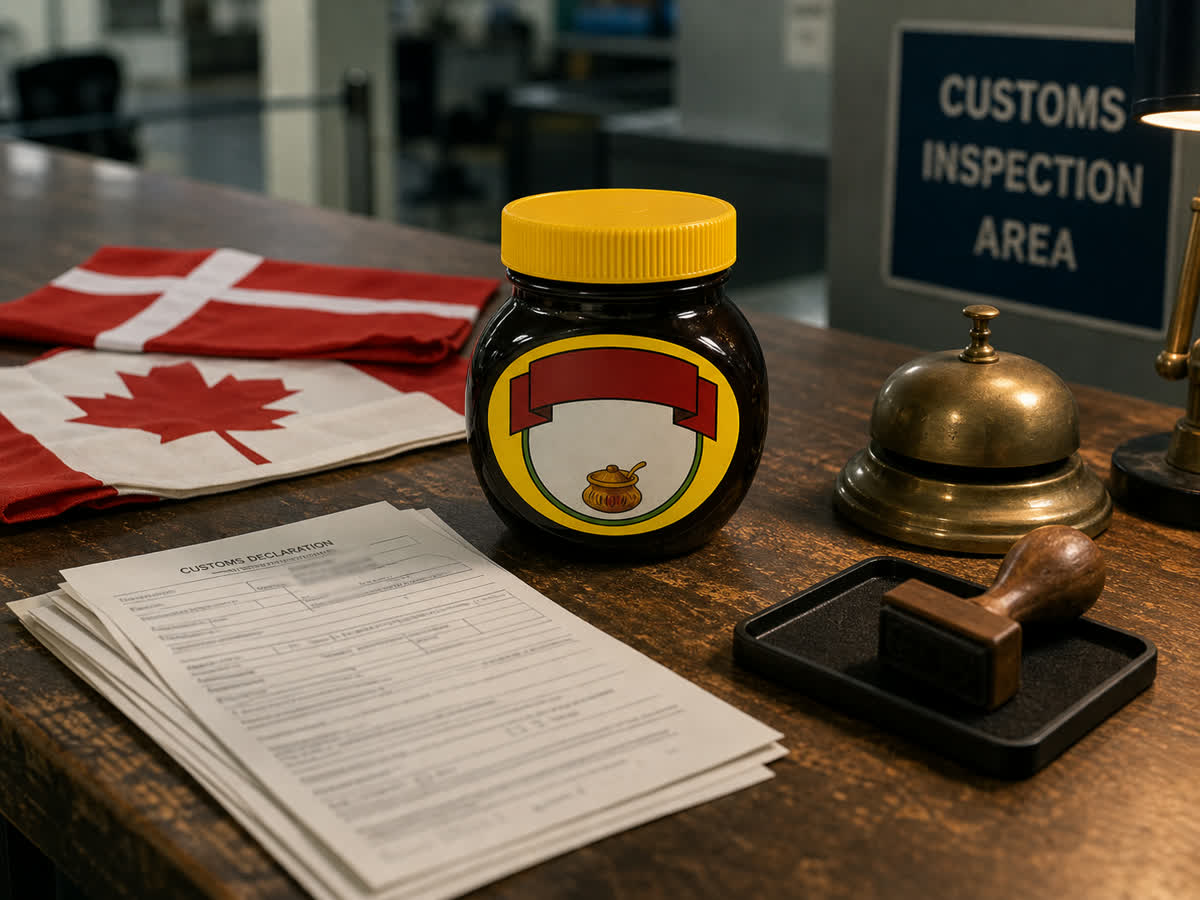
The Denmark ban
In 2011, Denmark enforced a long-standing food regulation that requires added vitamins in commercial food products to be specifically approved by the Danish authorities. Marmite, which is fortified with extra B vitamins (B12 in particular), did not have the approval. The Danish regulator’s interpretation of the rule was that Marmite therefore could not legally be sold.
Quietly, jars were pulled from shelves. British expats in Copenhagen, who treated their morning Marmite as a fixed point of their British identity abroad, noticed almost immediately and went mildly to war about it in the British press.
The Daily Mail, predictably, ran headlines about Danish jackbooted Eurocrats banning the cherished British spread. The truth was less interesting: Denmark was applying its own pre-existing food rules consistently, Marmite happened to fall on the wrong side of one of them, and the same rules also caught Vegemite, Ovaltine, and various American fortified breakfast cereals. Marmite just got the headlines because it was British.
The ban was lifted by 2014 after manufacturers went through the formal approval process. Danish Marmite consumption returned to its previous tiny levels. The expat community calmed down.
The Canadian situation
Canada has had a more sporadic relationship with the jar. There have been periodic seizures of Marmite shipments at the border on the grounds that certain ingredients (variously specified, depending on which year you ask) are not approved under the Canadian Food and Drugs Act. Whether this is the same B-vitamin fortification issue as Denmark, or a different additive question, has never been entirely clear from the public reporting.
The practical effect has been that Marmite is sometimes available in Canadian shops and sometimes not, and the British-import-food shops in Toronto and Vancouver have had to be creative about their supply chains over the years. It is one of those border-states-of-affairs that nobody really decides, that simply exists.
A note on why this happens
Both Denmark and Canada are operating their own legitimate food safety regulations. The rules exist for sensible reasons (the regulators do not want manufacturers fortifying random products with random vitamins without oversight, because that is how you end up with population-scale over-supplementation problems decades later). Marmite, with its enthusiastic B-vitamin loading, sits exactly in the category of product these rules are designed to capture.
The British view of all this tends to be that the jar is plainly a beloved heritage food and that obviously it should be allowed. The Danish and Canadian view tends to be that the jar is a manufactured nutritional supplement marketed as food and should be regulated as such. Both views are internally consistent. They just disagree on the priority order.
The pleasing irony is that the very thing that makes Marmite worth eating (the B-vitamin content) is also the thing that gets it into trouble with the more cautious foreign regulators. The jar’s nutritional virtues are inseparable from its legal awkwardness.
What you can do about it
If you are travelling to Denmark or Canada and you cannot live without Marmite, take a jar in your suitcase. Quietly. In your hand luggage if customs are likely to ask. Most British travellers have, at some point, smuggled a jar of Marmite past a customs desk in a country where it is technically not legally on sale. It is one of the more genteel forms of British contraband. Nobody has ever been arrested for it.
The Hate Party, who do not travel with jars of Marmite, do not have this problem and consider it self-inflicted. They are, in a narrow legal sense, correct, but they are also not having any fun.
Source: contemporary Danish and Canadian regulatory reporting; expat forums; the Wikipedia history page on Marmite.