
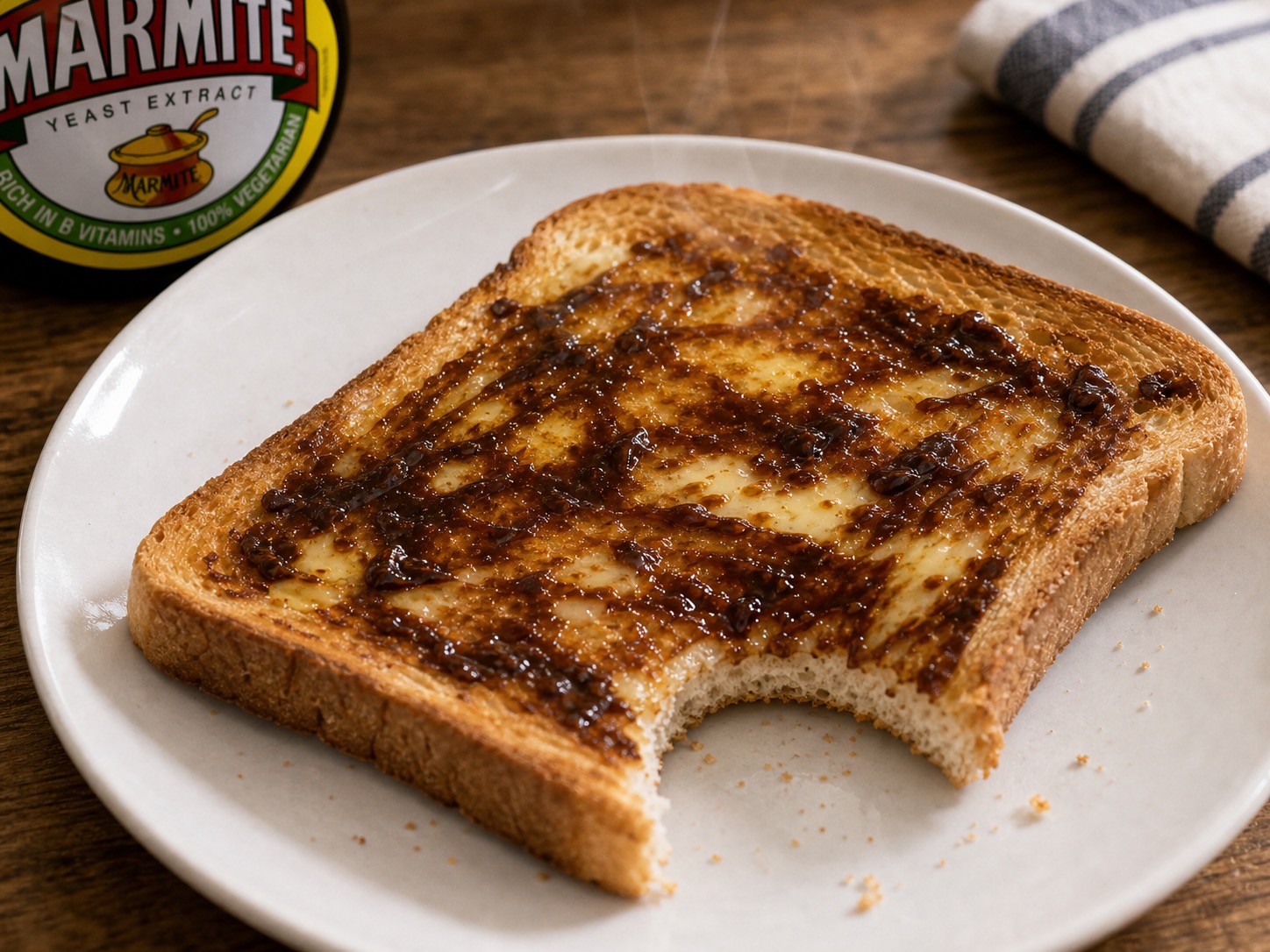
If you have only ever had Marmite the wrong way, you will think you hate it. Most people who say they cannot stand it were handed a slice with a thick, gleaming layer of the stuff troweled straight onto dry toast. That is not how you eat Marmite. Done properly it is one of the great two-minute breakfasts, and the method matters more than people think.
The short version: hot toast, butter on first while it is still warm, then a thin scrape of Marmite. The single biggest mistake is using too much.
The method
- Toast the bread properly, and use it while it is hot. The heat is doing real work in a moment.
- Butter it first, with real butter, right away so the butter melts into the toast. This is not optional. The butter is the carrier; it softens the salt and spreads the Marmite thin.
- Add a thin scrape of Marmite on top of the butter. A scrape, not a layer. You should be able to see the toast through it in places. If the toast looks evenly black, you have used far too much.
- Spread it into the melted butter so the two combine. Eat at once, while it is hot.
That is the whole thing. The difference between this and a thick cold smear is the difference between people who love Marmite and people who are certain they do not.
Why less is so much more
Marmite is intense and very salty. It is a seasoning that happens to come in a spread’s clothing. A thin scrape gives you the deep, savoury, slightly tangy hit it is famous for. A thick layer gives you a mouthful of salt and the conviction that the haters were right all along. If you are new to it, start with less than you think, almost nothing, and build up over a few breakfasts. Your idea of the “right” amount will settle quickly.
The butter matters for the same reason. It carries the Marmite, melts it thin, and rounds off the salt. Marmite straight onto dry toast is a punishing experience and not the intended one.
Good variations
Once you have the basic slice right, it takes well to a few additions:
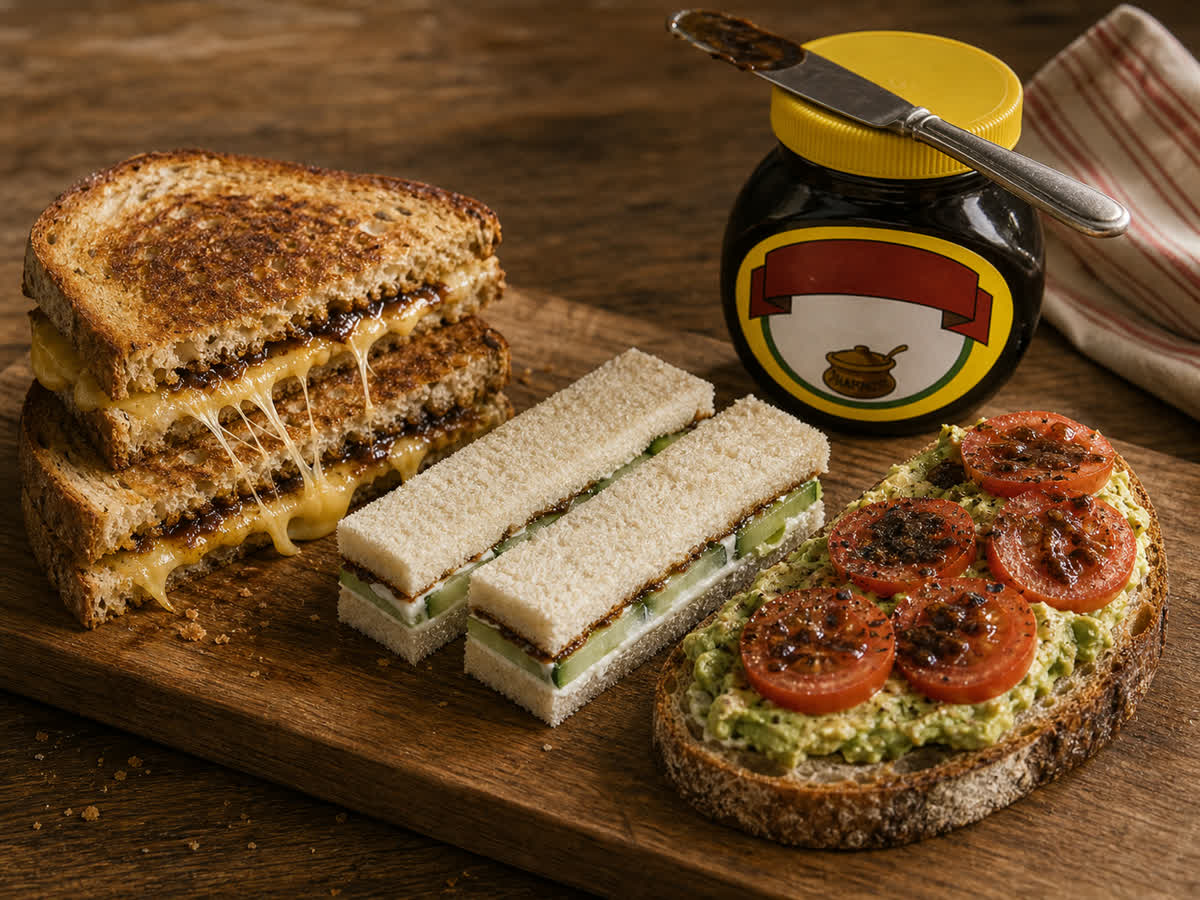
- With cheese. A thin scrape of Marmite under grated cheese, then grilled, is a properly good cheese on toast. The two are both savoury and they multiply each other.
- With a soft-boiled or poached egg. Marmite toast soldiers into a runny yolk is a small, perfect thing.
- With avocado. A scrape of Marmite under smashed avocado cuts the richness and adds a savoury floor.
- On a crumpet. All those holes hold the melted butter and Marmite. Arguably better than toast, and I will take the arguments.
Beyond toast
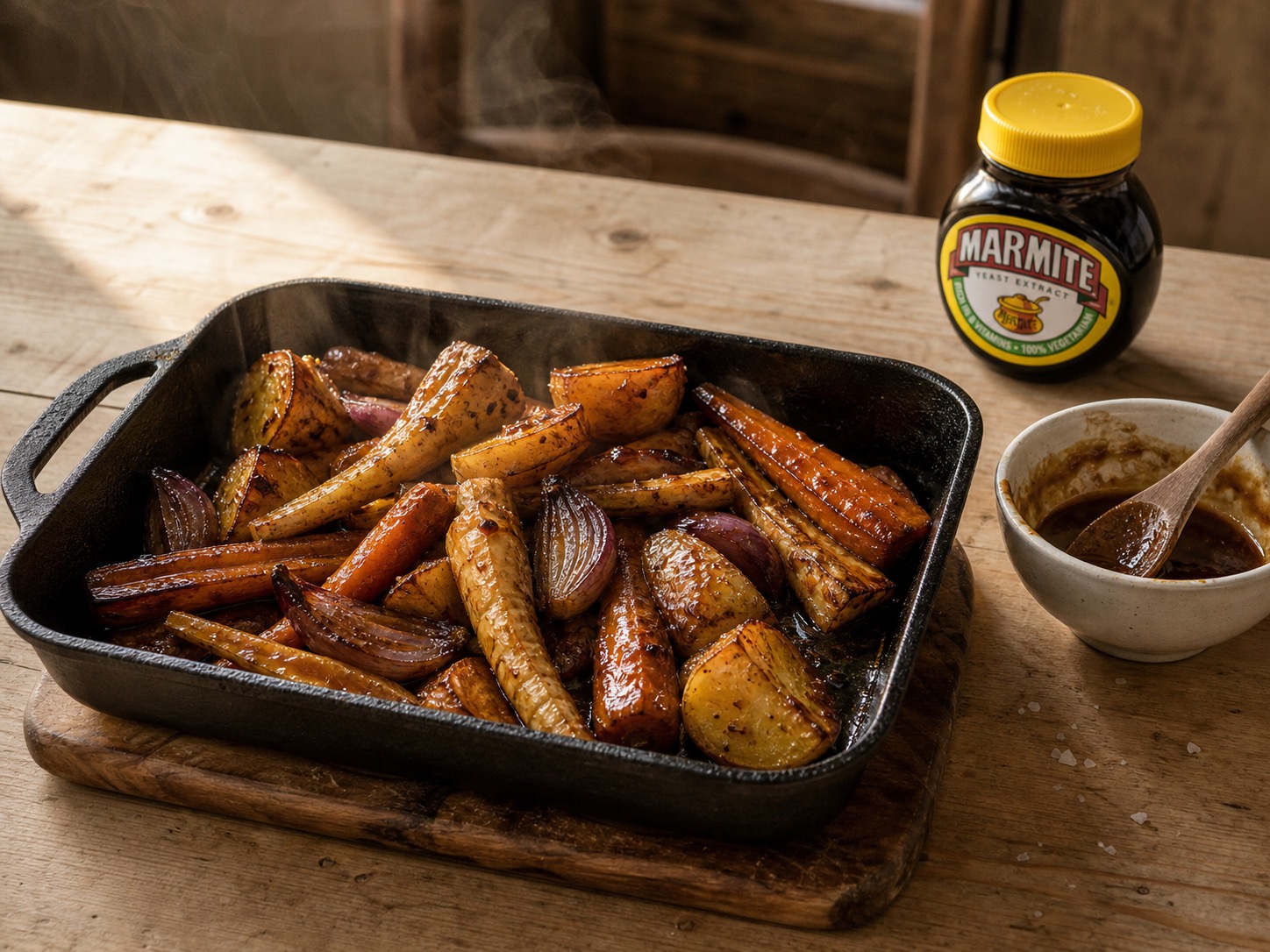
Toast is the classic, but the same restraint applies everywhere Marmite goes. A tiny amount, used as a savoury booster, is the rule in cooking too, where it lifts stews and gravies for exactly the same reason it works on toast. There is more on that in why a teaspoon of Marmite makes everything taste better.
Quick answers
How much Marmite should you put on toast? A thin scrape, not a layer. You should still see the toast through it in places. Too much is the commonest mistake.
Do you butter toast before Marmite? Yes. Butter first, with real butter, while the toast is hot so it melts. The butter carries the Marmite and softens the salt.
Why does my Marmite toast taste too salty? You are using too much. Scale right back, a scrape is plenty, and make sure there is butter underneath.
Does Marmite go on hot or cold toast? Hot. The heat melts the butter, which melts the Marmite into it. Cold toast gives you a stiff, oversalted smear.