
Anyone who cooks with Marmite knows the trick. A teaspoon stirred into a stew, a gravy, or a tomato sauce, and the whole thing suddenly tastes like it has been simmering twice as long. The odd part is that you cannot taste the Marmite. It disappears, and leaves depth behind. There is an actual reason for this, and it is one of the more satisfying bits of food science I know.
The 1957 discovery
The savoury taste we now call umami comes mainly from glutamate, the thing a Japanese chemist named Kikunae Ikeda identified in seaweed stock back in 1908. Marmite is loaded with free glutamate, which is most of why it tastes the way it does.
The better story is what happened next. In 1957 another Japanese scientist, Akira Kuninaka, noticed something strange while tasting compounds in the lab. On their own, certain substances called nucleotides (the ones with names like inosinate and guanylate) have only a weak savoury taste. But when he tasted one straight after glutamate, without rinsing his mouth, the umami hit was enormous. The two were multiplying each other.
He had found umami synergy. Put glutamate together with these nucleotides and the savoury taste is not added, it is multiplied, by something like eight times in human tasting. Not eight per cent. Eight times.
Where Marmite fits
This is the whole secret of cooking with Marmite. Marmite brings a huge amount of glutamate to the party. What it does not bring much of is the nucleotides. So Marmite does its most dramatic work when you add it to foods that are rich in those nucleotides but short on glutamate.
Which foods? Meat and fish carry inosinate. Mushrooms, especially dried ones, are loaded with guanylate. So:
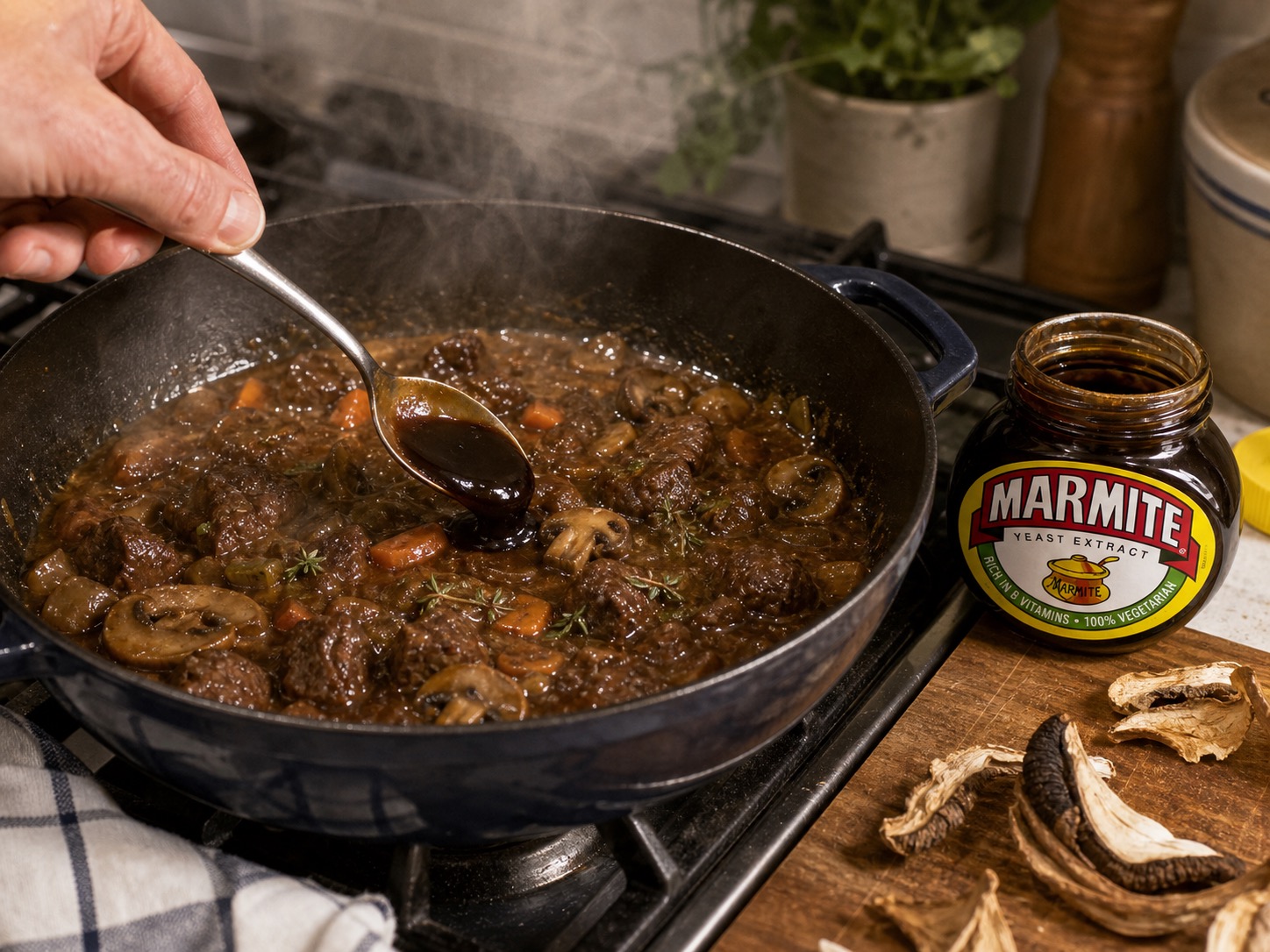
- A beef stew or gravy has the meat nucleotides but tastes thin. A teaspoon of Marmite supplies the glutamate, the two multiply, and the gravy goes from flat to deep.
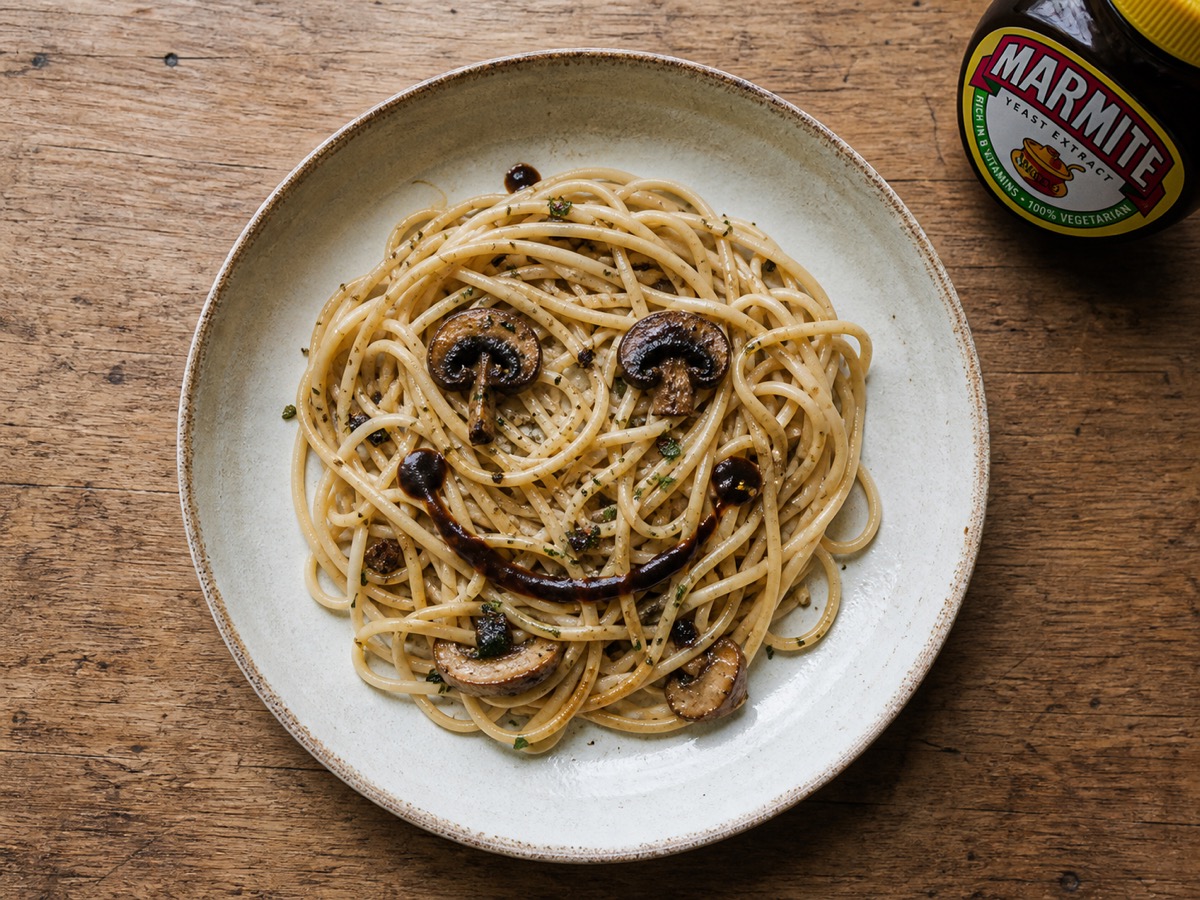
- A mushroom risotto or a mushroom sauce is the textbook case. Mushrooms plus Marmite is the synergy effect in its purest kitchen form.
- A tomato sauce already has some glutamate of its own, so Marmite helps but the jump is smaller. Add a little anchovy or a parmesan rind as well and you have stacked the whole effect.
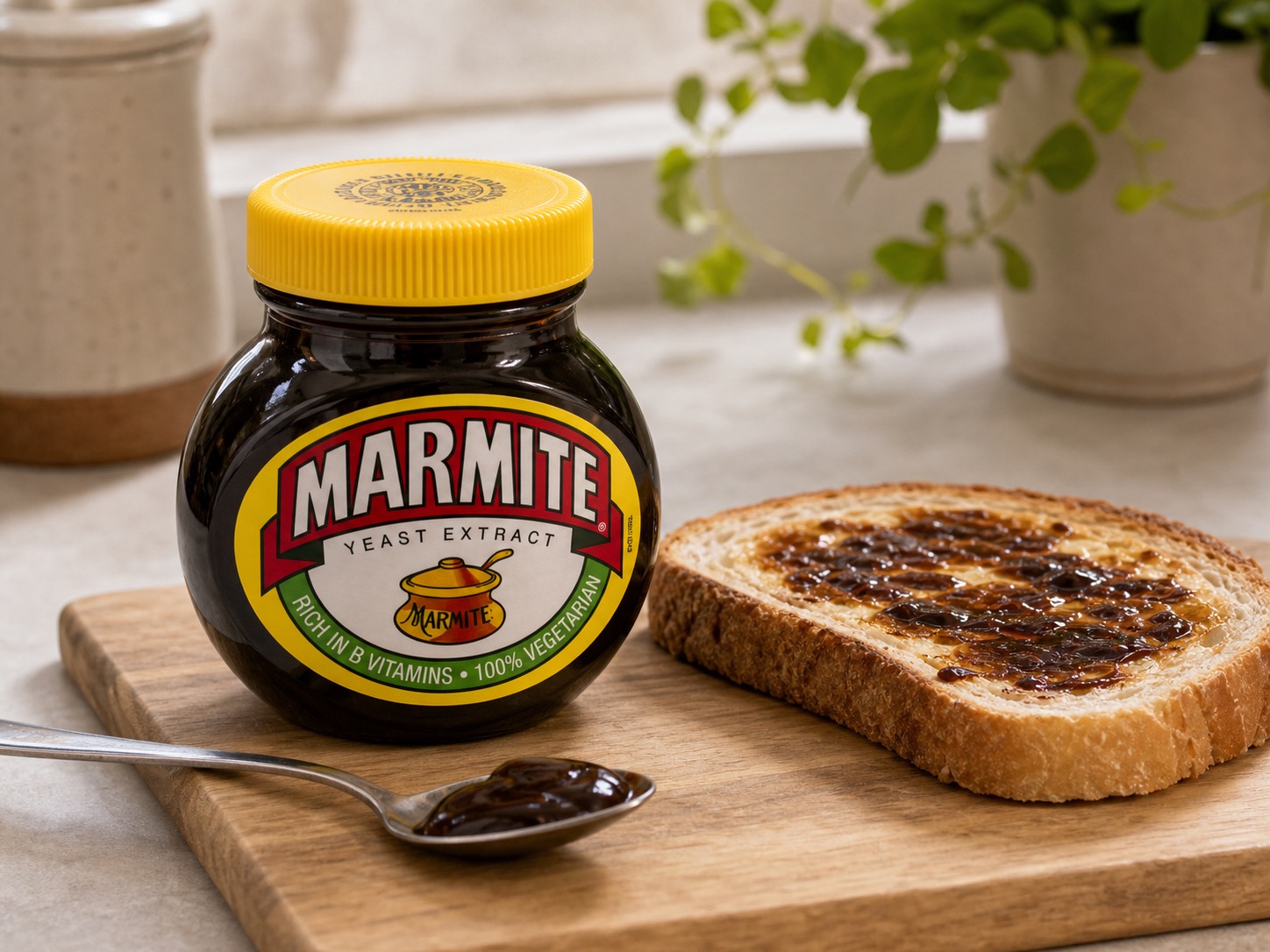
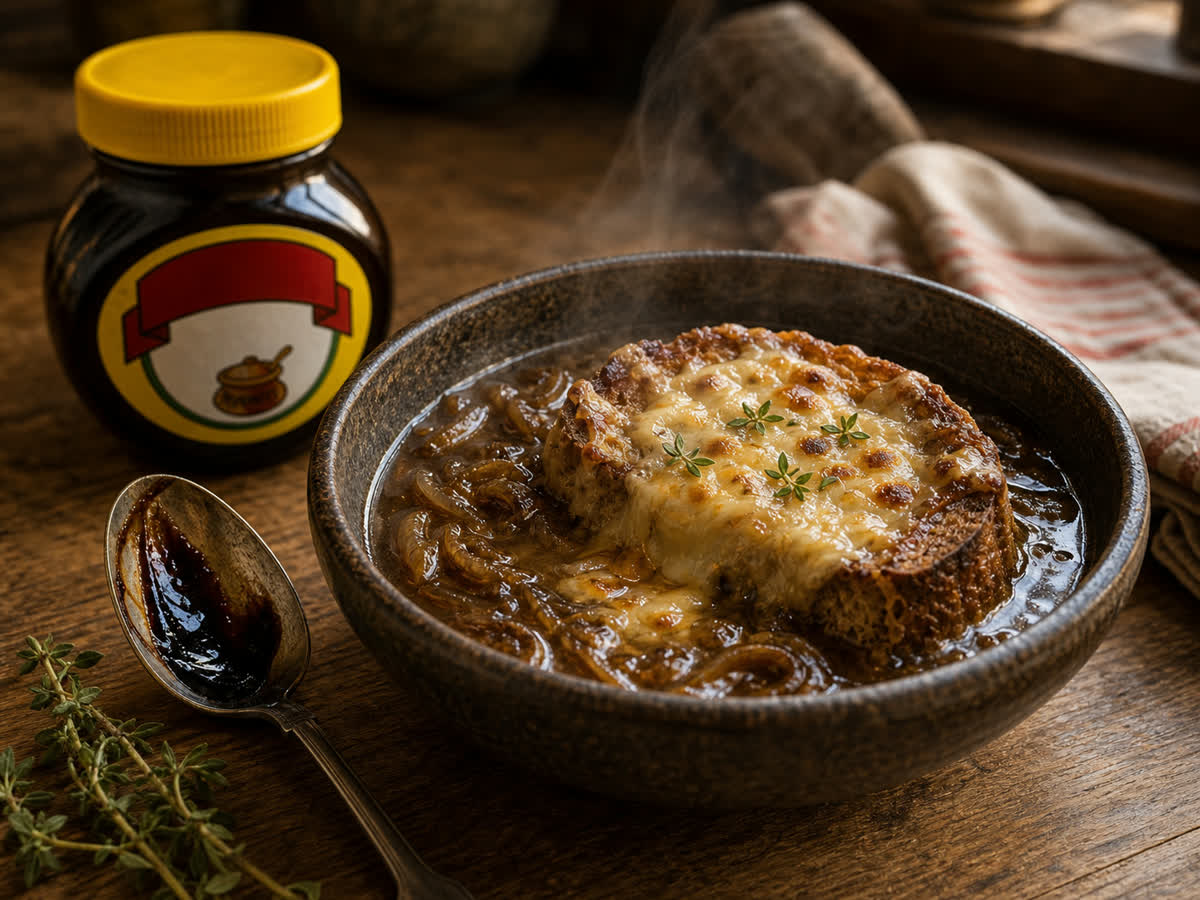
This is also why a scrape of Marmite on cheese on toast is more than the sum of its parts. Cheese, particularly a hard aged one like parmesan, brings glutamate of its own, and toast under melted cheese is exactly the sort of savoury base the jar was born to lift.
The practical rule
You do not need to remember the chemistry to use it. The rule is simply this: a tiny amount of Marmite, stirred in early, makes savoury cooked food taste richer and more finished, and it works best on anything with meat or mushrooms in it. Start with half a teaspoon for a pan that feeds four, taste, and add more only if you must. The point is depth, not a Marmite flavour. If you can taste the Marmite, you have used too much.
Nigella worked this out in her kitchen years before any of us were calling it synergy on TikTok. Kuninaka worked it out in a lab in 1957. The jar has been quietly doing the maths in British kitchens the whole time.