
Marmite has been hitching itself to England’s sporting fortunes since at least 2009, and it has a better record at it than most pundits.
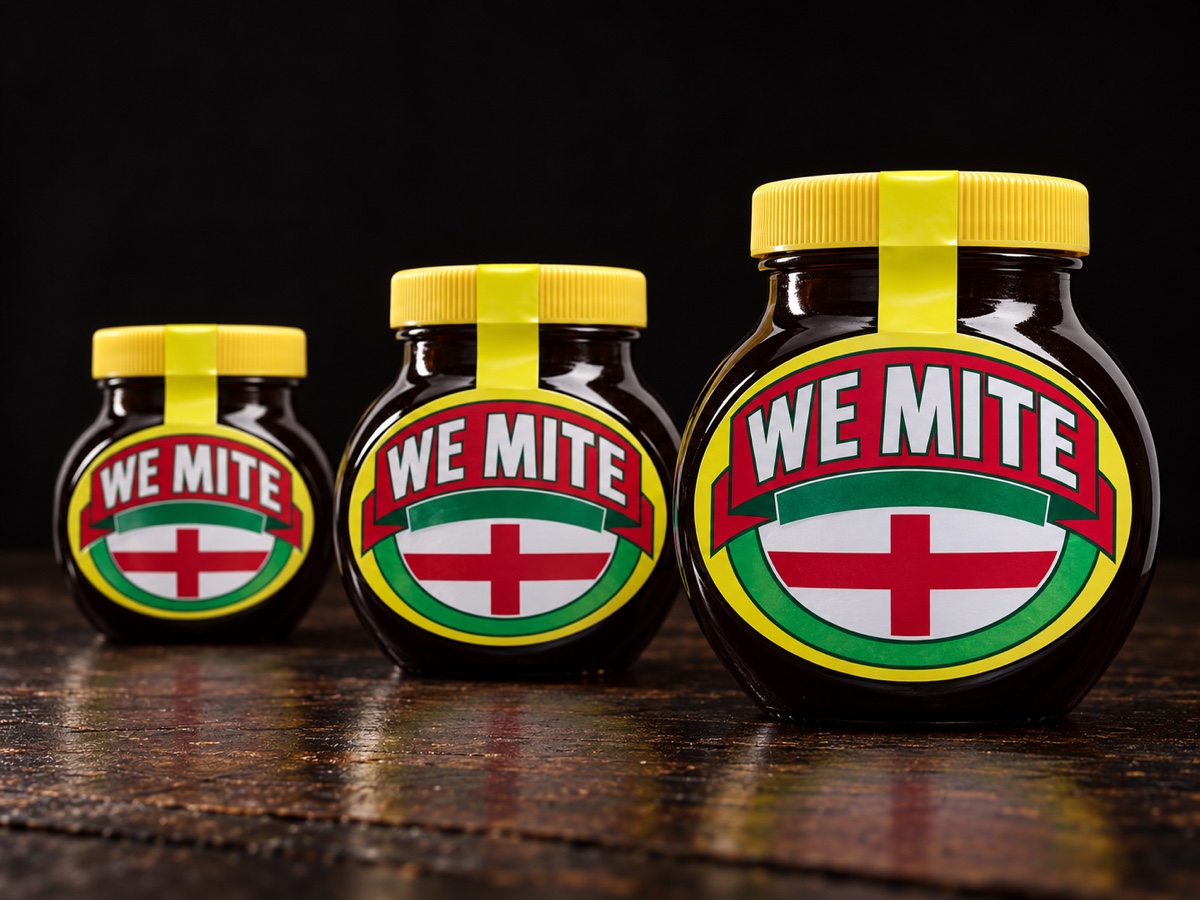
This summer it was WeMite, the World Cup rebrand with jars sized by how far you thought England would get. Seventeen years earlier it was cricket, an Ashes summer, and a novelty single by a retired left-arm spinner.
That’s Phil Tufnell and the Wooden Urns, which remains the best pun anyone has hung on the Ashes urn, performing The Ashes Song for Marmite in the summer of 2009.
What they actually did
The single went on iTunes at 79p, with all profits to Cricket for Change, the charity that runs cricket for disabled and disadvantaged young people. So the whole thing had a proper reason to exist beyond the gag, which is more than most brand singles manage.
Musically it’s set to the tune of Two Little Boys, the 1903 music-hall song. Lyrically it is three minutes of sledging: undying support for Straussy and Flintoff, a good panning for the Australians, and a line about Priscilla Queen of the Desert that I will leave you to find yourself. Tuffers plays it entirely straight, which is the correct decision and the reason it works.
It came out of Splendid Communications, who I should declare I have worked with, since they are the people who later brought me in on the Oxford Street lights and the Love Party dance-off. I am not a neutral judge of a Splendid campaign and you should read the next paragraph accordingly.
The other half of the campaign
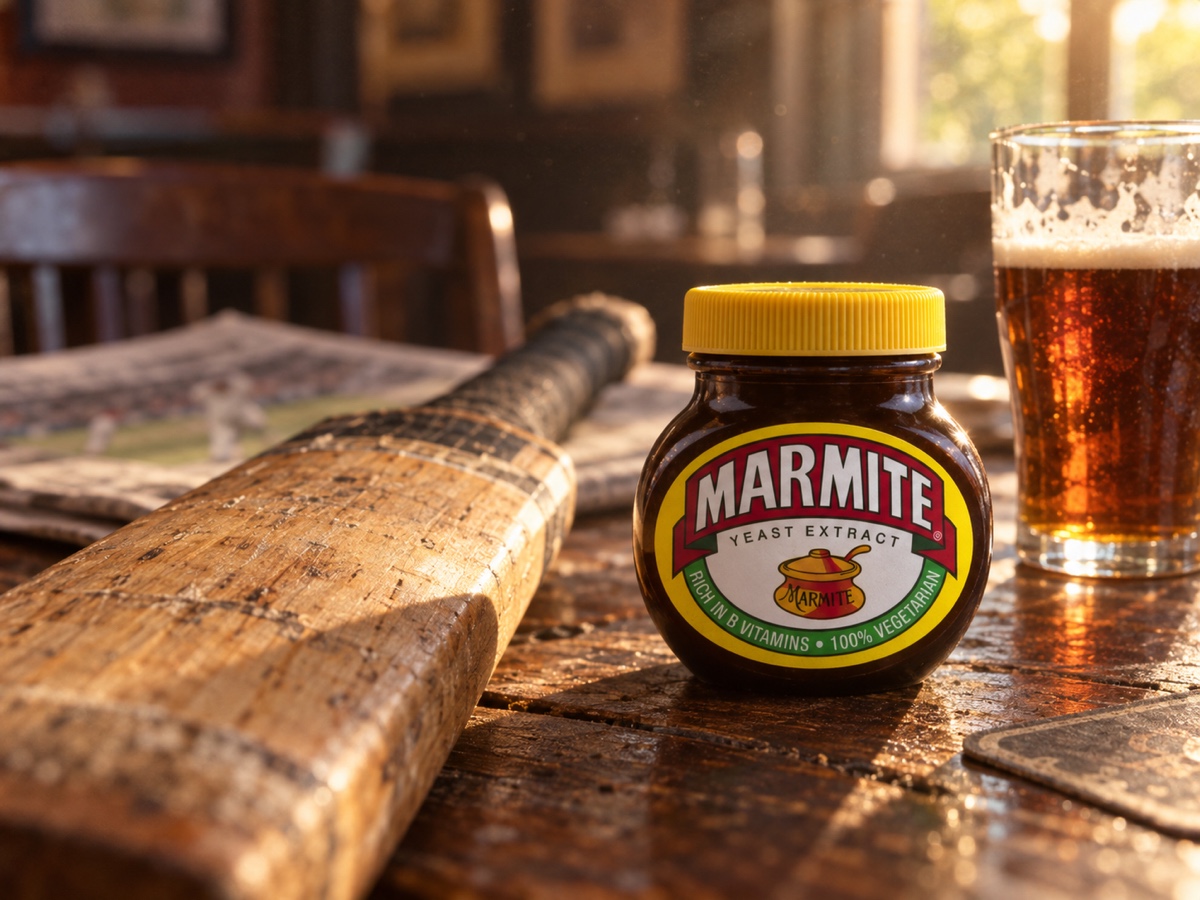
The song wasn’t all of it. Earlier that summer Marmite had put out a cricket-ball jar, 500,000 of them, made with yeast from Marston’s Pedigree, the official beer of England cricket, brewed a few streets from the Marmite factory in Burton.
That is a genuinely elegant bit of product thinking. Marmite is a by-product of brewing anyway, so swapping in the yeast from the official cricket beer isn’t a gimmick bolted onto the label, it changes what’s actually in the jar and it does it for a reason that makes sense. Novelty editions rarely clear that bar.
Between the jar and the single, the 2009 campaign had a product, a piece of content and a charity angle, in an era when most brands were still working out what to do with YouTube.
And England won
That’s the part that makes this a happy retrospective rather than an awkward one. England took the 2009 Ashes 2-1 across five Tests between 8 July and 23 August, with Andrew Strauss captaining and finishing as England’s player of the series. Only the second England captain in twenty years to win them back.
So Marmite backed England, and England delivered.
Which is where WeMite comes in
The 2026 version of the same instinct is more sophisticated and considerably more exposed.
Instead of making a song about hoping England win, Marmite sized the jars by how much you believed: Reach the Quarters, Reach the Semis, Go and Win It. That converts a piece of brand cheerleading into a public prediction with a settlement date, which is a genuinely risky thing to put on a shelf. The Ashes Song could not really be wrong. A jar reading Go and Win It can be, and was.
England lost the semi-final 1-2 to Argentina on 15 July. The medium jar was correct. Somewhere between “we hope” and “we might” the brand learned to hedge.
Seventeen years of the same idea
Line the two up and the throughline is obvious enough. Marmite works best when it attaches itself to something the nation is already arguing about, because arguing is the product’s entire cultural position. A general election, which they did in 2010. An Ashes series. A World Cup.
What changed between 2009 and 2026 is the mechanism. In 2009 you made a funny video and hoped it travelled. In 2026 you put the joke on the packaging and let the tournament resolve it, because nobody needs a brand to make them a music video any more.
What hasn’t changed is that both campaigns are, underneath, the same sentence: this is a British thing, England are playing, have some.
I would still rather have the song.
What was Marmite’s 2009 Ashes campaign?
Marmite ran a two-part campaign around the 2009 Ashes. It released a limited edition cricket-ball jar, 500,000 of them, made using yeast from Marston’s Pedigree, the official beer of England cricket. Alongside it came The Ashes Song, a comic single by Phil “Tuffers” Tufnell and the Wooden Urns, created by Splendid Communications and sold on iTunes for 79p with all profits going to the charity Cricket for Change.
Who were the Wooden Urns?
The Wooden Urns were the backing act credited alongside former England spinner Phil “Tuffers” Tufnell on The Ashes Song, Marmite’s 2009 cricket anthem. The name is a play on the Ashes urn. The accompanying music video featured a number of guest appearances.
Did England win the 2009 Ashes?
Yes. England won the 2009 Ashes series 2-1 across five Tests played between 8 July and 23 August 2009. Andrew Strauss captained the side and was named England’s player of the series, becoming only the second England captain in twenty years to regain the Ashes.
How does WeMite compare to the 2009 Ashes campaign?
Both attached Marmite to an England sporting campaign, but the mechanism changed. In 2009 Marmite made a comic single and a themed limited edition jar. In 2026 the WeMite campaign put the prediction on the packaging itself, with jar sizes tied to how far fans thought England would progress, meaning the campaign could be proved wrong by the result. England won in 2009; in 2026 they reached the semi-final, making the medium jar the accurate one.