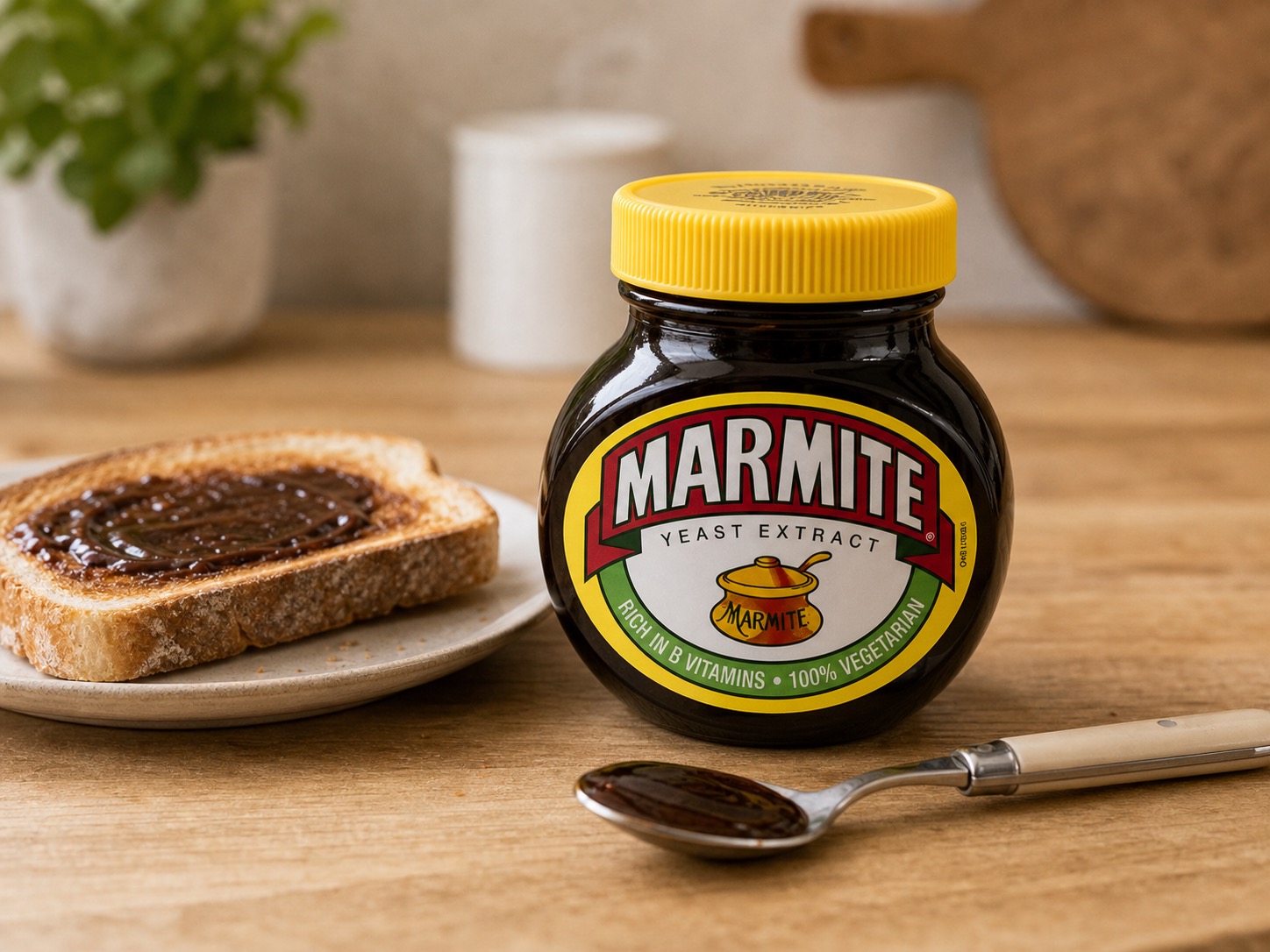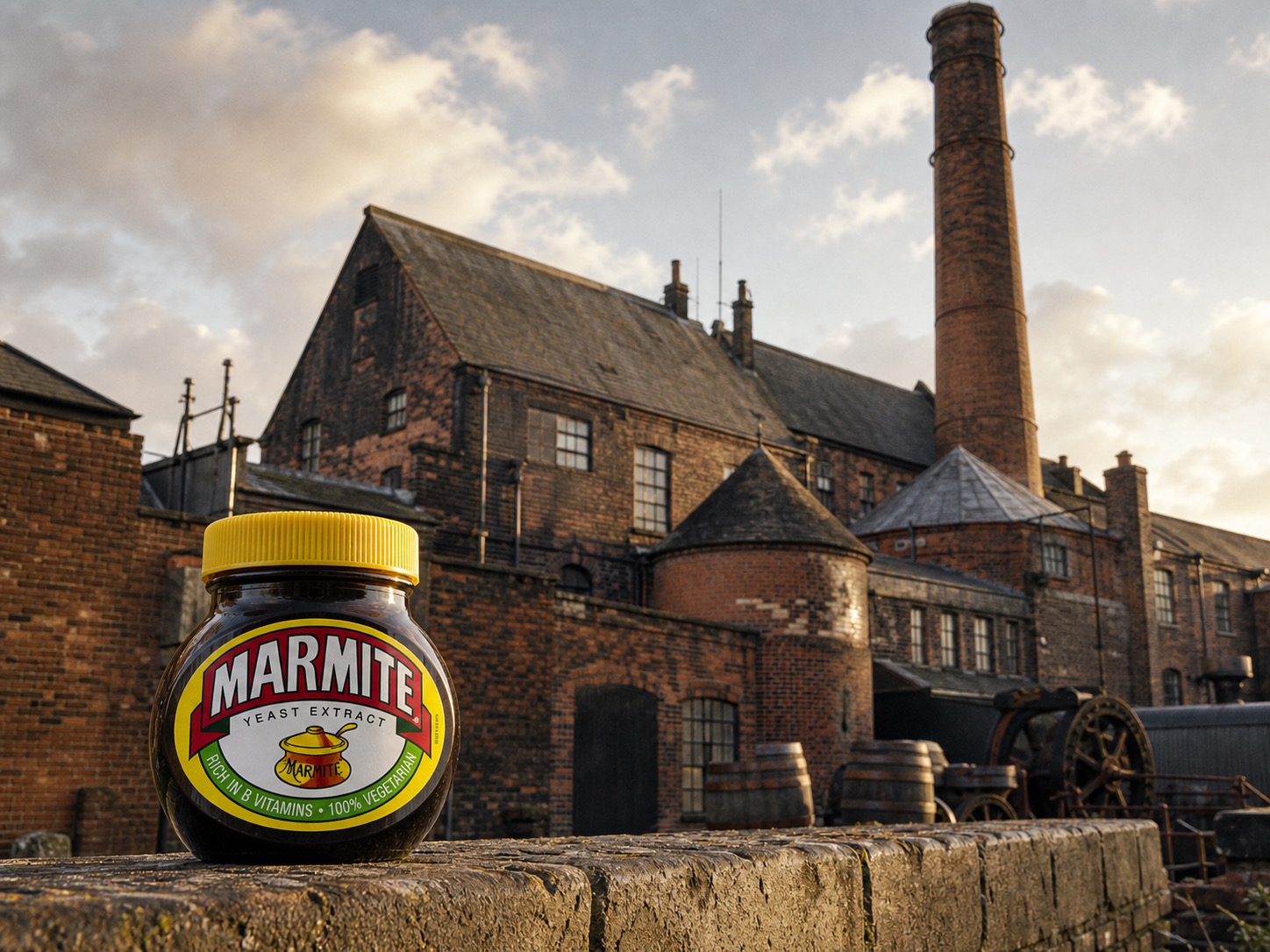

If you had to name the single most British thing in an ordinary kitchen cupboard, Marmite would be on the shortlist. It is made in Burton-on-Trent, it has divided the nation for over a century, it carried a royal warrant until recently, and the Queen was said to love it. And yet the invention at the bottom of all that Britishness was German. That is the fact that genuinely stops people.
Britain did not invent yeast extract
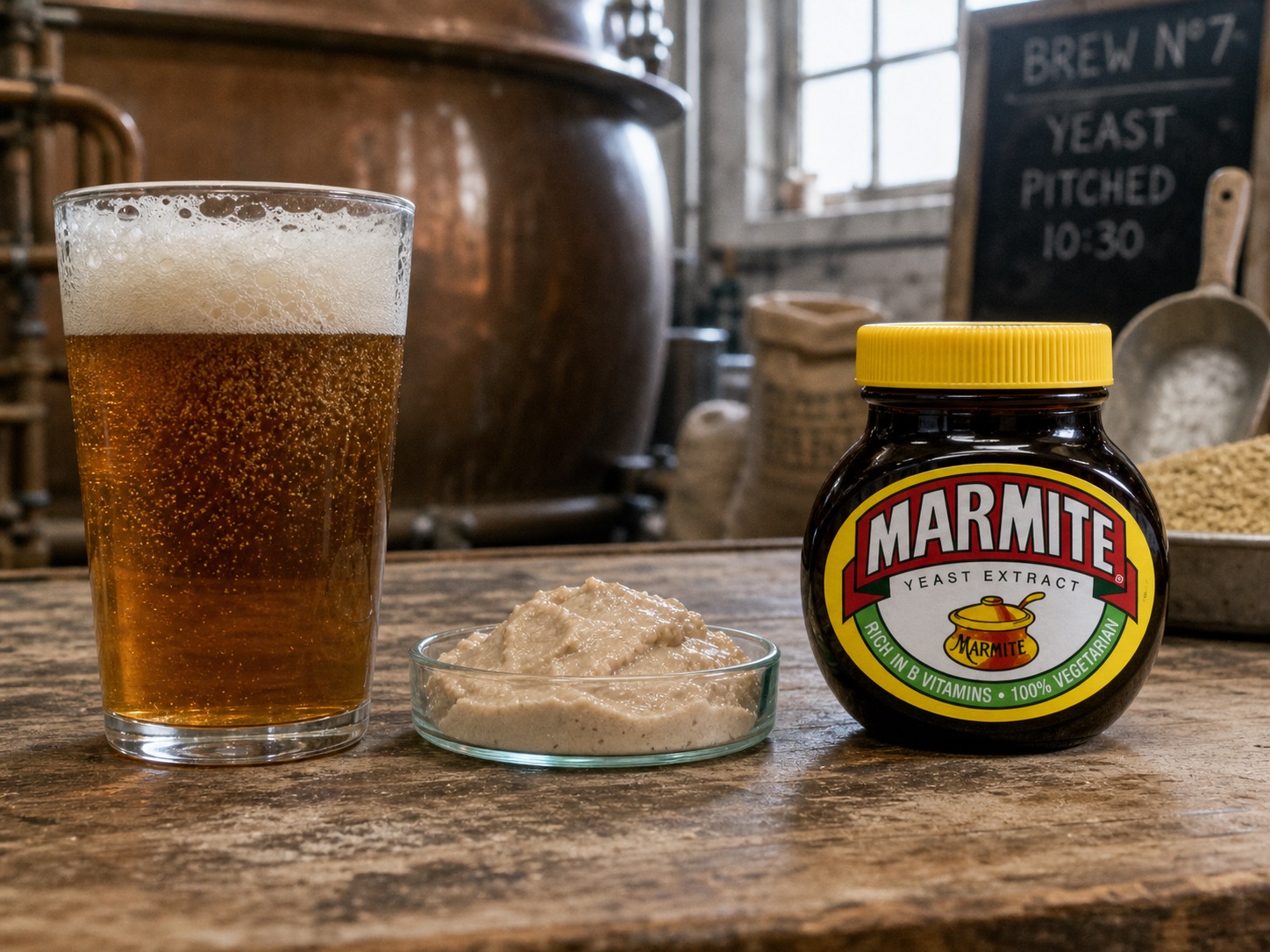
The idea that you could take the spent yeast left over from brewing beer and concentrate it into a thick, savoury, meaty-tasting and entirely vegetarian paste did not come from Burton, or anywhere in Britain. It came from the German chemist Justus von Liebig, one of the giants of nineteenth-century science, who worked out that brewer’s yeast could be concentrated, bottled and eaten. The whole category, the thing in the jar, is his.
Liebig is one of those names that turns out to be behind half the food cupboard once you start looking. His work on extracts of all kinds shaped a wave of late-Victorian products, and the savoury-extract idea he set going led, in different hands and different countries, to a small family of dark, salty, intense spreads and drinks. Marmite is the most famous survivor of that family. But the founding idea was a German chemist’s, not a British grocer’s.
What Britain actually did
So what is the British bit? The business. The genius of turning a scientist’s discovery into a product people would buy, argue about and miss when they travel.
In 1902 the Marmite Food Extract Company was set up in Burton-on-Trent, and that is the moment Marmite as we know it begins. The choice of Burton was the clever part. The town was the brewing capital of Britain, home to Bass and a quarter of the nation’s beer, which meant an endless free supply of exactly the spent yeast Liebig’s process needed, right on the doorstep. Britain did not have the idea. Britain had the breweries, the commercial nerve and, as it turned out, the national temperament to make the idea into an institution.
That is a real distinction. Marmite is a British product built on a German invention, using the by-product of British beer. All three of those things are true at once, and only the middle one ever makes it onto the label.
German idea, British jar, American future
The twist on top of the twist is where the story is heading. Marmite was invented, in concept, by a German. It was made British in 1902 and has been fiercely British ever since. And it is now on its way to being American: in 2026 Unilever agreed to sell its food business, Marmite included, to the American company McCormick. The most British thing in the cupboard started as a German discovery and is ending up, ownership-wise, in the United States.
So, is Marmite British? As a product, a brand and a national habit, completely. As an invention, not in the slightest. It is one of the great examples of Britain doing what Britain has often done best, which is take someone else’s clever idea and turn it into something the whole country feels it owns. For why Burton specifically, there is a piece on why Marmite is made there, and for where the ownership goes next, there is who owns Marmite now.