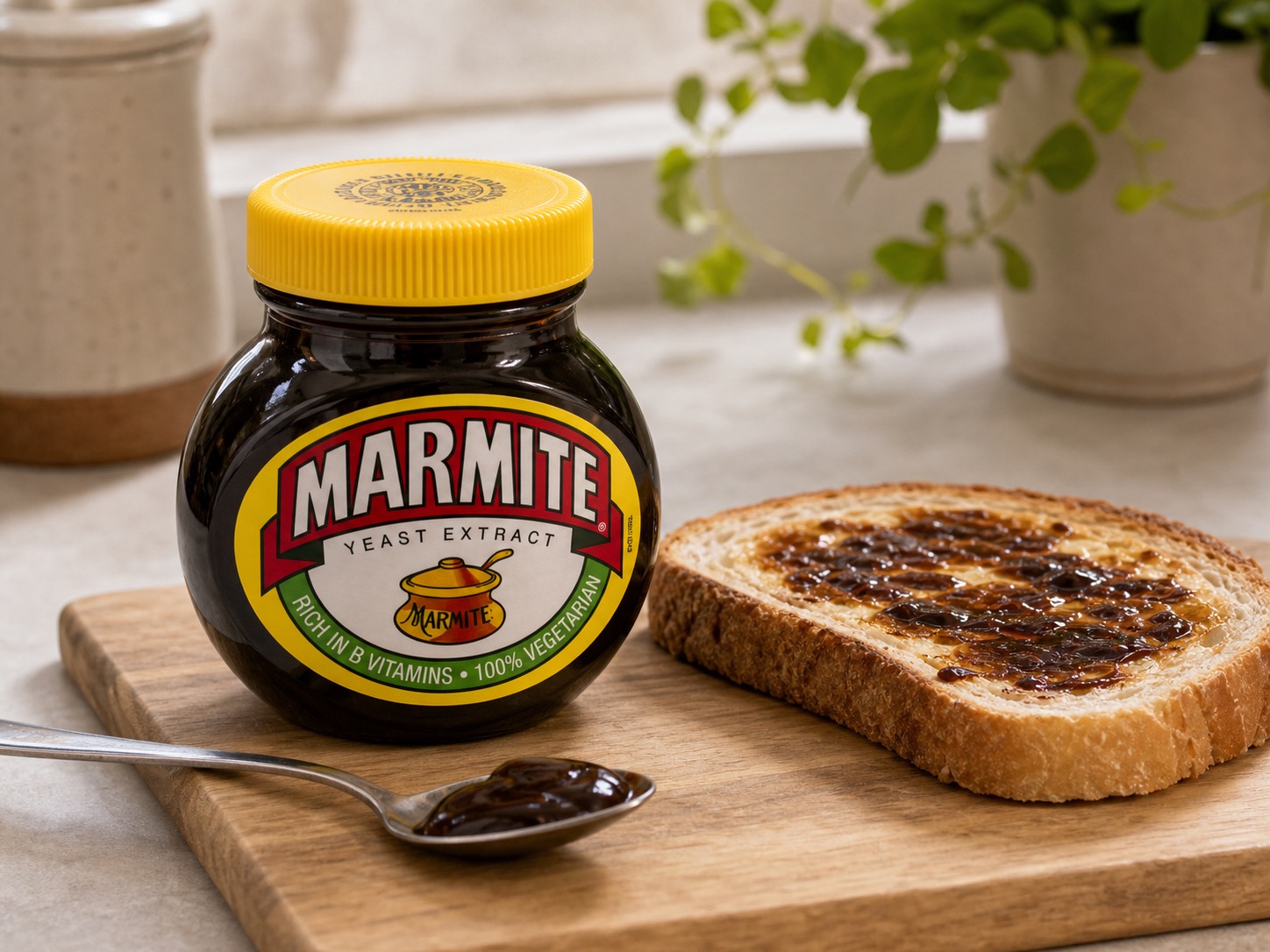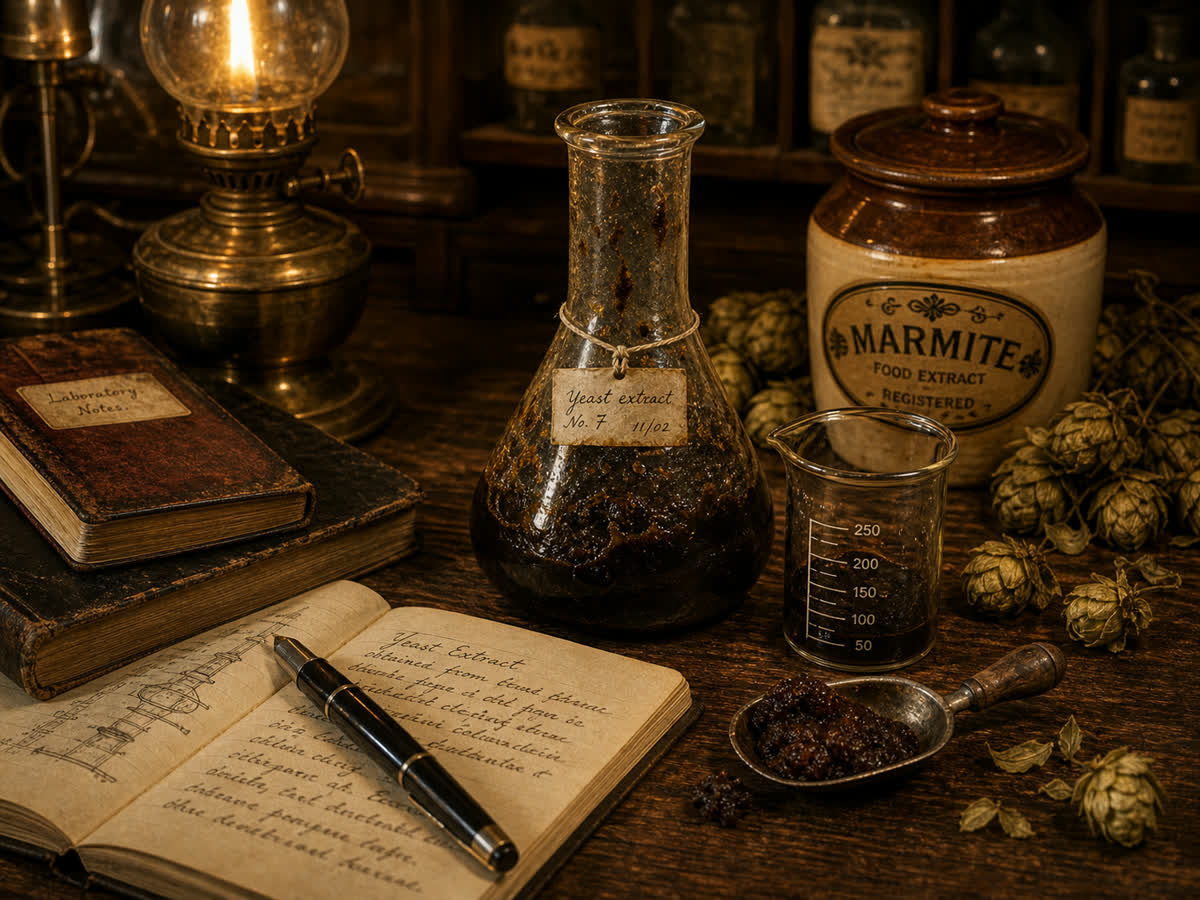

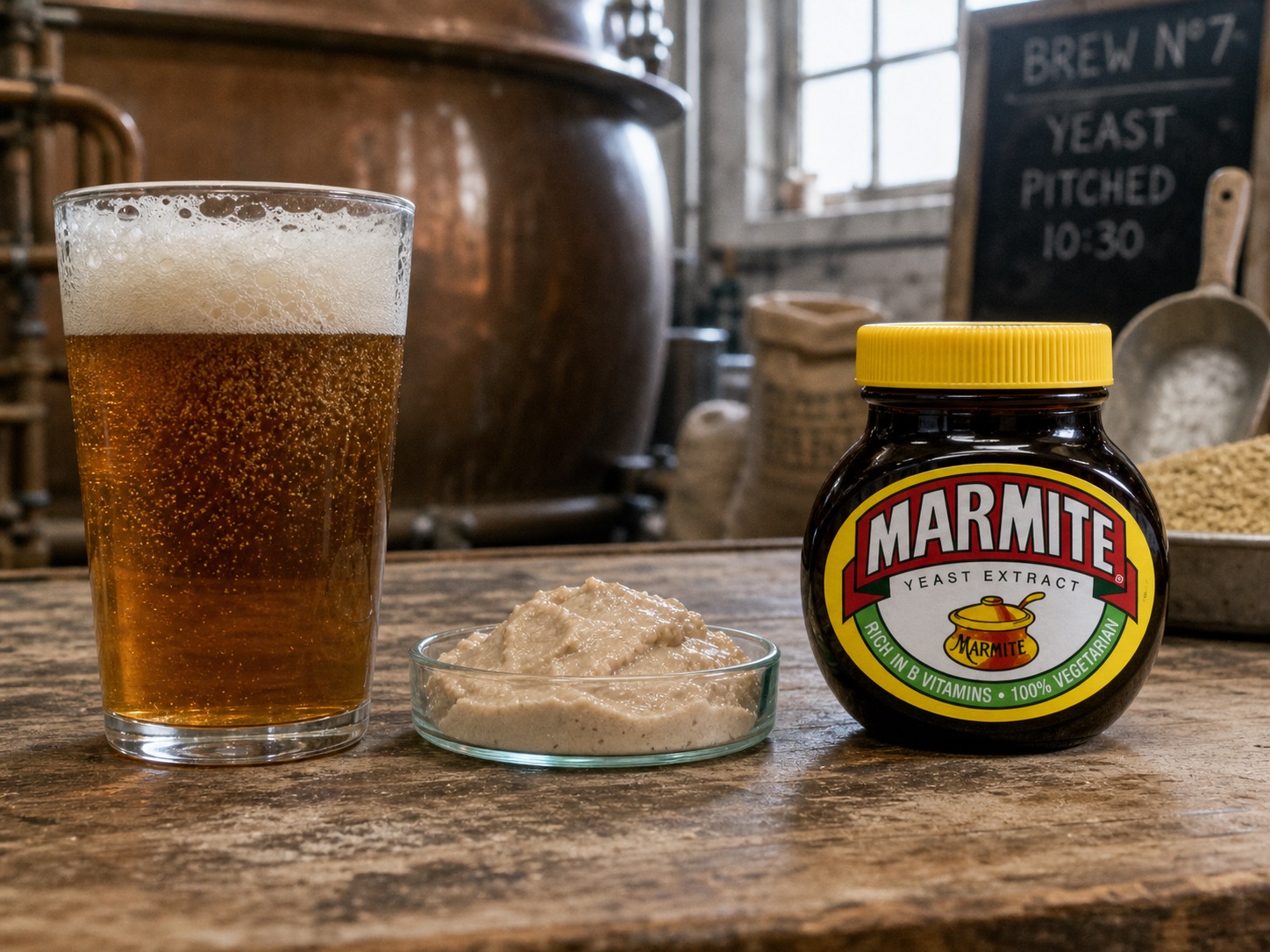
Most people know that Marmite has something to do with beer. Fewer know that the jar is, in the most literal sense, made of yeast that has been persuaded to eat itself. It is a slightly gruesome process for such a comforting product, and once you understand it the spread makes a lot more sense.
Here is the whole thing, start to finish, without the chemistry-lesson dread.
It begins at the brewery
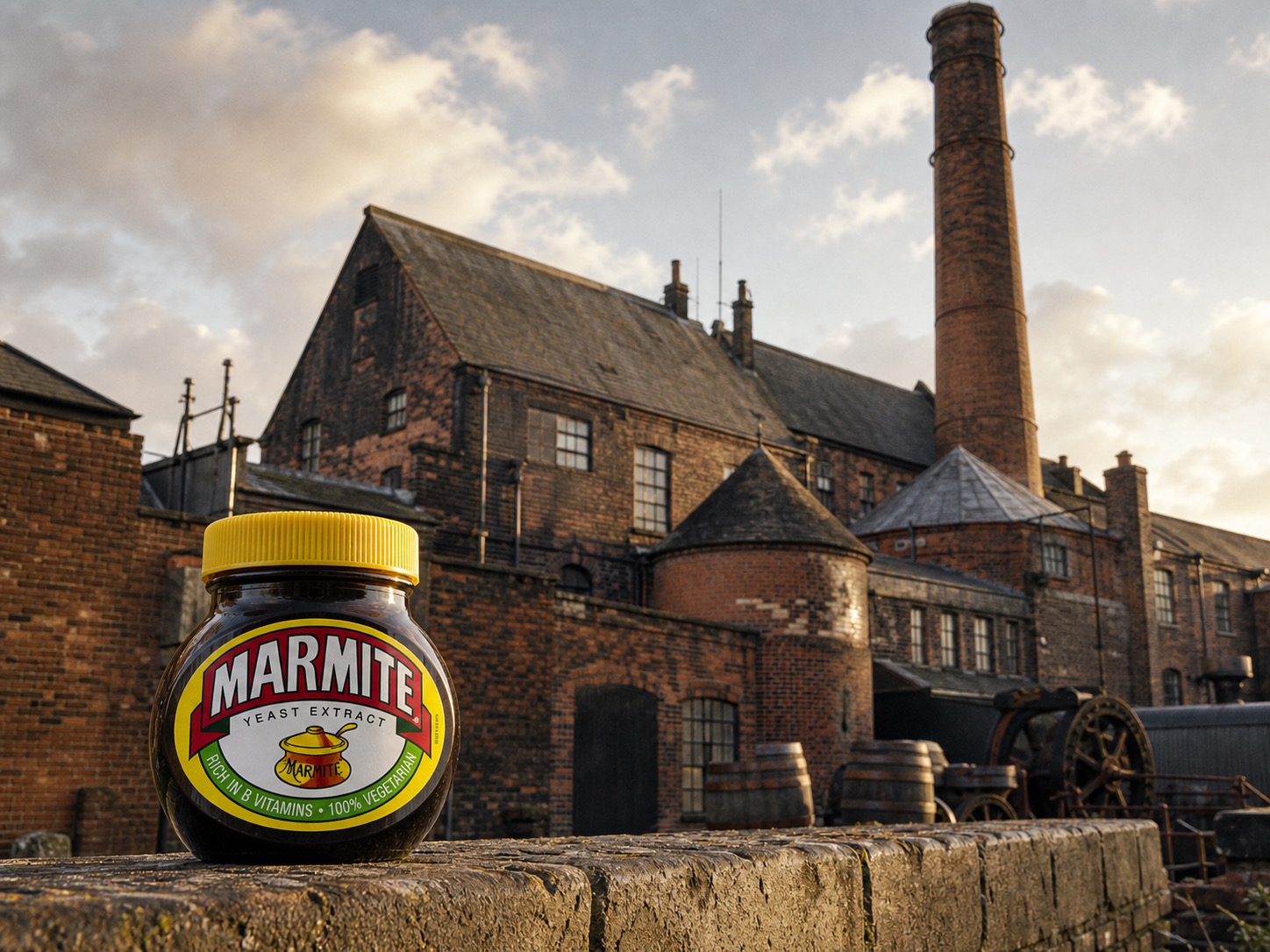
Brewing beer leaves a lot of spent yeast behind. For centuries this was a low-value by-product, and the clever bit of Marmite, going right back to the founding of the Marmite Food Extract Company in 1902, was spotting that the leftover could be turned into food. The town of Burton-on-Trent was chosen precisely because it was one of the great brewing centres of the country, which meant surplus brewer’s yeast in industrial quantities, cheaply, on the doorstep. The jar and the pint have been linked from the very first day.
Salt, and a kind of self-destruction
To turn yeast into yeast extract, you make the yeast destroy itself. This is called autolysis, and the trigger is salt.
Add enough salt to a suspension of yeast and the solution becomes hypertonic, which is a tidy way of saying the water inside the cells is pulled out and the cells shrivel. Under that stress the yeast’s own digestive enzymes switch on and start breaking the cell’s proteins down into much simpler pieces, mainly amino acids and the building blocks of nucleic acids. The yeast, in effect, digests itself from the inside. Heat is then used to finish the breakdown and stop the process.
It sounds violent, and it is, but it is also exactly what gives Marmite its character. One of the amino acids released is glutamic acid, the natural form of the thing better known as monosodium glutamate. That free glutamate is the source of the deep savoury hit, the umami, that makes a teaspoon of Marmite do so much work in a stew or on toast.
Sieving out the bits
Yeast cells have tough walls, and nobody wants a gritty spread, so the husks are filtered out. What you are left with is the smooth, soluble, intensely savoury liquid, which is then concentrated down into the thick paste you know. Salt for flavour and preservation, a little vegetable extract and spice, and the B vitamins that have been added since the 1930s, and the jar is essentially complete.
The Liebig footnote
None of this was invented in Burton. The science of treating yeast and meat as concentrated food goes back to the German chemist Justus von Liebig in the nineteenth century, whose work underpins the whole family of extracts, Marmite and Bovril included. Liebig died in 1873, decades before the first jar, with no idea that his chemistry would one day end up dividing British breakfast tables. The heat-and-autolysis method that bears his fingerprints is still the basic approach behind almost every yeast extract on the shelf.
So the next time someone tells you Marmite is an acquired taste, you can tell them what it actually is: brewing waste, talked into eating itself, sieved, and concentrated into one of the most efficient flavour delivery systems in the kitchen. It does not sound appetising for a second. It is also completely brilliant.