
People assume Marmite comes from Burton-on-Trent for some deep heritage reason, as though the town has always had a special relationship with savoury spreads. It has not. Marmite is made in Burton for a reason as practical as it gets: in 1902 the town was sitting on more spare brewer’s yeast than anywhere else in the country, and somebody finally worked out what to do with it.
The brewing capital
By the end of the nineteenth century, Burton-on-Trent was the brewing capital of Britain, and it was not close. The town had around thirty breweries running at once, and between them they accounted for something like a quarter of all the beer made in the country. The water did it. Burton’s water is naturally high in the mineral salts, gypsum especially, that suit pale ale, so much so that brewers elsewhere started “Burtonising” their own water to copy it.
At the centre of all this was Bass, founded in the town in 1777. By 1877 Bass was the largest brewery in the world, turning out a million barrels a year, its red triangle eventually becoming Britain’s first registered trade mark. A town brewing on that scale produces an enormous amount of one particular by-product: spent yeast, left over once the beer is made, and for centuries treated as near-worthless.
The bright idea
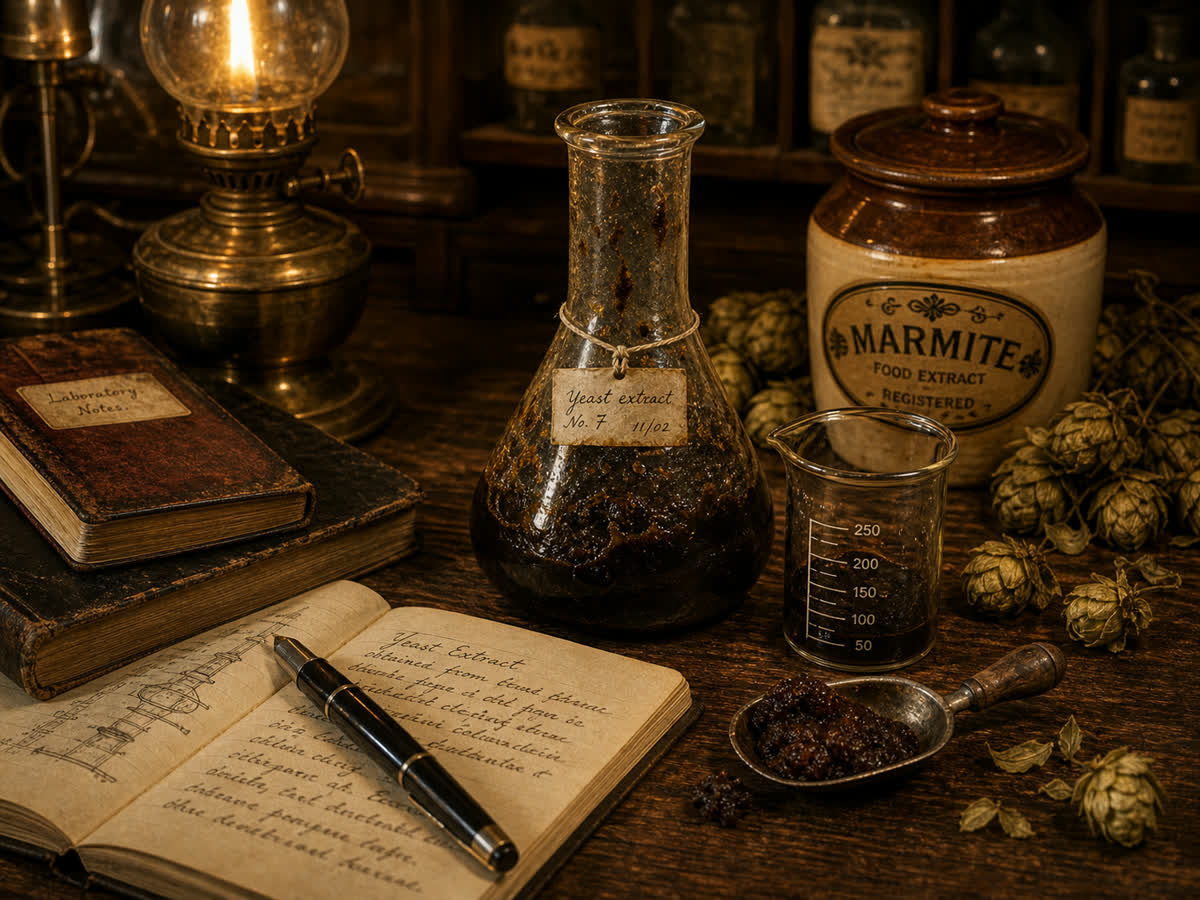
The science of turning that leftover yeast into food had been worked out on the Continent, building on the nineteenth-century chemistry of Justus von Liebig, who showed that yeast could be concentrated into something nourishing and savoury. What Burton had that the chemists did not was the raw material, by the tankerful, going cheap.
So in 1902 the Marmite Food Extract Company was formed in the town, and the by-product yeast for the very first jars was supplied by Bass. The logic is almost comically simple. You make Marmite where the spare brewer’s yeast is, and the spare brewer’s yeast was in Burton, because the beer was in Burton. The jar is, quite literally, built from the bottom of the brewing industry.
Why it still matters
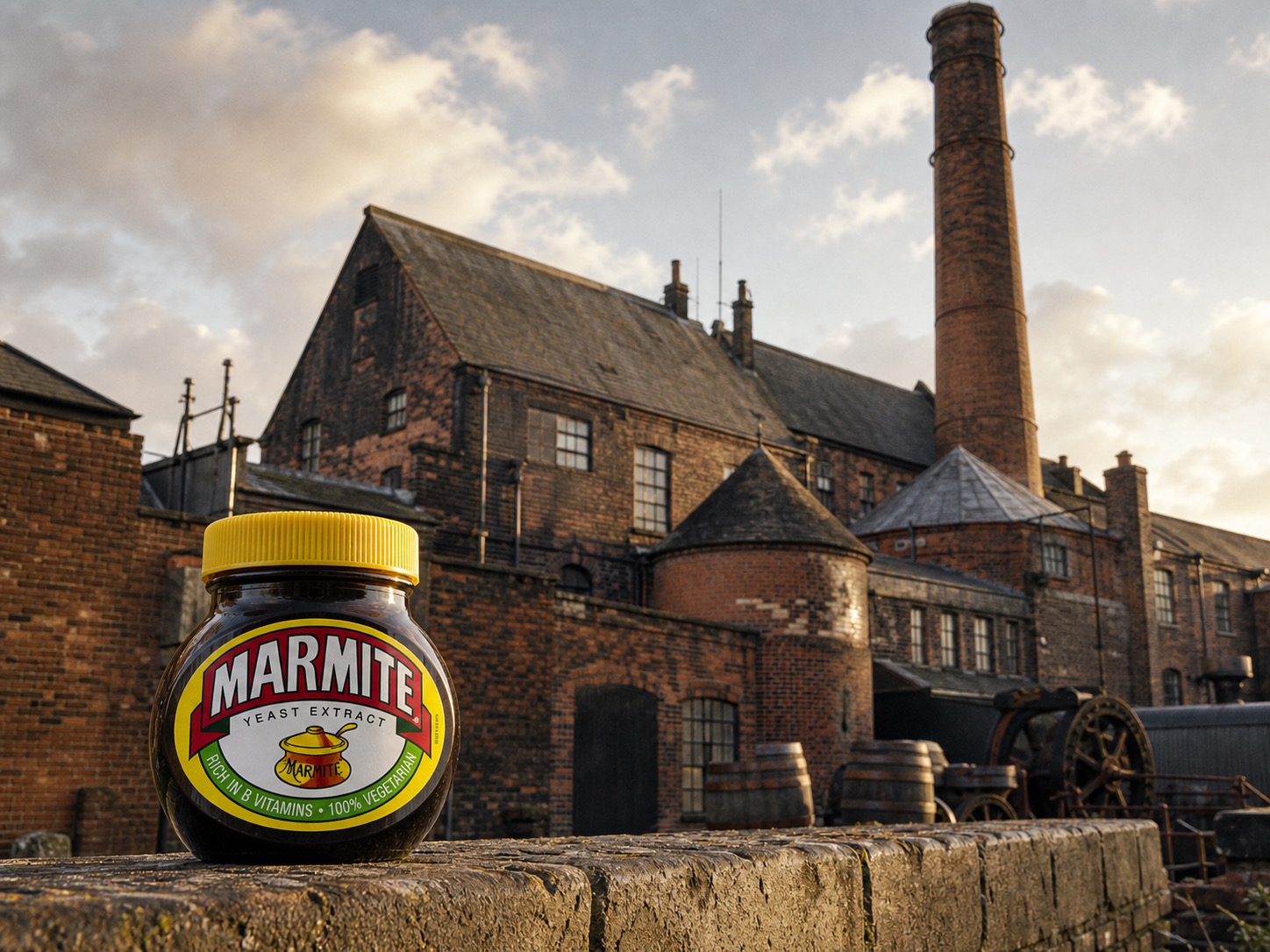
More than a century later the factory is still there, on the same town’s industrial edge, and Marmite is still made from brewer’s yeast. The brewing landscape around it has shrunk a great deal since Bass ruled the world, but the link between the pint and the jar never broke, which is exactly why the 2020 lockdown, when the pubs shut and the breweries slowed, briefly threatened the supply of Marmite as well.
It is a good thing to know the next time someone tells you Marmite is an ancient British institution. It is British, and it is well over a century old, but it is also a clever piece of recycling that happened in one Staffordshire town because that town happened to make more beer than anywhere else. Burton did not choose Marmite. Marmite chose Burton, because that was where the yeast was.