
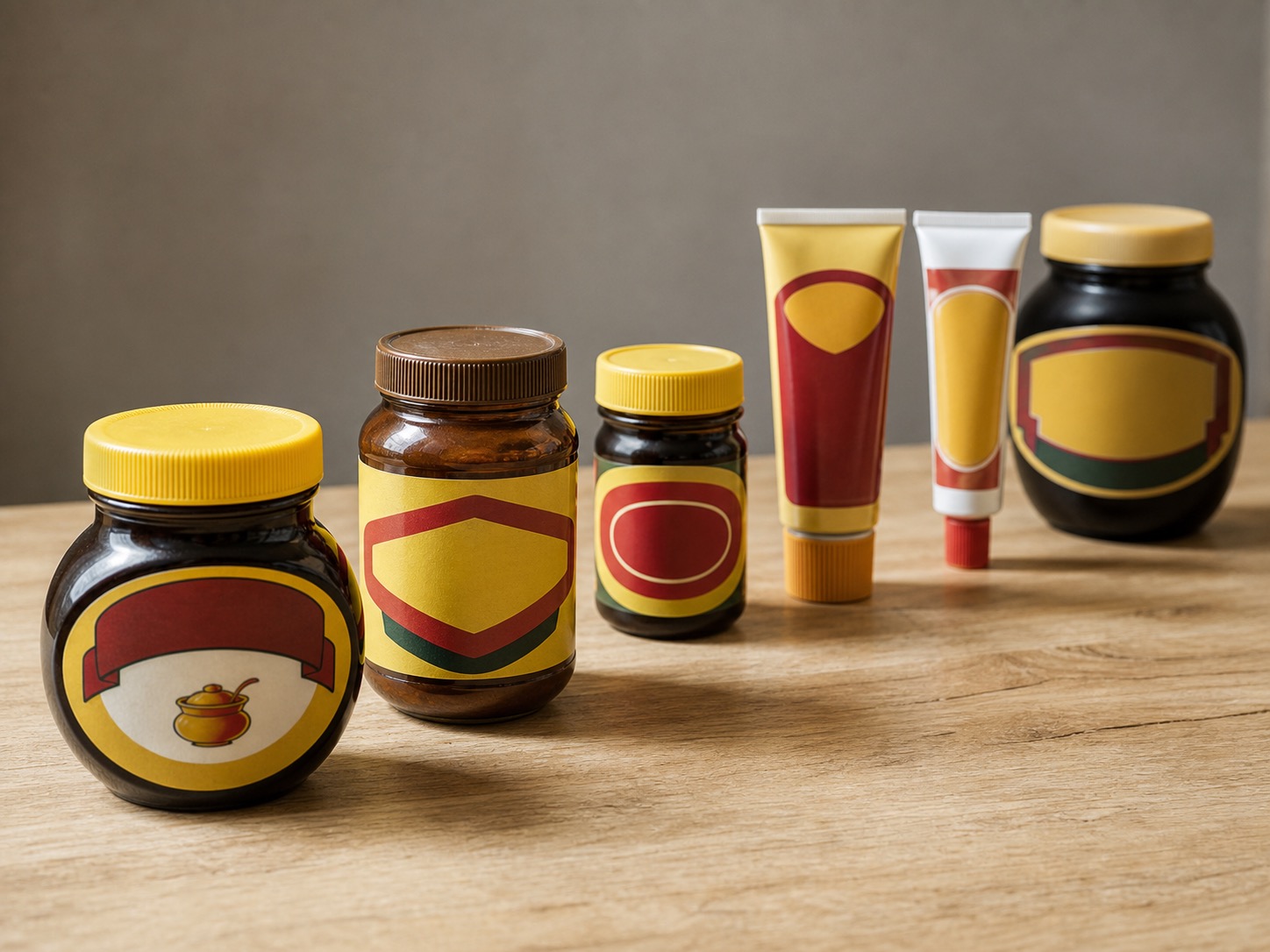
The family, briefly
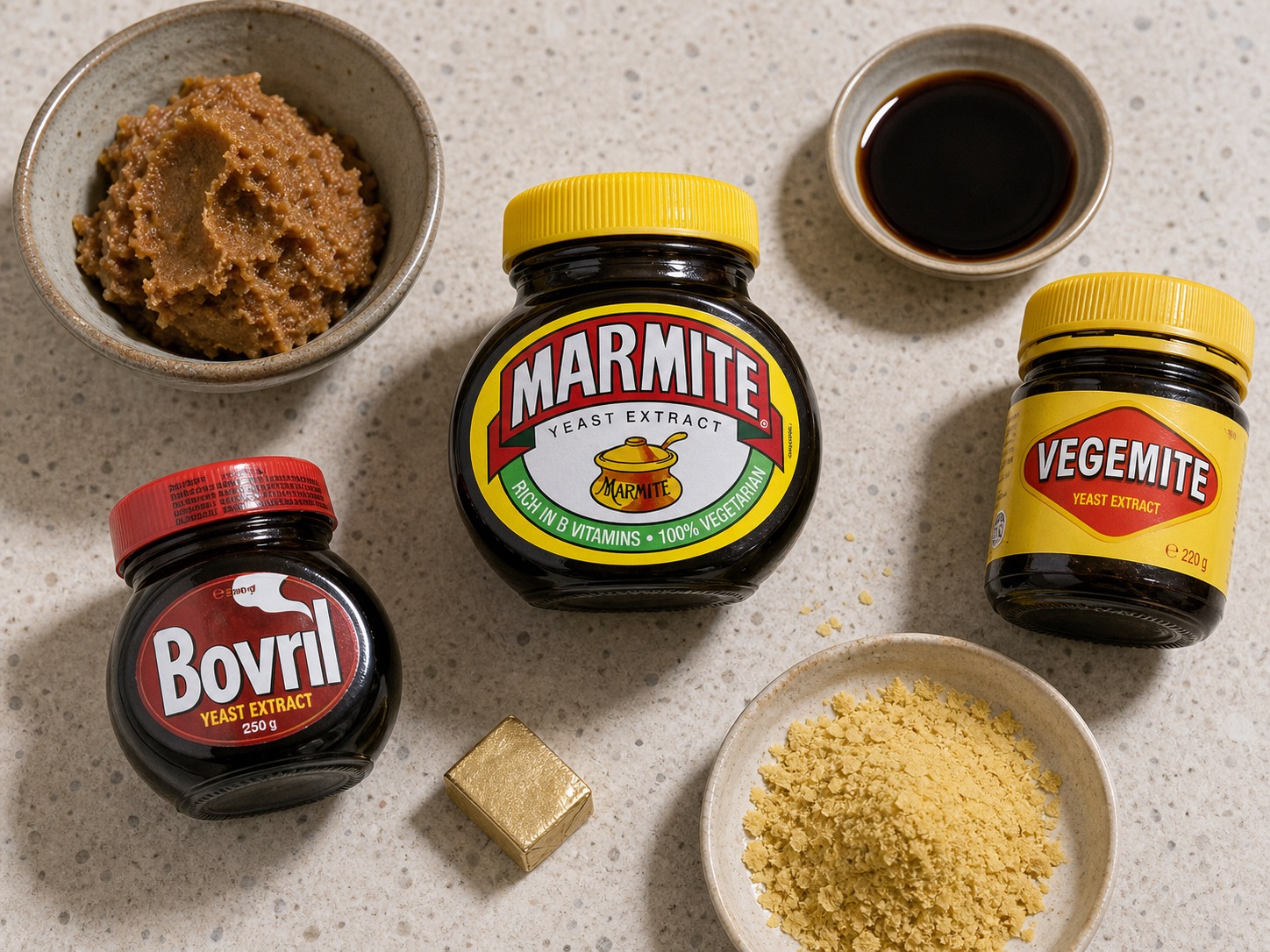
yeast extract spreads are a small global family. They are all built from the same trick: take leftover brewer’s yeast, autolyse it (let the cells digest themselves with their own enzymes), and concentrate the result. What comes out is a dark, salty, B-vitamin-rich paste, the exact character of which depends on which yeast you started with, which beer-style brewery you took it from, and what your country thinks counts as “savoury”.
Below, in rough order of seriousness, are the major members of the family. I am, for the record, partisan. British Marmite is the original and the best. The others are mostly interesting deviations.
Marmite (UK)
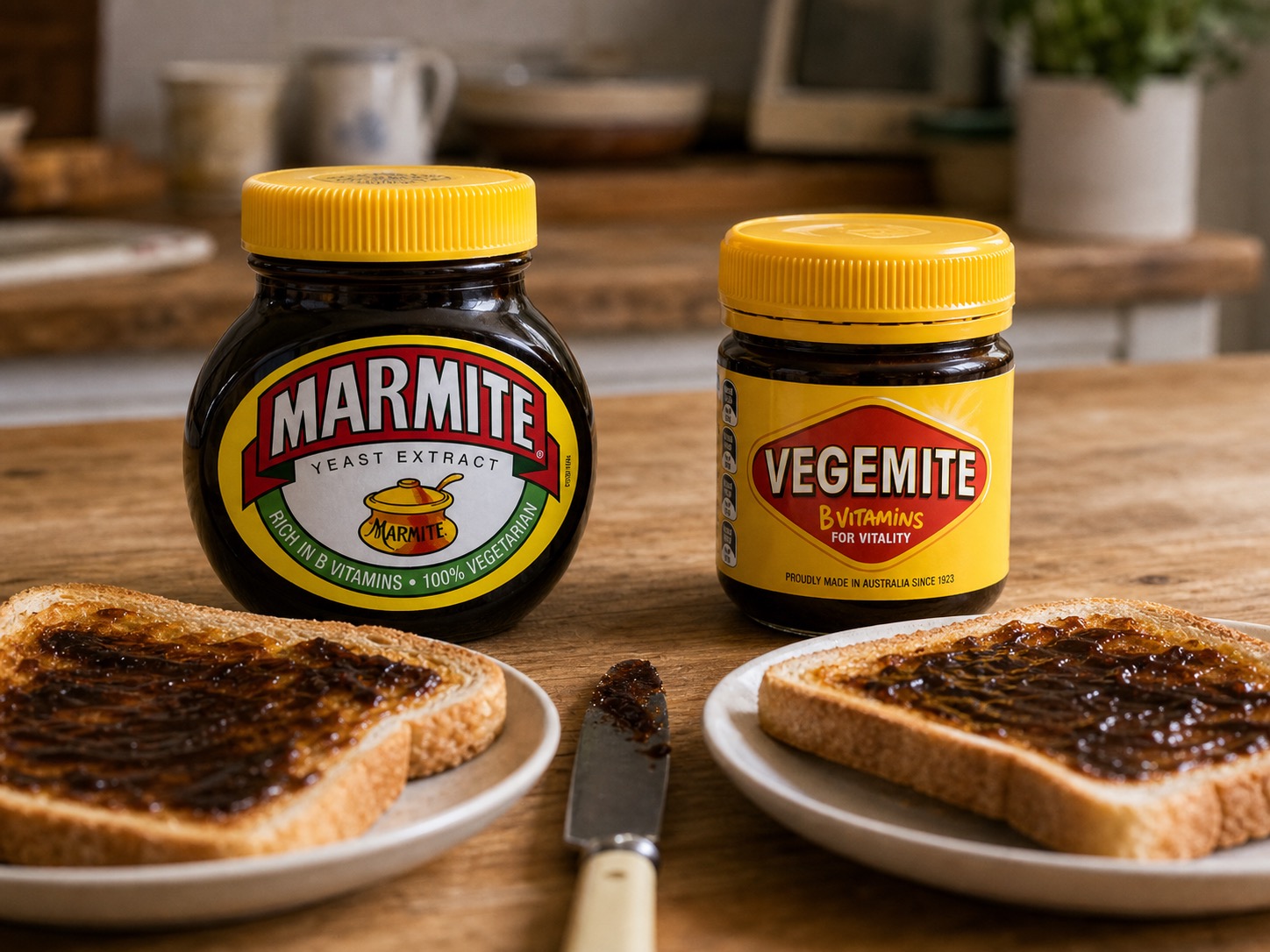
The original. Made in Burton-on-Trent since 1902. Made from Bass brewery yeast, which historically gave it its particular character; the brewery is gone but the lineage continues. Soft, slightly sweeter than the antipodean spreads, more rounded, intensely savoury without being aggressive. Designed to be spread thinly. Anyone in this family who tells you Marmite is the bland one has not had it.
Marmite (New Zealand)
A different product. Made in Christchurch by Sanitarium under licence. The recipe diverged a long time ago and is now distinctly its own thing: thicker, darker, slightly sweeter, less complex. Many New Zealanders grew up on it and are loyal to it. That is fine, but it is not the same product. Have you ever tried Kiwi Marmite? It is fine. It is not the British one.
This is one of the small confusions of the Marmite family. Two products, same name, different recipes, owned by different companies, on opposite sides of the world. Causes a lot of unnecessary internet arguments.
Vegemite (Australia)
The famous rival. Developed in Melbourne in 1922 by Cyril Callister after the First World War made British Marmite hard to import. Thicker, saltier, more aggressive, with a distinct bitter edge. Now owned by Bega Cheese (since 2017). Vegemite is properly Australian in a way the Aussies take seriously. A national food, not a spread.
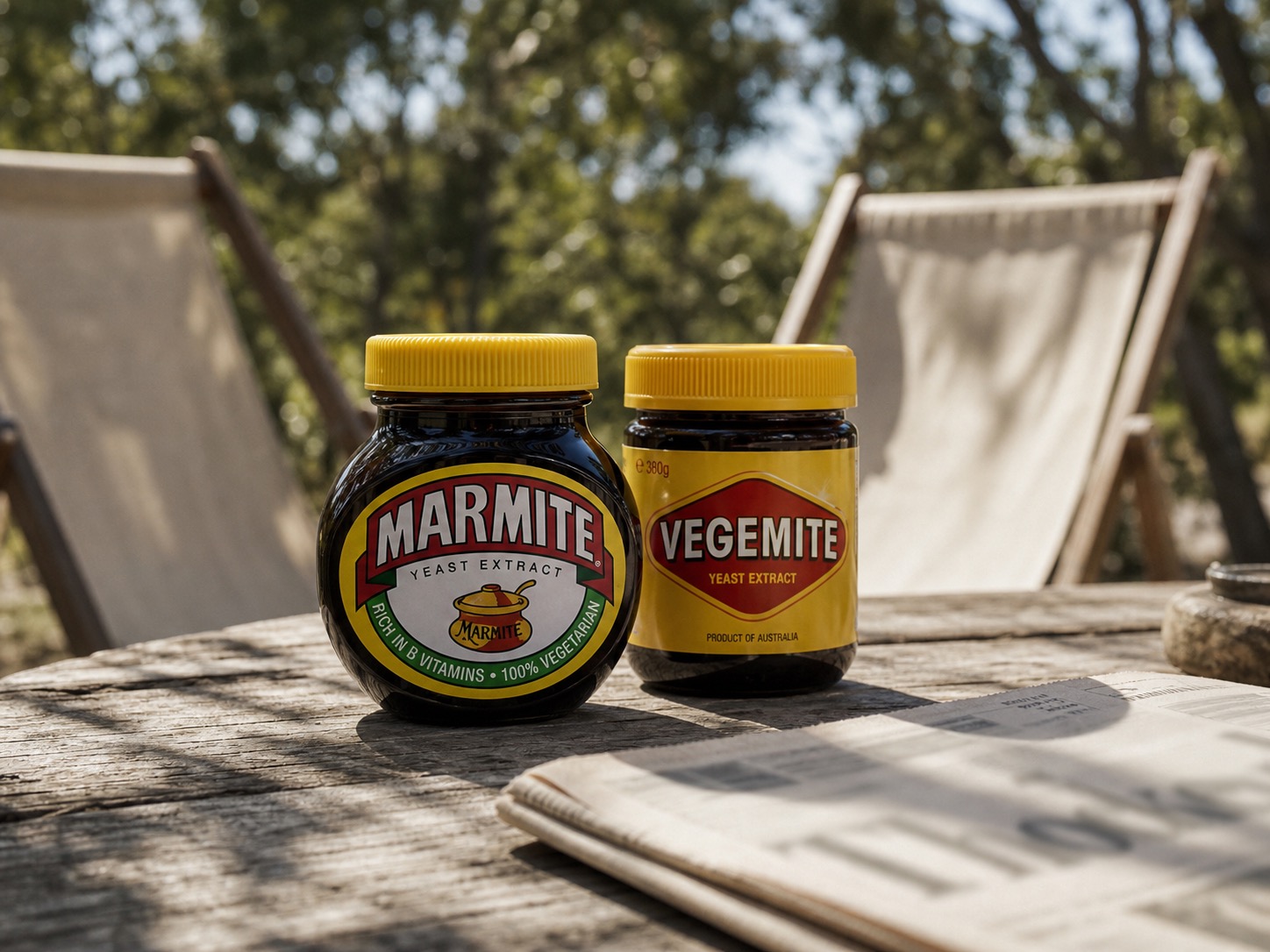
It is not the same as Marmite. People who say “Vegemite is just Australian Marmite” have not eaten both with attention. Different beast.
Promite (Australia)
The other Australian yeast extract, much less famous, sweeter than Vegemite (added sugar in the recipe), thinner texture, less salt-forward. Owned by Mars these days. Invented in the 1950s. Worth trying if you find Vegemite too intense and you want a softer entry point. Or just buy Marmite, which already exists and is better.
Cenovis (Switzerland)
The Swiss one. Made since 1931. Lighter colour, slightly milder flavour, fairly close in character to softer interpretations of Marmite. Loved by older Swiss-Germans, less commonly seen in the rest of the country, almost never exported. If you find a tube on a holiday in Lucerne, get it for novelty.
Vitam-R (Germany)
The German one. Vegan, organic, slightly less salty than the British or Australian spreads, more of a health-food-shop product than a supermarket one. The German organic-supermarket chain Alnatura stocks it as standard. Pleasant if you like a milder yeast extract.
Vegex (United States)
Almost extinct. A vegetable-and-yeast-based spread that has survived in small American health-food circles since the 1920s, mainly associated with Seventh-Day Adventist communities. Hard to find. If you see it, buy it for the novelty.
A note on the so-called South African Oxo spread
You will sometimes see “South African Oxo spread” listed as a yeast extract. Technically true, except the South African version also contains a small portion of beef extract, which makes it not really a yeast-extract spread in the strict sense. More of a savoury cousin. Worth being clear about, because it is not vegan if you go looking for it.
So which one wins?
The British one, obviously. I am not pretending to be neutral, this is the British Marmite fan site. But if you want a slightly more grown-up answer:
- For depth and balance: Marmite UK
- For raw aggression: Vegemite
- For something sweeter: Promite
- For mildness and a holiday souvenir: Cenovis
- For “I am in a German organic shop and curious”: Vitam-R
The whole family exists, broadly, because someone in each country looked at British Marmite and thought “we should have one of these”. They mostly did. None of them did it better.
Sources: Wikipedia, the Spruce Eats, manufacturer websites, my own jars.