
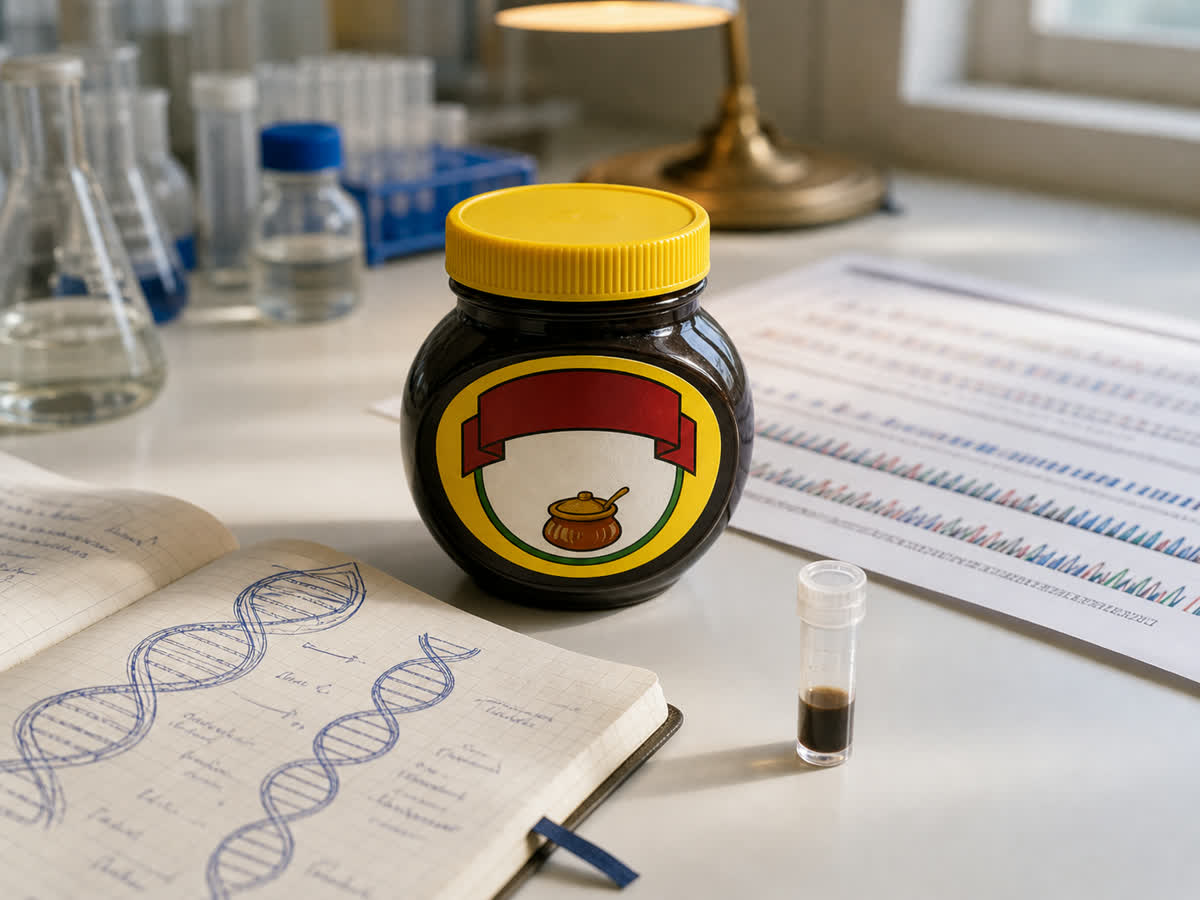
The Marmite Gene Project
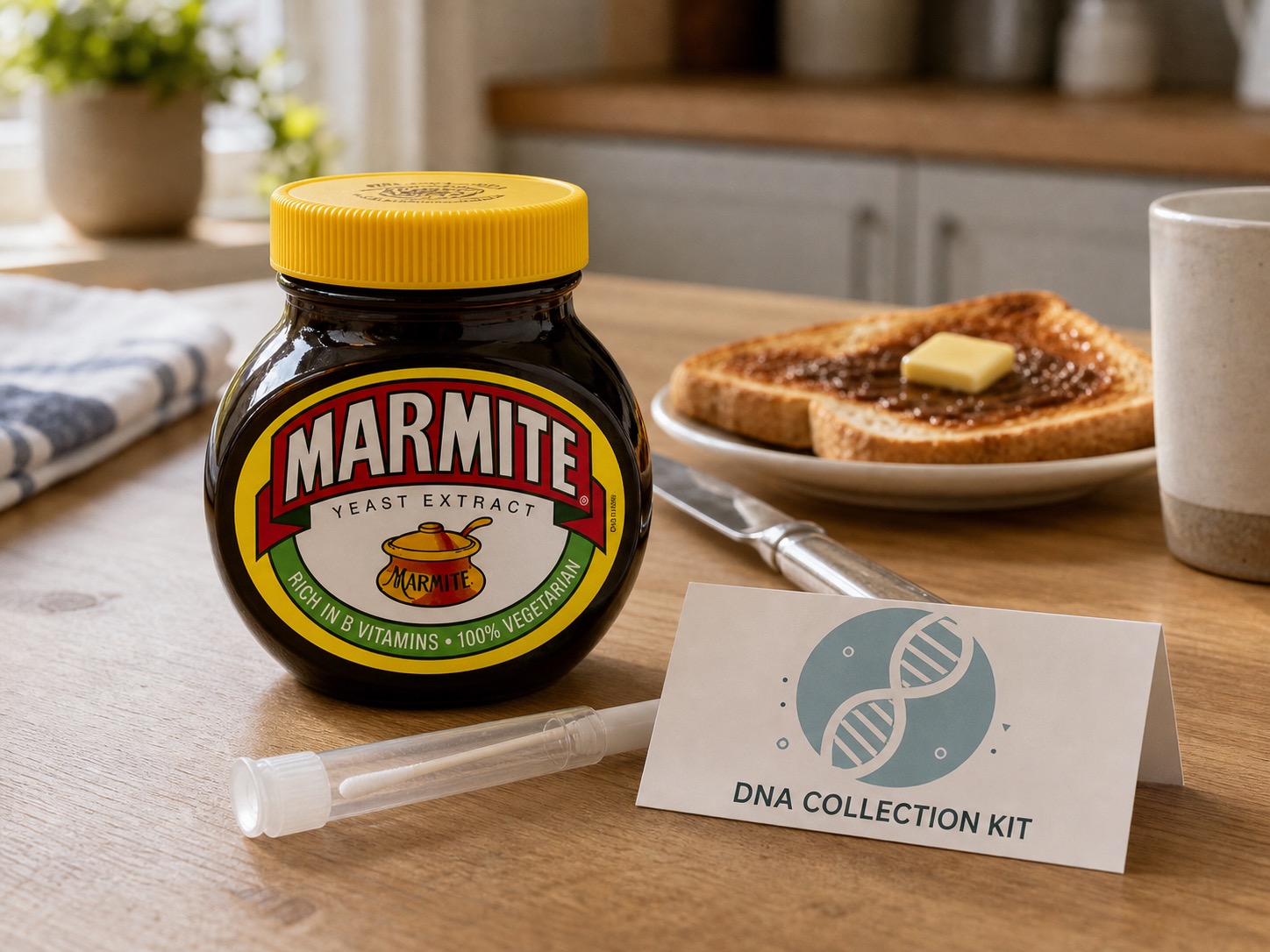
A few years back, the consumer-genetics company DNAFit ran a study they called the Marmite Gene Project. The aim was to see whether the famous love-it-or-hate-it divide had a genetic basis, beyond cultural exposure and childhood imprinting.
The answer, surprisingly, was yes. The study identified fifteen specific single-nucleotide polymorphisms (SNPs, the small variations in DNA that explain a lot of individual differences in everything from eye colour to caffeine tolerance) that correlated meaningfully with Marmite preference. The correlations were not enormous, but they were real. Two people from the same household and the same upbringing can react to Marmite quite differently, and a chunk of that difference appears to be sitting in their genes.
The 23andMe follow-up
The much larger genetic-testing company 23andMe, with its much larger participant base, did follow-up work and identified a specific SNP near a gene called SIX3 as significantly associated with Marmite preference. SIX3 is, among other things, involved in the development of the olfactory system, which matters because most of what we experience as “taste” is actually smell.
So the genetic mechanism is plausible. People with certain variants of olfactory-development genes perceive the volatile compounds in Marmite differently, and those different perceptions translate into the difference between “Mmm, delicious” and “How can you eat that”.
What this does not mean
It does not mean Marmite preference is a hundred per cent genetic. Childhood exposure matters. Cultural context matters. Whether your parents put Marmite on your toast at age four matters a lot. The genetic component is one variable among several, not the whole story.
It also does not mean that Marmite Haters are biologically incapable of enjoying Marmite. A person with the “less-receptive” SNP variants can still develop a taste for the jar over time, given exposure and a willingness to keep trying. Taste is plastic. The genes set the starting point; the rest is your own experience.
Why this is comforting
The next time you are at a dinner party and someone says they cannot stand Marmite, you can now, in a small way, give them the benefit of the doubt. They are not being dramatic or fussy. There is a non-trivial chance that their olfactory genes are simply reading the volatile compounds in your jar differently from how yours are.
This is also a useful argument to deploy against people who claim Marmite Lovers are somehow culturally smug about their preference. We are not smug. We are genetically blessed. The two are very different things.
The Hate Party respond
The Hate Party, when confronted with this evidence, will typically reply that their dislike of Marmite is a perfectly rational response to a perfectly horrible product. The Hate Party are also, in their own way, partly correct: their genes are telling them the truth as they perceive it. We just disagree about whose truth is more interesting.
Pass the toast.
Source: DNAFit Marmite Gene Project; 23andMe research blog.