

Before the lid
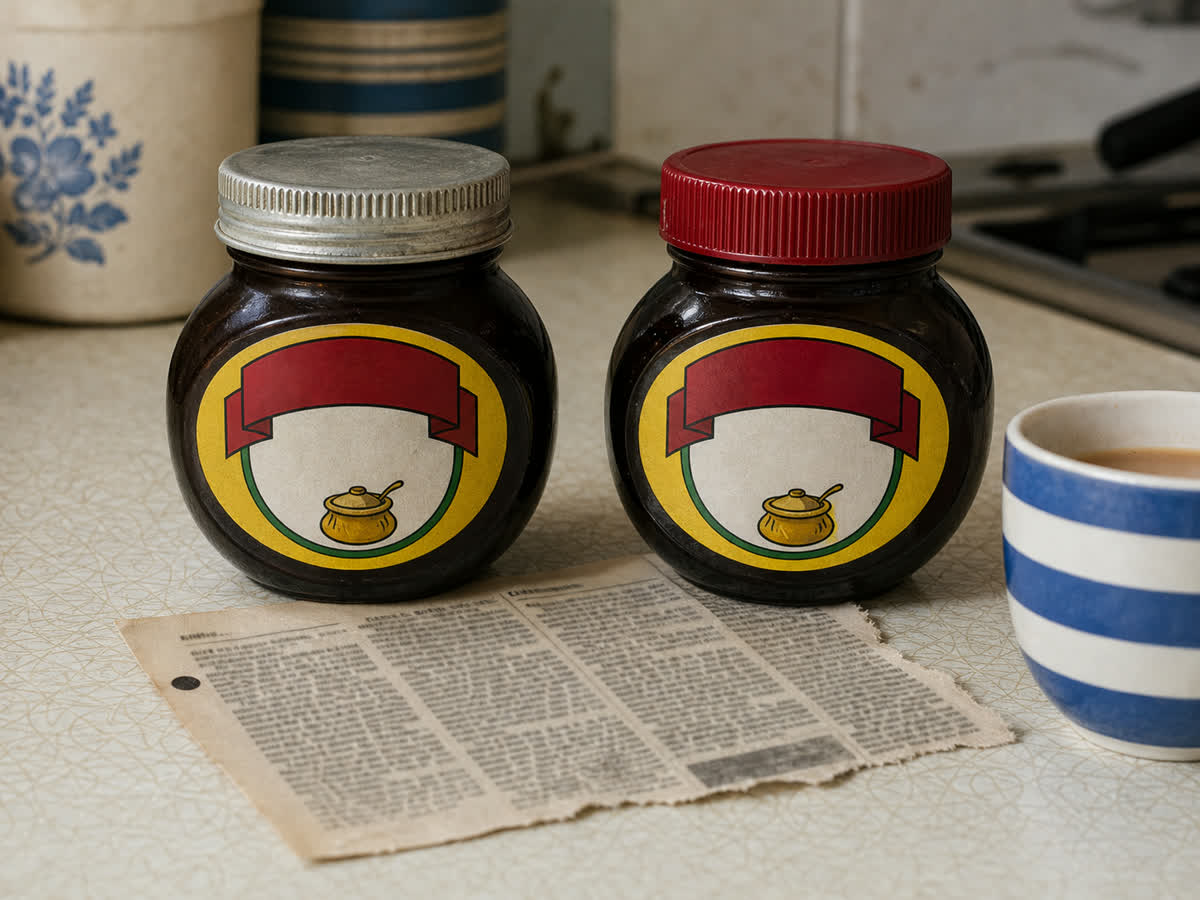
For most of its history, Marmite came with a metal screw-top lid. The lid was satisfying. It made the right sound when you opened the jar. It had heft. It felt durable, in the way that midcentury British packaging often did, and it suggested that the contents were a serious product.
This was the lid for, give or take, the first eighty years of Marmite’s existence.
The change
In 1984, in a quiet exercise of cost optimisation, Marmite switched from metal to plastic lids. The new lid was lighter. Easier to manufacture. Cheaper. Slightly more resistant to corrosion from the salty contents. From a packaging-engineering perspective, the change was sensible and overdue.
From the perspective of the British Marmite consumer, the change was an outrage.
The outcry
The letters pages of national newspapers in late 1984 carried a small but vigorous correspondence on the lid question. Devoted Marmite consumers wrote in to express their dismay. The plastic lid was not the same. It did not feel right. It did not make the right sound. It was, in a small way that nevertheless mattered, a betrayal of tradition.
Some of the letters were straightforwardly cross. Some were comic. The funniest were the ones that took the change with mock-grand seriousness, comparing it to other 1984-specific cultural catastrophes (the year was, of course, peak Orwell-anniversary, peak Thatcher, peak miners’ strike). A change of jar lid was a small thing to add to that list, but the Marmite faithful added it anyway.
Unilever, who were the manufacturer at that point, did not reverse the decision. The plastic lid stayed. The metal lid did not come back.
Why it mattered
This is, on the surface, a very silly story. People wrote to The Times because their condiment had a different lid. Easy to mock.
But it is also a useful piece of evidence for how the British Marmite consumer base operates. There is no other comparable food product in Britain whose customers would have written letters to the national press about a lid change. Heinz could have swapped the colour of their ketchup-bottle lid and nobody would have noticed. The Marmite community noticed within a week and wrote letters within a month.
This is the same community that, twenty-six years later, would happily apply for Marmarati membership (see the Marmarati), and forty years later would still be defending its preferred packaging through social media campaigns when the squeezy bottle was discontinued (see the squeezy comeback). The fan base is unusually engaged with the small details of the product, and the brand has, to its credit, mostly learned to listen.
The lid today
The lid in 2025 is still plastic. It is now the original yellow-and-black plastic that anyone under fifty thinks of as the proper Marmite lid. The 1984 plastic lid was a deeper yellow, slightly textured. It softened to the current modern lid over the next decade.
Almost nobody under sixty now remembers the metal one. The few people who do are now in their seventies or eighties and quietly maintain that the metal lid was better. They may even be right. The change was made for cost reasons and not for quality reasons, and packaging changes made for cost reasons usually are slightly inferior to the things they replaced.
But the plastic lid is what we have, the world has moved on, and the Marmite community has, mostly, accepted it. Just please do not change it again.
Source: Marmite Museum; the Times letters archive, October-December 1984.