
A slogan from 1996 that the internet adopted
Bartle Bogle Hegarty wrote “Love it or hate it” for Marmite in 1996. Twenty-nine years later, half the internet is still using it. That is the kind of longevity ad agencies dream of and almost never achieve.
The reason it travelled is that it does not actually sell Marmite. It describes a kind of opinion. Once you have a phrase that captures a feeling neatly, the phrase escapes the brand and goes off to do work elsewhere. So “a bit Marmite” gets applied to films, footballers, prime ministers, restaurants, fonts, sitcom characters, weather, modern architecture, and, on one memorable occasion, Will Smith.
The meme formats
There are roughly four recurring Marmite meme shapes that turn up on social media in some form most weeks:
The first is the “I am Marmite” confessional, mostly from comedians, musicians and the occasional pop star, accepting that they are not for everyone and embracing it. Lily Allen did this in 2007 and the format has been borrowed ever since.
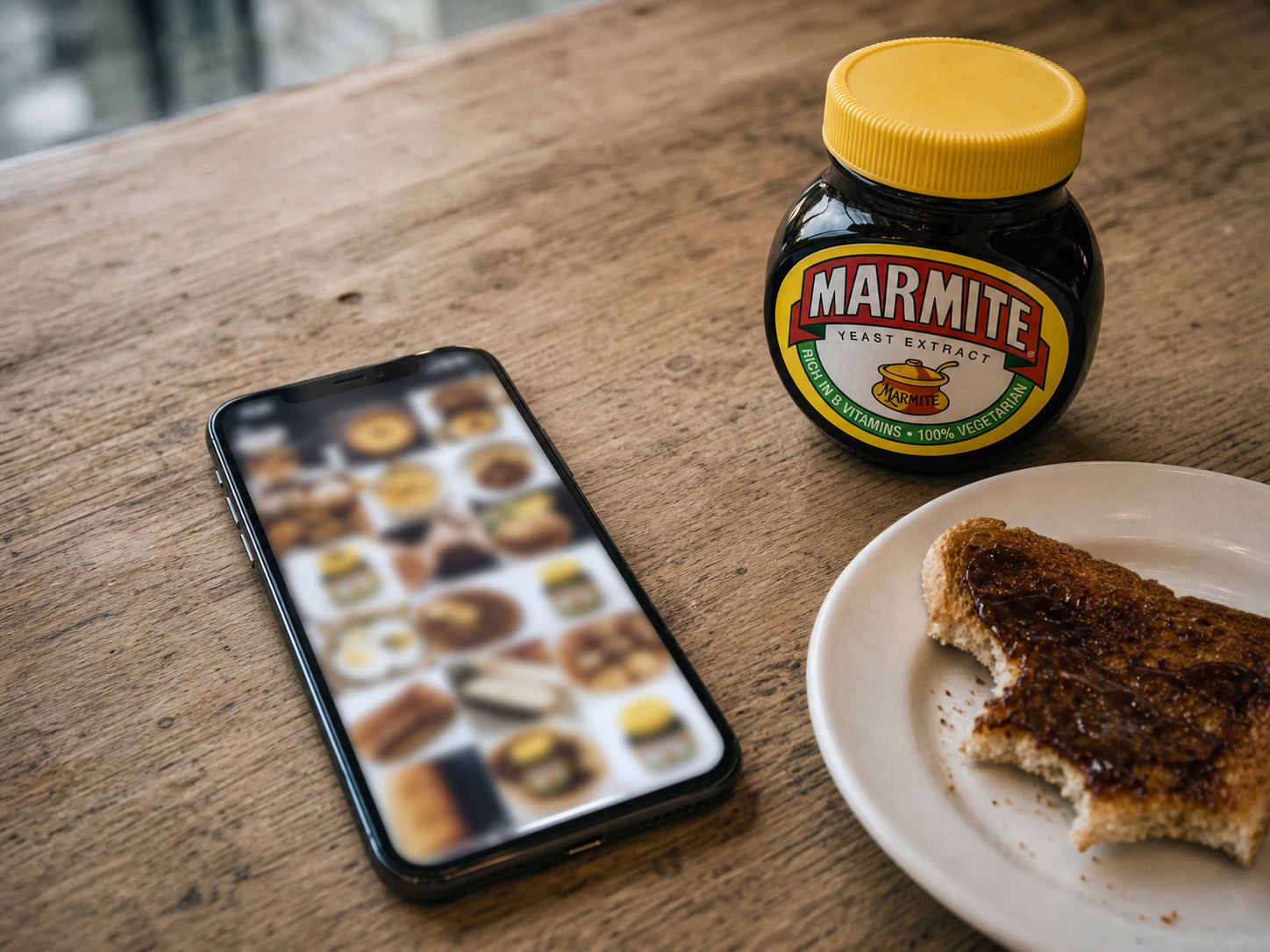
The second is the toast photograph, posted with deliberate provocation: someone scraping Marmite on so thickly that the slice is almost black, captioned to enrage the haters; or alternatively someone applying a transparently thin smear, captioned to enrage the lovers. Either side will rise to the bait.
The third is the cultural-comparison meme: “X is a bit Marmite”, where X is anything from a Christopher Nolan film to a particular type of jeans, by way of one or two politicians along the route. The format is so worn that it has wrapped around to being charming again.
The fourth, and probably the funniest, is the meme that mocks the meme. The “I have a controversial Marmite opinion” tweet, where the opinion turns out to be entirely banal. The joke is that Marmite has become such a meme that people parodically deploy it for opinions that are not divisive at all.
What the brand has done about it
To Unilever’s credit, mostly stayed out of it. The Marmite social accounts will occasionally lean into the joke, but they have largely allowed the internet to do its own thing. That is the right call. The fastest way to kill an organic meme is for the brand to start trying to participate in it. Marmite has resisted that temptation more than most.
The Hate Party will not be pleased to learn that the Love Party are winning the meme war by sheer volume. But that, again, is part of the joke.
Why this is a small marvel
Most advertising language is forgotten the day after the campaign ends. “Love it or hate it” survived because it described something the language did not have a word for, and once it was loose, people kept finding new uses for it. Twenty-nine years on, it is one of perhaps a dozen advertising lines from the modern era that has properly entered the public vocabulary.
Not bad for a jar that sells thirty million units a year on the back of one good sentence.