
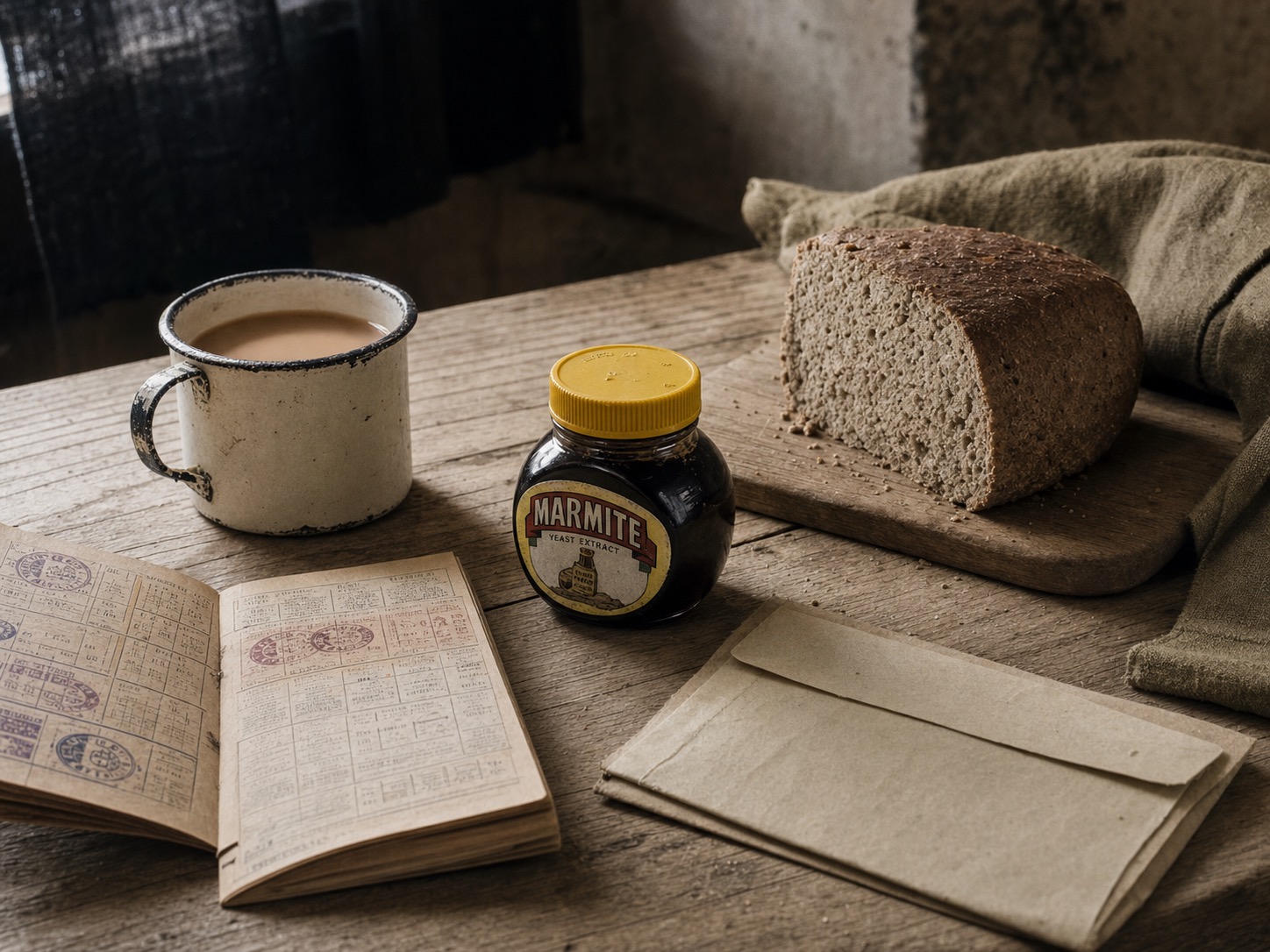
The army issued it
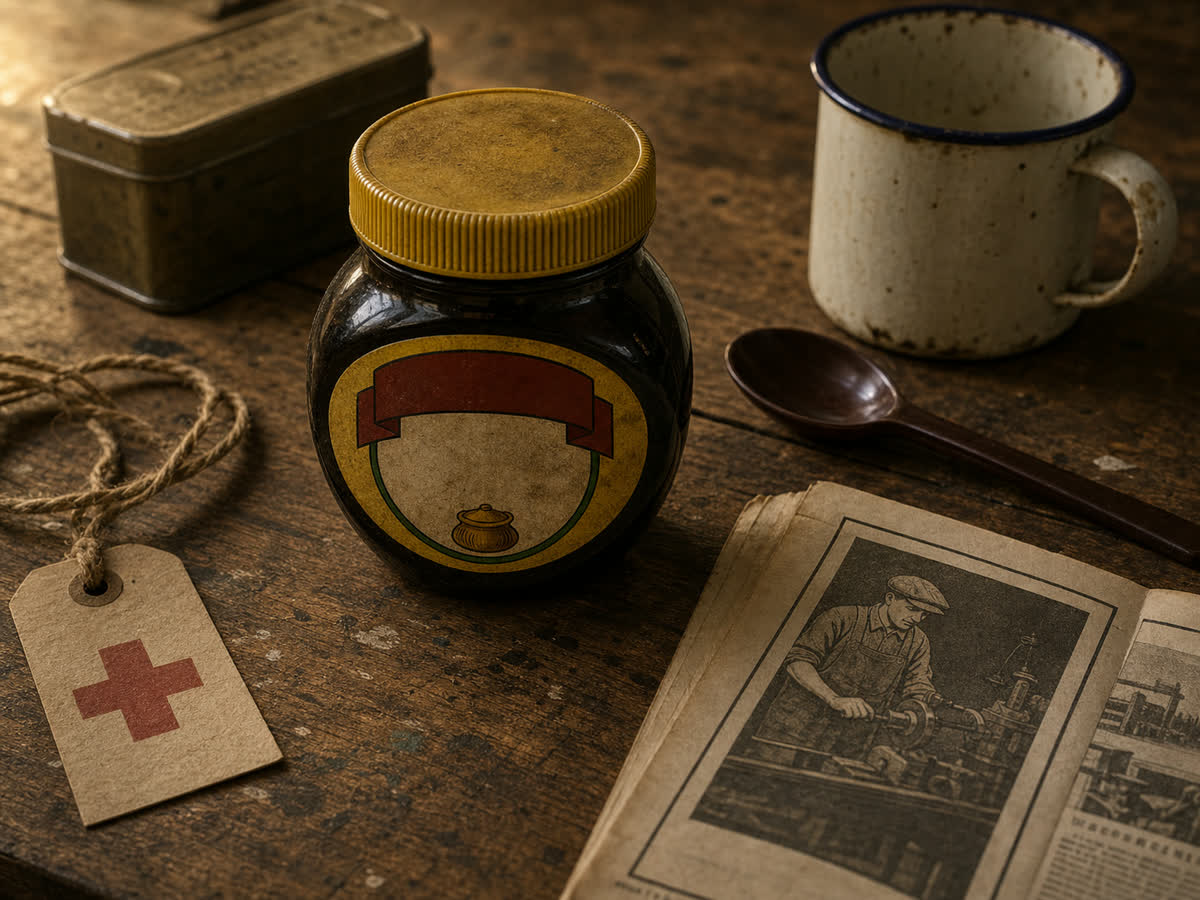
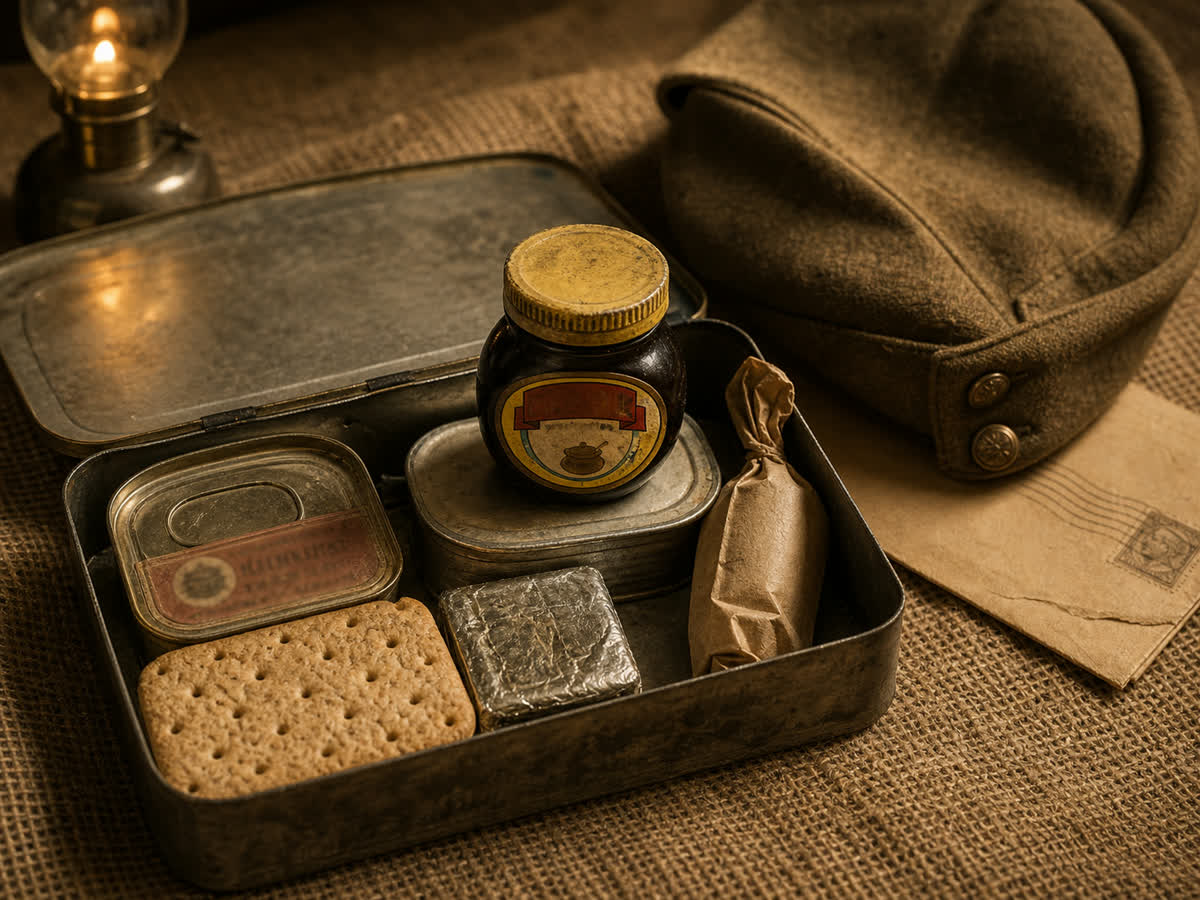
Marmite spent both World Wars in British army ration tins. Not as a luxury, as a piece of medicine. A teaspoon of yeast extract carries a real dose of B vitamins, and B vitamins, specifically thiamine (B1), are what stop you developing beriberi when your diet is mostly biscuit, tinned meat, and tea for months at a stretch.
The army quartermasters of the day were not romantic about it. They were trying to keep large numbers of young men upright. Marmite was cheap, kept indefinitely, took up almost no space in a ration tin, and prevented a nutritional disease that would otherwise have invalided people out at scale. That is the entire reason it was in there.
And the hospitals used it too
On the home front, civilian hospitals were running into the same problem at the other end of the scale: malnutrition in children, especially in deprived urban areas where the rationing was bearing down hard on already poor diets. Marmite turned up there as well, sometimes in solution, sometimes spread thin on whatever bread the ward could get hold of. The doctors of the period wrote up cases of children recovering on a regime that included regular Marmite, and the spread was promoted in maternity and infant care guidance through both wars.
This is not the brand reading too much into its own history. There are real ration cards, real War Office documents, and real medical papers behind it. Marmite was one of a small handful of British food products that had a documented public health role in wartime, alongside cod liver oil and the orange juice concentrate that fuelled a generation of post-war babies.
The other half: morale
The official line was the vitamins. The unofficial line was that a tin of stew with a teaspoon of Marmite stirred in tastes like a real dinner instead of a punishment. Recipe pamphlets of the period are full of “stretch your rations” tricks built around Marmite, the same way recipe pamphlets of our own period are full of “stretch your shopping” tricks built around tomato puree. Cheap, intense, savoury, and a little goes a long way. Wartime cooks worked out the same things home cooks work out now.
Why this is worth remembering
The wartime story is the reason there is so much loyalty to the jar in older British households. People grew up on a product the state was actively recommending, the army was actively issuing, and their mother was actively rationing the spoonful of for everyone at the breakfast table. That is the sort of thing that builds a lifetime habit.
Most heritage-brand stories are advertising-led nonsense. This one is not. Marmite genuinely was a piece of Britain’s wartime health infrastructure. It just happens also to be quite good on toast.
Sources: Imperial War Museums; War Office ration records; period medical literature on infant nutrition; Wikipedia on Marmite history.