

The cheat code
If you have made a vegetarian soup that tasted thin, the answer was almost certainly a teaspoon of Marmite stirred in towards the end.
Marmite is a concentrated lump of glutamates, the savoury compounds that give meat stock its meatiness. A small amount, dissolved in hot broth, gives a vegetarian or vegan soup the long savoury back-note that it otherwise has to work very hard to develop. It is the single most useful thing you can do to a winter soup that is not quite singing.
Where it works best
French onion soup is the most obvious one. The classic recipe relies on a strong beef stock for its dark depth. A vegetarian version made with vegetable stock plus a teaspoon of Marmite, stirred in five minutes before serving, holds its own against any beef-based version. Top with a sourdough crouton and a slice of Gruyère under the grill.
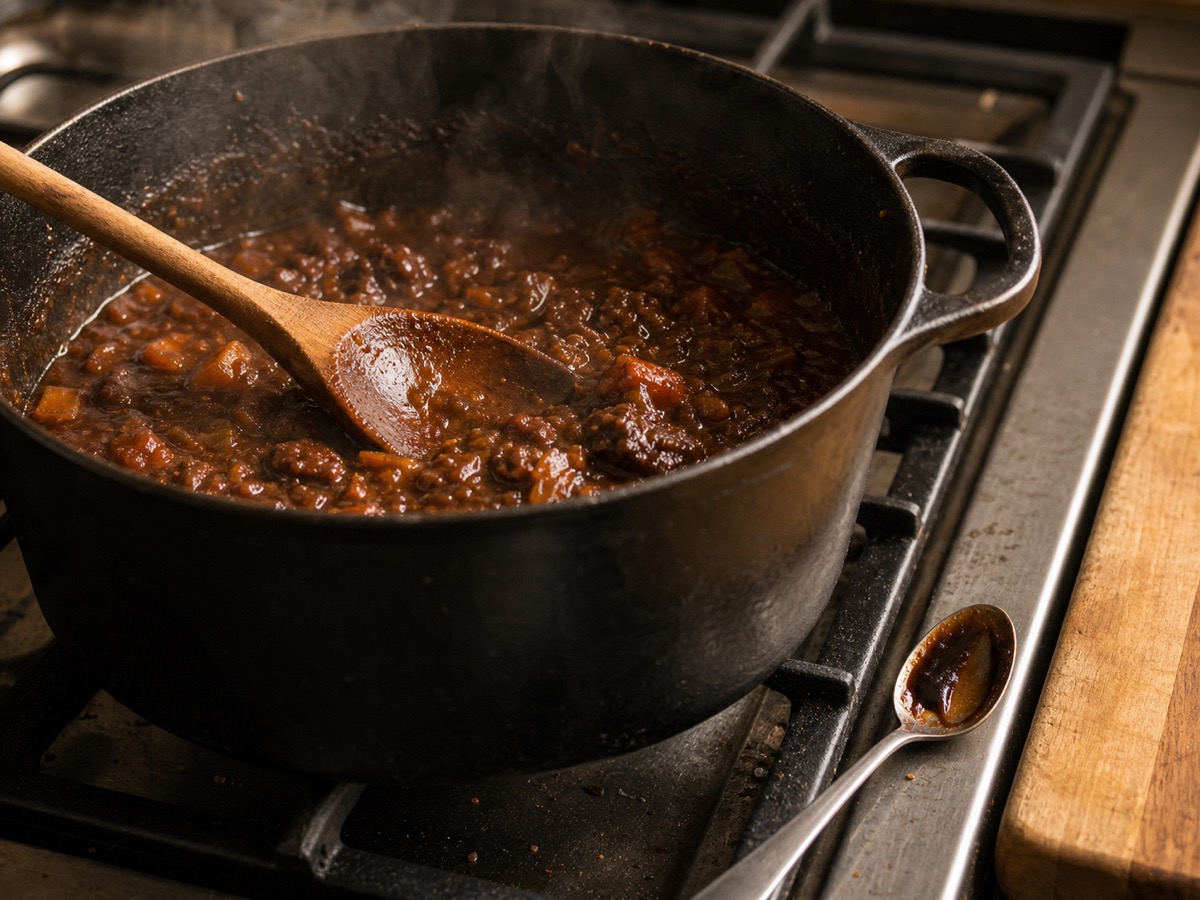
Lentil soup is the next one. Lentils are filling but flavour-quiet. A teaspoon of Marmite stirred into a pot of green lentil soup with carrots and celery turns it from “fine” to “the soup I will actually want again tomorrow”.
Cauliflower and cheddar soup is the third. The Marmite anchors the cheese flavour and stops the cauliflower tasting like cauliflower water. A few Marmite-buttered croutons on top, properly excellent.
Mushroom and potato soup, ditto. Anywhere you have an earthy vegetable that needs a longer back-of-the-tongue note than the vegetable can deliver on its own.
Where it does not work
Light, fresh, summery soups. Gazpacho. Cold cucumber soup. Anything where the brief is “bright and clean”. Marmite will weigh those down and ruin them. Save it for the heavier, autumn-and-winter end of the soup spectrum.
The dose
A teaspoon for a pot of soup that serves four. Half a teaspoon if you have not done this before and you want to feel your way in. Stir it into a ladleful of hot broth first to dissolve, then back into the pot. Taste, then add a touch more salt if needed (the Marmite will already have done some of the salting work).
That is the whole technique.