
The teaspoon trick
If you only eat Marmite on toast, you are using maybe a tenth of what the jar can do. The teaspoon trick is this: a small amount, stirred into something else, gives that other thing the long savoury back-note that a stock cube and a teaspoon of soy sauce together cannot quite manage. Once you have noticed it, you start finding places to put it.
What follows is the comfort-food repertoire, in roughly the order I cook them through a winter. Not in priority order, just in the order they happen.
Macaroni cheese
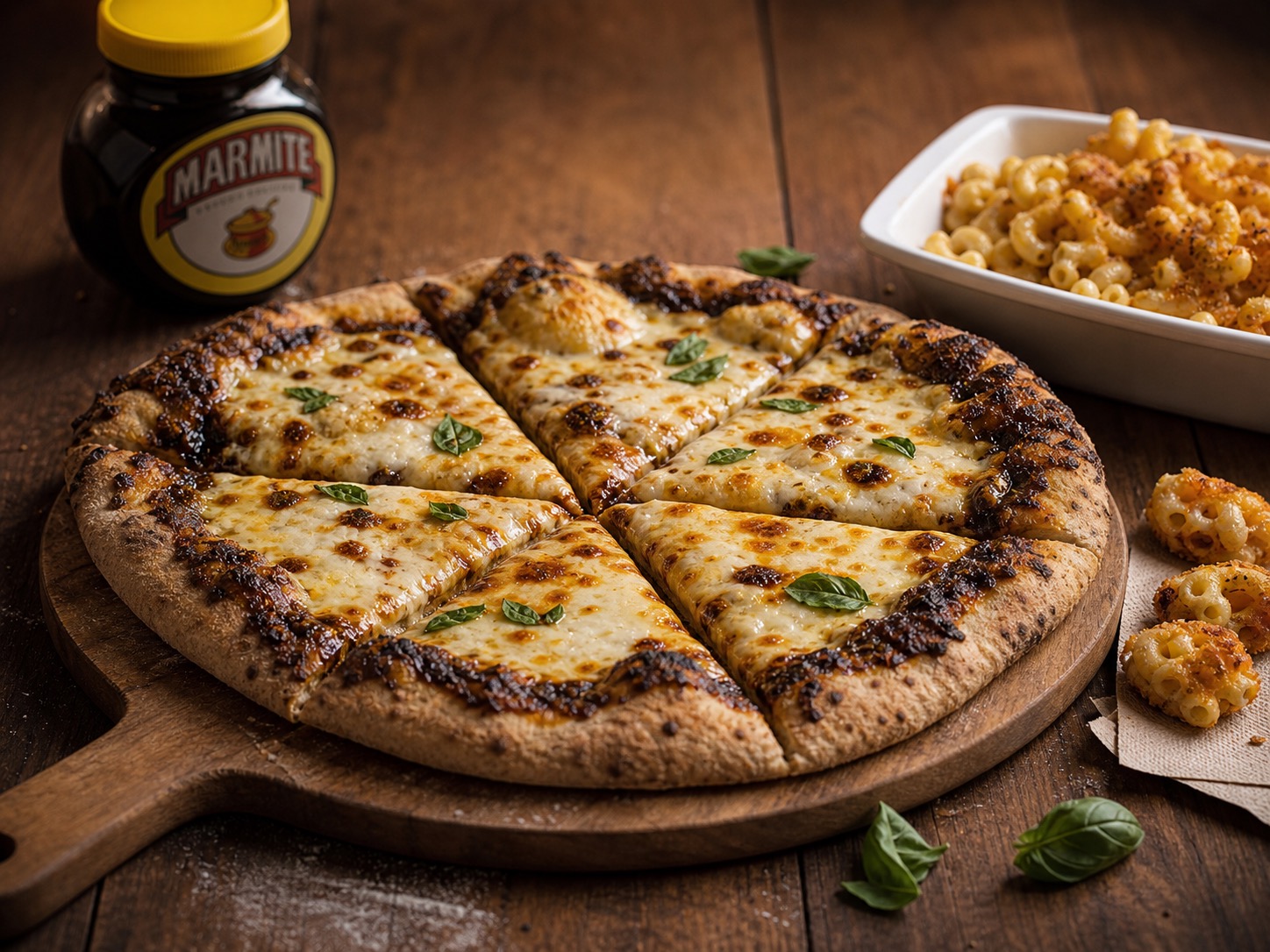
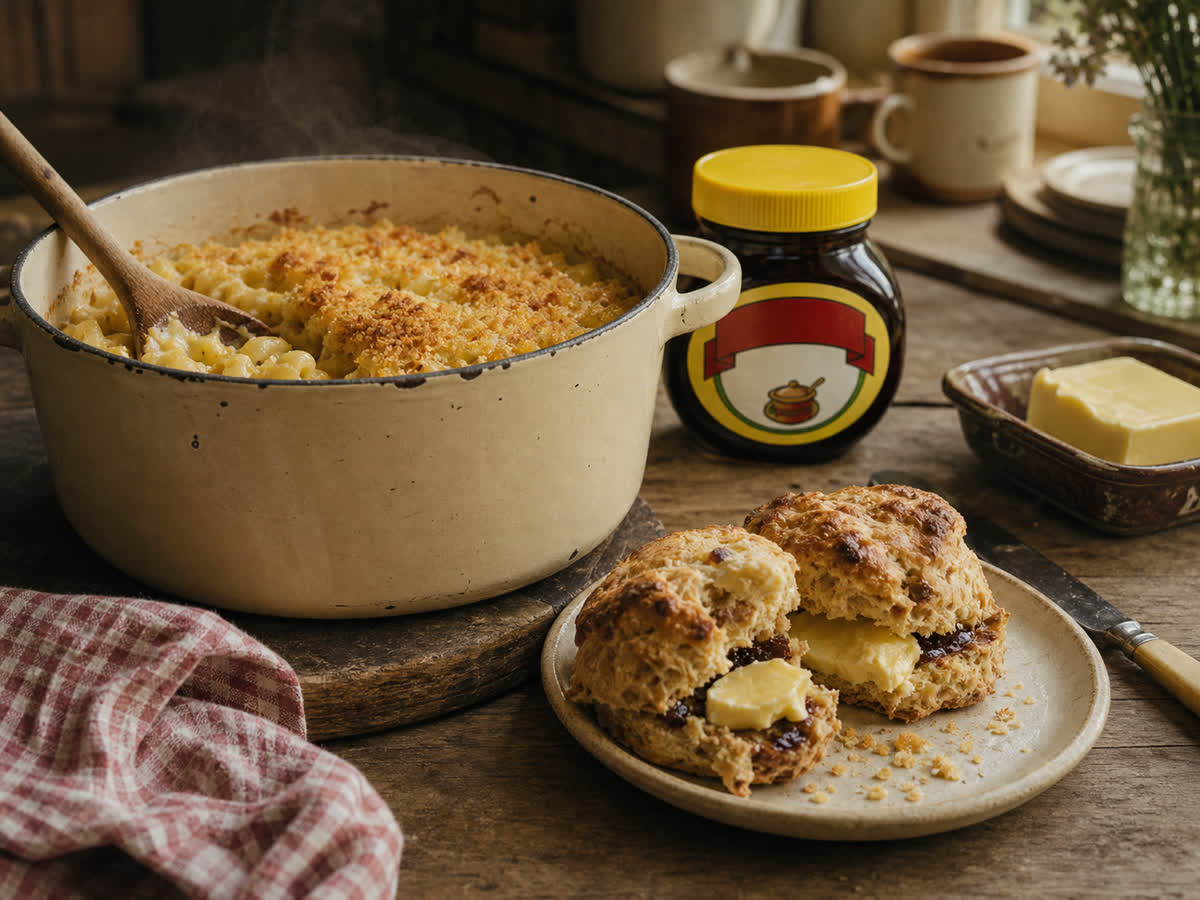
This is the obvious one. A teaspoon of Marmite stirred into the cheese sauce before the macaroni goes in. The Marmite disappears into the cheese, the resulting sauce reads as a deeper, longer, more grown-up cheese sauce. It does not taste of Marmite. It tastes more of cheese.
If you want to push it, stir a little extra Marmite into a few tablespoons of melted butter and toss the breadcrumb topping in it before baking. Properly transformative.
Three-onion soup
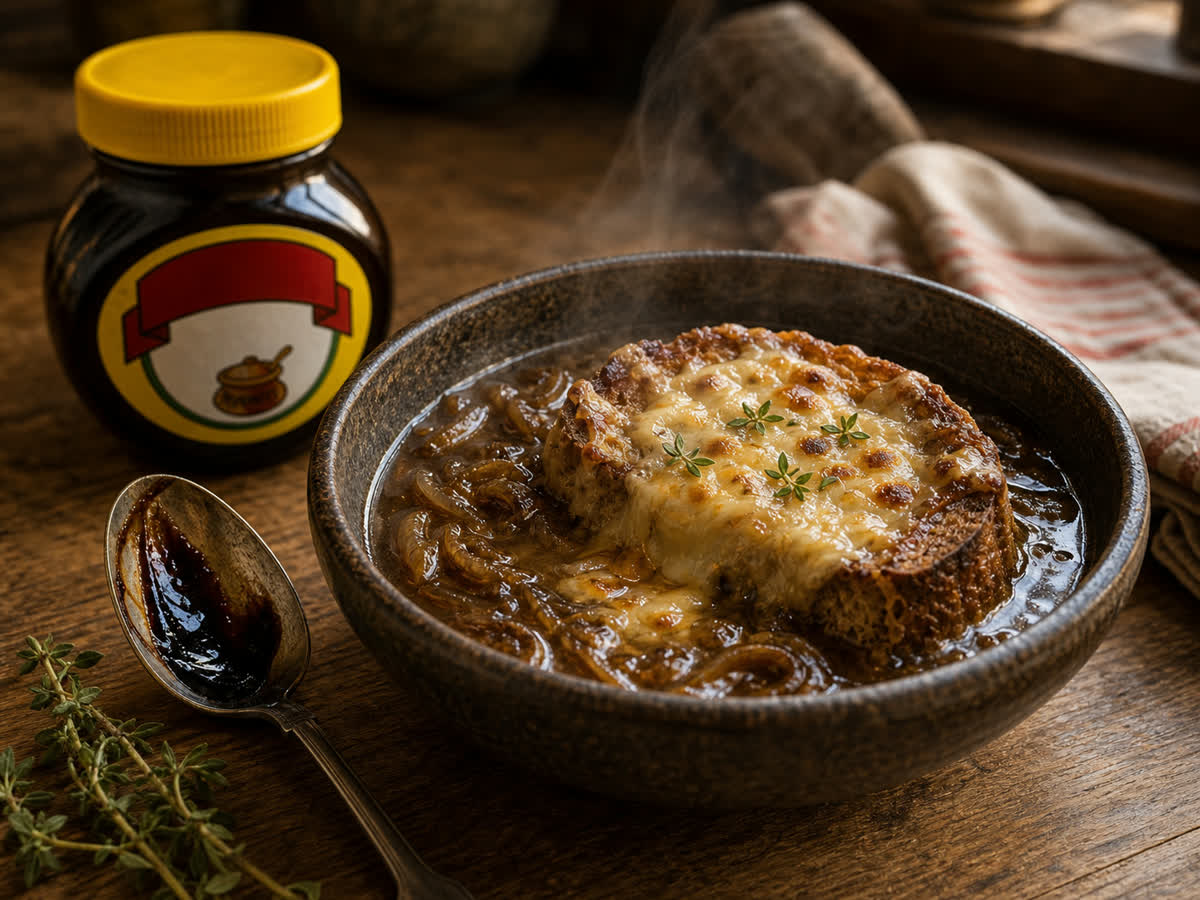
French onion soup made with three different onions (regular yellow, red, and shallot, slowly caramelised) is one of the best winter dinners. A teaspoon of Marmite stirred in towards the end, with a splash of madeira if you have it, replaces the dark beef-stock backbone that most onion soup recipes call for. Stilton or Gruyère on the crouton on top, under the grill. Done.
Cheese and Marmite scones
This is the one I make most often. A standard cheese scone recipe (self-raising flour, butter, grated cheddar, milk, salt) with two teaspoons of Marmite worked into the dough before the milk goes in. Bake hot, eat warm with more butter.
These are slightly miraculous. The Marmite flavour is barely there as Marmite but the savoury depth is exactly what cheese scones need to stop being a bit one-note. Half the people you serve them to will ask what is in them. The other half will assume you bought them.
Spaghetti with Marmite and butter
Nigella’s recipe, basically. Boil spaghetti. Drain, retaining a cup of pasta water. Melt a big knob of butter into the pan with a teaspoon of Marmite, splash in some of the pasta water to loosen. Toss the spaghetti through. Parmesan over the top.
Five minutes from start to dinner. Cheap. Genuinely delicious. The plant-based version (vegan butter, no parmesan) is also excellent, see the vegan kitchen note for the vegan kitchen note.
Roast potatoes
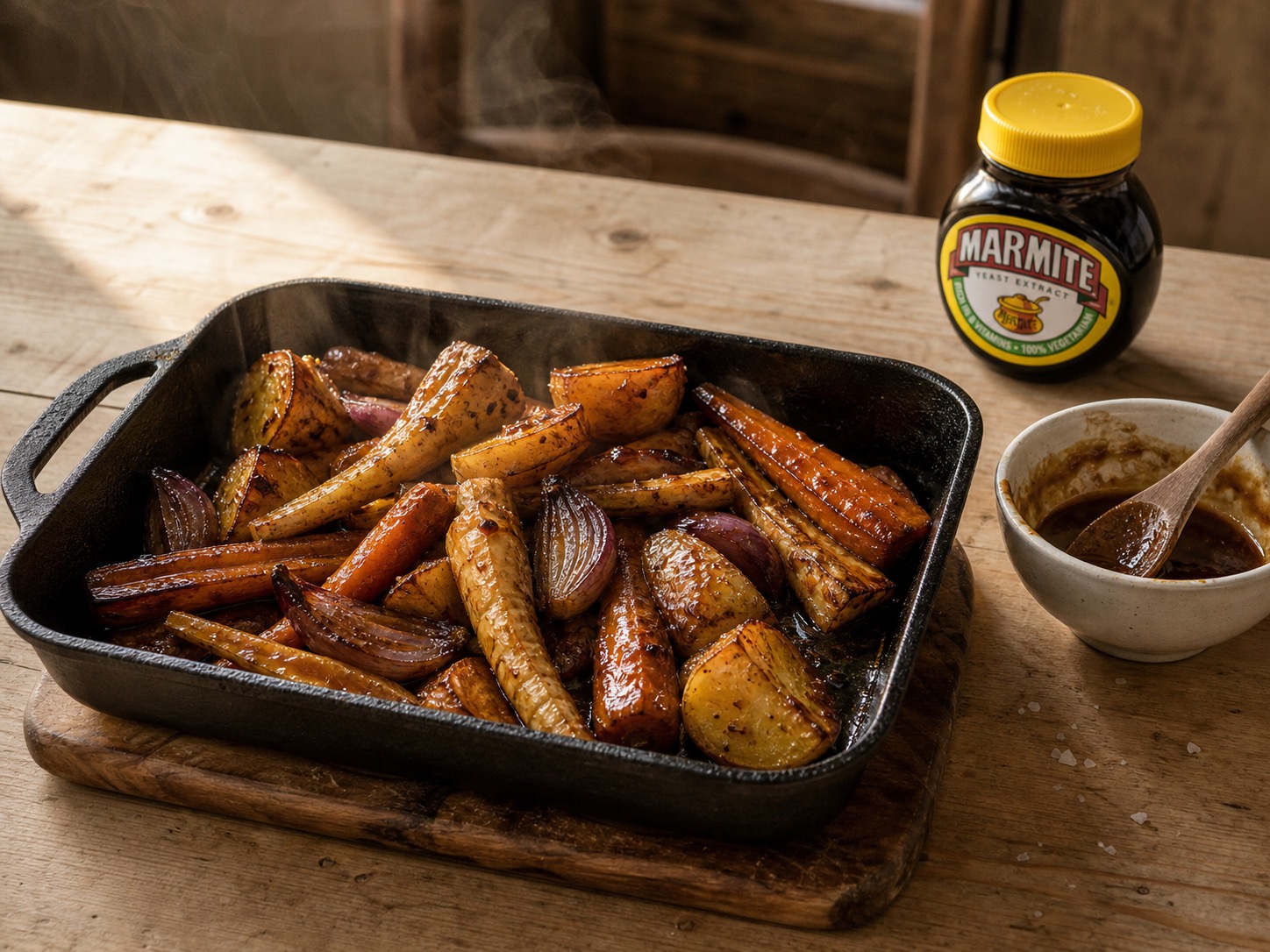
Brush par-boiled, oil-roughed potatoes with a teaspoon of Marmite dissolved in a tablespoon of melted butter for the last ten minutes of the roasting time. Crispier, glossier, deeper. Be careful with the timing because the Marmite will burn if it goes in too early. See the Marmite-glazed vegetables recipe for the proper full version of the technique.
Bubble and squeak
This is the one that surprised me. Bubble and squeak is leftover mash and leftover cabbage fried together until brown, eaten with the leftover gravy. A teaspoon of Marmite stirred through the mash before frying gives the whole dish a savoury anchor that I had not realised it was missing. Add bacon if you have it. Egg on top, runny yolk. Sunday morning, sorted.
Cheese, Marmite and bacon sausage rolls
For when you have made the dough and you are looking for the next-level filling. Pork sausagemeat, a tablespoon of Marmite worked through, crumbled streaky bacon, grated cheddar, fresh thyme. Roll into puff pastry, brush with egg, bake. They go very fast.
What this list is not
It is not a recipe collection. It is a permission slip. The point of all of these is that Marmite is a kitchen ingredient and the jar belongs near the salt and the soy sauce, not at the back of the spreads cupboard. Once it lives there, you start reaching for it without thinking about it, and the things you cook get gently better.
That, more or less, is the whole comfort-food argument. The toast is wonderful. The toast is not the limit.
Source: my kitchen; delicious magazine collected Marmite recipes; Nigella.