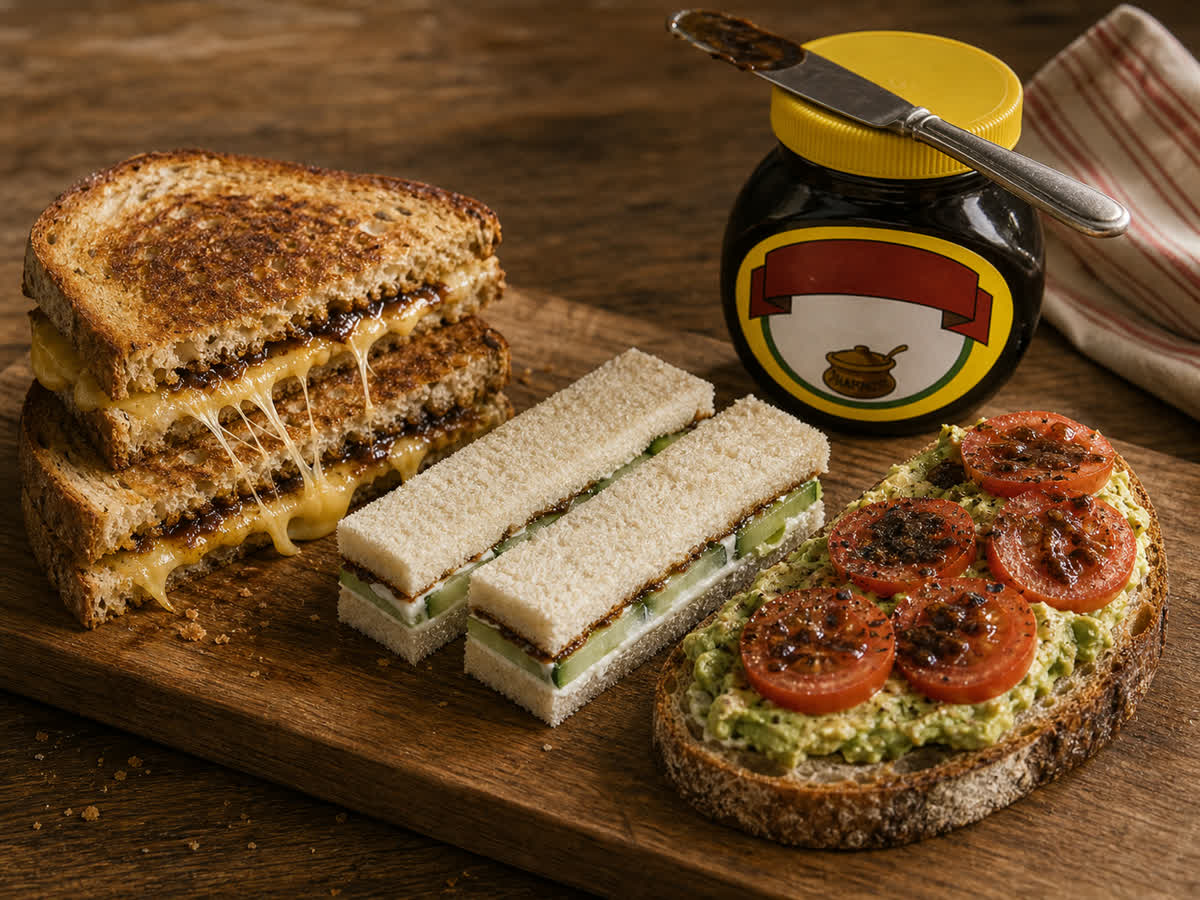

The vinaigrette
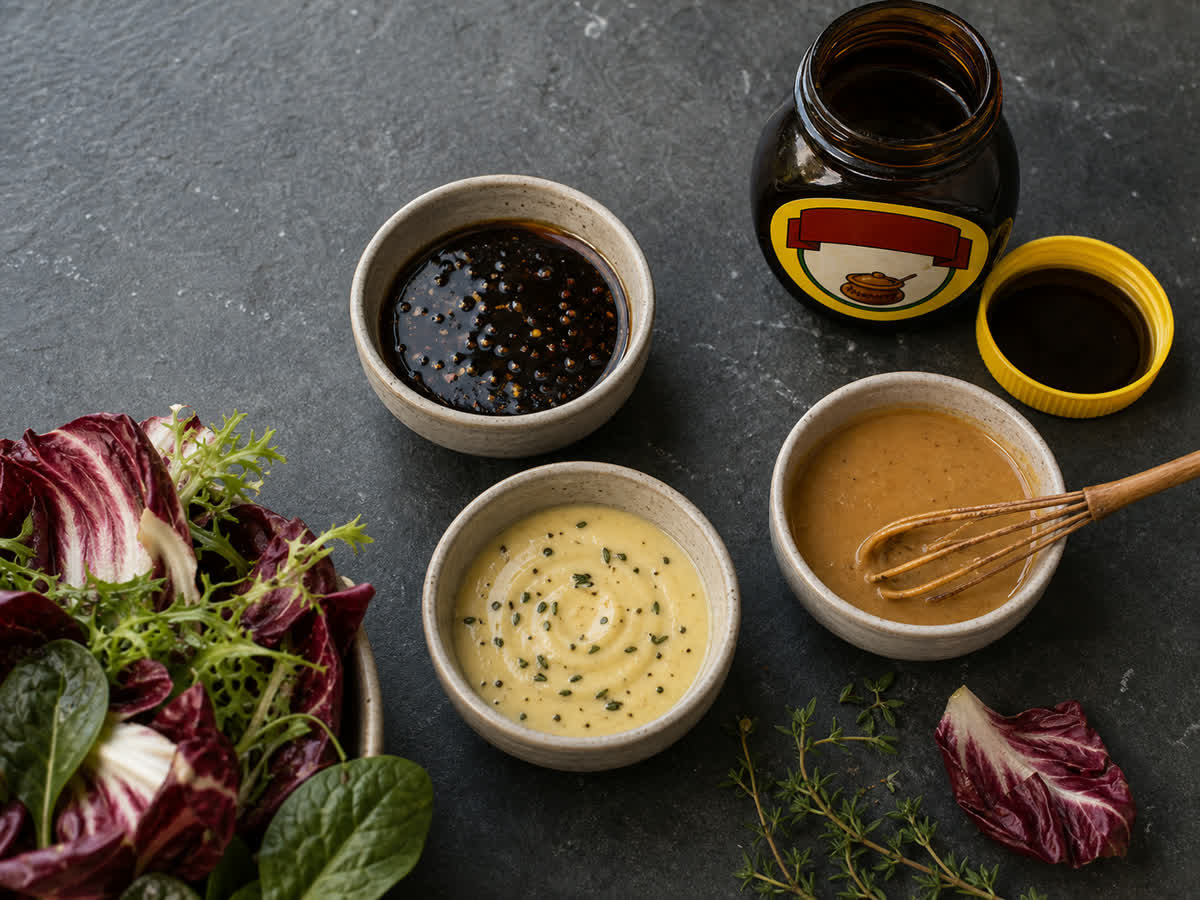
This is the one that surprises people. A teaspoon of Marmite, dissolved in a tablespoon of hot water, whisked together with two tablespoons of olive oil, one tablespoon of white wine vinegar, and a teaspoon of Dijon mustard. Salt, pepper.
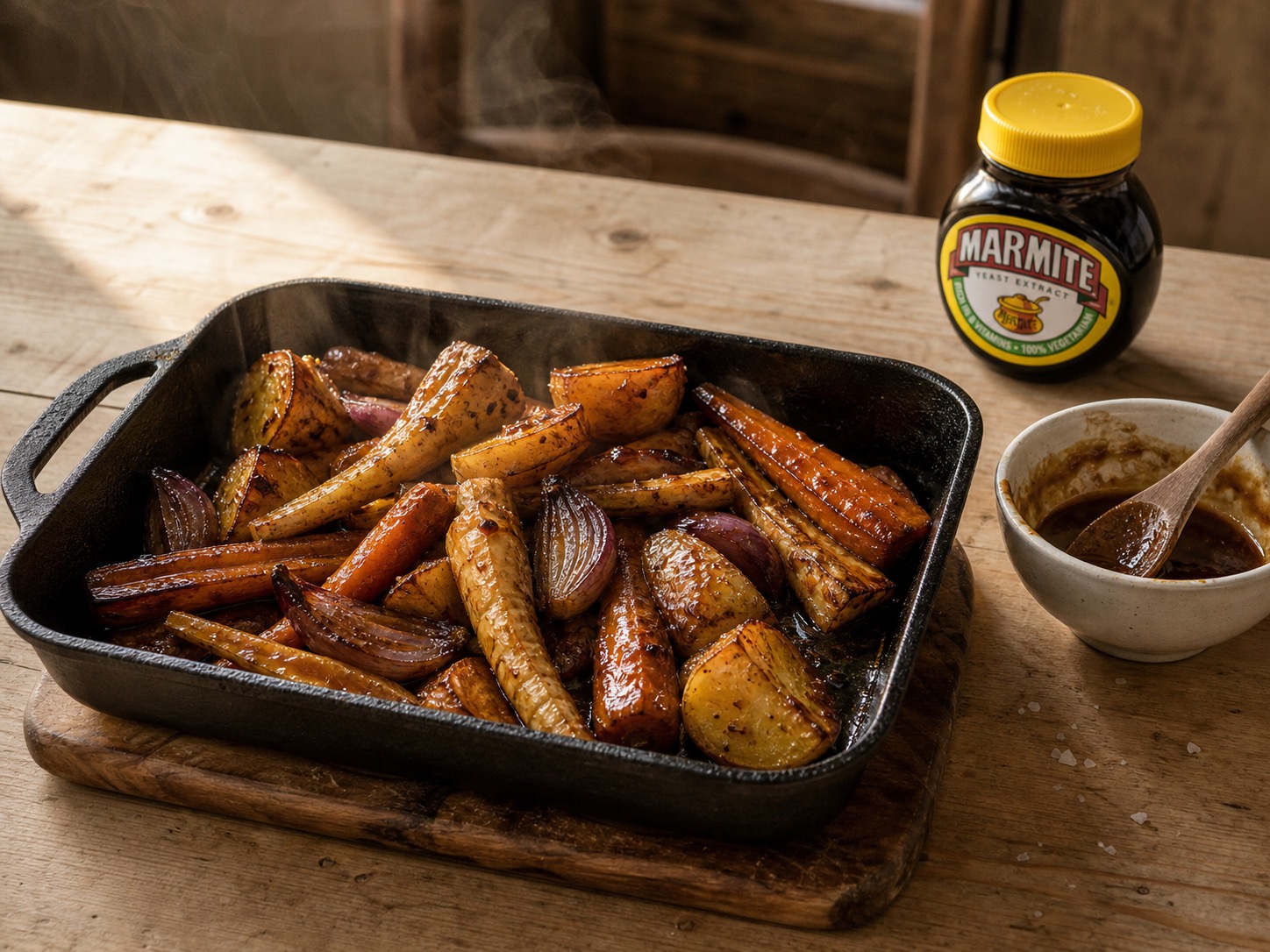
Use it on a green salad, a grain bowl, roasted vegetables, any robust salad that can take a heavier dressing. The Marmite gives it a savoury depth that ordinary vinaigrette never quite achieves. Particularly good over hot roasted vegetables (it almost glazes them as it hits the heat) and over a salad of bitter leaves like chicory or radicchio.
This is the single most useful Marmite trick if you eat a lot of salad.
The pasta water sauce
A knob of butter melted with a teaspoon of Marmite in a hot pan, a splash of pasta water added to loosen, a generous handful of just-drained spaghetti tossed through, parmesan on top. Nigella did this years ago and is right.
Five minutes. Cheap. Surprisingly good. The Marmite reads as deeply savoury parmesan, not as Marmite. Anyone who has not been told what is in it will not guess.
The cheese sauce upgrade
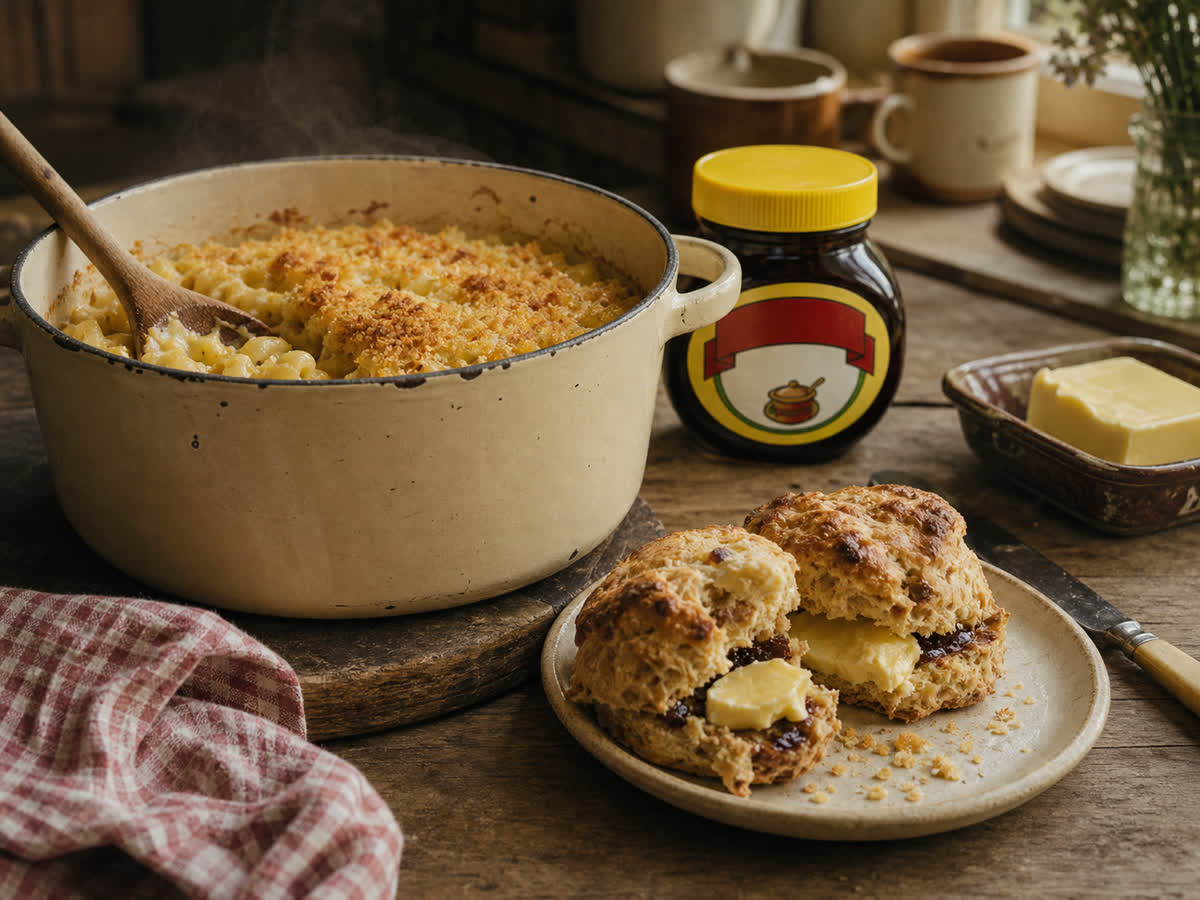
Standard cheese sauce is butter, flour, milk, grated cheese, mustard, salt. Add a teaspoon of Marmite to the milk before you make the roux, and the resulting cheese sauce is markedly better. Deeper, more rounded, longer on the tongue.
Use it on macaroni cheese, cauliflower cheese, leek-and-potato bakes, anything that involves pouring a cheese sauce over a starch and baking it under a top of breadcrumbs. The Marmite makes the dish taste like a slightly better version of itself.
The miso-Marmite dressing
For grain bowls and grilled halloumi. A teaspoon of Marmite, a teaspoon of white miso, a tablespoon of rice vinegar, two tablespoons of sesame oil, a teaspoon of honey, a grated clove of garlic. Whisk together. Drizzle.
This is the slightly fancier Marmite dressing if you are eating something that wants more depth than the basic vinaigrette can provide. Particularly good on grilled aubergine.
The bread sauce twist
A teaspoon of Marmite stirred into a classic bread sauce alongside the cloves and the bay leaf. Particularly good with roast chicken or roast turkey. Adds the savoury anchor that bread sauce can sometimes lack.
A small intervention, a big improvement.
The dose
A teaspoon, in almost every case. The jar is a strong ingredient and the recipes above are calibrated around that. If you double the Marmite, you will tip the balance and the dish will taste of Marmite rather than of the dish it is supposed to be. Restraint is the trick.
The exception is the bread sauce, where you can probably get away with a teaspoon and a half if you are using it for a serious Christmas dinner.
That is the entire saucing repertoire. Add it to your kitchen.