
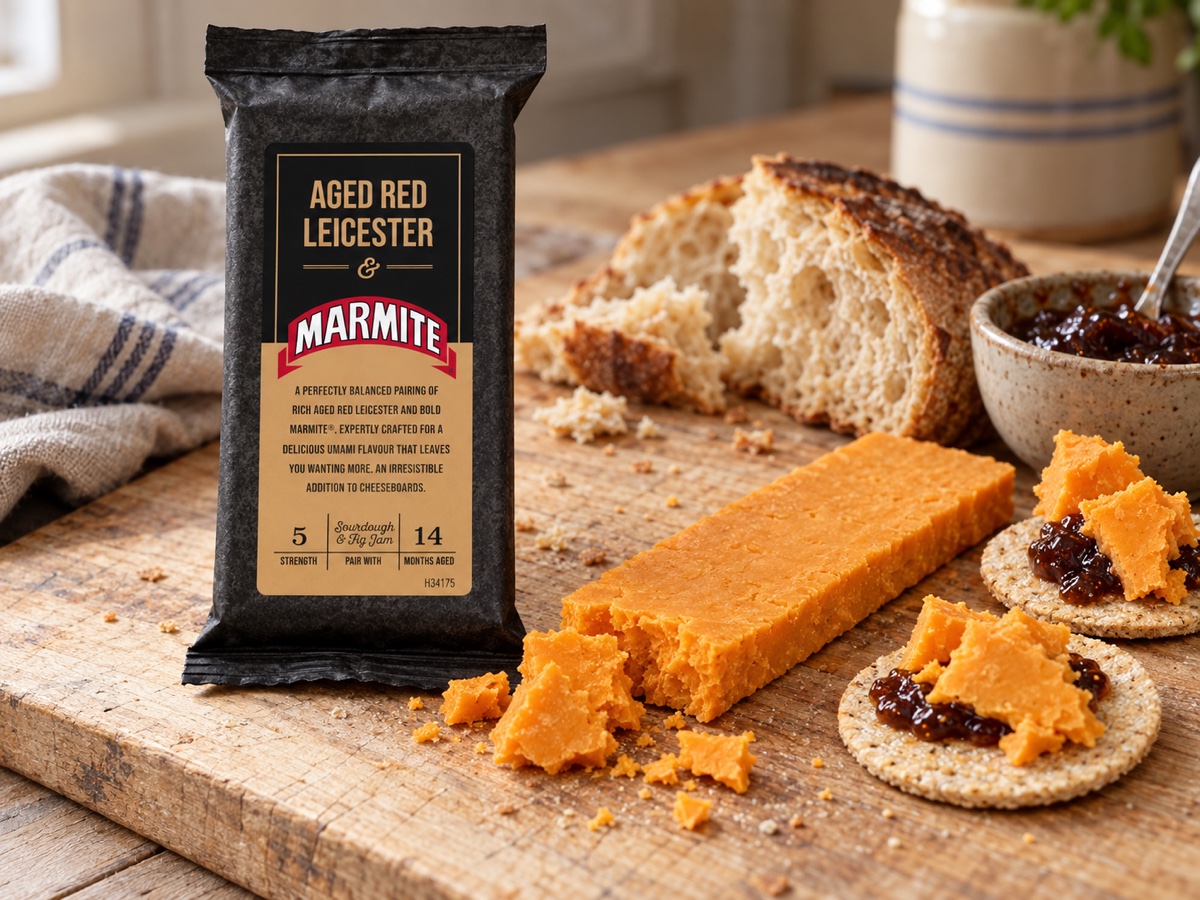
A 150g wedge of Aged Red Leicester and Marmite turned up in my local supermarket: £3, exclusive to Tesco, made under licence by the Ilchester Cheese Co in Somerset. The pack says fourteen months aged and a strength rating of five, which is a braver choice of base than the mild Red Leicester I had assumed, and a more interesting one than the cheddar versions that came before it. The Tesco reviews average 4.5 stars with nothing between five and one, and they agree on one flaw that is not the flavour. Buy it now, work out whether you like it later.
Marmite Articles
Explore our collection of articles about Marmite, Britain's most divisive spread.
Showing articles tagged with: umami | View all articles

Why does Marmite taste like that? The science of the savoury hit
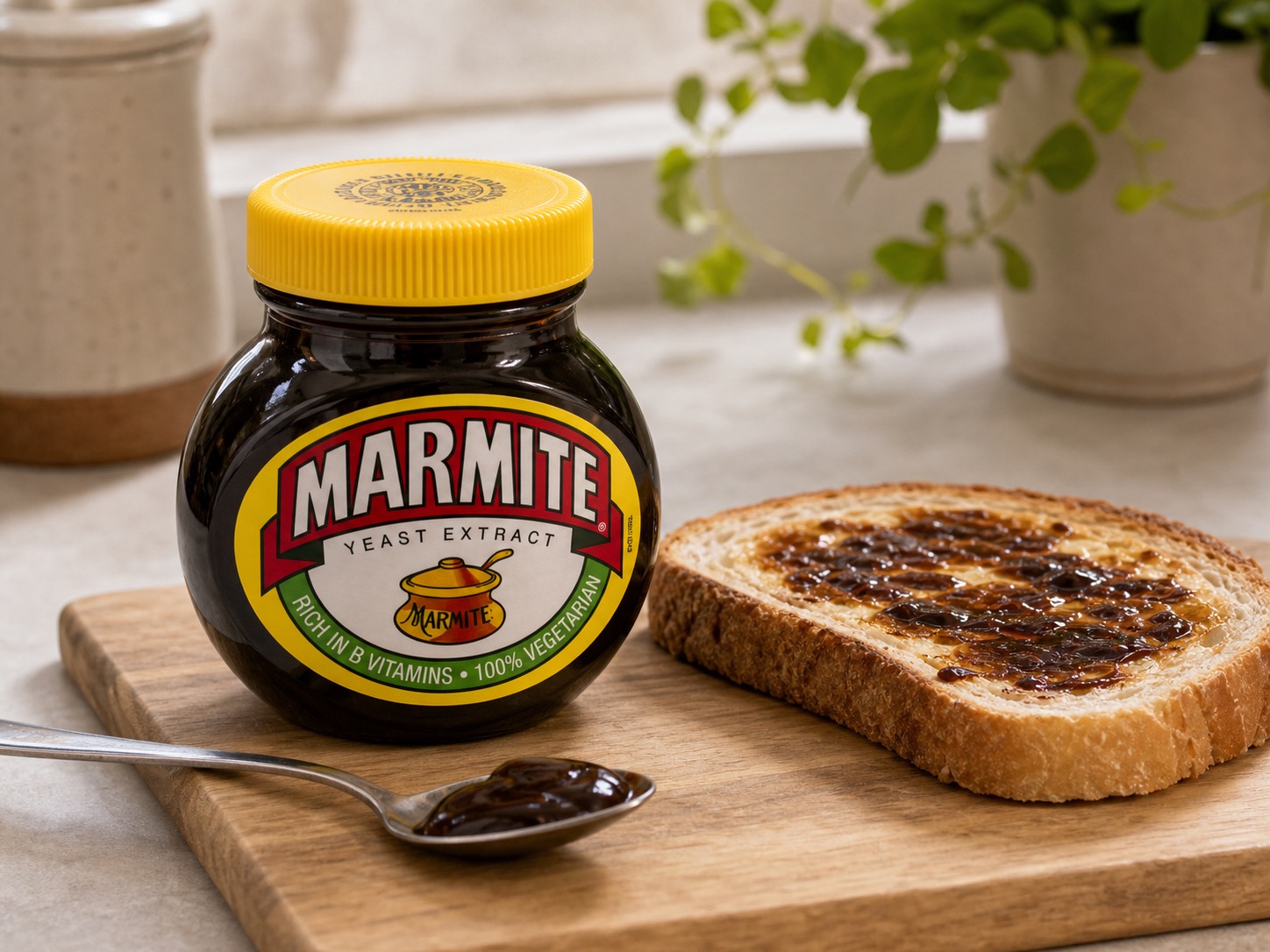
Marmite tastes the way it does because it is loaded with natural glutamates (the umami compounds), a lot of salt, and the dark, malty, slightly bitter notes from heating concentrated yeast. The intensity is the point, and it is why it divides people.
Marmite finally admits toast is dying
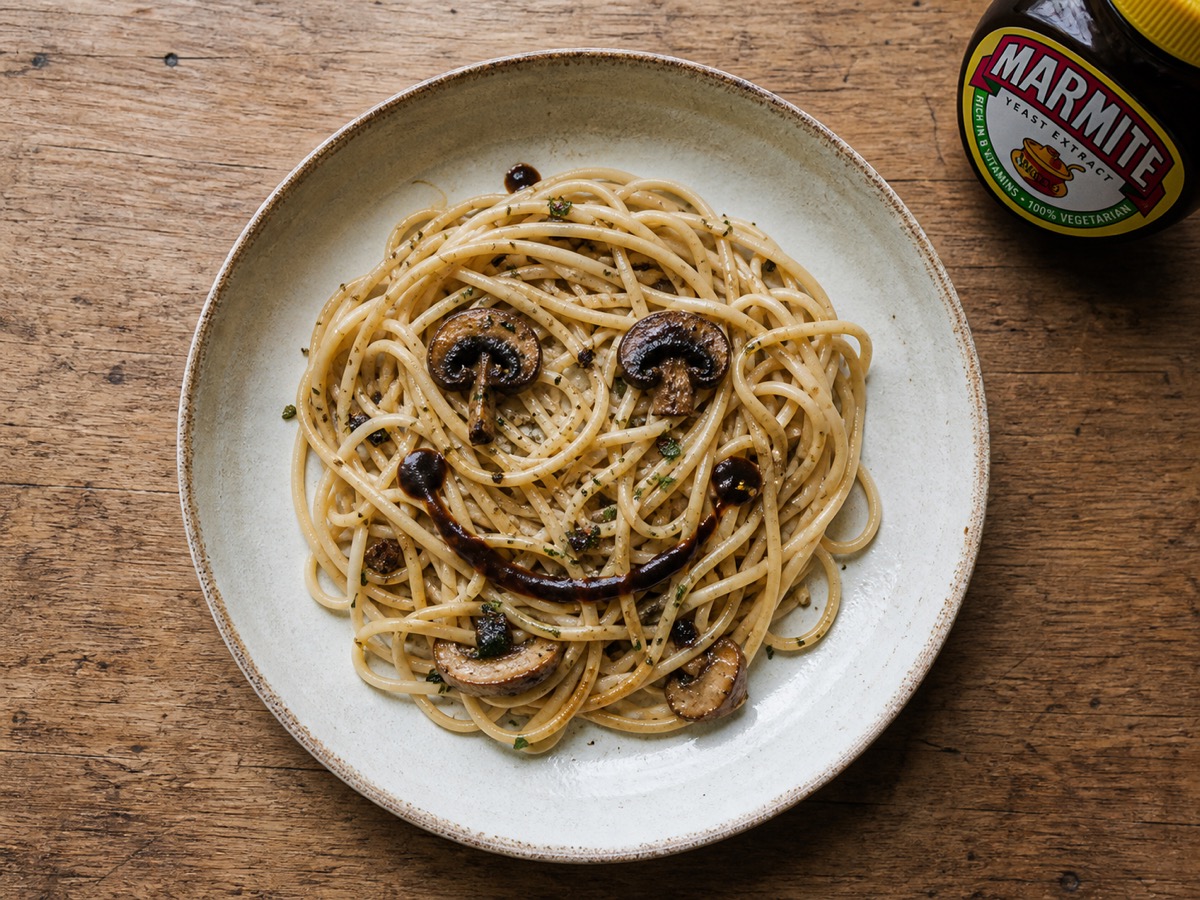
adam&eveDDB's new campaign quietly admits UK toast consumption is down 62 per cent and repositions Marmite as a cooking ingredient. Mostly successful.
Marmite substitute: what to use instead, for cooking and for toast
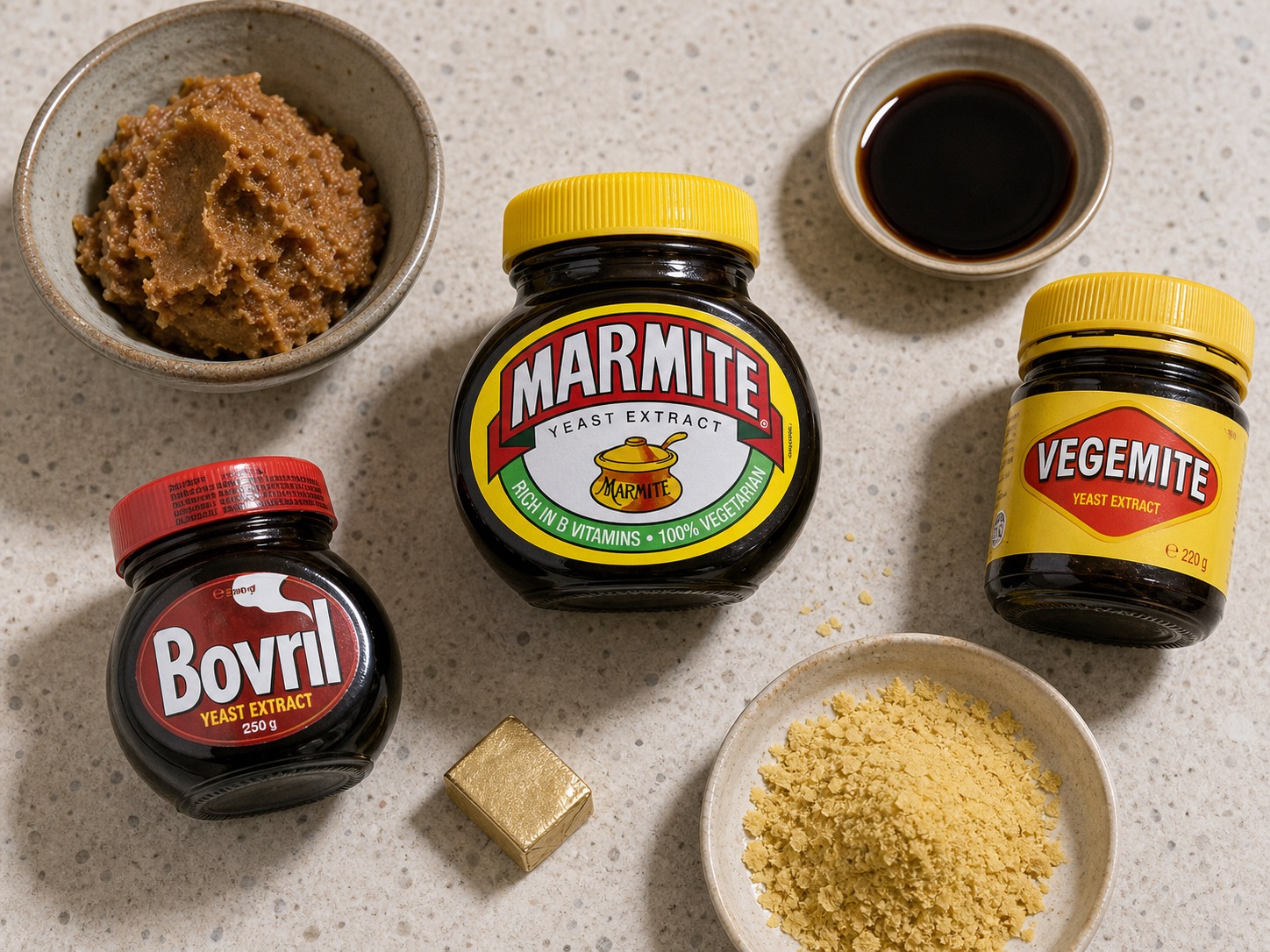
The best substitute for Marmite depends on the job. For savoury depth in cooking, Vegemite, another yeast extract, miso or soy sauce all work; for spreading on toast, only another yeast extract really does. The full list, quantities, and the trap to avoid.
The Marmite Bolognese that broke TikTok, written down properly
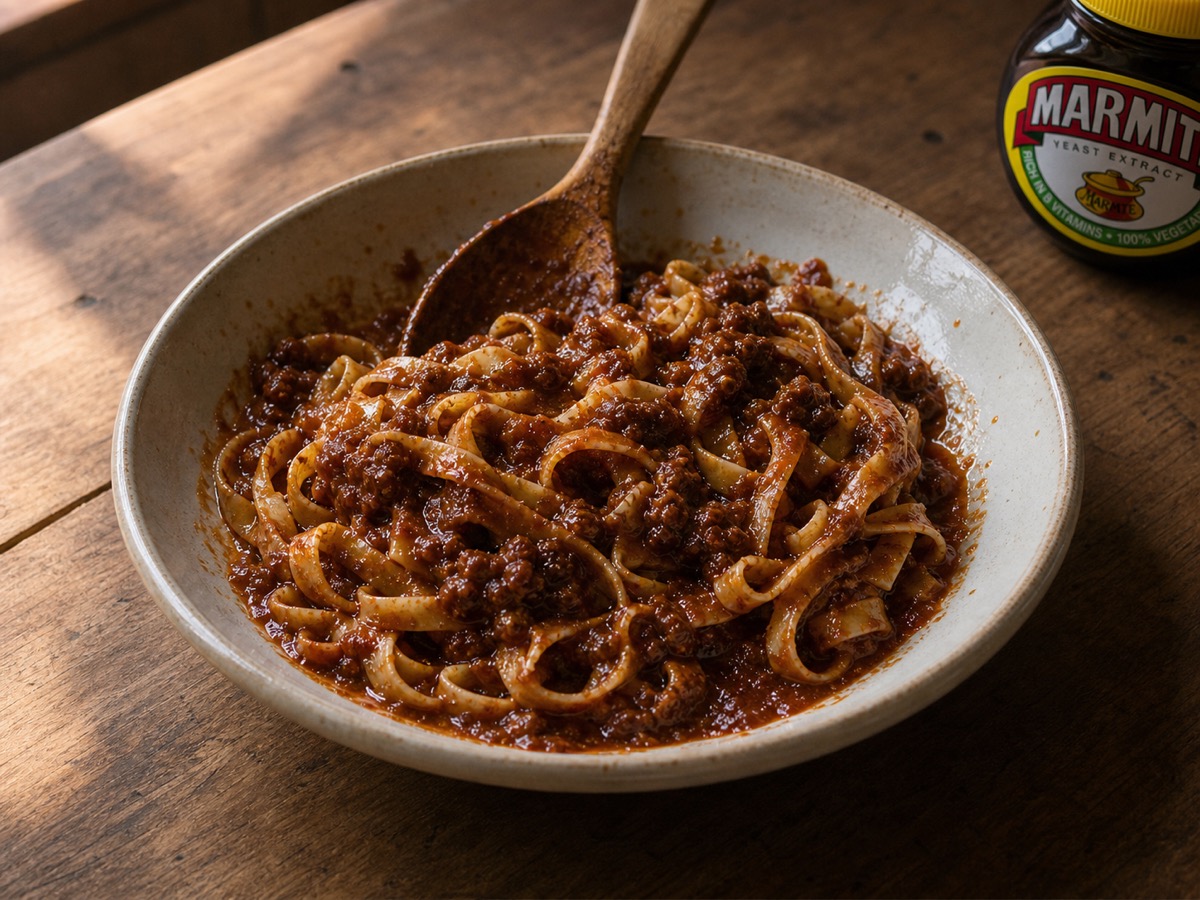
The Marmite Bolognese the umami-bomb crowd is making wrong on TikTok, written down properly. One teaspoon, for four people. Stop using more.
The umami-bomb trend is just cooks discovering what Nigella has been doing for years
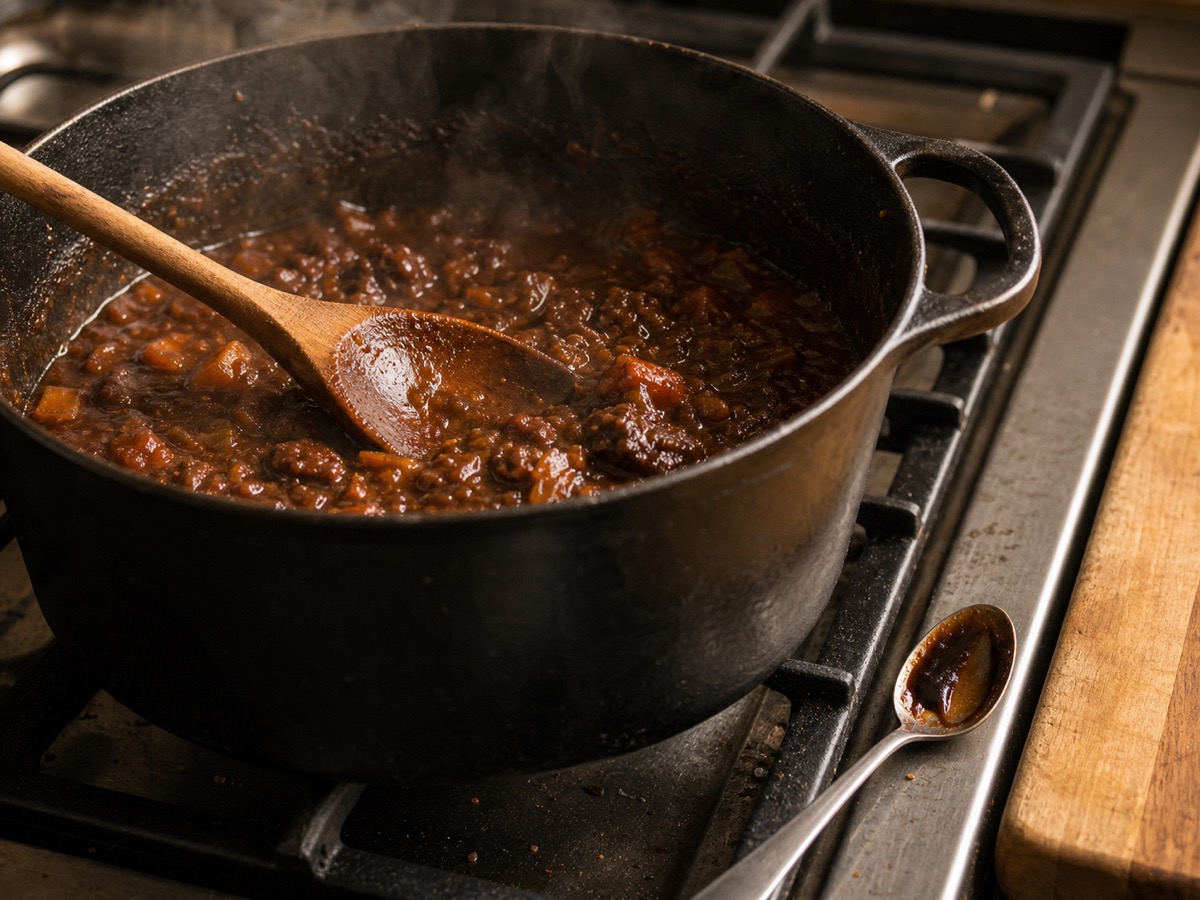
The TikTok umami-bomb trend has put Marmite in stews, ragus, and brownies. The trick is real, but Nigella was doing it in 2010.
A Marmite glaze for roast vegetables
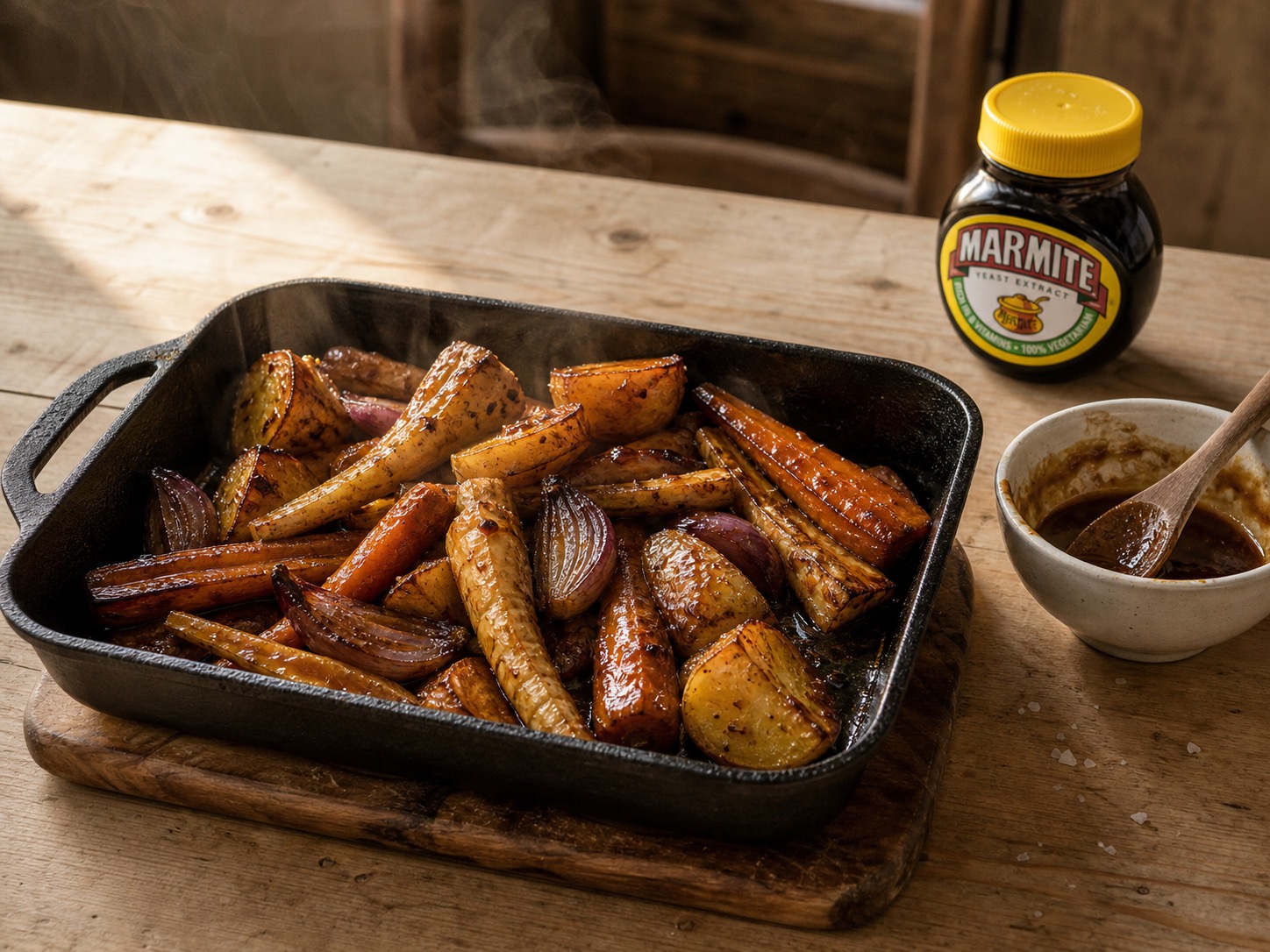
A teaspoon of Marmite, a tablespoon of oil, a splash of just-boiled water to thin it. Whisk together until it is loose enough to pour. That is the base glaze. It will coat about a roasting tray's worth of vegetables for four people. Add the glaze at the end, not the start.
Why a teaspoon of Marmite makes everything taste better: the umami multiplier
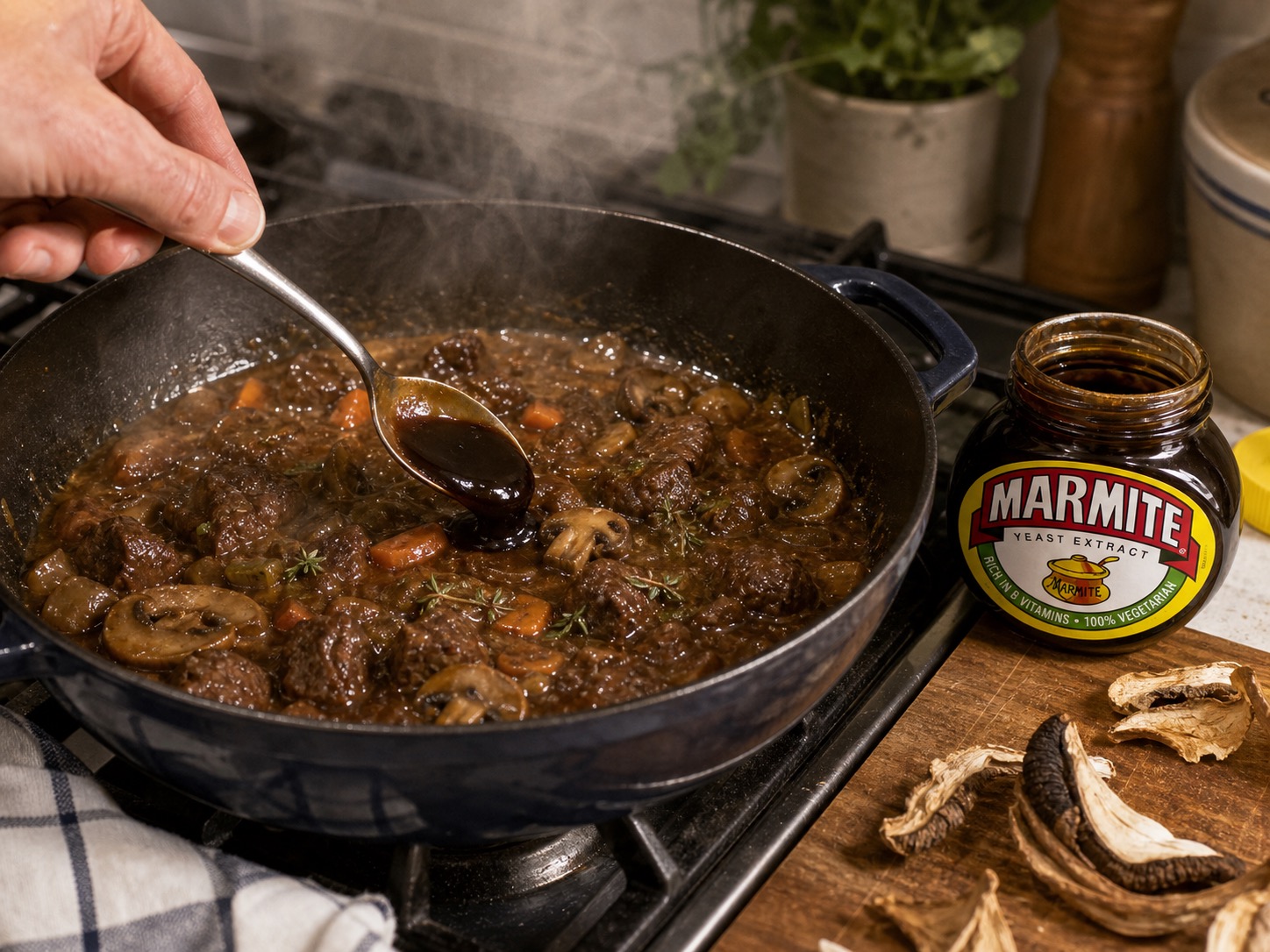
There is a real reason a teaspoon of Marmite turns a flat stew into something with depth. It is umami synergy, discovered in 1957: glutamates and certain nucleotides multiply each other rather than add. Marmite is pure glutamate looking for a partner.
If you are vegan, Marmite is doing real work
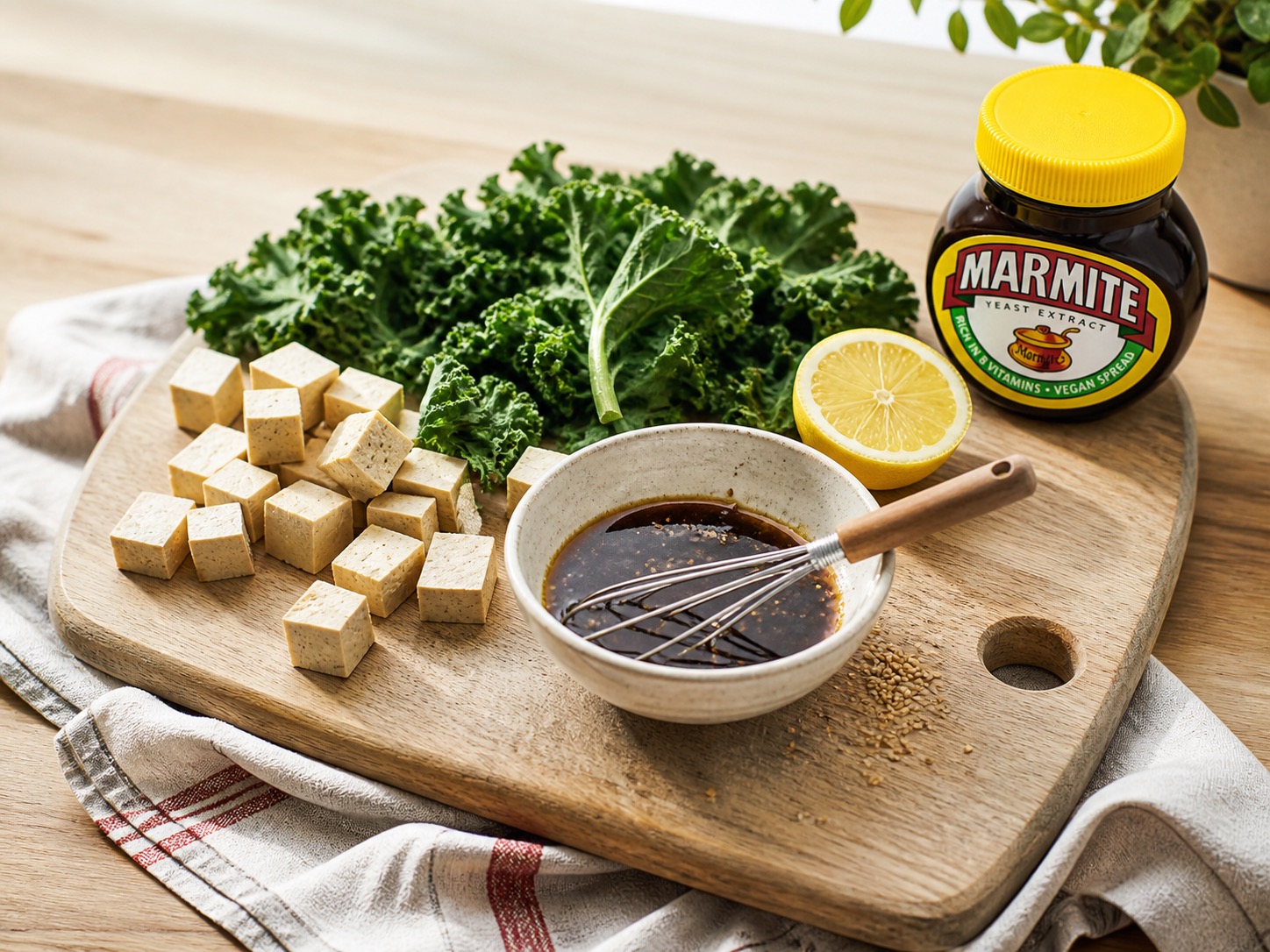
If you are vegan, your single hardest nutrient is vitamin B12. It is found almost exclusively in animal products, and it does real work: nerve function, red blood cell production, DNA synthesis.
How Marmite is actually made: the yeast that eats itself
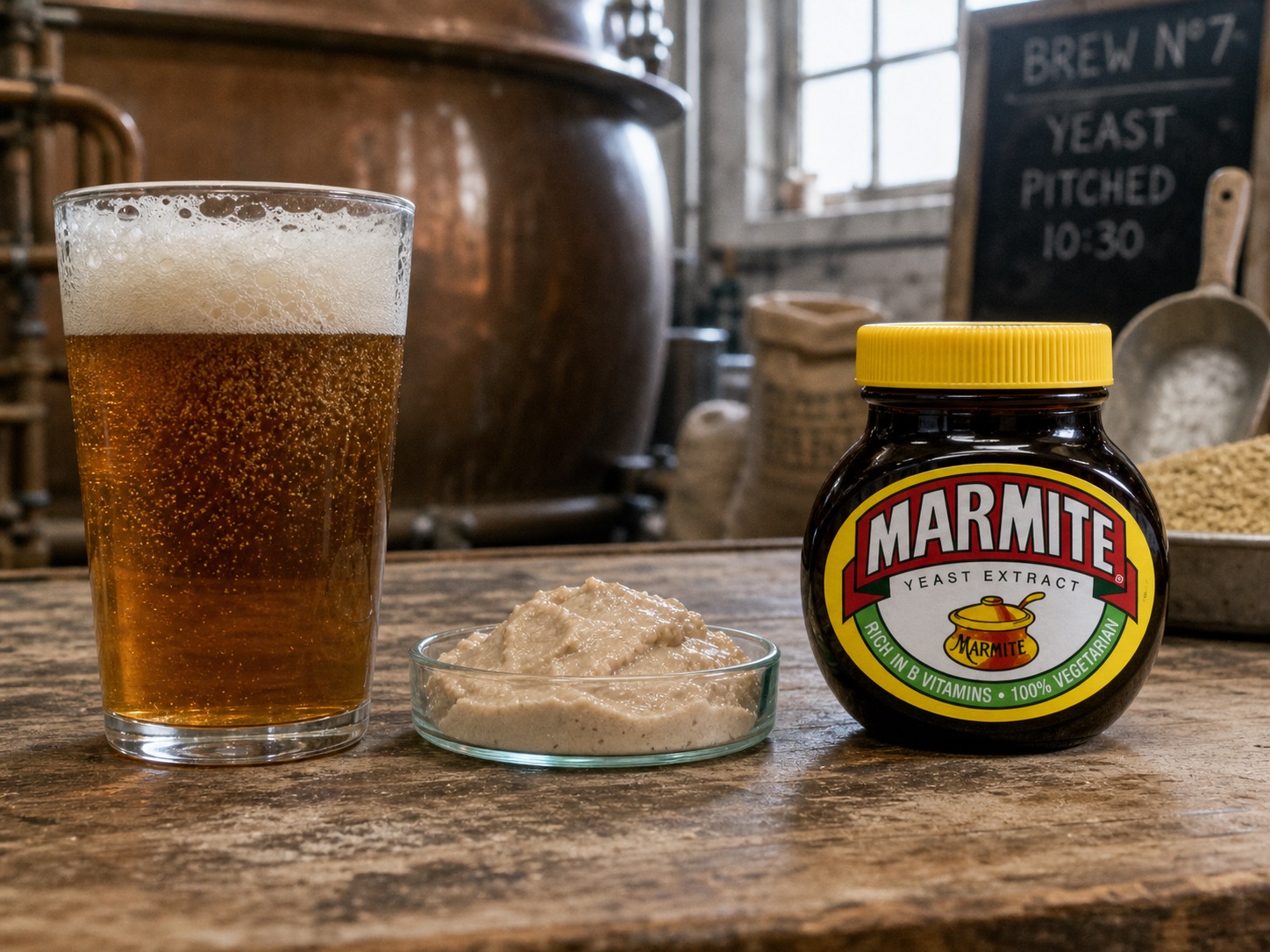
Marmite starts as the spent yeast left over from brewing beer. Salt makes the yeast cells digest themselves, the husks are sieved out, and what remains is a thick brown paste full of natural glutamates. The science of the jar, in plain English.
Page 1 of 2
Next »