
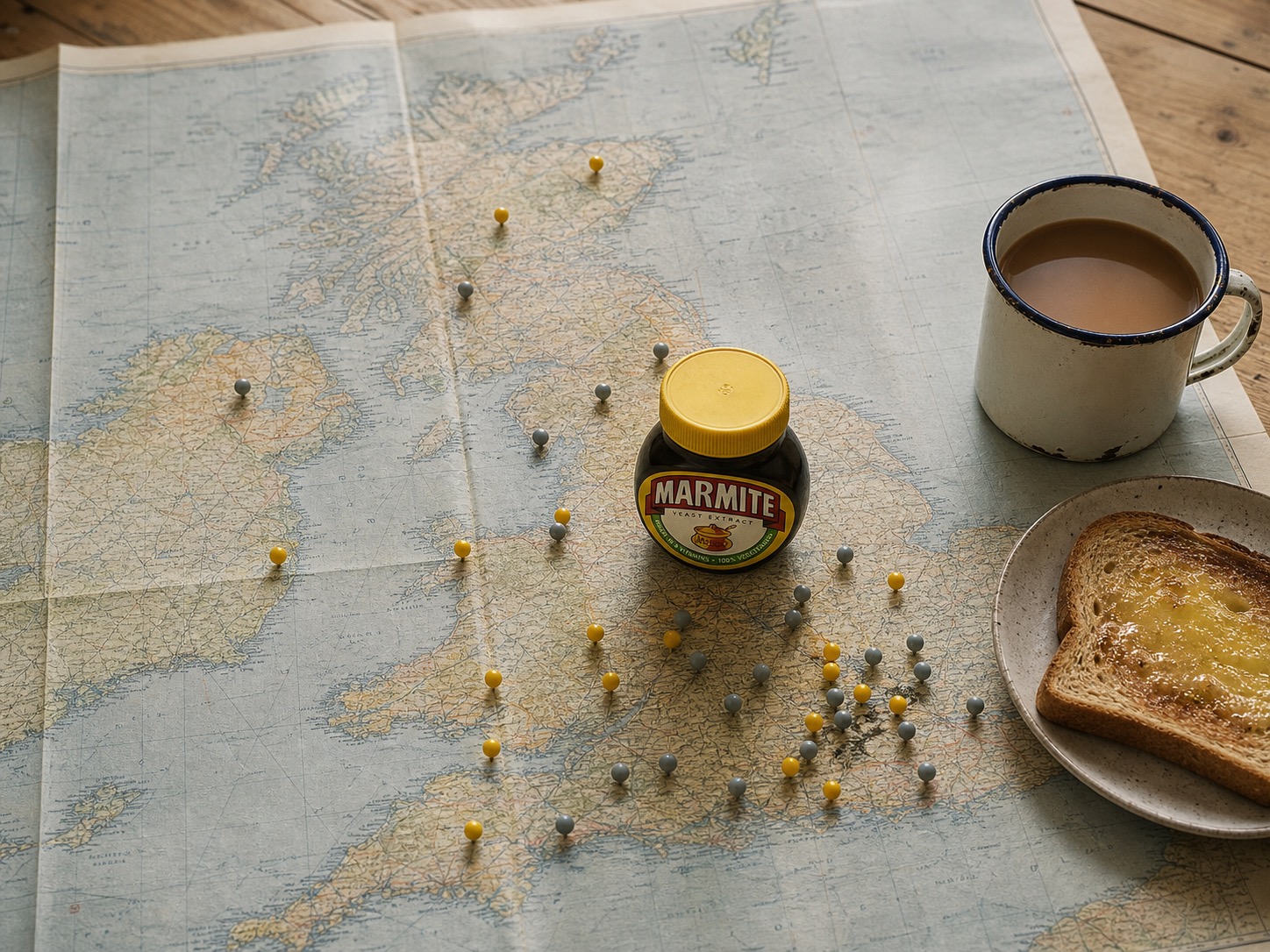
The split, in numbers
Consumer surveys have repeatedly shown the same pattern. In London and the south-east, roughly six in ten people say they either love Marmite or are happy to eat it. In Scotland and the north of England, that figure drops to closer to three in ten. The midlands sit somewhere between. The eastern counties, including Norfolk where I live, lean to the loving side, but more quietly.
That is a properly large gap for a single food product. It is bigger than the gap for most other British store-cupboard staples, and it has been stable across a couple of decades of survey work.
What probably explains it
Three honest guesses, none of them complete.
The first is just brand exposure. Marmite was always heavier on advertising spend in the south. The big-budget TV-era campaigns ran nationally, but the press, the outdoor, and the agency-pitched stuff was disproportionately London-skewed. A generation that grew up seeing more Marmite in front of them grew into adults who buy more Marmite.
The second is taste tradition. Northern English and Scottish breakfast cultures sit slightly differently to southern ones. Where the south has settled around toast-and-Marmite as a normal weekday breakfast, the north has historically had more savoury options at breakfast already, so the toast-spread market splits more between butter, jam, and not much. Marmite is competing for a slot that is already filled.
The third is the price-per-jar question. Marmite is more expensive per gram than most spreads, and the price-conscious shopper passes it over for own-brand jam or chocolate spread. Regional income variation goes some way to explaining why the further-north markets buy less of the premium-end of the spread aisle, and Marmite sits at the premium end whether the marketing department wants to admit it or not.
What the pattern is not
It is not, despite what every “regional divide” piece on the internet tells you, a culture-war thing. Glaswegians who say they hate Marmite are not making a political statement about southern softness. They have simply not been brought up on it. The same shoppers will happily eat Bovril, which is structurally a similar product, because Bovril sat better with the existing regional taste habits when both brands were establishing themselves.
So the Marmite map of Britain is mostly a map of which households put Marmite on the toast in 1965 to 1995, plus a bit of pricing. Most “regional preference” stories turn out to be that, eventually.
A small Norfolk note
Eastern England is interesting on this. We are not a high-loving region, but we are a stubbornly loyal one. Per-capita Marmite consumption among people who eat it is among the highest in the country, even though the proportion of households eating it sits in the middle of the table. We do not have many lovers, but the ones we have are committed.
I do not know what to do with that data point, except to nod and pass the toast.
Source: aggregated YouGov and Kantar consumer surveys; Mintel category reports.