

Happy Towel Day
It is 25 May, which means it is Towel Day, the day on which Hitchhiker’s fans annually carry towels around for reasons that, if you have to ask, will not be satisfactorily explained. This struck me as the right occasion to sit Douglas Adams in front of the Marmite Mnemonicon. Adams was the closest thing British absurdism produced to a national treasure, he had strong opinions about almost everything, and he died in 2001, all of which makes him a perfect Mnemonicon guest.
The plan was to ask him about Marmite. He had, it turns out, not very much to say about Marmite directly. He had a great deal to say about everything adjacent to Marmite, which is just as well, because everything adjacent to Marmite turned out to be more interesting.
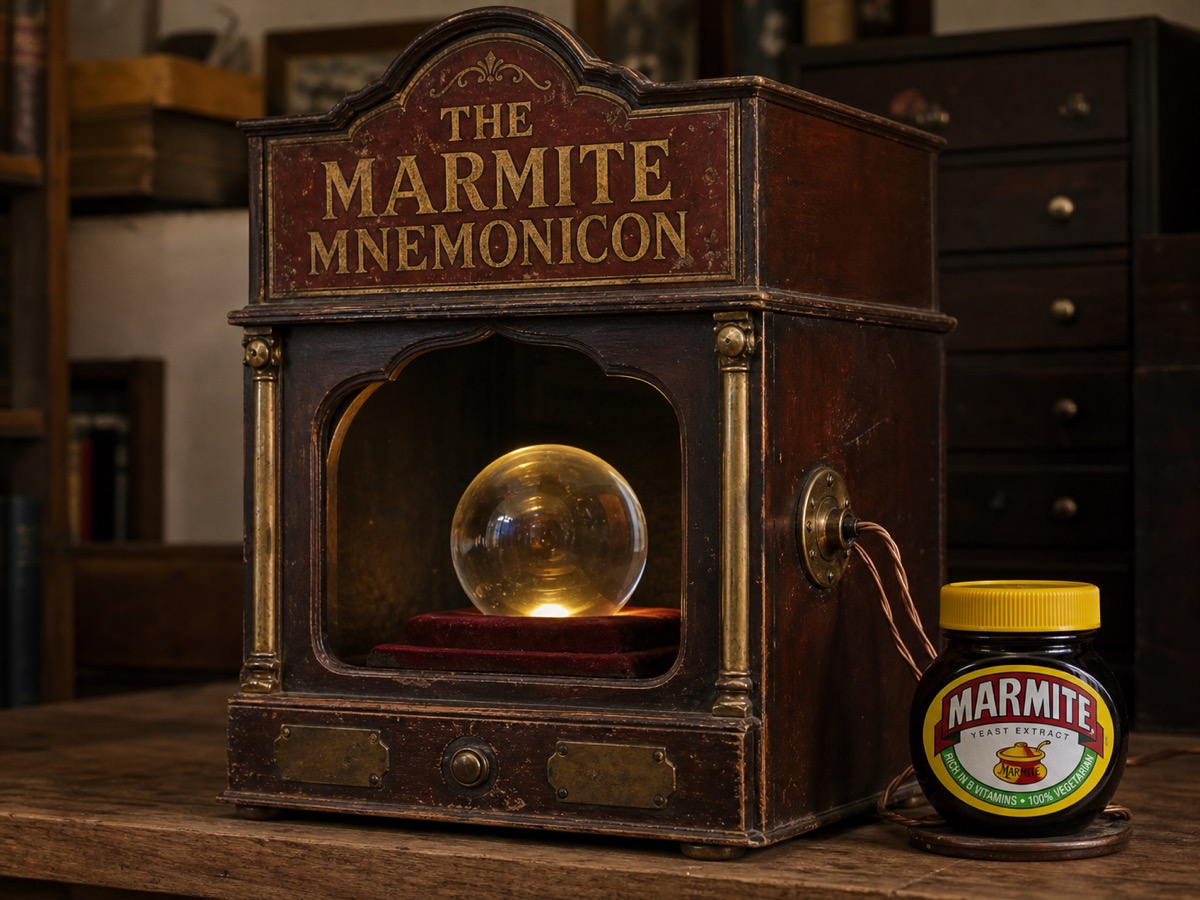
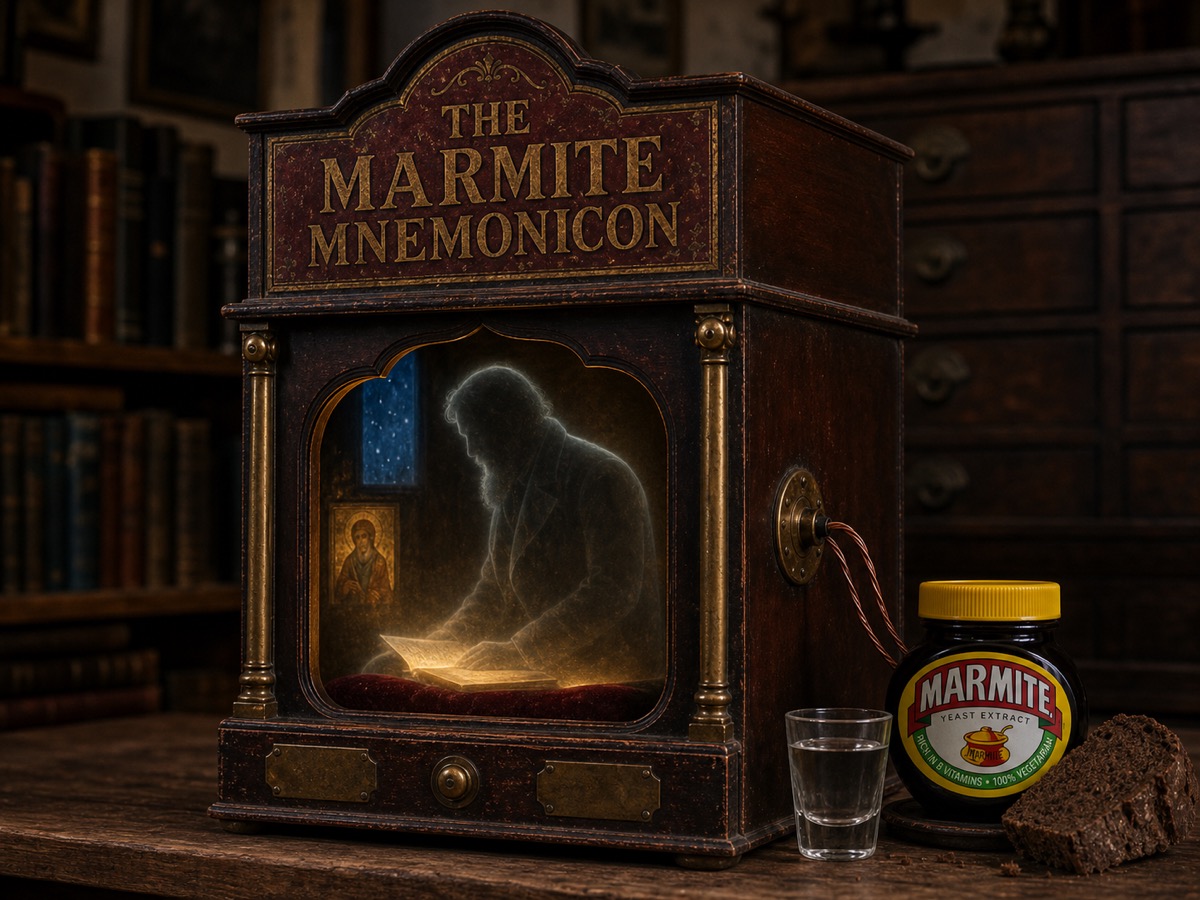
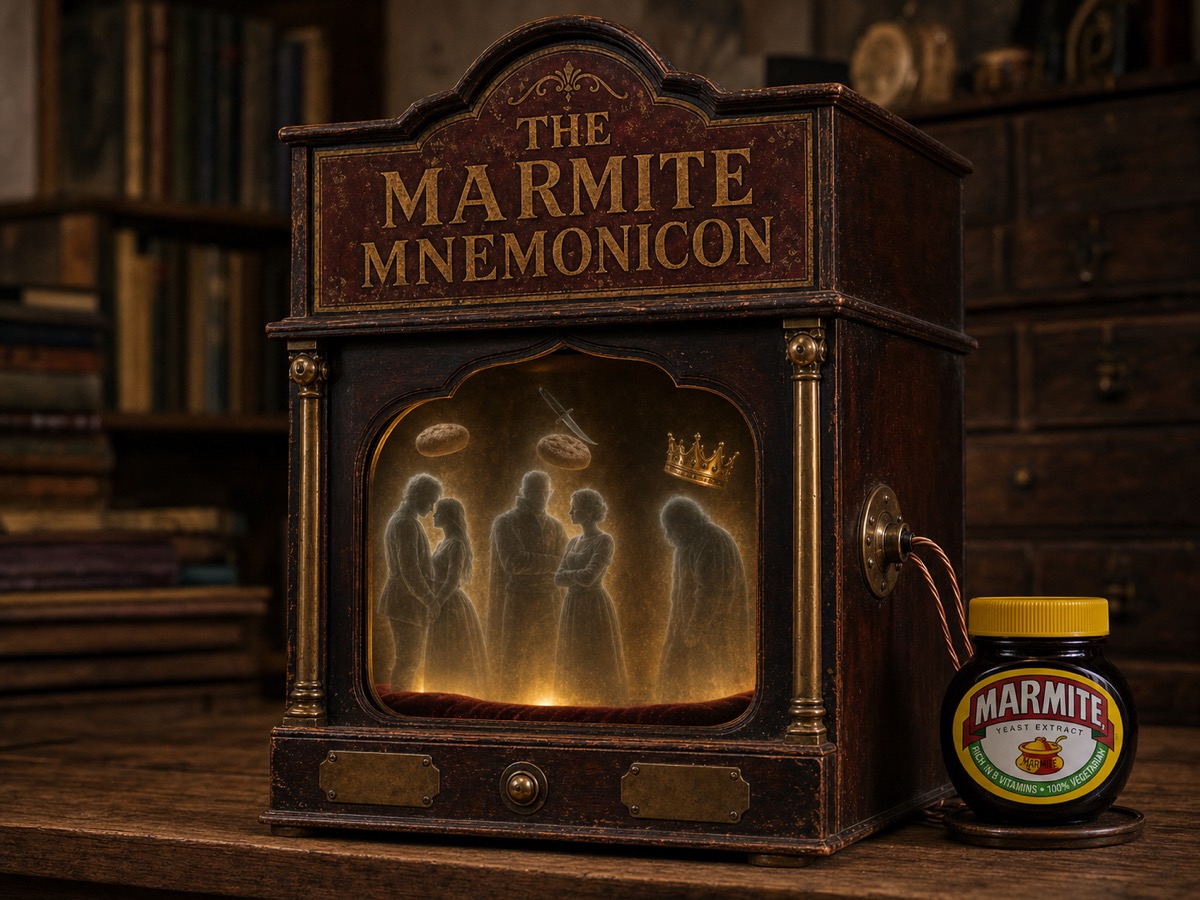
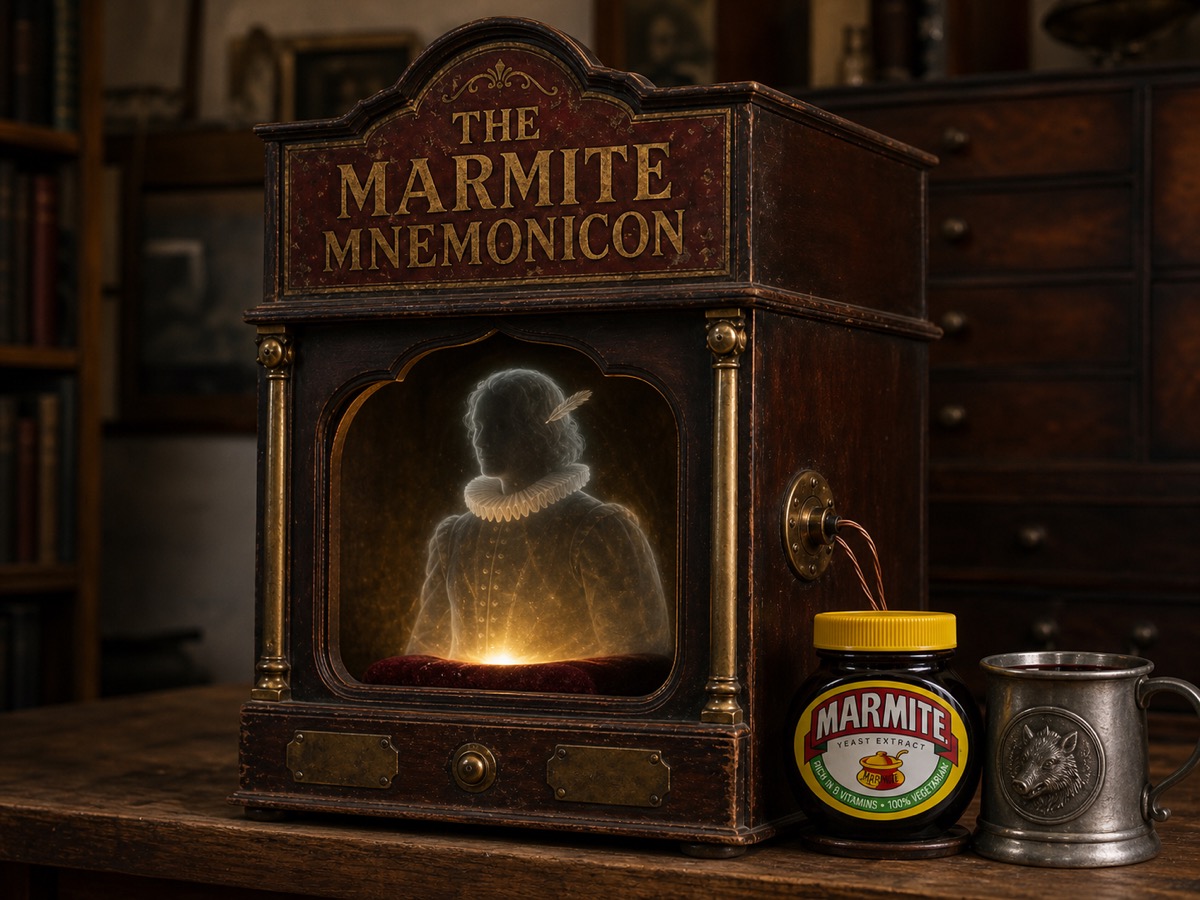
A reminder of how the Mnemonicon works: two answers per question, grounded versus hypothesised, the second marked clearly. Sedasoft’s siteengine_ai does the heavy lifting; the brass-and-velvet cabinet on my Norfolk shelf is the part I built. Editor’s note at the bottom as usual.
The interview
Me: Mr Adams, thank you for sitting for this. The simple opener: did you actually eat Marmite, and if you did, did you have a position?
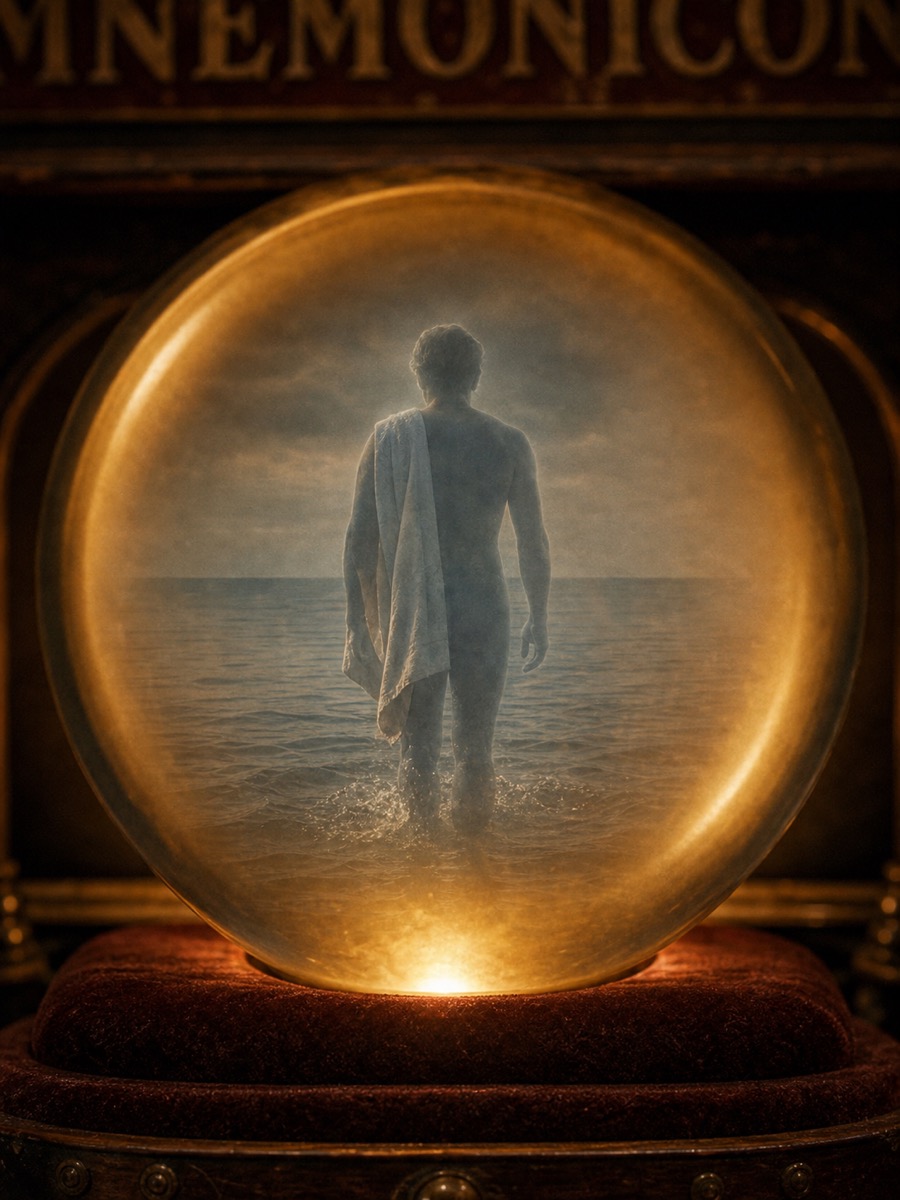
DNA: Honestly, no. Not that I can recall. It’s rather like being asked about a book I never wrote. I could make something up, but that wouldn’t be honest, would it?
Me: Pass 2 just told me you were a Bovril sandwich man. Is that real?
DNA: Right, well caught. Yes and no. I did write, in the procrastination-and-baths sections of The Salmon of Doubt, about Bovril sandwiches as a reward system while writing: sit down, fail to think of a character name, decide what you really need is a Bovril sandwich and a bath, end up an hour later with three Bovril sandwiches, two baths, a cup of coffee, and no character name. That part is on record. The grand-ritual framing was me embellishing on the spot. The ritual existed; the specifics were thinner than I made them sound.
Me: That is a more honest answer than most live writers manage. Did you cheat on Bovril?
Don't panic.Douglas Adams
DNA: Good Lord, yes. Toast and peanut butter. Crisps. The aforementioned biscuits. Anything that could be framed as necessary preparation for the actual work of writing. The deeper truth is simply that I was rather good at thinking up reasons for doing something other than writing. Sandwiches were just the most memorable excuse.
Me: The whole Hitchhiker series leans into a particular brand of British absurdism. Where does Marmite sit in that taxonomy?
DNA: Marmite never made it into the books, so honestly, nowhere. What does sit firmly in that taxonomy are towels and the Pan Galactic Gargle Blaster. The Guide on towels: a towel is about the most massively useful thing an interstellar hitchhiker can have, practical value, wrap it around you for warmth, and so forth. The trick was to take something utterly mundane, something so ordinary that nobody thinks about it twice, and make it crucial to survival in an entirely different context.
The Pan Galactic Gargle Blaster works similarly. Take Ol’ Janx Spirit, Santraginean sea water, Arcturan Mega-gin, Fallian marsh gas, layered with ridiculous precision. The effect is like having your brains smashed out by a slice of lemon wrapped round a large gold brick. Grotesquely specific, utterly implausible, and yet it sounds real because it’s described with such mundane technical certainty. That’s the British absurdist approach. Not surrealism, but hyperrealism applied to the impossible.
If I had ever put Marmite in the books, that is how I would have done it. As a small, specific, slightly ridiculous object that nobody on Earth pays much attention to, but which turns out, in some inexplicable galactic context, to be utterly essential. Probably a Vogon repellent. Possibly a fuel additive. Definitely a paperwork generator.
Me: Which brings us to the next question. Vogons are famously bureaucratic. If a jar of Marmite had to pass Vogon import inspection, what would happen?
DNA: Right. Imagine a jar arriving at a Vogon checkpoint.
First, the paperwork. Forms A-37b through Z-45c, minimum. The Vogons would require documentation establishing the Marmite’s point of origin, its chemical composition, its cultural significance, its intended use, its moral alignment, and probably its astrological chart. If any single form was incomplete, a missing initial, a box left blank, the entire shipment would be grounds for rejection.
Second, the philosophical interrogation. The Vogon inspector would regard the jar with the same aesthetic horror they bring to all things slightly unusual. Marmite is dark. It is viscous. It is aggressively flavoured. It would be classified as suspicious. Questions would multiply. Why is it brown? Who decided it should be? Do you understand that the Vogons do not approve of things that taste the way Marmite tastes?
Third, destruction. Once the paperwork had been exhausted, and the Vogons would exhaust it thoroughly, the jar would be smashed. Not out of malice, precisely. Out of bureaucratic necessity. The regulations would demand it. And a Vogon never questions the regulations. He simply executes them with grim precision and a certain amount of pleasure.
What makes the scenario particularly Vogon-like is that the destruction wouldn’t be the first resort. It would be the correct resort, after all the proper procedures had been followed.
Me: This is where we get to current events. An American spice company called McCormick is buying Marmite from Unilever in a deal worth £33.5 billion. What would the Hitchhiker’s Guide entry on the takeover read?
DNA: (Mnemonicon, speculation mode, clearly marked: this is the Guide entry I never wrote)
McCormick Spice Corporation (Earth Division): Marmite Acquisition. A Transaction of Dubious Merit.
In what financial analysts described as “bold”, “visionary”, or “terminally misguided”, depending largely on whether they had tasted Marmite, the McCormick Spice Corporation, a terrestrial firm based on the North American continent, acquired Marmite from its previous owners for approximately 45 billion Earth dollars.
This sum was, by any reasonable standard, excessive. Marmite is a dark brown paste manufactured from yeast extract. It is either loved or despised with equal intensity, which makes it, from a business perspective, roughly equivalent to investing heavily in a lottery ticket that reads “You have already won (something you don’t want)”.
McCormick executives confidently predicted that American consumers would soon embrace Marmite with enthusiasm. American consumers, when informed of this prediction, laughed until they required medical attention.
The fundamental error lay in assuming that because McCormick sold spices successfully, it could sell anything. This is rather like assuming that because a man can play the violin well, he should immediately attempt piloting a spacecraft. The disciplines are not interchangeable.
By 2027, the deal was regarded as one of the more spectacular misjudgements in commercial history, though not quite as bad as the ABC Television network’s attempt to adapt The Hitchhiker’s Guide to the Galaxy for American audiences, which cost approximately 2.2 million dollars for a single episode and produced something genuinely worse than silence.
Me: Marvin has an opinion on almost everything, usually a bleak one. What would he make of Marmite?
DNA: Marvin would despise it with the sort of comprehensive bleakness that only a robot with a brain the size of a planet could properly articulate.
Consider his existing relationship with food. The Nutrimatic Drink Dispenser, a device engineered to synthesise any beverage imaginable, reliably produces “a liquid that was almost, but not quite, entirely unlike tea”. Marvin would regard this as precisely what he expects. Technology promising much and delivering disappointment. At least the Nutrimatic had the decency to be consistently wrong in a predictable way.
Marmite is worse. It is the sort of foodstuff that defies even Marvin’s well-honed despair because it operates on a fundamentally unsettling principle: some people actually enjoy it. This would disturb him more than outright universal rejection ever could.
He’d say something like: “Here is a substance that tastes simultaneously of yeast, salt, and the accumulated regrets of civilisation. Some humans consume it willingly. On bread, no less. This suggests either that human taste receptors are malfunctioning, or that humans themselves are malfunctioning. Given my experience, I suspect both.”
He wouldn’t bother tasting it. He’d simply know, through some combination of his vast intelligence and his wretched circuits, that it represented everything wrong with organic life forms and their baffling relationship with food.
Me: Last big one, and then the closer. The Total Perspective Vortex shows you how insignificant you are in the universe. What would a jar of Marmite look like to someone who has just emerged from the Vortex?
DNA: That’s a rather lovely question. Let me try it properly.
The Vortex gives you one momentary glimpse of the entire unimaginable infinity of creation, with a tiny little marker, a microscopic dot on a microscopic dot, that says “You are here”. Most beings find this drives them mad. The sheer scale of it, the utter irrelevance of your existence, it is meant to be annihilating.
But Zaphod emerged from the Vortex and simply said he was fine, that it had confirmed he was a great guy. He had metabolised the whole infinite universe and arrived at the conclusion that he was the most important person in it. Which rather suggests that the Vortex doesn’t actually change you so much as it reveals what you already are.
Now, a jar of Marmite. After seeing the infinite cosmos and your own infinitesimal place in it, you would look at this small brown jar and perceive something rather remarkable. Here is an object made by humans, for humans, containing a substance that most humans either love or despise with equal passion. It has no relevance whatsoever to the grand machinery of creation. The universe will not pause to consider whether you like Marmite or hate it. The universe will not consider you at all.
And yet, and this is the bit I think matters, you would emerge from the Vortex and still want to spread it on your toast, or you would not, based entirely on your own preference. The Vortex shows you that you’re nothing. But you still get to choose.
That jar becomes rather a perfect emblem of human resilience, actually. Not despite insignificance. Alongside it.
Me: The closer. 42 is the answer. What is the question, in Marmite terms?
DNA: Two candidate questions, both yielding 42.
The first: “How many times must you be told Marmite is delicious before you actually believe it?” The answer hovers around 42, statistically speaking, which is the point at which social conditioning finally overwrites your taste receptors and you convince yourself that a jar of concentrated salt and regret is actually rather nice on toast.
The second, more in keeping with the spirit of things: “How many alternative explanations must you generate before accepting that some humans simply enjoy something that tastes like the bottom of a brewery?” Again, 42. The number at which rational explanation breaks down entirely and you are forced to accept that the universe genuinely doesn’t care whether your breakfast condiment tastes like heaven or hell.
The beauty is that 42 answers both questions perfectly whilst explaining absolutely nothing whatsoever about Marmite itself. Which is, of course, the entire point.
Me: Mr Adams, thank you.
DNA: Don’t panic.
Editor’s note
For full background on the Marmite Mnemonicon, see the introduction piece. The short version: the Mnemonicon is a thin wrapper around siteengine_ai, a project built by my friends at Sedasoft, trained on the published writings and recordings of a roster of dead authors.
For this interview, every question was put through twice, once in strict grounded mode and once in hypothesised mode. The Bovril sandwich procrastination ritual is a real Adams account, drawn from The Salmon of Doubt and surrounding interviews. The Pan Galactic Gargle Blaster recipe and the Nutrimatic Drink description are real Hitchhiker’s text. Marvin’s quoted line about “the accumulated regrets of civilisation” is a synthesised Mnemonicon line, written in Marvin’s documented voice but not from any actual Adams work. The Guide entry on the McCormick acquisition is, obviously, a Mnemonicon construction.
Nothing in this article should be cited as having been said by the actual Douglas Adams. It is, instead, what a careful machine, trained on his papers, will say in his voice when pressed, with the speculation flagged honestly.
Next into the Mnemonicon: a Towel Day panel discussion, with Mr Adams plus a roundtable of his own characters. Arthur Dent, Ford Prefect, Marvin, and (regrettably) Zaphod Beeblebrox, all on the subject of Marmite. That follows shortly.