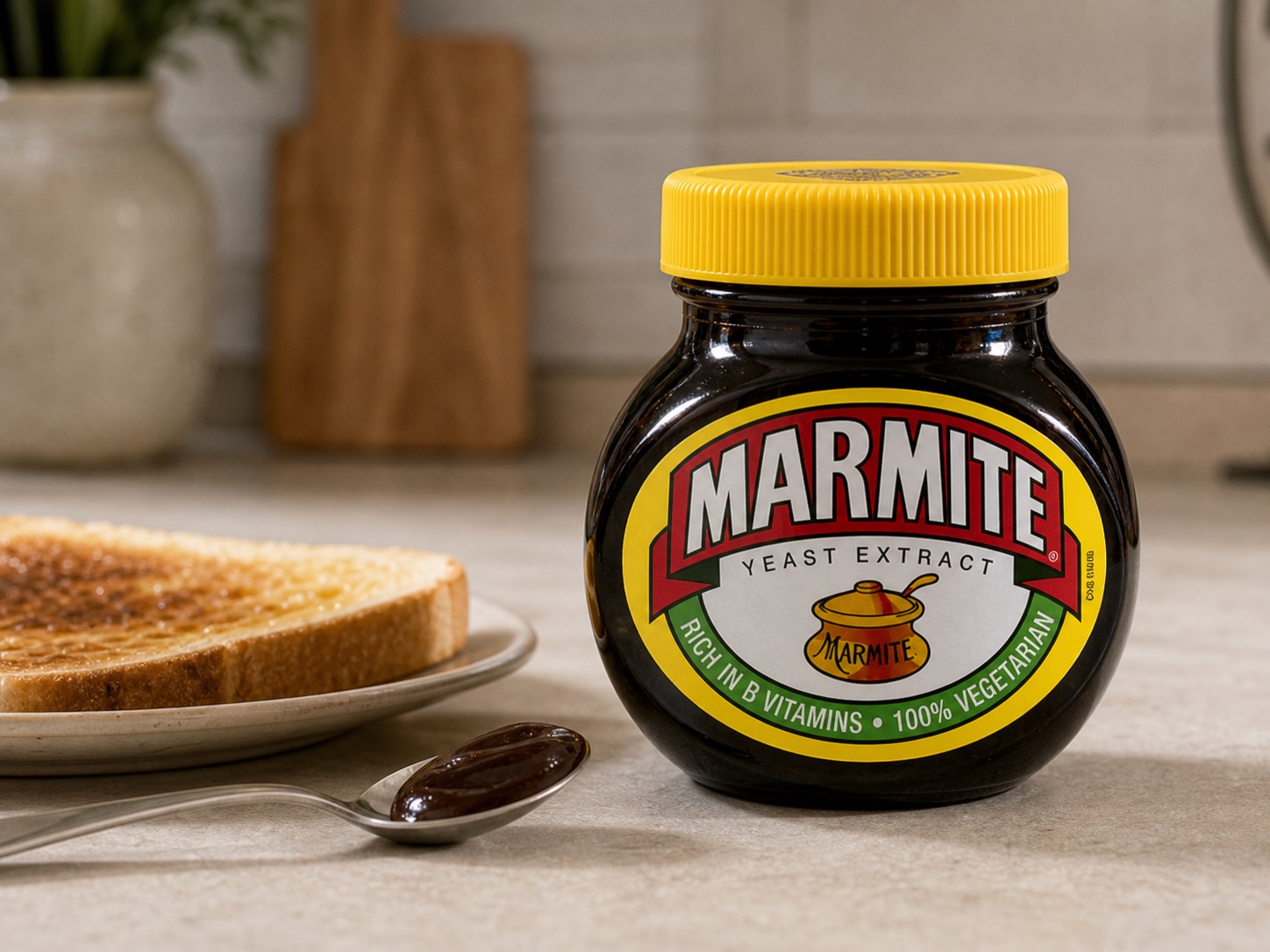

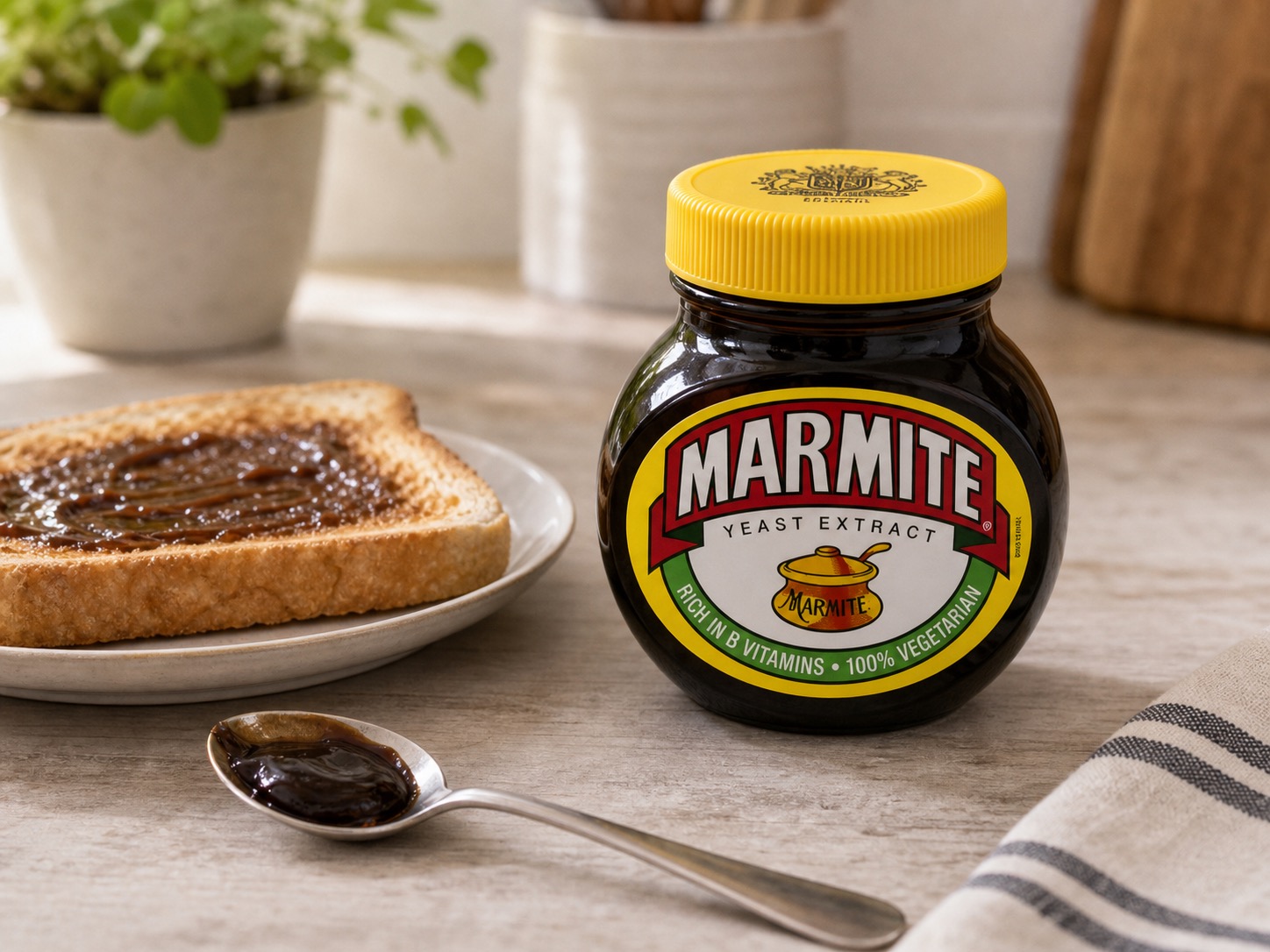
Marmite contains no meat, no animal products and no alcohol in the finished jar, so it is widely accepted as suitable for a halal diet. It is not formally halal-certified in the UK, although Marmite in Australia is. The one thing that gives some Muslim consumers pause is that Marmite is made from brewer’s yeast, so let us go through it properly, because the honest answer needs the detail.
This is information, not a religious ruling. If certification matters to you, check the pack and follow your own authority.
What is and is not in the jar
Marmite is a yeast extract. It is vegan and vegetarian, with no meat, no animal fat, no gelatine and no animal-derived additives of any kind. On the basic ingredients, there is nothing in Marmite that is haram. That is the easy part, and it is why so many Muslim households have used it for generations without a second thought.
The brewer’s yeast and alcohol question
The reason the question comes up at all is the brewing connection. Marmite is made from the spent yeast left over from brewing beer, and that association with alcohol is what makes some people hesitate.
Here is what actually happens. The yeast is a by-product of brewing, but Marmite itself is not brewed and is not an alcoholic product. Any trace of alcohol from the yeast’s origin evaporates during the high-heat production process, and the finished spread is alcohol-free. The yeast cells, and the extract drawn from them, are not intoxicating. The link to beer is one of production origin, not of content.
This is why the major halal food bodies treat yeast extract as halal. The Halal Food Authority in the UK, JAKIM in Malaysia and the Muslim Consumer Group in the United States all classify yeast and yeast extract as permissible. On the mainstream view, Marmite clears the bar.
So why is it not certified halal in the UK?
Because Unilever has not applied for UK halal certification, not because it failed one. A product can be entirely halal-suitable and still not carry a certificate, simply because the manufacturer chose not to go through the certification process for that market. It is the same administrative gap that means the jar does not carry a Vegan Society badge despite being vegan.
Interestingly, Marmite sold in Australia is halal-certified, by the Halal Certification Authority there, which tells you the product itself is considered acceptable. It is the UK paperwork that is missing, not the suitability.
So should you eat it?
That is your decision, and scholars are not unanimous. The mainstream position, backed by the major halal authorities, is that yeast extract is halal and Marmite is fine. A minority of Muslim consumers prefer to avoid it specifically because of the brewer’s yeast origin, even though the finished product contains no alcohol. Both positions are held in good faith. If you follow a particular authority, theirs is the answer that matters.
For the full picture across every diet, see the complete guide to Marmite’s dietary status.
Quick answers
Is Marmite halal? It contains no meat, no animal products and no alcohol in the finished jar, and the major halal authorities treat yeast extract as halal. It is widely accepted as halal-suitable.
Is Marmite halal-certified? Not in the UK, where Unilever has not sought certification. It is halal-certified in Australia.
Does Marmite contain alcohol? No. It is made from brewing by-product yeast, but any alcohol evaporates in production and the finished product is alcohol-free.
Why do some Muslims avoid Marmite? Because of the brewer’s yeast origin and the link to brewing, even though the final product contains no alcohol. It is a matter of individual choice and which authority you follow.