
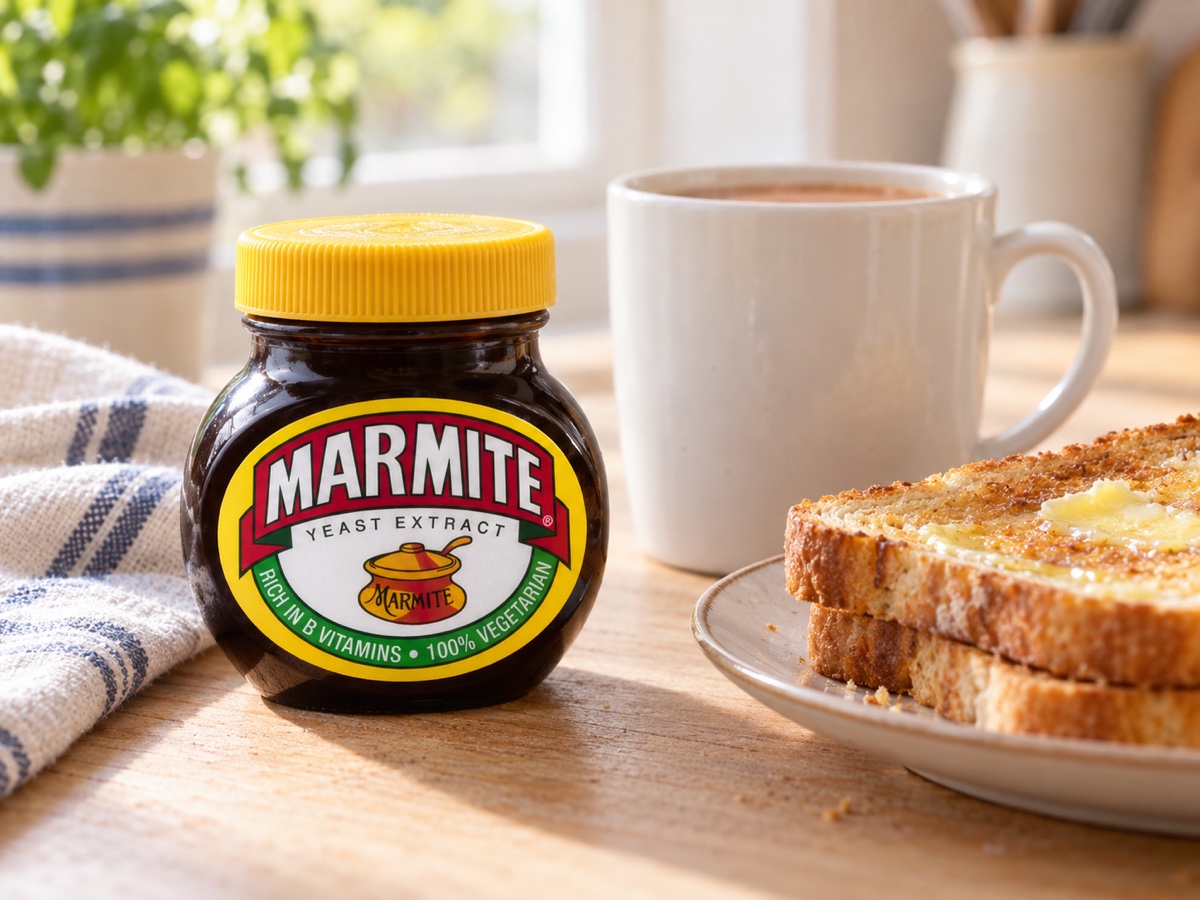
Marmite is safe to eat in pregnancy and it is a genuinely useful source of folate, the nutrient that matters most in the first trimester. That does not make it a substitute for the folic acid supplement the NHS tells you to take, and the salt is worth keeping an eye on: about 0.86g in an 8g serving, roughly 14 per cent of an adult's daily reference intake. What the guidance actually says, without the scaremongering.
Common Questions
Frequently asked questions: Is Marmite vegan? Is it gluten-free? Why does it taste like that? And more.
Category: Common Questions | View all articles

What is Bovril, and what is actually in it?
Bovril is a beef and yeast extract paste: 50 per cent beef broth, 27 per cent yeast extract, which makes it a quarter of the way to being Marmite. It was invented in the 1870s by a Scottish butcher in Canada to fill Napoleon III's order for a million cans of beef, was originally called Johnston's Fluid Beef, and takes its name from the Latin for ox plus a fictional energy source from an 1871 science-fiction novel.
What is Marmite? A plain-English guide to Britain's most divisive spread
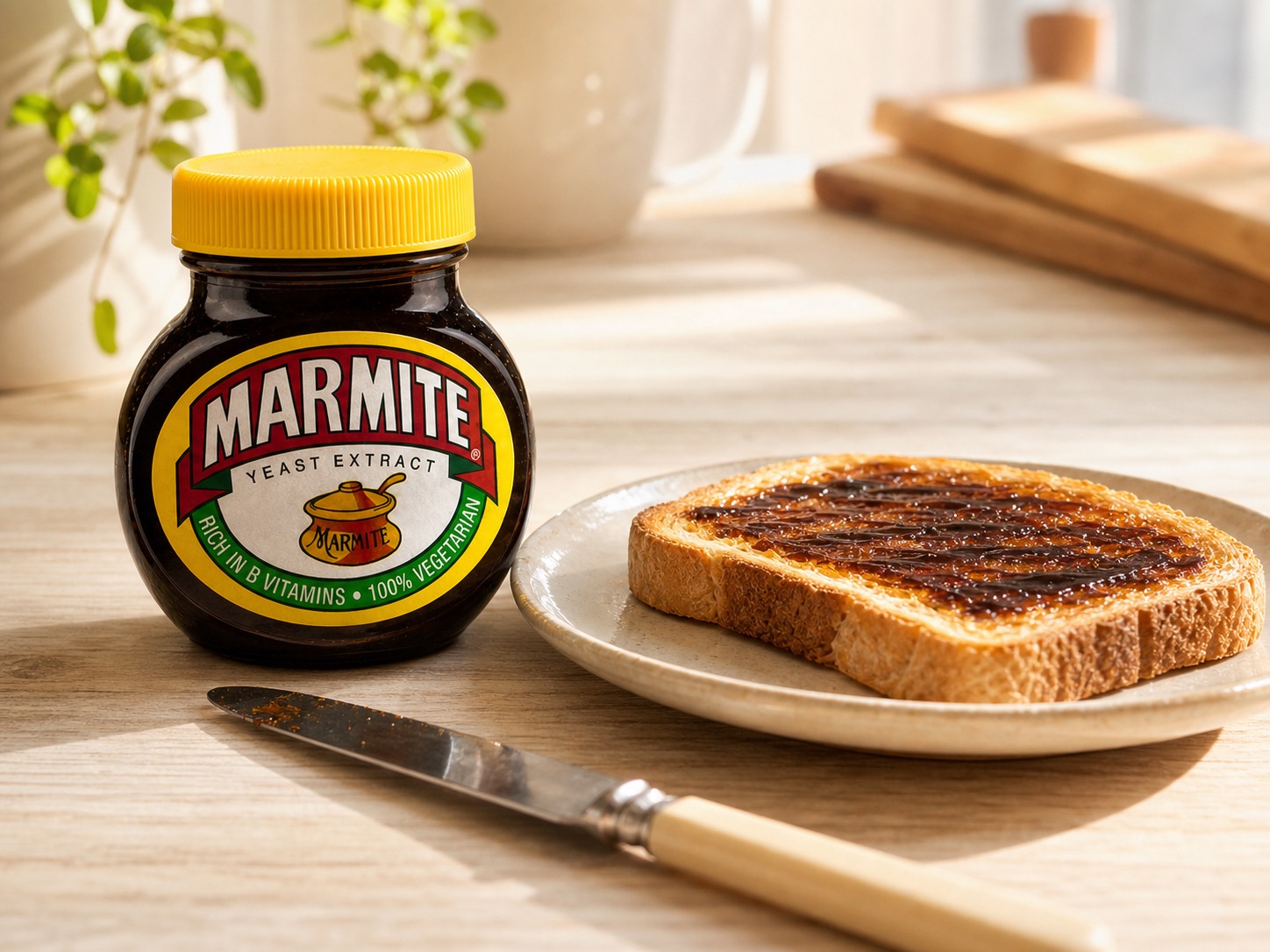
Marmite is a dark, salty British spread made from spent brewer's yeast, first produced in Burton-on-Trent in 1902. A plain-English guide to what it is, what it tastes like, what actually goes in the jar, and why the country has never agreed on it.
What is Marmite actually made of? A look at the ingredients list, in plain English
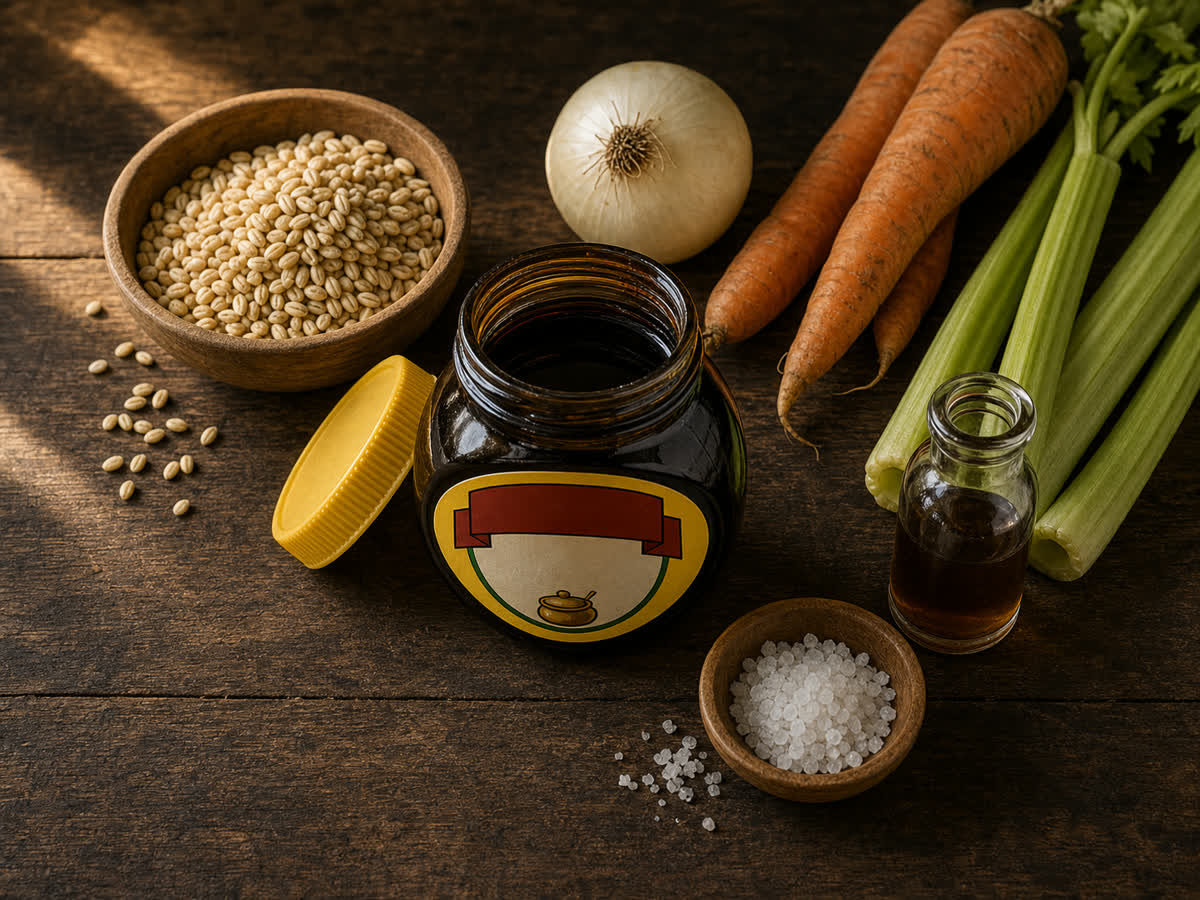
The five things on a Marmite jar's label, in plain English: yeast extract, salt, vegetable juice concentrate, five added B vitamins, and a natural flavouring that contains celery. What the list used to say, and what is not in the jar.
How long does Marmite last, and does it ever actually go off?
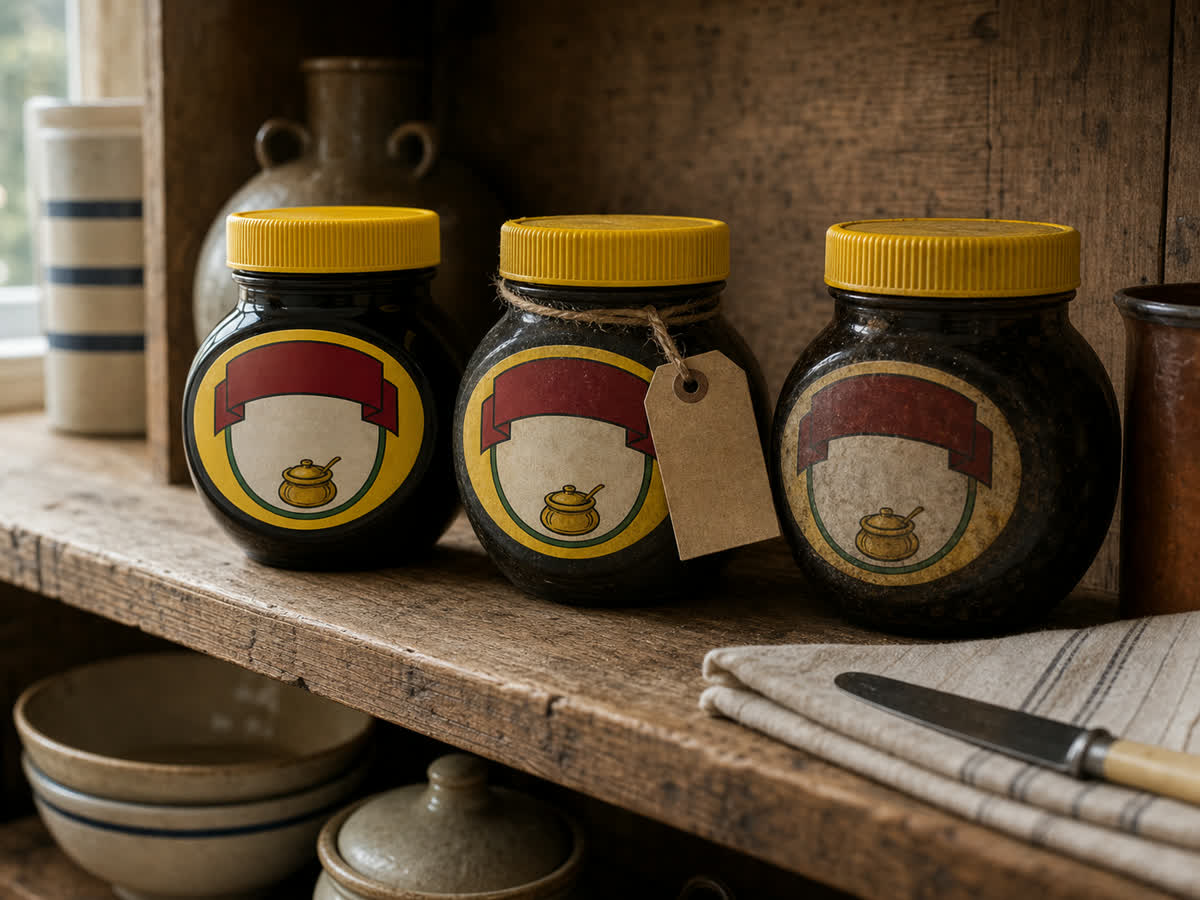
How long Marmite lasts opened and unopened, why the salt and low water content make it nearly impossible to spoil, whether it belongs in the fridge (it does not), and the three signs that a jar should actually be binned.
Is Marmite halal? The honest answer, and why it is not certified in the UK
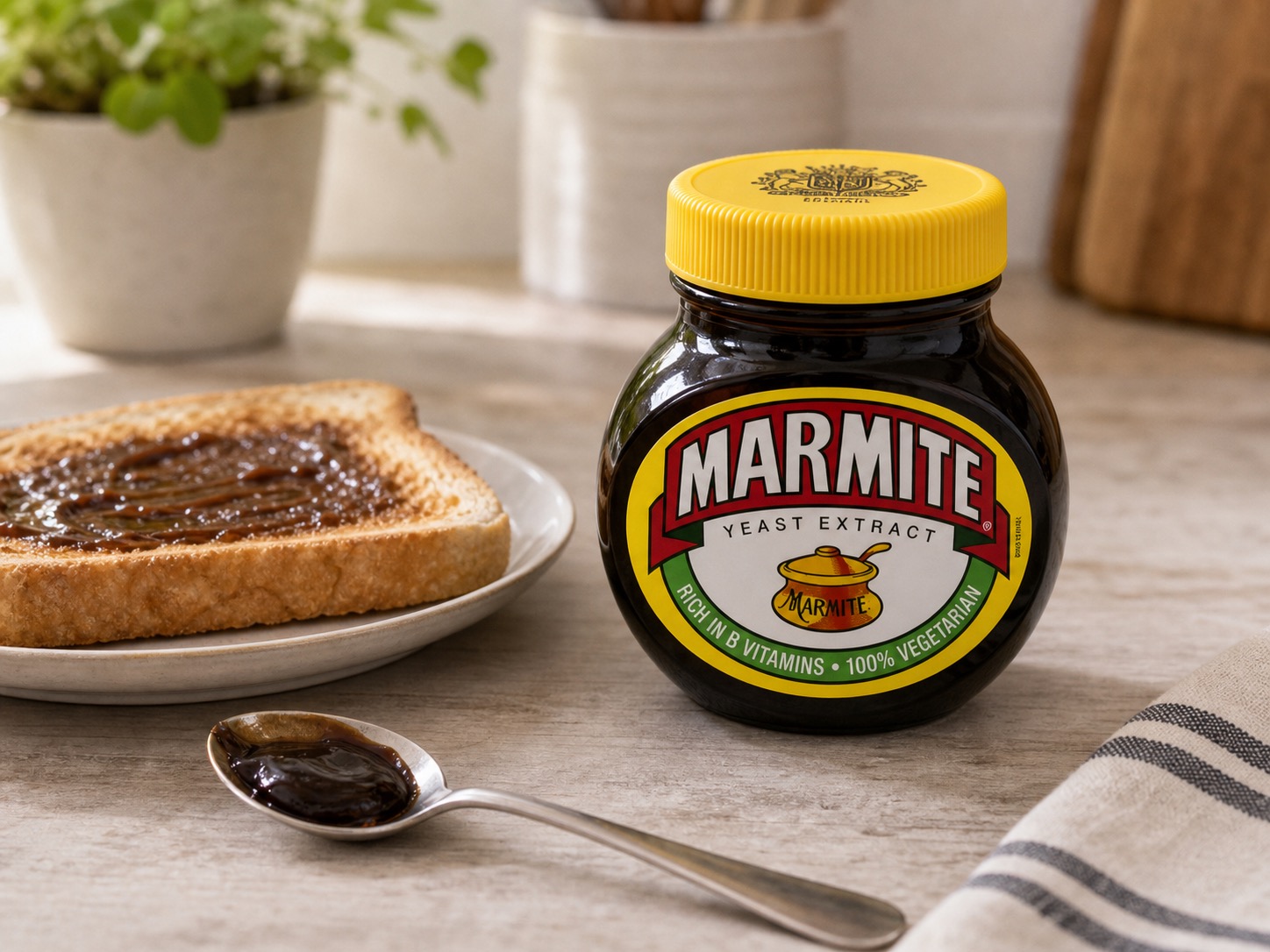
Marmite contains no meat, no animal products and no alcohol in the finished jar, so it is widely treated as halal-suitable. It is not formally halal-certified in the UK, though Marmite in Australia is. The sticking point for some is the brewer's yeast origin.
Is Marmite kosher? Only some jars, and only with the KLBD mark
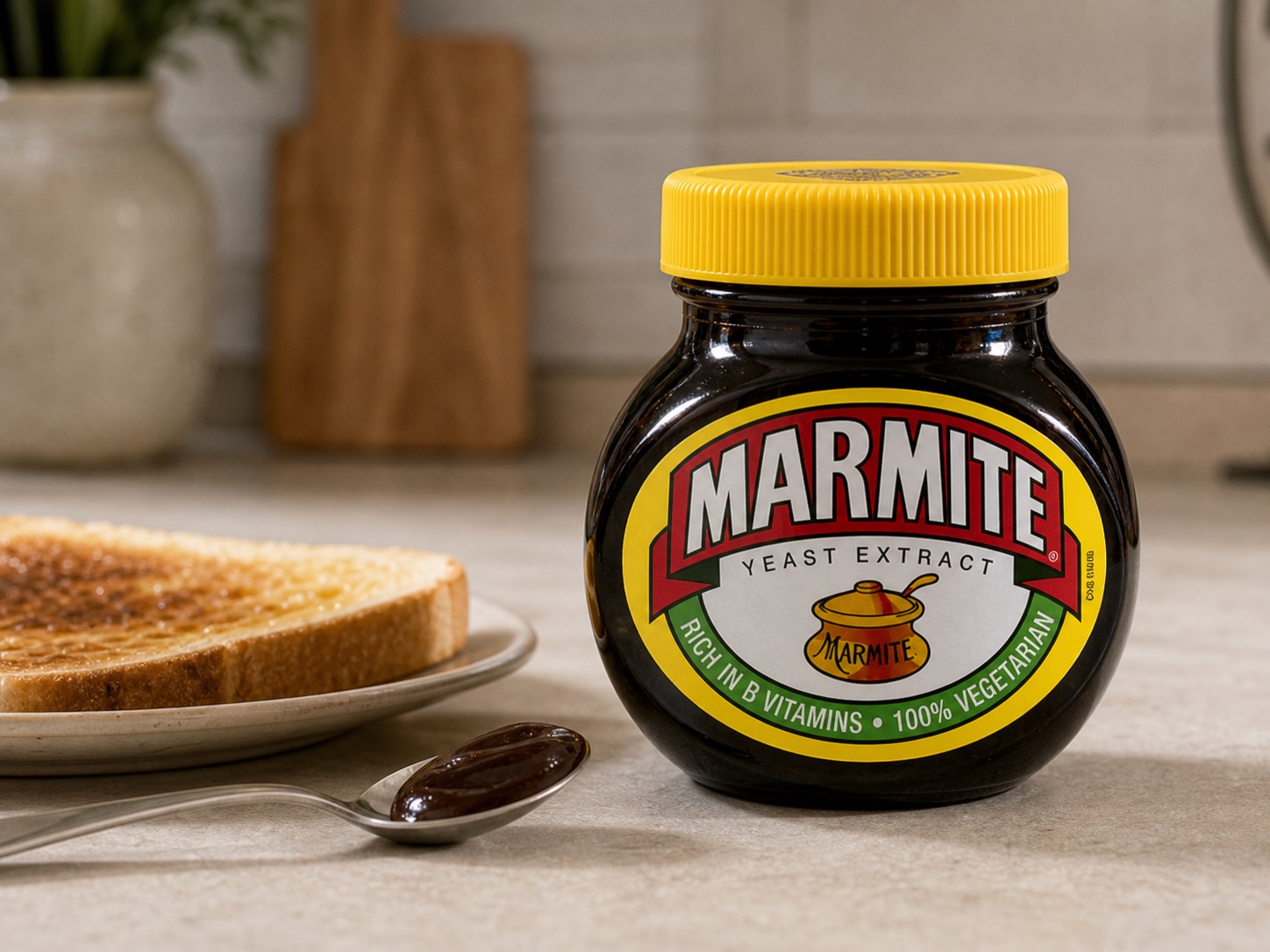
Some Marmite is kosher, but not the everyday jar. Only the 8g portions and the 600g catering tubs are certified KLBD Parev, and only when they carry the Kosher London Beth Din logo. The standard retail jar is not certified, so checking the mark is everything.
Marmite does not, sadly, repel mosquitoes
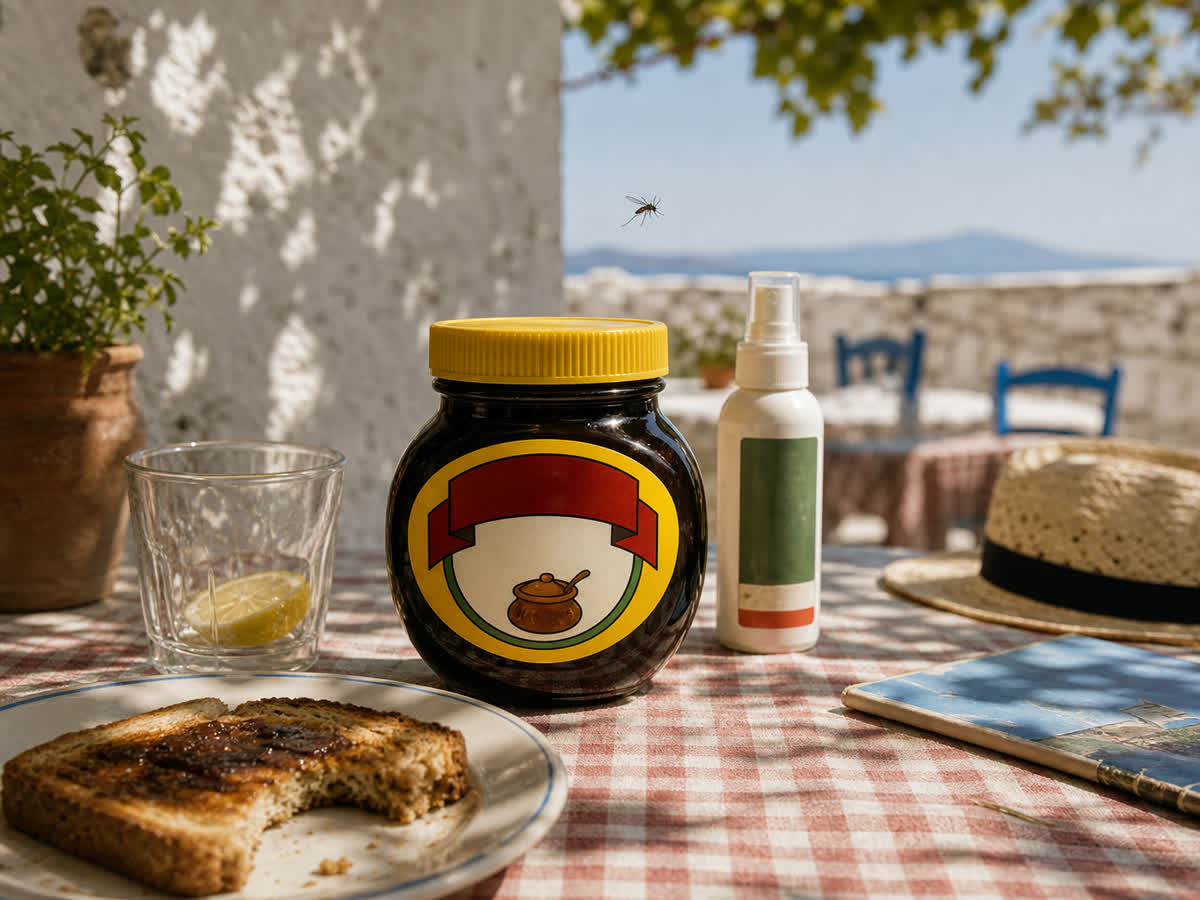
It goes like this. The B vitamins in Marmite, particularly thiamine (B1), are excreted through the skin in small amounts. Mosquitoes find the smell of thiamine unattractive. Therefore, eating Marmite makes you a less appealing target.
I Wouldn't Eat It: Marmite
From Too Many Chefs , food bloggersd extraordinaire. Originally written in February 2004. Consulting the web, the most important thing to know about Marmite is apparently that it is NOT Vegemite. So what is it? Basically, it's beer yeast crap. Or more precisely, salty beer yeast crap.
Marmite FAQ: Your Questions Answered
"You either love it, or you hate it — and it turns out a chunk of which side you fall on is written in your DNA." Marmite is Britain's most divisive spread - a dark brown, sticky paste made from concentrated yeast extract, a by-product of brewing beer.
Page 1 of 1