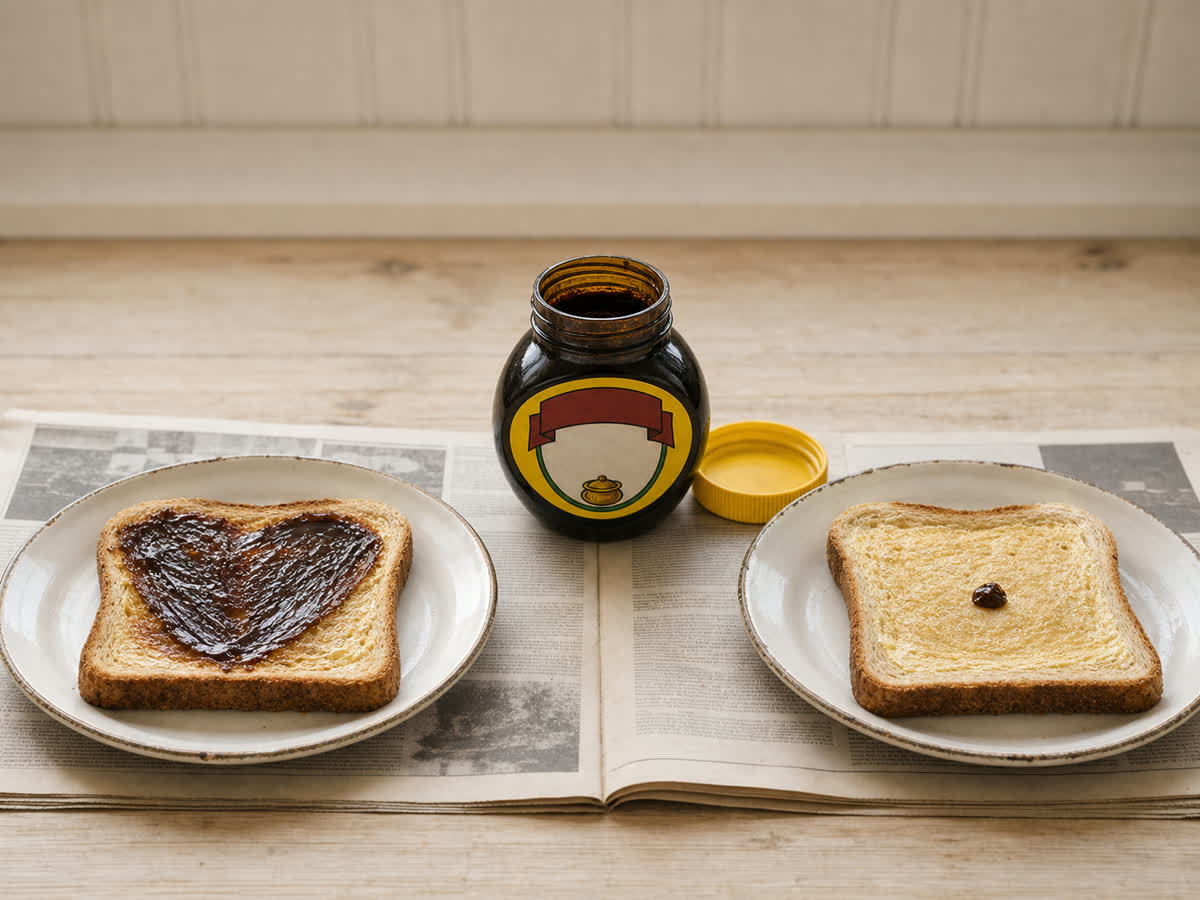

Marmite spent the autumn of 2017 asking the public to spit in a tube. I am still not sure whether that was the bravest or the daftest thing the brand has ever done, and I say that as someone who has watched it make a knife, a board game, and a tub of lip balm.
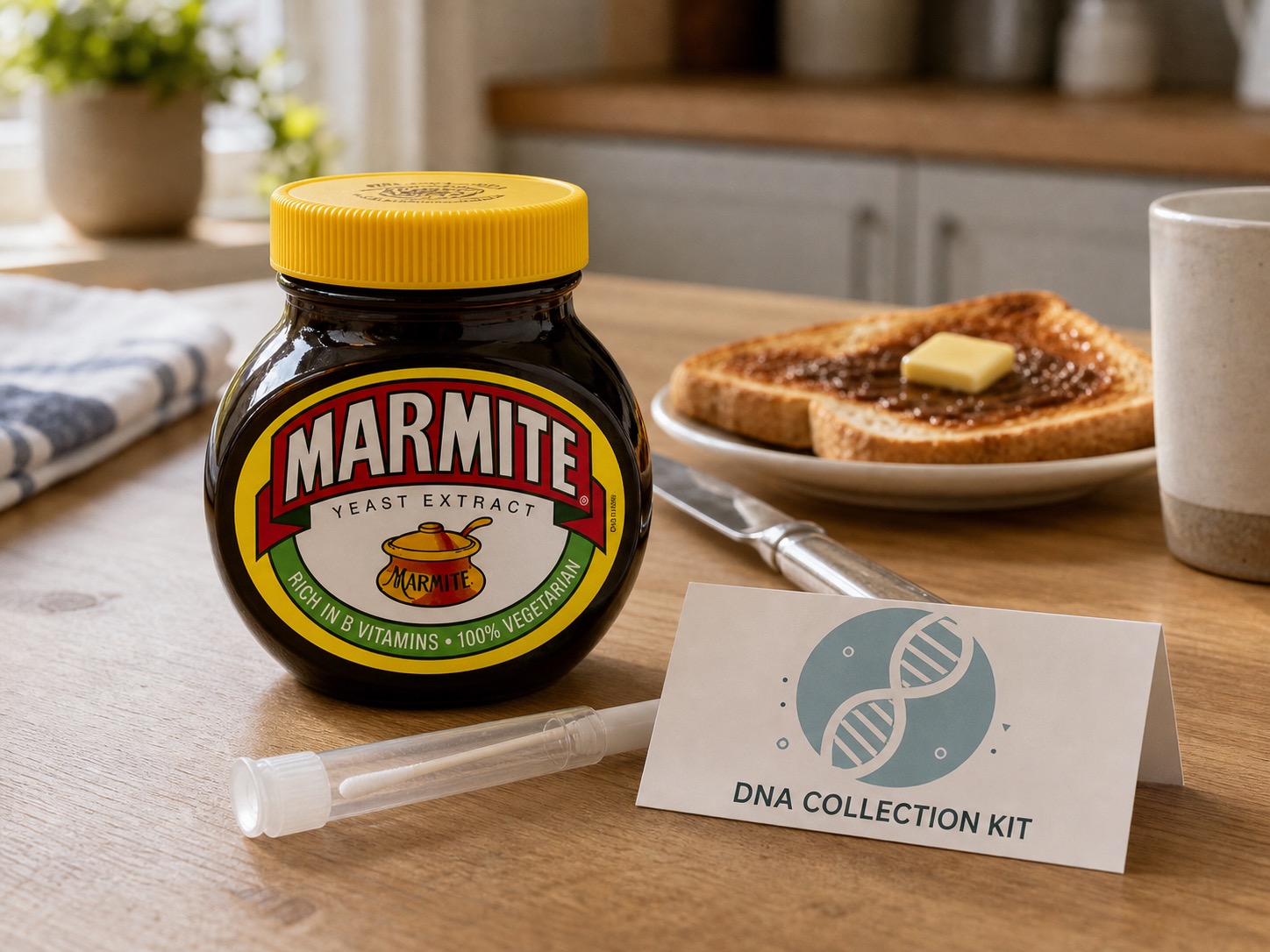
The campaign was the Marmite Gene Project, and the premise was exactly what it sounds like. adam&eveDDB, the agency behind “love it or hate it”, paid a genetics-testing company called DNAFit to find out whether your feelings about the jar are written into your DNA. DNAFit swabbed the cheeks of 260 adults, fed them a spoonful, and went looking for a pattern. They came back claiming fifteen genetic markers linked to whether a person loves Marmite or recoils from it. Then, naturally, they sold you a kit so you could find out your own score.
The advert
The launch was not subtle. On a Saturday night in September the brand ran a television “roadblock”, the same ad appearing across roughly 120 channels at once, with the main film debuting during The X Factor. James Rouse directed it through Outsider. The story was a family at the breakfast table, one lover and one hater, the old domestic battle now dressed up as a question of inheritance. There was an app, built by AnalogFolk, that used facial recognition to guess which side you were on before you had touched a jar.
It was, as a piece of advertising, very good. Marmite has always understood that its real product is the argument, not the spread, and the Gene Project turned the argument into a thing you could order through the post.
The science, such as it was
Here is where I put the spoon down. There is genuine science about why people taste things differently. Bitter perception, for instance, is linked to a gene called TAS2R38, which is why some people find certain greens and tonic water unbearable and others do not notice. Taste preference really is part inherited. Nobody serious disputes that.
What the Gene Project was, though, is a marketing exercise, not a peer-reviewed paper. A study of 260 people, run for a brand by a company that wants to sell you a swab kit, is not the same thing as published research. Preference for a food as loud as Marmite is shaped by a tangle of genes, what you were given as a child, and whether your dad ate it in front of you every morning. Reducing all of that to “you have the Marmite gene” is the bit that made scientists wince. The clever trick of the campaign was that it never quite claimed more than it could defend, while letting everyone assume it had.
Did it work?
Yes, annoyingly. Sales rose 14 per cent, which made it one of the brand’s most successful campaigns, and the following year the Gene Project collected a Pencil at the D&AD awards. So the daft idea was also the brave one, and it paid.
I still think about the people who paid actual money to be told, with a straight face, that their dislike of a yeast spread was genetic destiny. There is something very Marmite about that. The brand sold the haters a scientific excuse, and the haters bought it.