
The strategy shift, briefly
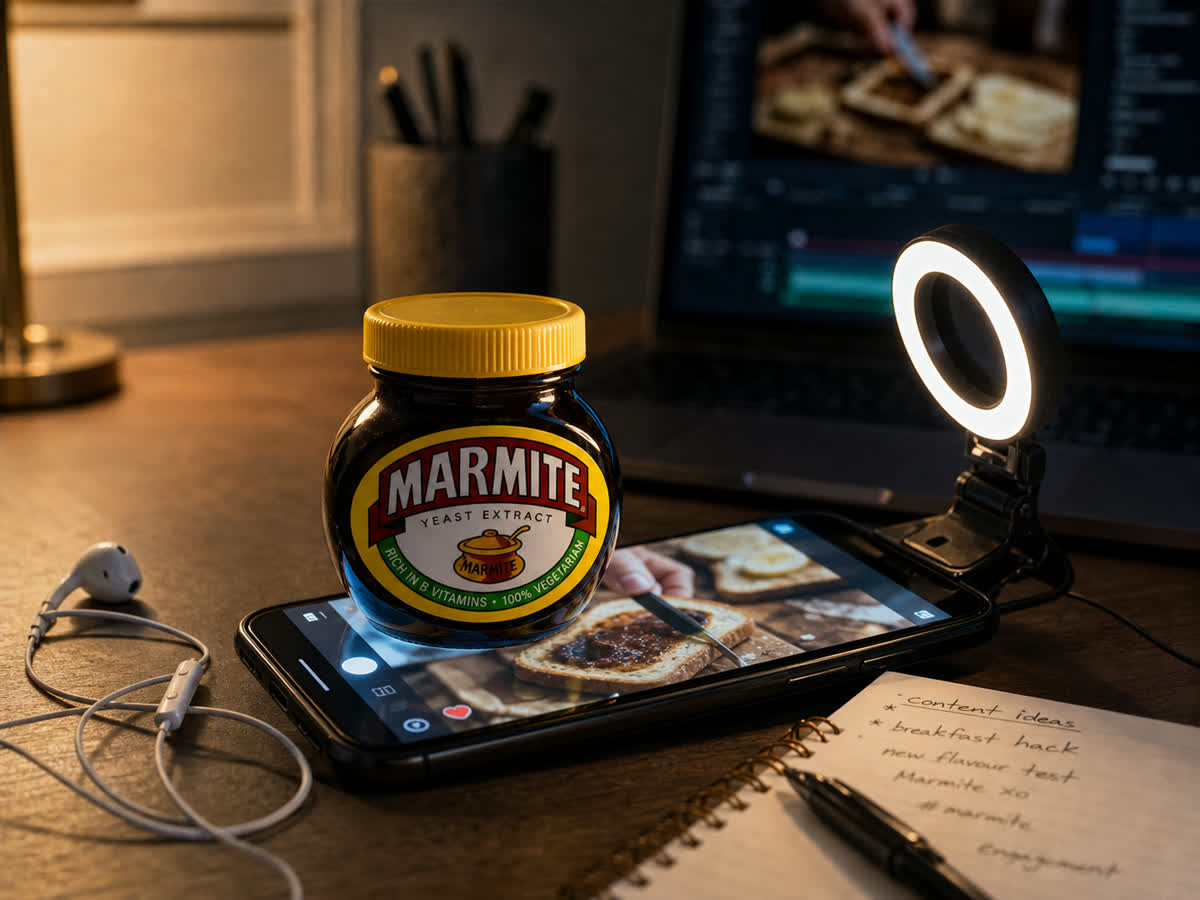
Unilever’s CMO put out a statement in early March confirming what most of the trade press had already worked out. Marketing spend for a chunk of the British brand portfolio, Marmite included, is being moved out of traditional advertising channels (TV, print, outdoor) and into influencer partnerships and social-first content. Fewer thirty-second ads on Channel 4, more food creators on TikTok.
For most heritage brands this would be a slightly nervous moment. For Marmite, it is actually the right call, for reasons that are worth being precise about.
Why this works for Marmite specifically
Marmite’s entire commercial identity is built on personal opinions. The whole “love it or hate it” positioning is, structurally, a piece of user-generated content waiting to happen. Every Marmite first-time-trier post on TikTok is a free Marmite ad, paid for by the creator’s audience and delivered with more credibility than any TV spot could ever manage.
For thirty years, the brand’s TV campaigns have been trying to make people talk about Marmite. Now there is a global platform where people talk about Marmite for free, twenty-four hours a day, in thirty-second clips, and the brand can simply lean into the conversation rather than trying to start one.
Moving the budget to support that conversation, instead of paying TV agencies to simulate it, is the obvious move once you see it laid out.
The risk, briefly
The risk of influencer-led campaigns is always the same: pay too obviously for endorsements, and the audience smells it immediately. TikTok and Instagram users have spent five years learning to spot sponsored content, and a creator who looks like they are forcing a Marmite mention into otherwise unrelated content will lose more credibility than the brand gains.
The way around this is to do what the smart brands have already worked out: find creators who genuinely already use the product, give them creative freedom rather than scripted ad reads, and accept that some of the resulting content will be off-brand or mildly chaotic. That last bit, accepting some loss of control, is the hard part for any large corporate marketing team.
Marmite’s advantage here is that the underlying product is already polarising and chaotic enough that off-brand content tends to land in a Marmite-shaped place anyway. A creator who hates Marmite making a video about hating Marmite is still doing the brand’s work for it. That is the unusual position the jar sits in.
What you will probably see
A few predictable categories.
Recipe creators using Marmite as a “secret ingredient” in adventurous dishes. The Nigella spaghetti and the Marmite ragu have both been TikTok formats for a few years. Expect more, with better production values and a small “in partnership with” disclosure that nobody really reads.
First-time-trier reaction videos, mostly from American creators discovering the jar via their British partner. These are evergreen content, they have always existed organically, and the brand can now amplify the good ones.
Cooking-tip and hack content: “the right way to make Marmite on toast”, “how to use Marmite in your scrambled eggs”, that sort of thing. These will be reliable mid-tier engagement and the bread-and-butter of the strategy.
A handful of bigger collaboration moments, where Marmite partners with a creator on a one-off piece of content that gets pushed across the brand’s own channels too. This is where the real production money will go.
What it tells us about TV
The Marmite shift is part of a much bigger shift across the Unilever portfolio and across the CPG sector generally. TV advertising spend is in long-term decline as a share of marketing budgets. Premium streaming services have made it harder and more expensive to reach the audiences brands used to reach on terrestrial broadcasters. The big creative campaigns of the 1990s and 2000s (which is, mostly, where the BBH “Love it or hate it” work sat) belong to an era that is finishing.
This is not the death of TV advertising. There is still a place for big-budget brand-building work, particularly for heritage brands like Marmite that benefit from occasional reminders of their cultural presence. But the share of total budget is shrinking, and the new spending is going where the audience is, which is on their phones.
The slightly sad note
The thing this shift loses is the occasional truly great TV ad. The 1996 Bartle Bogle Hegarty “Love it or hate it” launch campaign was a piece of genuinely great advertising that shaped how British people talked about the brand for thirty years. TikTok has a lot of strengths, but it does not produce campaigns like that. It produces a thousand smaller moments instead.
Whether the thousand smaller moments add up to the same cultural footprint is the question the marketing trade will be arguing about for the rest of this decade. For Marmite, given how well the brand sits in user-generated formats, the answer is probably yes. For brands with less natural conversational territory, the answer is going to be less clear.
Source: Unilever marketing comms, March 2025; Marketing Week and Campaign coverage.