
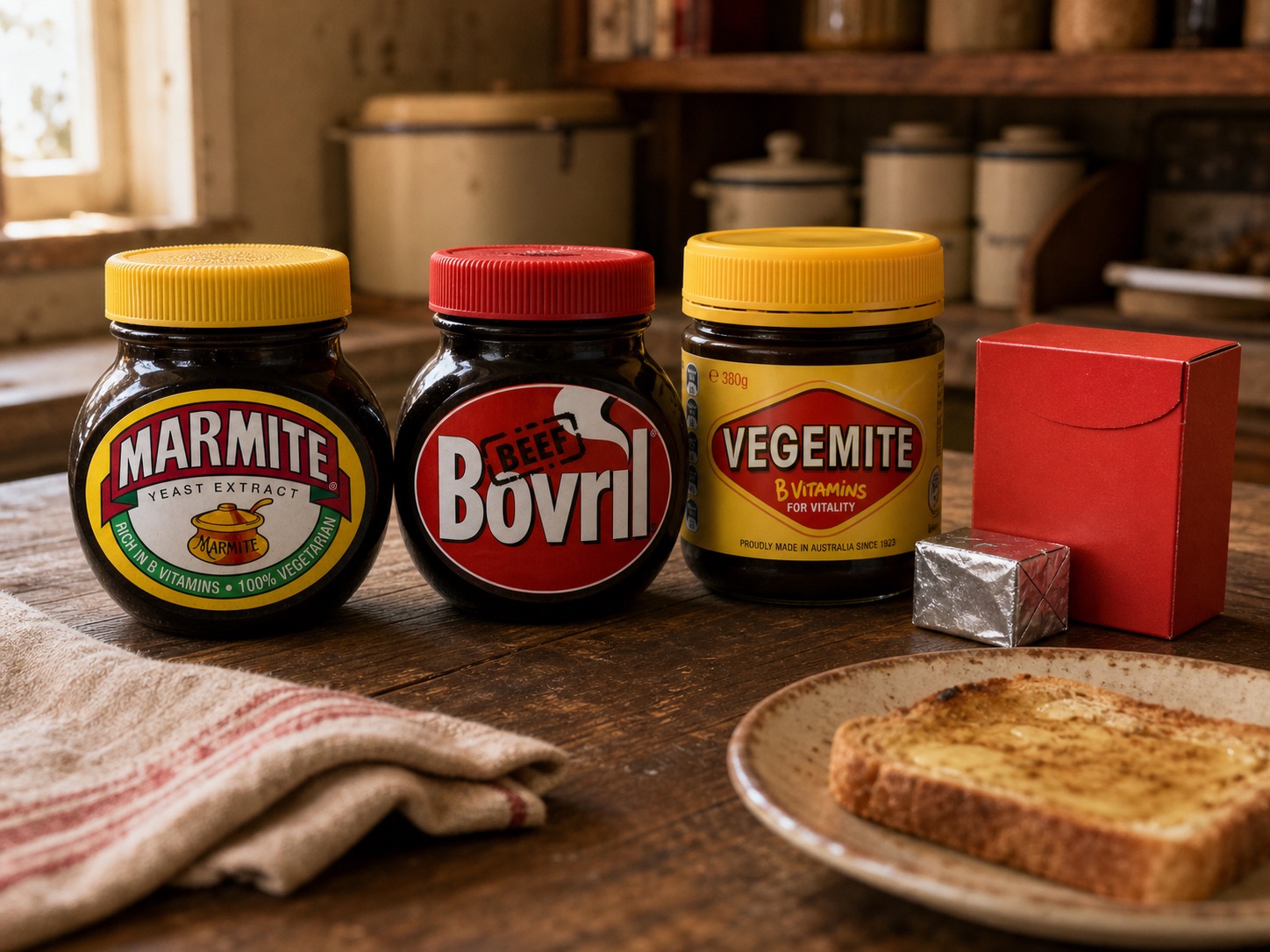
People half-remember Marmite as some kind of wartime energy product, the brown jar that kept factory workers and soldiers going. The reputation is real, but the science is widely misunderstood. Marmite barely contains any calories at all, so it is not an energy source in the way a sugary drink or a flapjack is. What it does carry is a heavy load of B vitamins, which help the body release energy from the food you eat. That distinction is the whole story.
Marmite Articles
Explore our collection of articles about Marmite, Britain's most divisive spread.
Showing articles tagged with: wartime | View all articles

The Marmite WWII workers' campaign: how a brown jar became part of the war effort
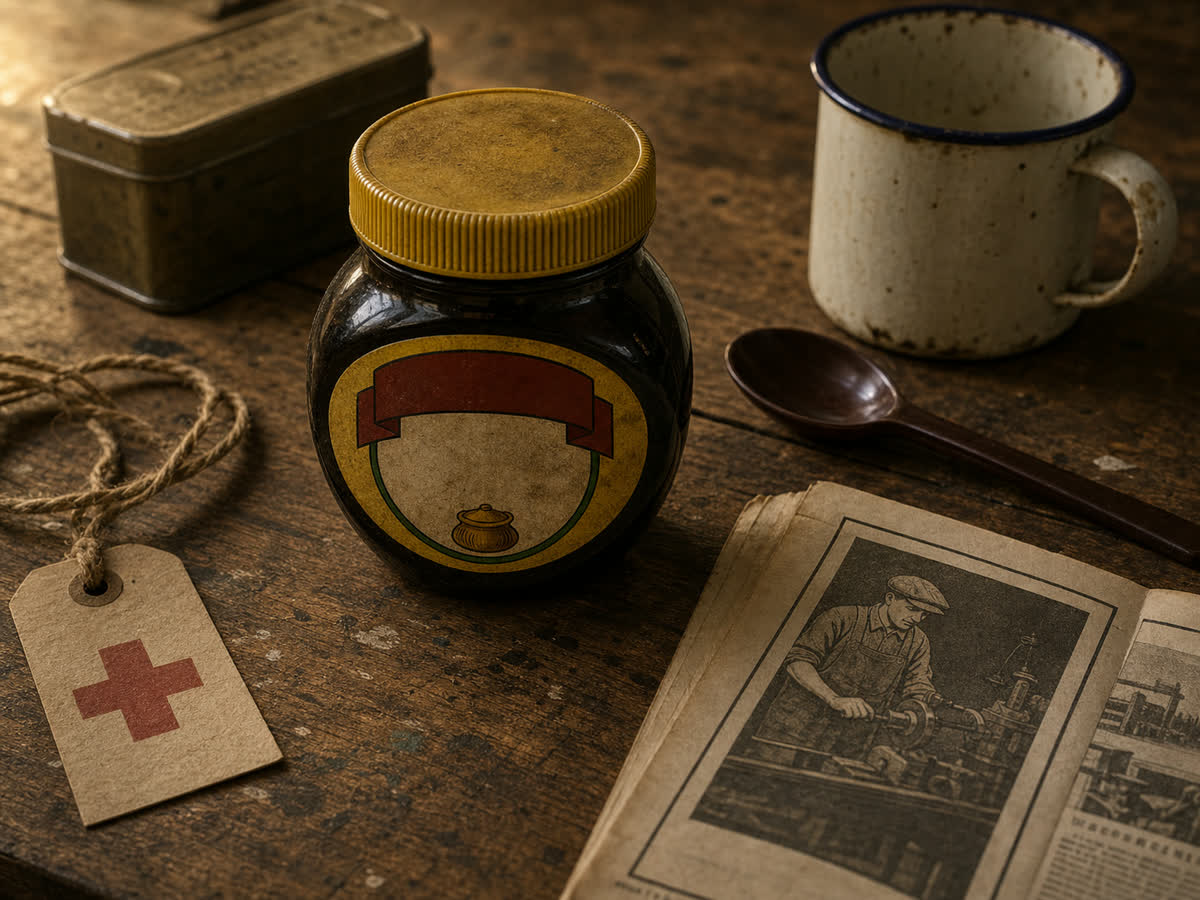
Marmite's Second World War story: the B-vitamin workers' advertising in factory press, the Red Cross parcels to prisoners of war, the desert and jungle field rations, and what the wartime ads actually looked like.
An imagined Mnemonicon interview with Winston Churchill on Marmite, rationing, and the rumoured sale

Sir Winston Churchill on rationing, the Burton factory, and a rumoured Marmite sale. Two questions Britain should ask before the deal closes, in his voice.
Marmite went to war, and the B vitamins came with it
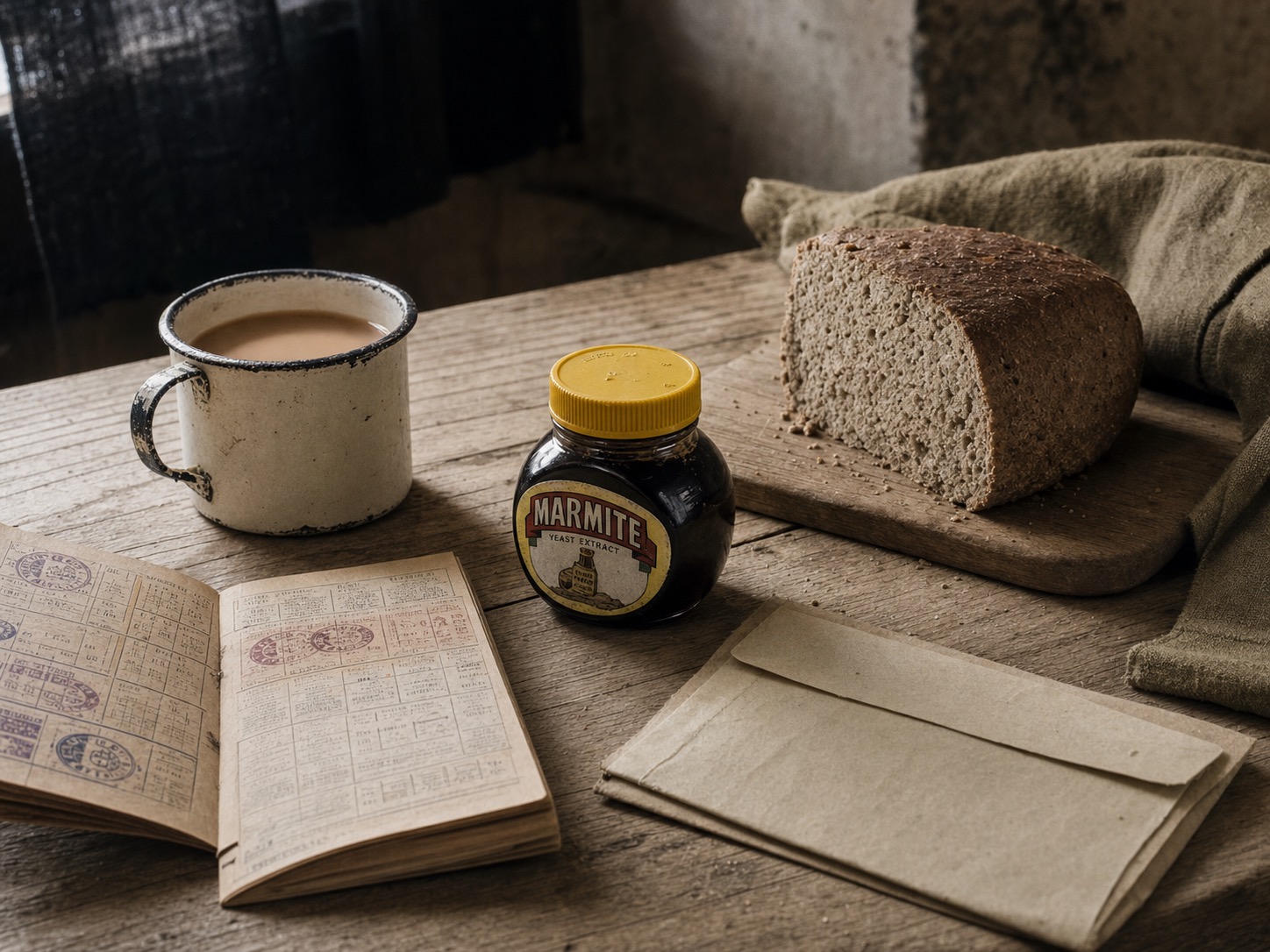
Marmite spent both World Wars in British army ration tins. Not as a luxury, as a piece of medicine.
Marmite goes to war: the WWII workers' advertising, the Red Cross parcels, and the Burma broth
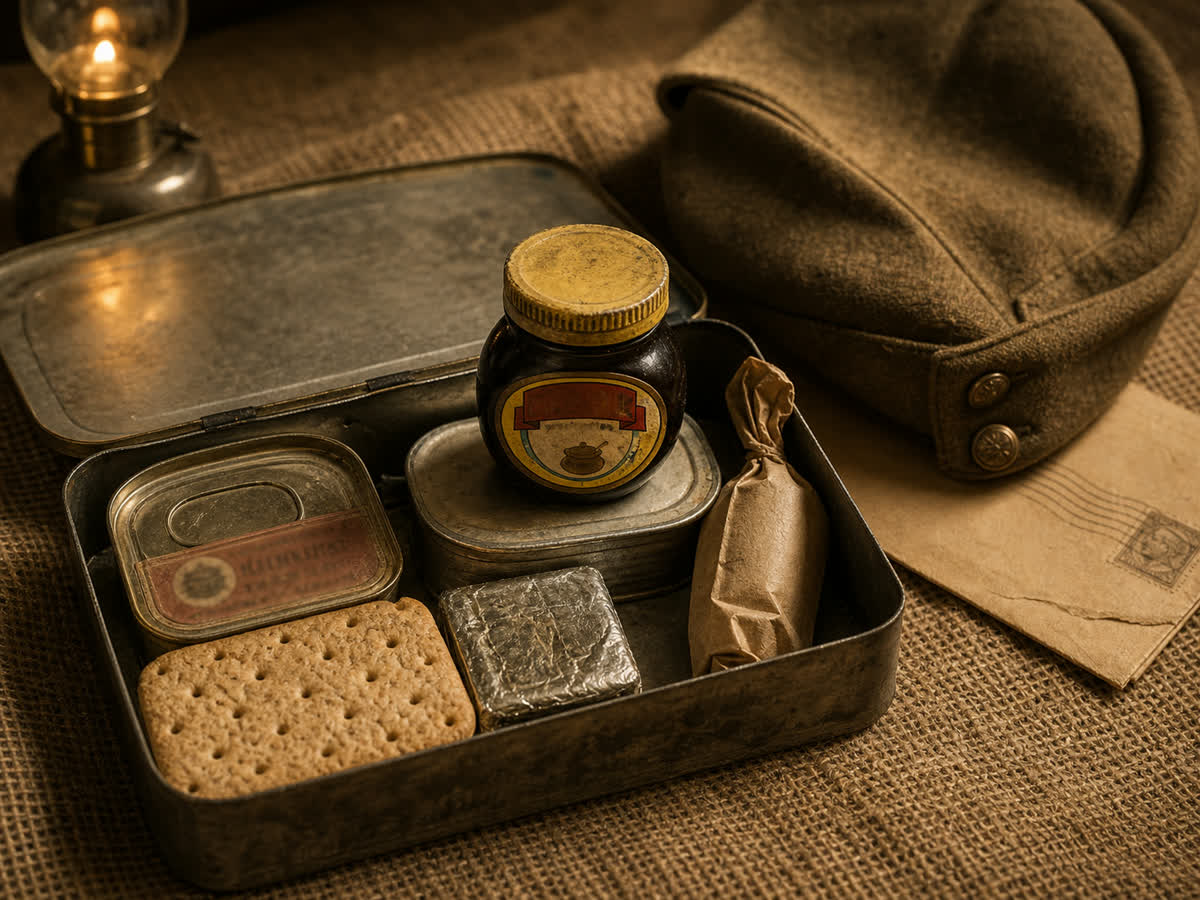
By 1916, the British Army Medical Corps had a problem. Soldiers in the trenches were developing beriberi, a nerve disease caused by thiamine (vitamin B1) deficiency.
Page 1 of 1