
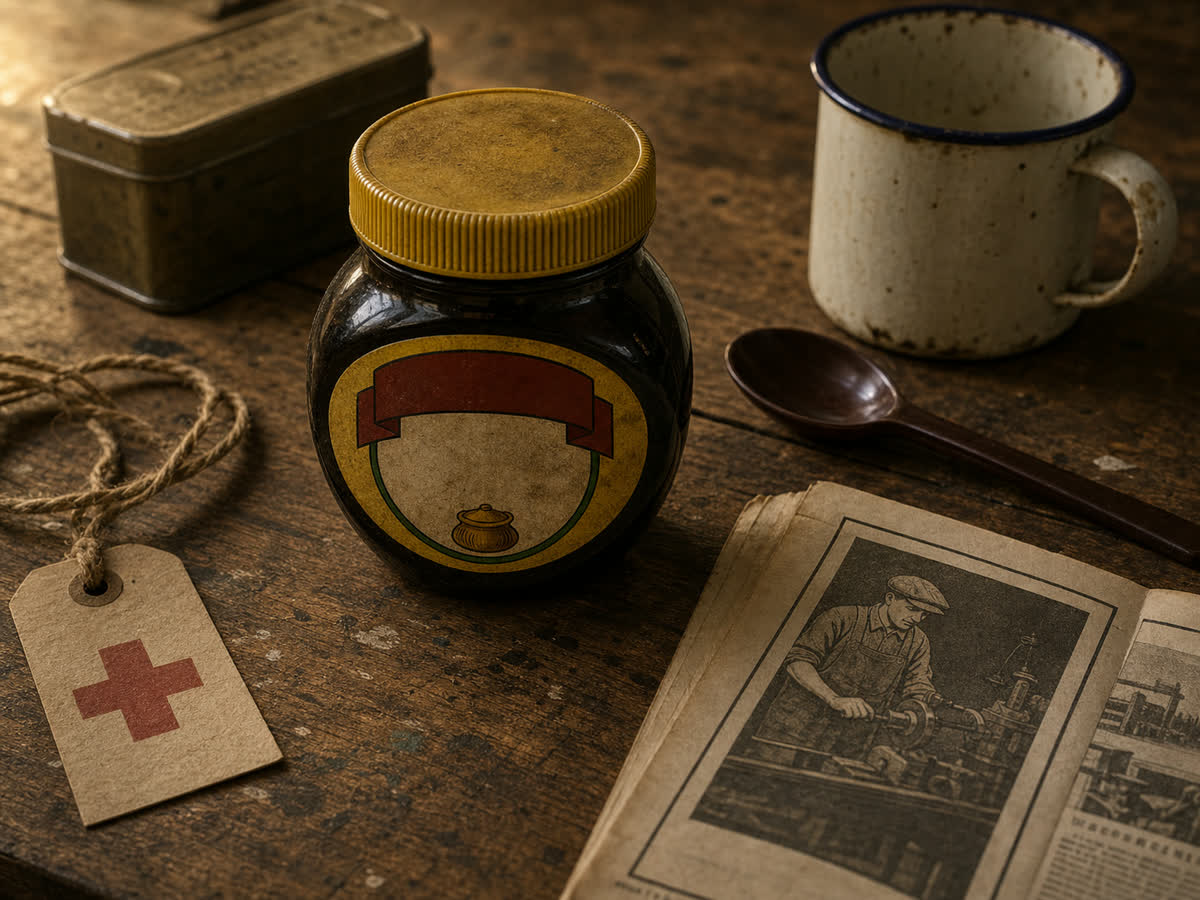
Marmite's Second World War story: the B-vitamin workers' advertising in factory press, the Red Cross parcels to prisoners of war, the desert and jungle field rations, and what the wartime ads actually looked like.
Wars & Rationing (1914-1945)
Marmite during World Wars I and II: its role in soldier rations, medical use for vitamin B deficiency, and wartime production challenges.
Category: Wars & Rationing (1914-1945) | View all articles

Marmite went to war, and the B vitamins came with it
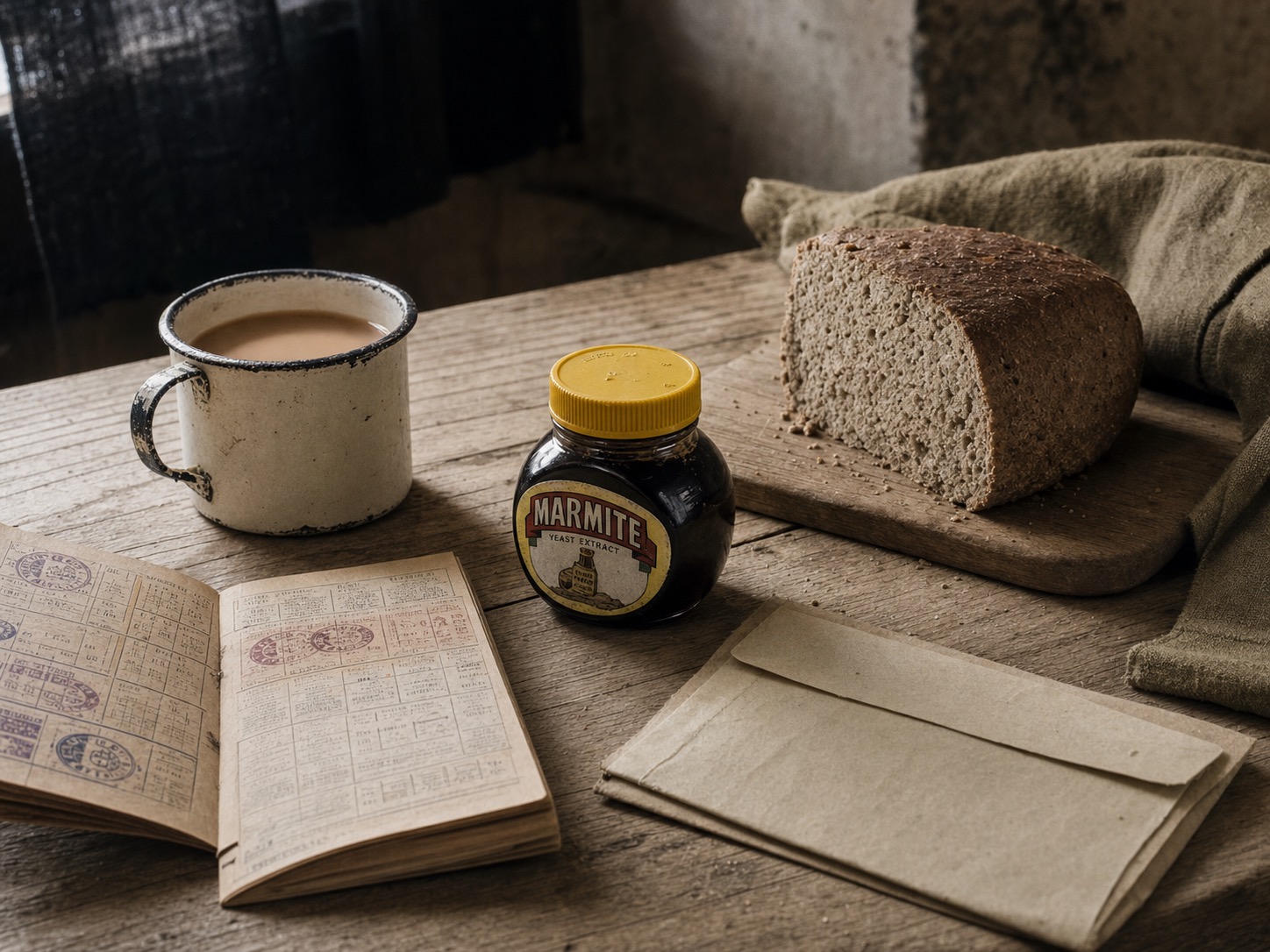
Marmite spent both World Wars in British army ration tins. Not as a luxury, as a piece of medicine.
Lucy Wills, Marmite, and the discovery of folic acid
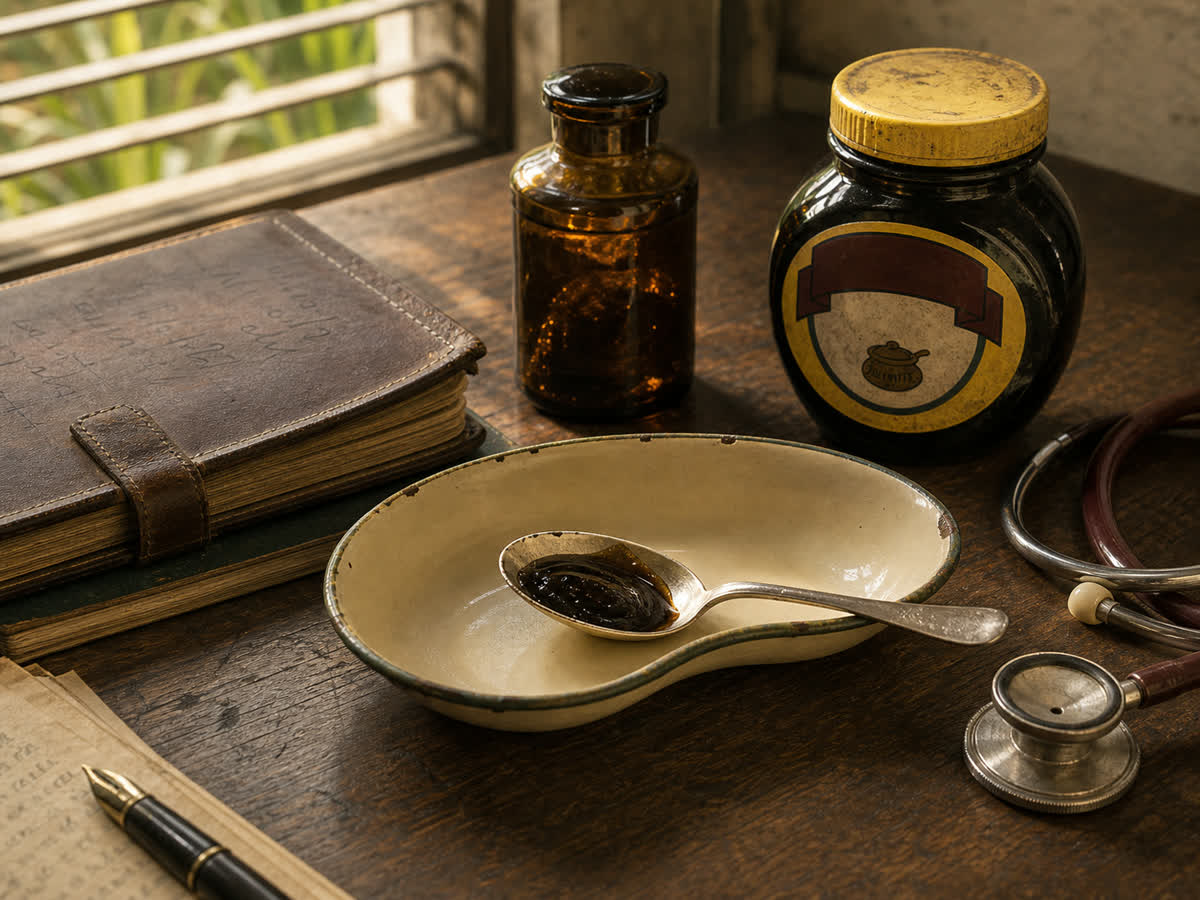
Lucy Wills was an English physician who graduated from Cambridge in 1928 and went to work at the Haffkine Institute in Bombay in the early 1930s. She was particularly interested in a severe and often fatal anaemia affecting pregnant women in the Bombay textile mills. The condition was puzzling.
Marmite goes to war: the WWII workers' advertising, the Red Cross parcels, and the Burma broth
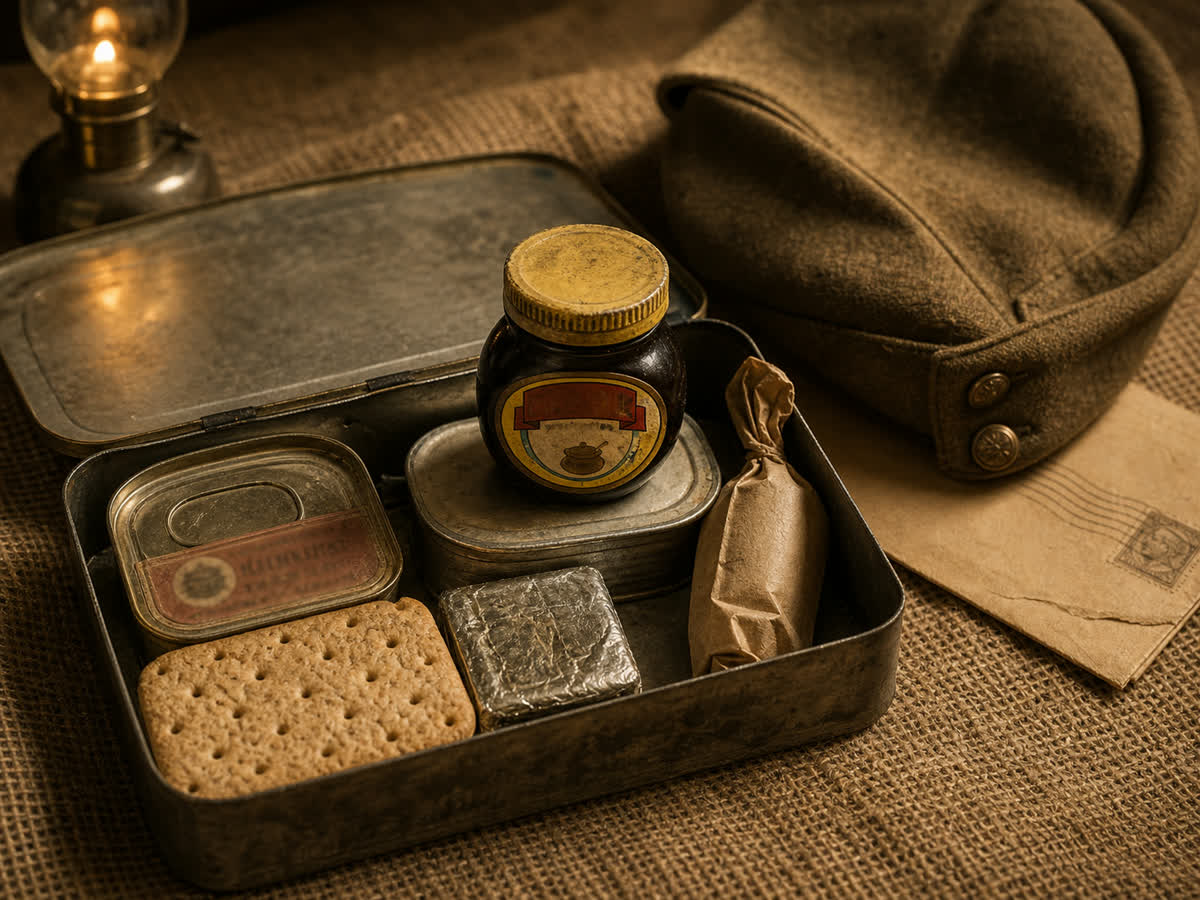
By 1916, the British Army Medical Corps had a problem. Soldiers in the trenches were developing beriberi, a nerve disease caused by thiamine (vitamin B1) deficiency.
Page 1 of 1