
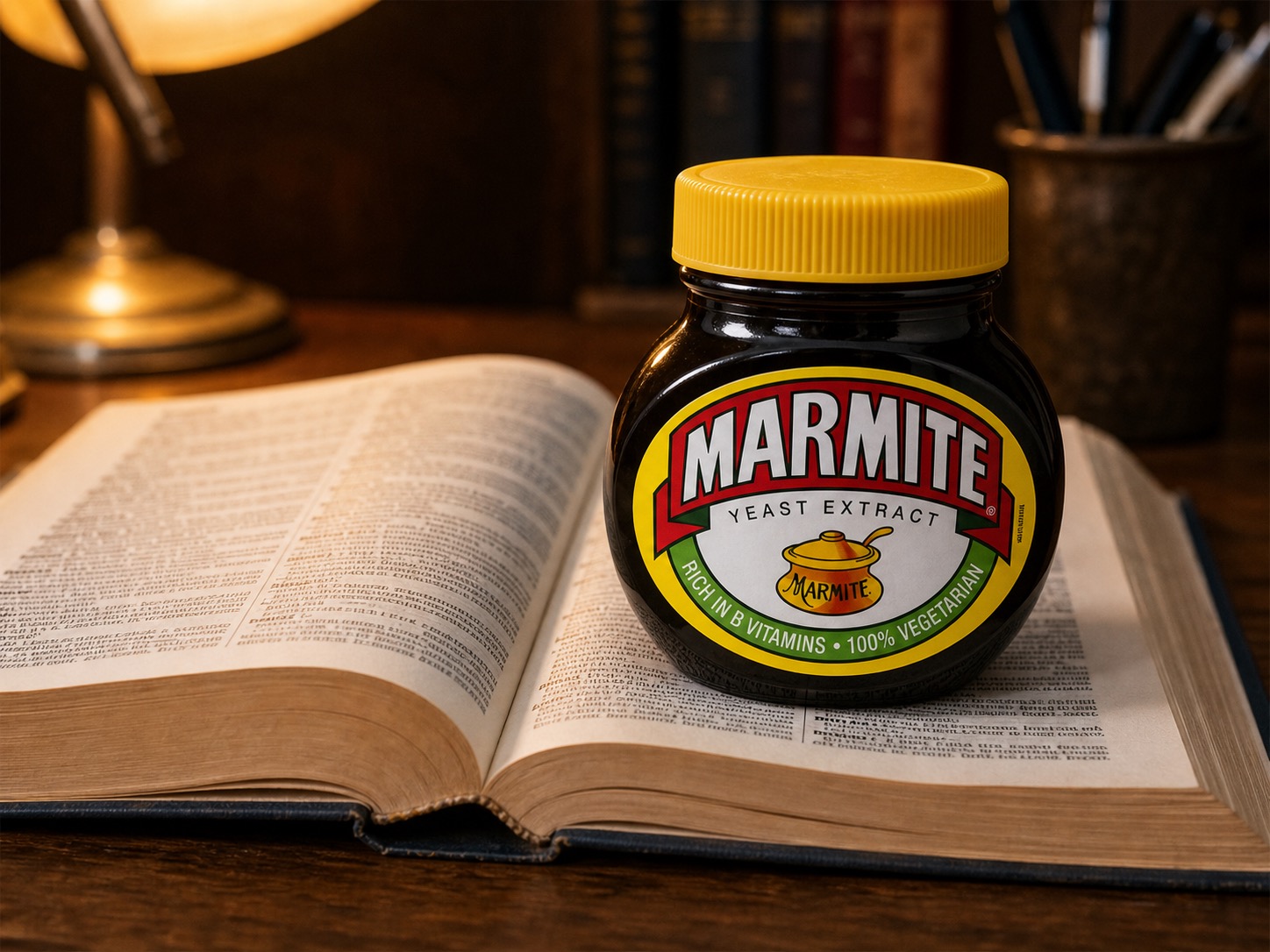
Marmite is a word in the dictionary now, and not just the noun on the jar. The Oxford English Dictionary lists “Marmite” as an adjective: “British colloquial. That polarises opinions by provoking either strongly positive or strongly negative reactions, rather than indifference.” A bit Marmite, in other words. Officially.
I am absurdly pleased about this, in the way you are pleased when the thing you have been a fan of for years turns out to be properly important. Our jar is a part of speech.
Here is the bit that surprised me, though. Everyone assumes the metaphor comes from the famous advert, the 1996 “you either love it or hate it” campaign. It does not. The OED dates the adjective to 1994, two years earlier.
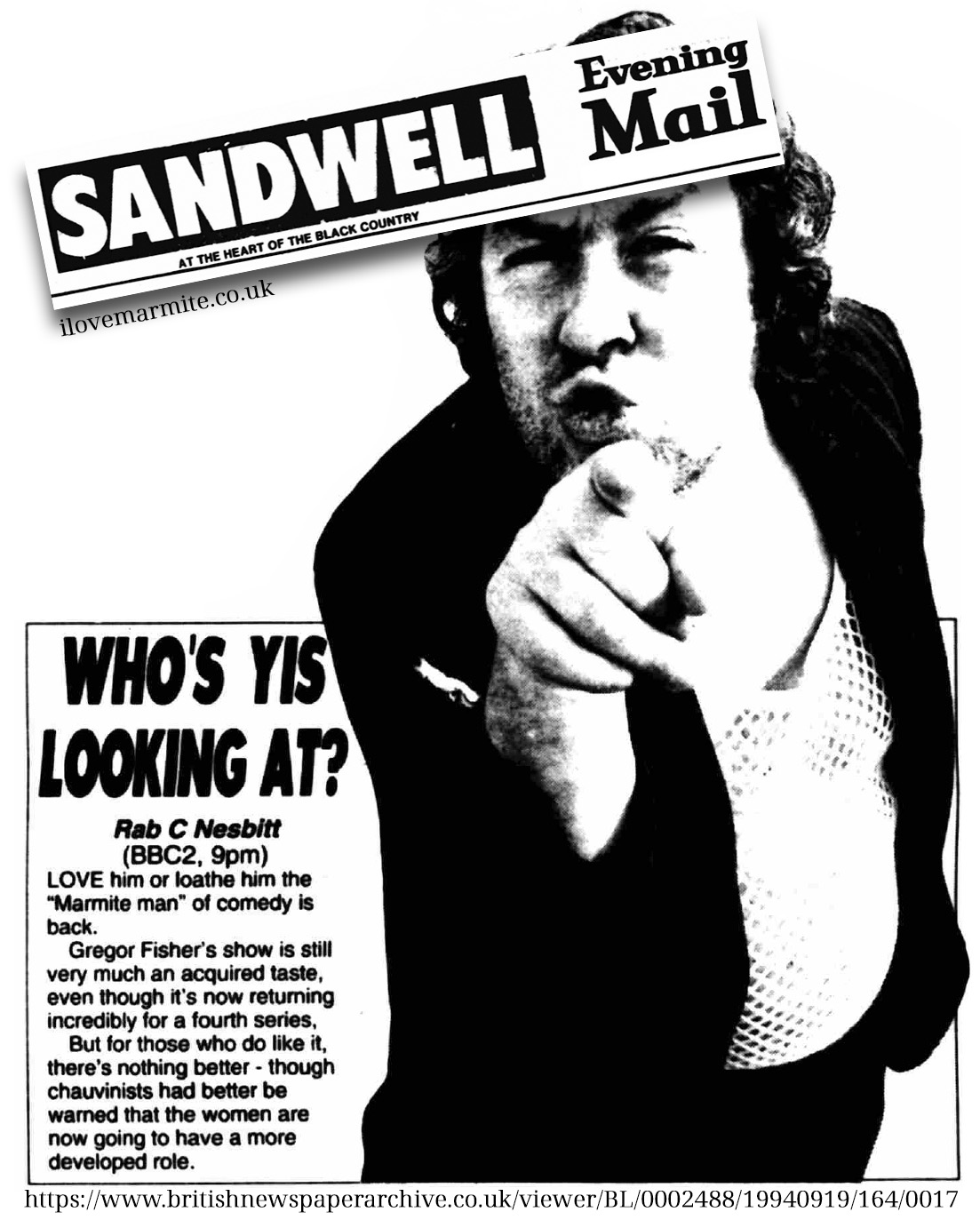
1994: the Marmite man of comedy
The OED’s first citation for the adjective is from the Sandwell Evening Mail, 19 September 1994: “Love him or loathe him the Marmite man of comedy is back.” I have no idea who the comedian was. But there it is, “love him or loathe him” and “Marmite” in the same breath, two years before the BMP DDB campaign that everyone credits with inventing the idea.
The “X is like Marmite” version turns up the next year. The Guardian, 7 April 1995: “Wagner is like Marmite, you either love it or you hate it.” Wagner. The composer, not the wrestler. So before the advert, a broadsheet was already using the jar to explain a German opera.
The advert popularised it, it did not invent it
Credit where it is due. The October 1996 campaign, with the slogan “You either love it or hate it,” is what pushed the metaphor into everyday speech, and the OED says exactly that in its note. Before 1996 the figurative use was occasional and a bit clever. After it, the word was everywhere, and it has never left.
By 1999 the Racing Post was calling a racecourse Marmite: “Chester is the Marmite of Flat tracks. You either love it or you hate it.” By 2010 the Daily Telegraph had Andrew Lloyd Webber down as “theatrical Marmite,” after one of his shows took a five-star rave in the Independent and a nit-picking two stars in the Times on the same morning. That is the word doing the exact job it exists to do.
What it actually means
The dictionary definition is dry, so here is the working one. To call something “a bit Marmite” is to say it splits people, hard, with no middle. Plenty of things are mildly some-like-it-some-don’t. Marmite means the two camps are loud, certain, and slightly at war, and that nobody in the room is shrugging. A politician can be Marmite. A pop star can be Marmite. A roundabout can be Marmite, if it is a bad enough roundabout.
The clever thing the brand did, in the end, was stop arguing with the half of the country that hates the taste and start celebrating the split itself. The advert never said everyone should love Marmite. It said, more or less, fine, hate it, that is the joke. Turning your own detractors into the punchline is a rare trick, and it worked so well that the word climbed out of the jar and went off on its own.
We were in the dictionary already, mind
The noun on the jar has been in the OED since 1902, with some lovely entries along the way. D. H. Lawrence grumbling in a 1925 letter about being fed “only marmite pie and nut-cutlet.” T. H. White in 1947 giving a character “brown eyes the colour of marmite, but more shiny.” A 1985 post on a Usenet cooking group explaining it to Americans as the thing people either “fall in love with” or “wouldn’t even stay in the same room as a bottle of it.” The love and the hate were on the record long before the marketing department turned them into a slogan.
So the next time someone calls a band, or a comedian, or a Prime Minister “a bit Marmite,” you can tell them they are using a word the OED has dated to 1994, and that the jar got there before the advert did. Whether they find that fascinating or unbearable, well. That is rather the point.
When was Marmite first used as an adjective?
The earliest figurative use the Oxford English Dictionary records is from 1994, in the Sandwell Evening Mail of 19 September. The line, “Love him or loathe him, the Marmite man of comedy is back”, ran in a television review of the return of Rab C Nesbitt, two full years before the famous “love it or hate it” advert of 1996. So the metaphor was already in print before any marketing department reached for it.
Who was the first “Marmite man”?
By the OED’s own dating, it was Gregor Fisher, the actor who played Rab C Nesbitt. The 1994 citation the dictionary uses for the figurative adjective is a review of his show, which makes the string-vested Govan drunk the original “Marmite man”, a detail almost everyone who repeats the citation manages to miss.
Is “Marmite” in the dictionary as an adjective?
Yes. The Oxford English Dictionary lists Marmite as an adjective for anything that splits people sharply into those who love it and those who hate it, and it dates that figurative sense to 1994, before the 1996 advert most people credit for the phrase.
Did “love it or hate it” exist before the 1996 advert?
Yes. The idea was in circulation well before the advert. The OED’s 1994 citation already pairs “love him or loathe him” with “Marmite man”, and an even earlier 1985 post on the Usenet group net.cooks explained Marmite to Americans as something people either love or will not stay in the same room with. The advert popularised the line, it did not invent it.