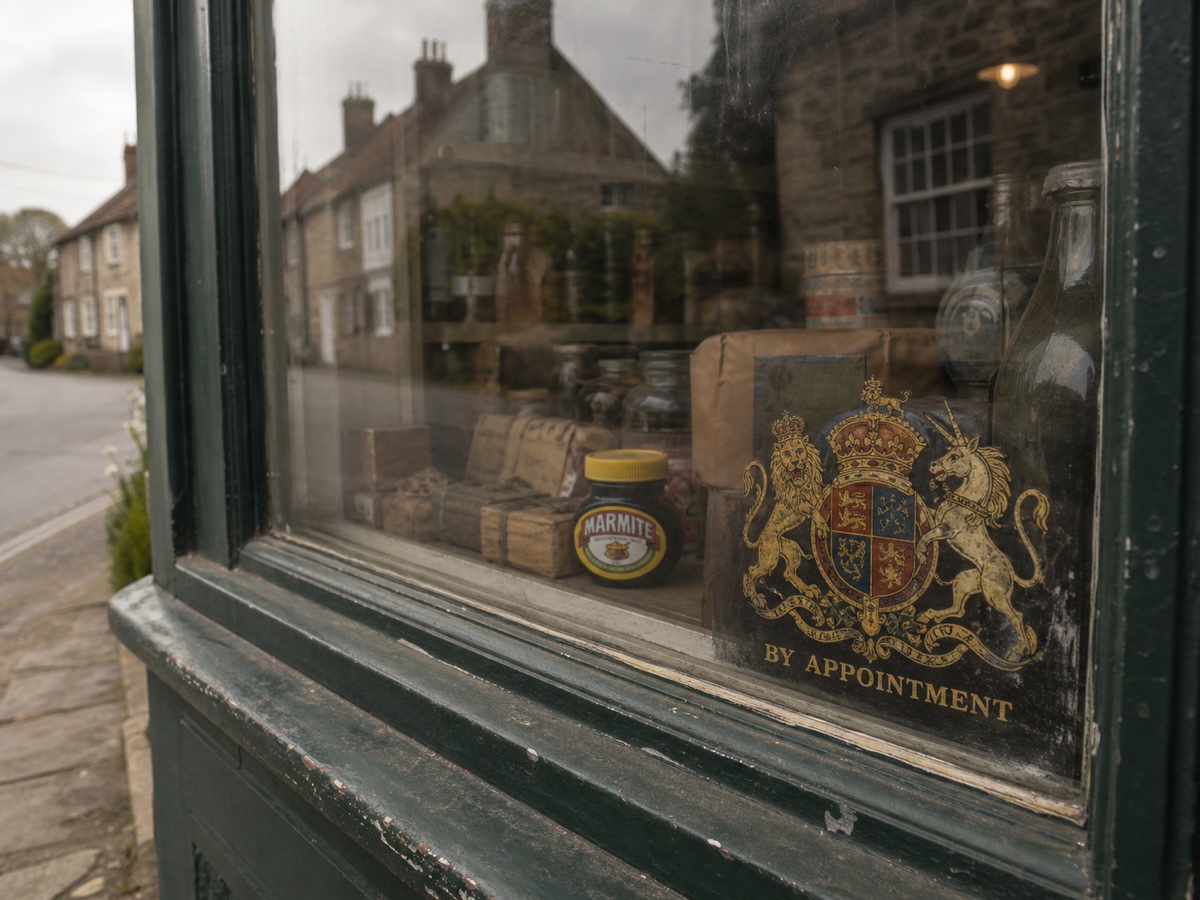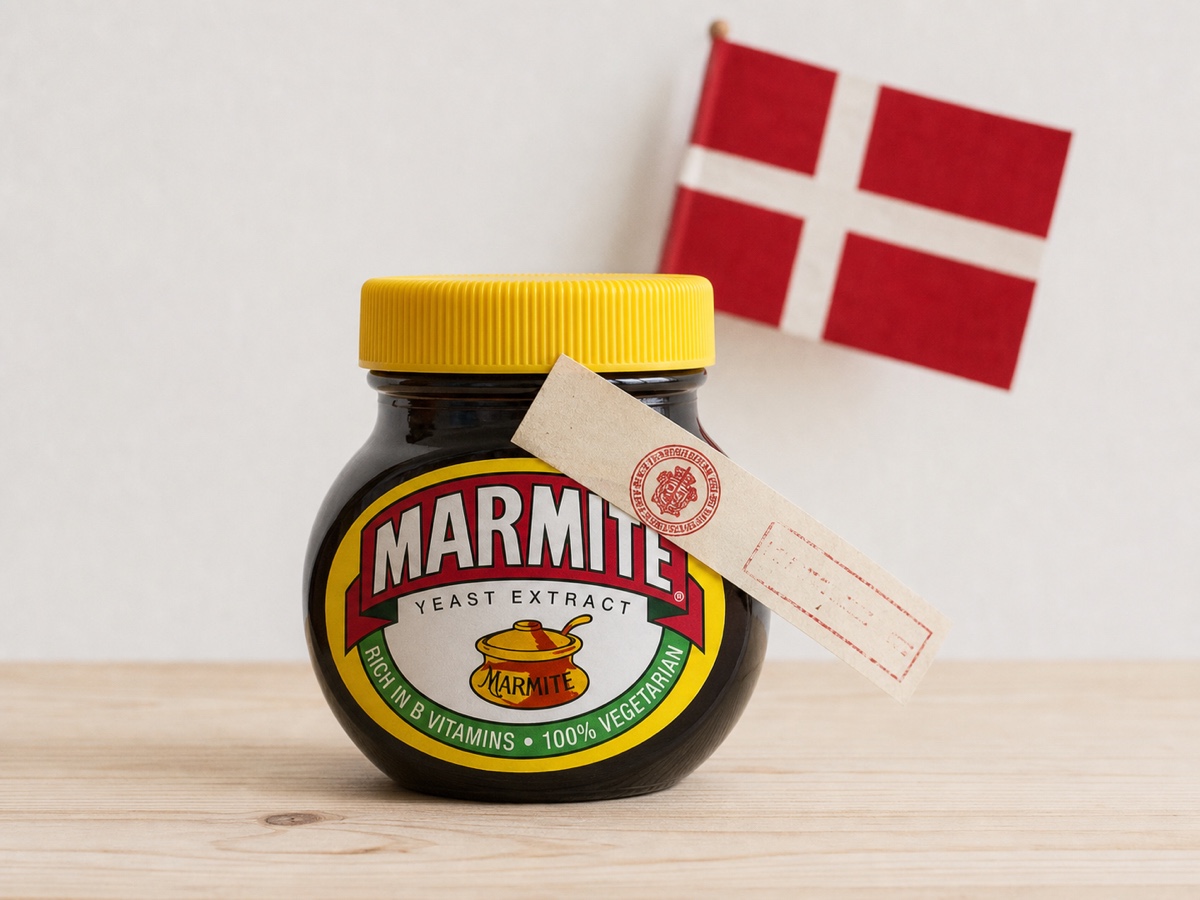

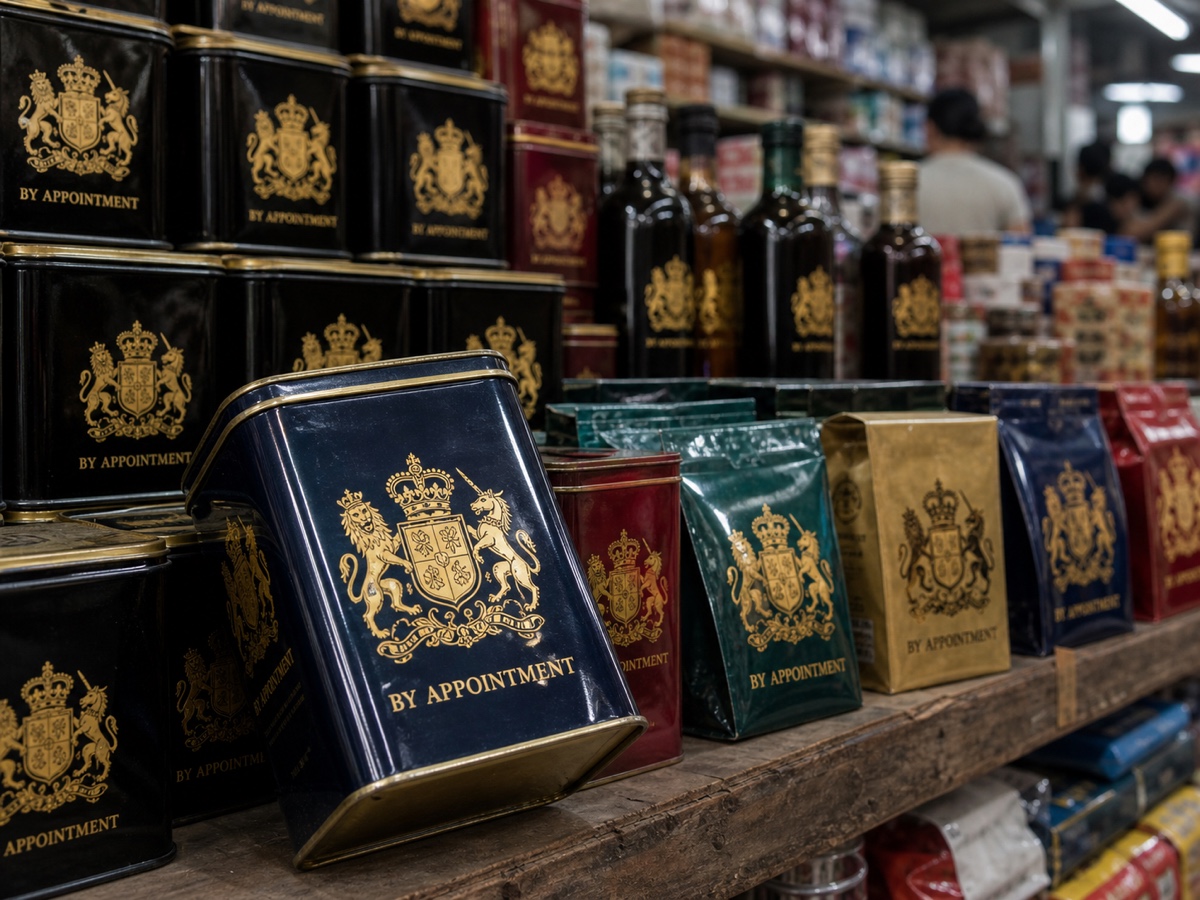
The painted crest over a butcher’s door in Norfolk is the easy fake to police, because the door is in Norfolk. Someone notices, a letter arrives, the crest comes down. The harder problem, and the one that has quietly grown into the bigger headache, is the royal coat of arms that turns up on a tin of biscuits in a market in Guangzhou, a bottle of “English” gin distilled nowhere near England, or a tea brand that has never sold a single leaf to anyone royal.
I wrote a longer piece about what a royal warrant actually is and how Marmite won one and then lost it. This is the offshoot of that, about the version of the warrant that nobody granted at all.
Why the crest is worth stealing
A royal warrant, the genuine article, is a mark of recognition that lets a company display the Royal Arms and the words “By Appointment” because it has really supplied the Royal Household for years. What it signals to a customer is quality, heritage and a quiet nod from the palace. That signal is valuable in Britain. It is arguably more valuable abroad, in markets where “British” already means premium and where the buyer has no way to check whether the nod from the palace ever happened.
That is the whole temptation. The arms are prestigious, instantly recognisable, and free to copy. Stick them on a label aimed at a shopper on the other side of the world and you borrow centuries of accumulated trust for the cost of the ink. The product underneath might be made anywhere, by anyone, to any standard. The crest does the lying for you.
The law against it is global, on paper
The surprising part is that the Royal Arms are protected almost everywhere, not just at home.
Under Article 6ter of the Paris Convention, an intellectual-property treaty that dates back to 1883 and has most trading nations signed up to it, the armorial bearings of reigning houses count as a protected state emblem. Member countries are obliged to refuse, and to cancel, any trademark that contains those arms or a heraldic imitation of them, whoever is doing the applying. In principle a company in any member state simply cannot register the British Royal Arms as part of its own brand.
At home the teeth are sharper still. Under section 4 of the Trade Marks Act 1994 you cannot register a mark containing the royal arms, the crown, or words implying royal patronage without consent. And under section 99 of the same Act it is a criminal offence to use the Royal Arms in connection with a business in a way calculated to lead people to believe you are authorised when you are not. That is the statutory back-stop behind every “take the crest down” letter.
So on paper, the fake “By Appointment” tin should be impossible. In practice it is everywhere. Why?
A treaty is only as good as its enforcement
The gap is simple. The right exists everywhere; the enforcement is concentrated wherever the palace can actually reach.
The Crown cannot police every market stall and every trademark registry on earth. What it does instead is run a quiet, permanent monitoring operation. The Lord Chamberlain’s office and the Crown’s lawyers watch trademark filings around the world and object to the ones that cross the line. It is the same machinery that handles the cheeky applications at home, and it is surprisingly willing to use it.
When a former butler to the then Prince Charles tried to register “The Royal Butler” as a trademark for an etiquette business, the Lord Chamberlain opposed the application on the Queen’s behalf. It was refused, with costs awarded against him, on the grounds that customers would assume a royal authorisation that did not exist. The same instinct killed the “Sussex Royal” trademark that the Duke and Duchess of Sussex tried to register after stepping back from royal duties. If the household will go to the tribunal over its own former staff, and over its own departing family, you can imagine how it feels about a factory abroad printing the actual coat of arms on a biscuit tin.
The trouble is reach. Opposing a filing in London or another major registry is one thing. Chasing a counterfeit crest through a market in a jurisdiction where nobody local is checking, and where the cost of acting exceeds the harm of any single fake, is another. So the fakes survive in exactly those corners: the grey markets, the export-only product lines, the websites that exist for a season and vanish. They keep going until the volume gets large enough to be worth a lawyer’s letter, and then a new one starts somewhere else.
The Marmite angle
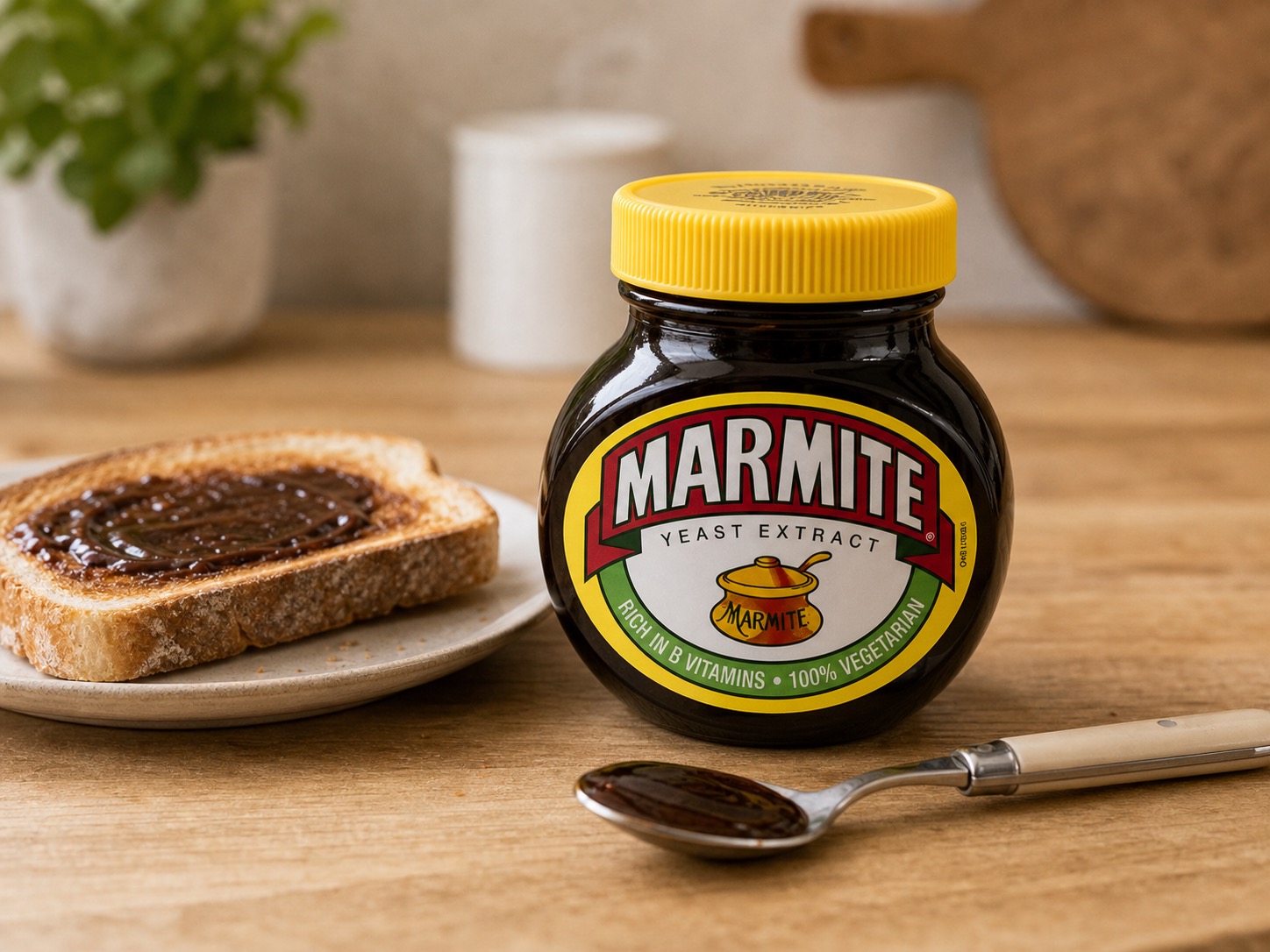
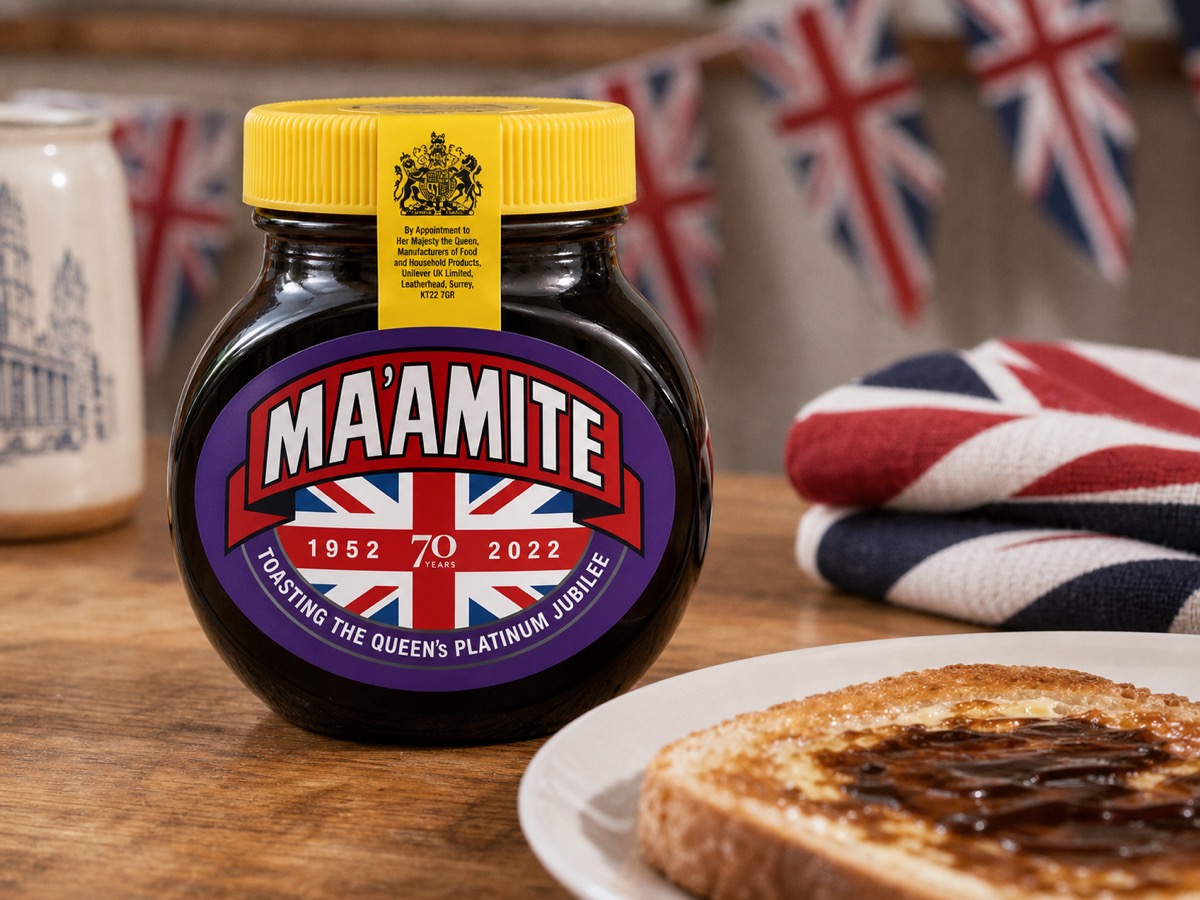
There is a small irony here for anyone who follows Marmite. Marmite held a genuine royal warrant from 2016, lost it when Queen Elizabeth II died in 2022, and was quietly left off King Charles’s new list in December 2024 when Unilever was dropped. So the real thing no longer carries a real warrant.
Which makes Marmite precisely the kind of name a counterfeiter loves: a trusted British brand, globally recognised, with a genuine royal association in living memory that most shoppers half-remember and could not date. The crest on a fake jar would do its work on the strength of that half-memory alone. The genuine “By Appointment” Marmite, the jubilee jars that really were entitled to the wording, is now the rarer object. The fake version of a thing often outlives the real one, and the royal crest, being both prestigious and free to copy, is one of counterfeiting’s oldest and favourite targets.
For the full story of the warrant system, how a business earns one, and how Marmite won and lost its own, see the companion piece. And for where the brand itself is heading next, the McCormick deal that is moving Marmite out of Unilever’s hands is covered separately.