
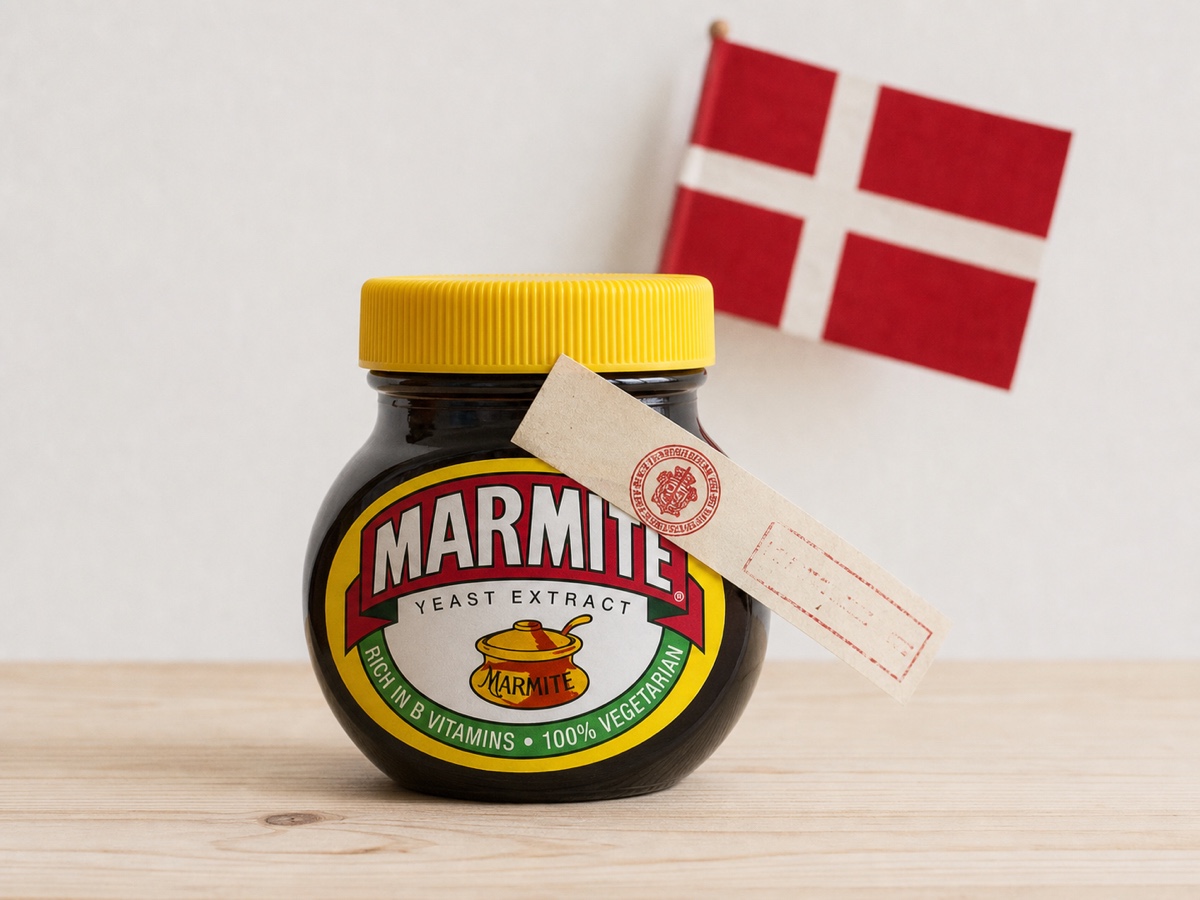
Every few years a story goes round that Denmark banned Marmite. It surfaced with real force, ran in papers all over the world, and produced the kind of headlines a brand cannot buy. British expats in Copenhagen were quoted mourning their lost jars. The phrase “Anglo-Danish Marmite war” got an outing. Somewhere a columnist reached for Churchill.
It was not true. Denmark never banned Marmite.
What the Danes actually said
The clearest correction came from the Danes themselves, and it was blunt enough to use as a headline, which the Danish food-industry press duly did:
Fødevarestyrelsen har ikke forbudt Marmite.
The Danish Veterinary and Food Administration has not banned Marmite.
The authority said the same thing in English, through the Danish embassy in London, for the benefit of the papers that had got it wrong: neither Marmite nor Vegemite nor anything like them had been banned. What Danish law actually required was approval before sale. In the regulator’s own words, “Ifølge de danske regler skal fødevarer, der er tilsat vitaminer, mineraler og andre stoffer være godkendt af Fødevarestyrelsen, før de kan markedsføres i Danmark”, which is to say that foods with added vitamins, minerals or other substances must be approved by the food authority before they can be sold in Denmark. No application for Marmite had ever arrived.
The real situation, once you scrape the outrage off it, was tiny. A single importer, a British shop in Denmark, was told it could not keep selling fortified Marmite until the product was approved. Rather than fill in the form, it stopped. That was the entire ban: one shop and one unfiled application. By then the story had reached Brussels, where a member of the European Parliament tabled a formal written question titled, with no apparent irony, “Forbud mod marmit i Danmark”, the ban on Marmite in Denmark, about a ban that did not exist.
So if it was not banned, what was it?
The actual rule
Denmark has had a law since 2004 covering foods that are fortified with added vitamins and minerals. The principle is the cautious one: a food that has had extra vitamins or minerals added to it cannot be sold in Denmark until the food authority has assessed it and approved it. The worry behind the law is overdose, people unknowingly stacking fortified product on fortified product until they pass a safe limit for this or that nutrient. Whatever you think of that as policy, it is a rule about a category of food, not a hit list of brands.
Marmite has B vitamins added to it, and has since the 1930s. That puts it squarely in the fortified category. And the thing that actually kept it off Danish shelves was mundane to the point of comedy: nobody had submitted an application to get it approved. The food authority had not received a request to market Marmite, so Marmite had no authorisation, so a shop selling it was technically selling an unapproved fortified food. Not banned. Unauthorised, for want of a form.
This is the difference the headlines flattened. “Denmark bans Marmite for having too many vitamins” is a story. “British firm has not filed a Danish fortification application” is not. One of them went round the world.
The grain of truth
A good myth usually has a true thing at the centre of it, and this one does. If you were a British expat in Aarhus in 2011 with a craving and an empty cupboard, the legal distinction between “banned” and “not specifically approved” made no difference to you at all. Either way the jar was not in the shop. From the consumer’s end it looked exactly like a ban, walked like a ban, and ruined toast like a ban. So people called it one.
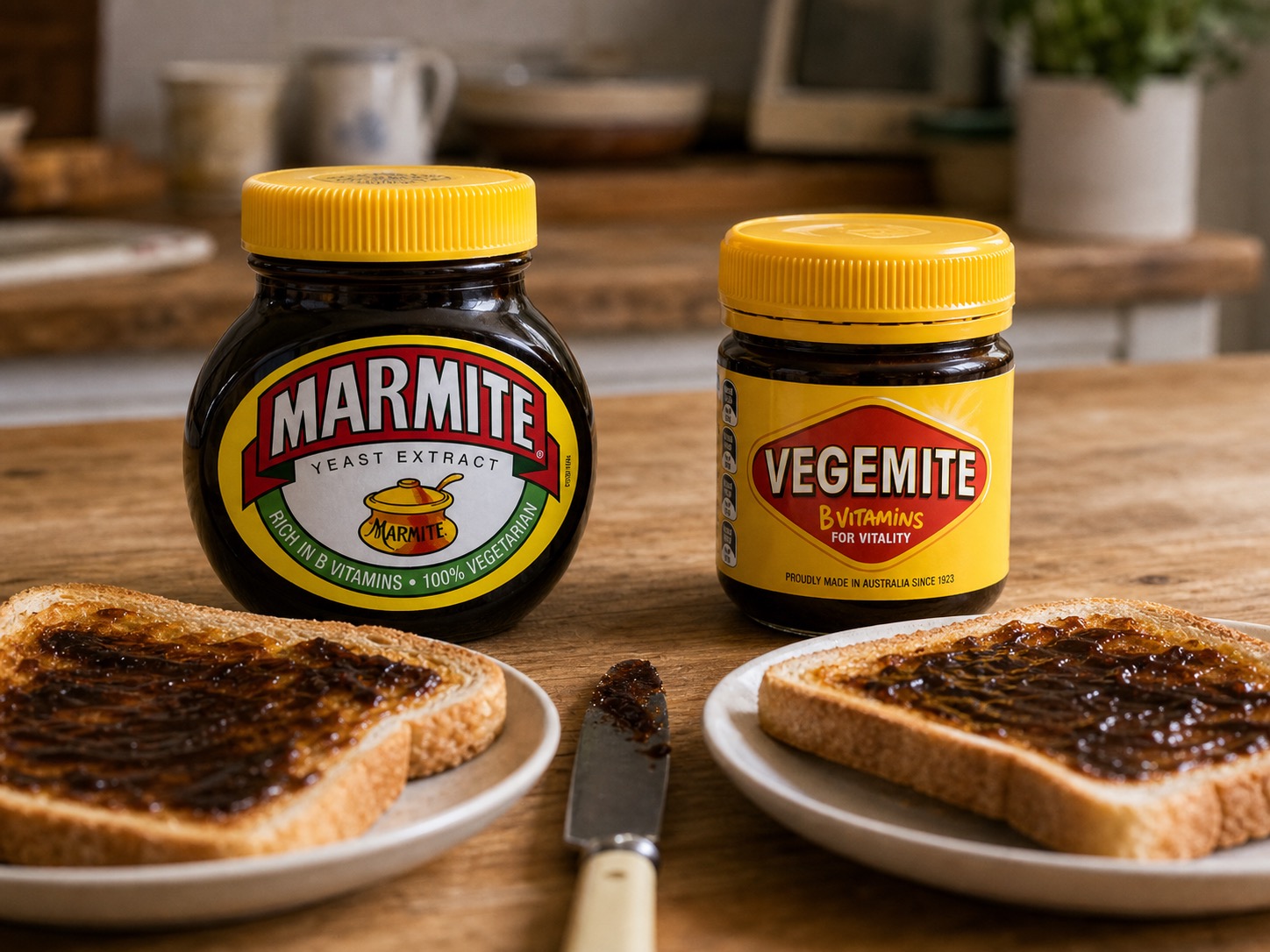
It did not help that Vegemite got swept into the same story, which let everyone widen it into yeast extract against the Danish state, the Anglo-Australian-Danish front of a war nobody had declared. The truth, that other fortified foods had gone through the approval process and were on sale perfectly legally in Denmark, was duller and arrived later and convinced no one who had already enjoyed being outraged.
So, the verdict
Marmite was not banned in Denmark. It lacked the marketing authorisation that Danish law requires for any vitamin-fortified food, because no one had applied for one, and a rule about fortification got retold as a rule about Marmite. The Danish food authority said as much at the time, in plain language, to very little effect.
It is a small lesson in how a Marmite story behaves once it gets loose. Take a dry piece of food-additive regulation, add a jar that half the country already has strong feelings about, and you do not get a clarification. You get a war. Nobody starts an Anglo-Danish incident over an unapproved breakfast cereal. They start one over Marmite, because Marmite is the kind of thing people are ready to go to the barricades about before they have checked whether there is anything to fight.
For what is actually in the jar, including the B vitamins at the heart of all this, there is a piece on the ingredients. For whether any of it is good for you, the honest nutrition answer has its own.