
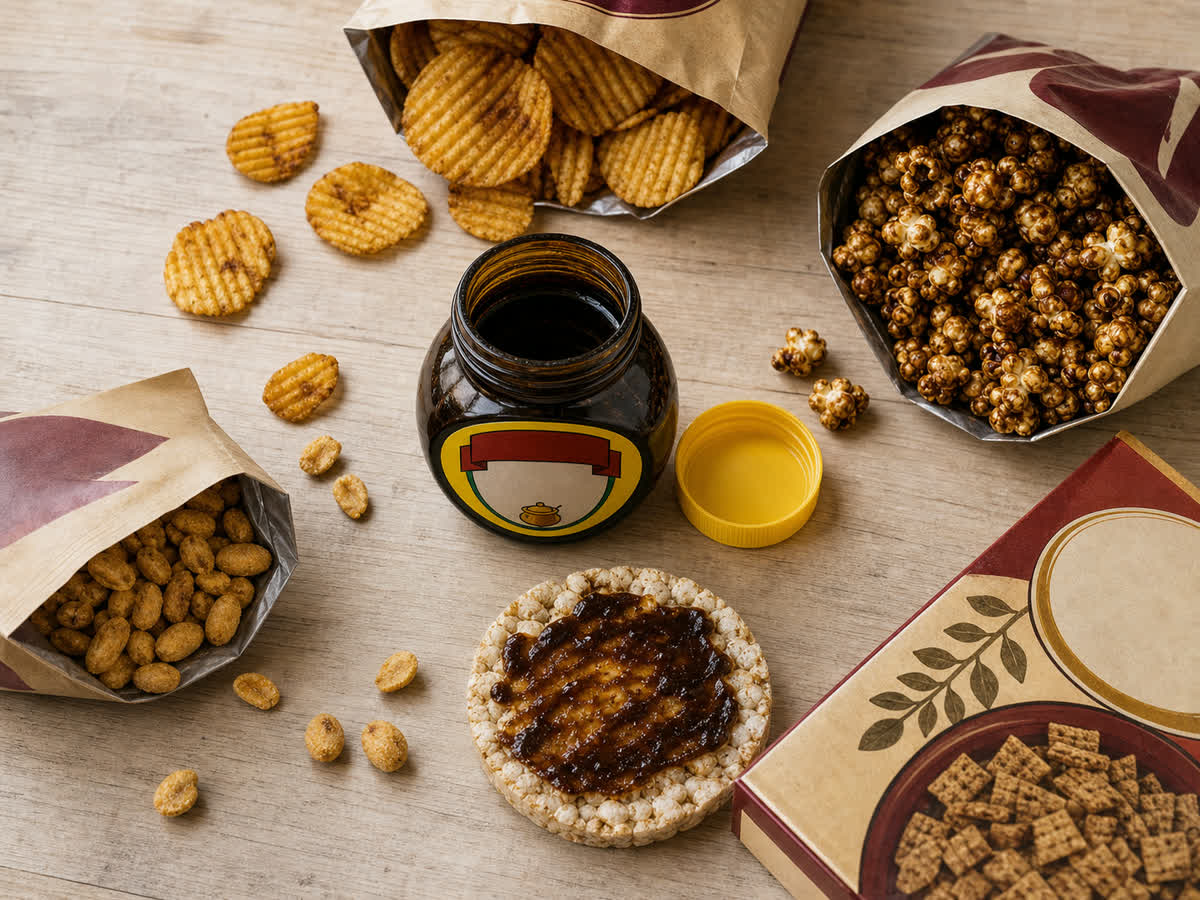
Marmite is not really a snack. It is a spread. That has not stopped British snack makers spending the last twenty years working out how to get the flavour of Marmite into bagged things that sit next to the crisps and popcorn, and there have been enough of them to count as a proper little category. So here is the full picture: every Marmite-flavoured snack worth knowing about, what is still on the shelves in 2026 and what has quietly come and gone, with notes on what works, what does not, and which licensing deal sits behind which product.
Walkers Marmite crisps (2002 to 2023, now discontinued)
For two decades the oldest and the biggest seller, and now, sadly, gone. Walkers made Marmite crisps under a Unilever licence from 2002, with the odd gap for a “limited edition” reformulation or a new bag, right up until it discontinued the flavour at the end of 2023. Walkers said it wanted to focus on the flavours that sell best; fans of the Marmite one said the obvious thing about that. What you got was a standard ridged potato crisp dusted with a yeast-extract seasoning that took you most of the way to Marmite without literally being the spread smeared on a crisp.
It read saltier and more yeasty than the jar. Most people who liked it described it as a milder Marmite, which was about right. The seasoning was a powdered yeast-extract blend, not a paste, because nobody is painting Marmite onto crisps at factory speed, and the powder dropped some of the bitter complexity you get from the spread.
These were the version most non-Marmite Britons had actually tried. The crisp was the gateway drug. The people who say “I tried the crisps and quite liked them” are usually the same people who do not keep a jar in the cupboard. If you still spot a bag in 2026 it is old stock, so do not count on it: for a bagged yeast-extract crisp now, the Tyrrells one below is what you want.
Joe & Seph’s Marmite popcorn
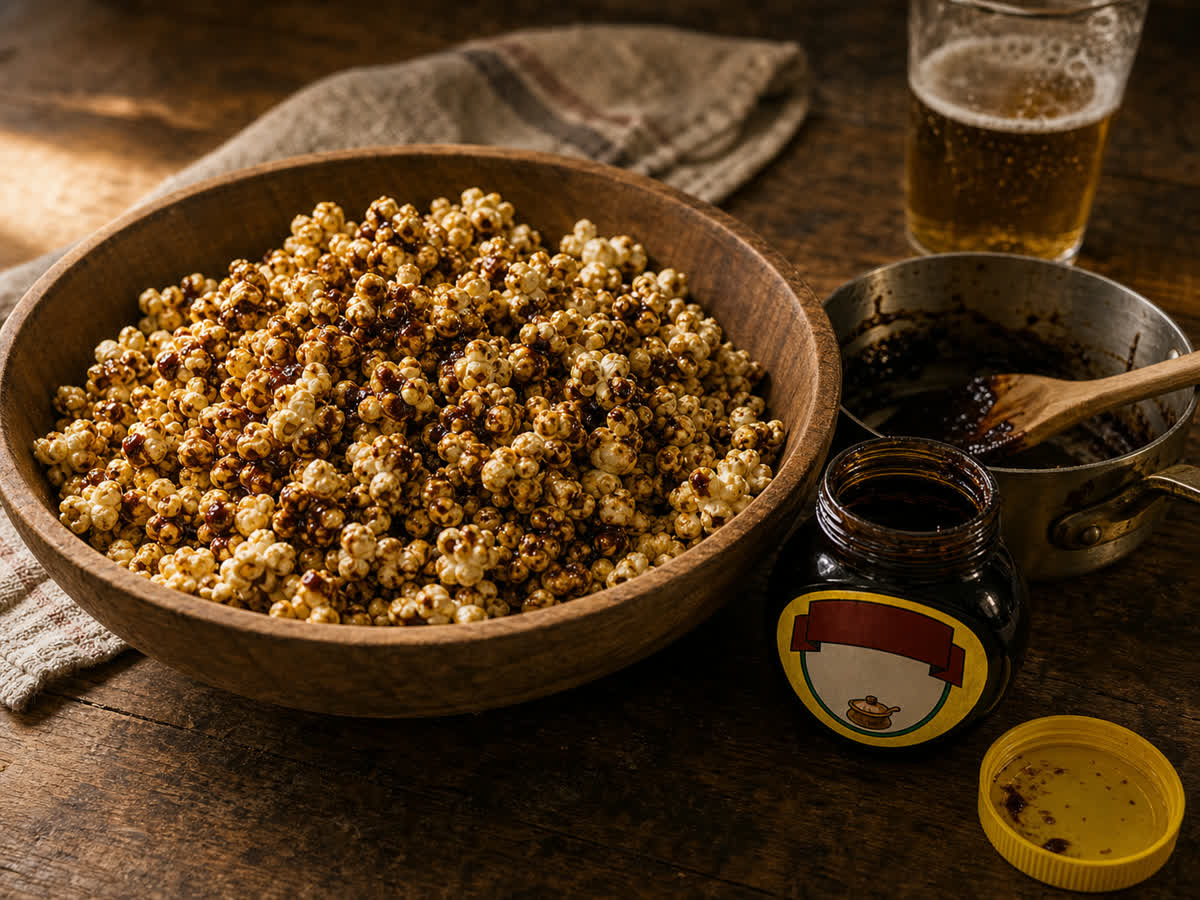
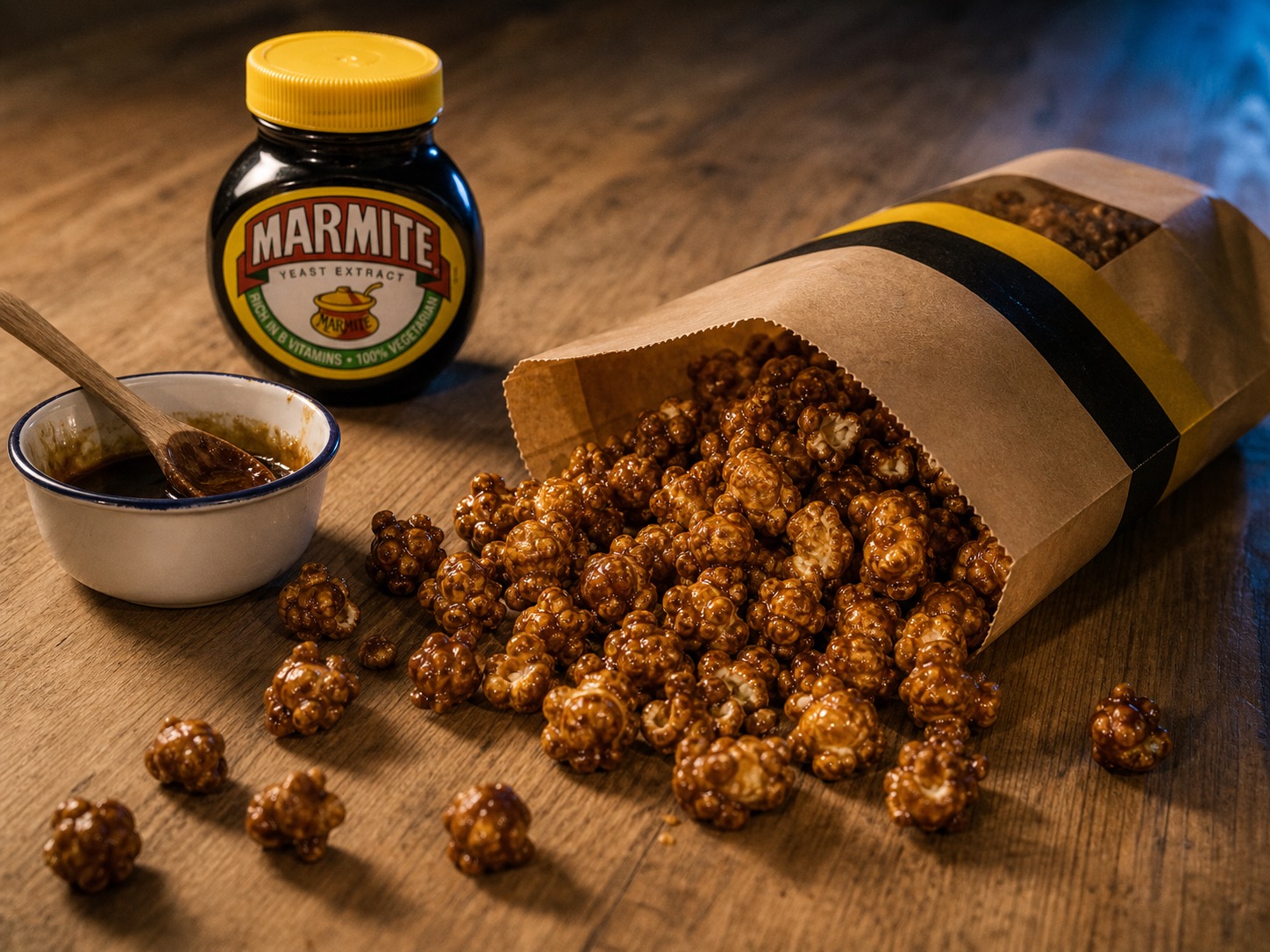
The posh popcorn lot, Joe & Seph’s, launched their Marmite popcorn under a 2017 licensing deal that was renewed in 2022. They are the brand other British popcorn makers measure themselves against. Everything is hand-popped and fully coated, so the kernels come out denser and glossier than anything you make in a microwave.
The Marmite one uses a butter-and-yeast-extract glaze, and it gets far closer to the jar than any dusted-powder approach. Because each kernel is coated rather than dusted, every piece carries a real Marmite hit instead of a trace that vanishes between your teeth. The bag is small and the price is not, but kernel for kernel this is the most intense Marmite flavour of anything on the list.
The launch generated a small mountain of press, and it is what most people mean when they search for “Marmite popcorn”. You will find it in Waitrose, Sainsbury’s, Selfridges and Joe & Seph’s own shops, plus online direct.
Tyrrells “Hand-cooked English yeast extract” crisps
Tyrrells, the Herefordshire posh-crisp brand, does not licence the Marmite name. Instead it makes a yeast-extract crisp under its own labelling, which gets you a Marmite-adjacent flavour without paying for the name. The seasoning is a brewer’s-yeast-extract blend, and it tastes slightly different from Marmite proper: drier, less bitter, more straight-up salty-savoury.
This matters more now that Walkers has dropped its Marmite crisp, because the Tyrrells bag is the readiest yeast-extract crisp left on the shelf. It turns up in plenty of supermarkets and independent shops. In honest taste-testing terms it was always a different flavour from the old Walkers Marmite crisp: drier, less bitter, more straight-up savoury. Both were good. This is the one you can still buy.
KP Marmite-flavoured peanuts
KP has made Marmite peanuts under a Unilever licence since 2017: a salted peanut with a yeast-extract dusting, in a small bag with the Marmite jar on the front. The peanut turns out to be a clever carrier. Its own oil plays nicely with the dry seasoning, and the long crunch gives the flavour time to come through.
This is the Marmite snack most likely to be ordered at the bar. The packs are pub-sized, the flavour is bold without being aggressive, and beer does something to the savoury hit that the bag does not warn you about.
Special K Marmite cereal
The 2023 Special K Marmite breakfast cereal was a limited-edition collaboration with Kellogg’s, and as of mid-2026 it has not come back. It was a wheat-and-rice flake with a yeast-extract glaze, sold for about six months and then quietly dropped. Reviews split exactly as you would predict: Marmite fans found the flavour authentic but the sweetness from the cereal odd, and non-Marmite people just found the whole thing confusing.
Keep it in mind mainly as proof of how far the licensing deals will stretch. I would not hold my breath for a comeback, but it belongs on the list.
Marmite-flavoured rice cakes
A short-lived 2023 line that turned up in Tesco and Sainsbury’s and then quietly disappeared. The rice cake is a poor carrier for Marmite. It is too dry and porous to hold a proper coating, so the flavour arrives in scattered hits rather than a steady layer. Gone within a year. Anyone who tried them tends to remember them as the answer to “what if you could not really taste the Marmite”.
Marmite chocolate
The Marmite chocolate bar made by Cadbury under a limited 2019 licence is, technically, a snack, so in it goes. A milk-chocolate bar with embedded Marmite-flavour pieces, sold for six months in Tesco and then withdrawn. The chocolate-and-Marmite combination splits even the brand’s most loyal fans down the middle, reviews were genuinely divided, and Cadbury has never brought it back.
What the snacks tell you about the brand
The Unilever playbook has been the same for two decades. Licence the name to whoever leads the category (Walkers in crisps, Joe & Seph’s in popcorn, KP in peanuts, Cadbury in chocolate), accept that the licensee will make a Marmite-ish flavour rather than literal Marmite on a product, and let the licence lapse if it stops being worth it. Walkers crisps were the biggest seller of the lot and ran the longest, from 2002 to 2023, and even they came to an end, in their case because Walkers chose to concentrate on its core flavours rather than because the Marmite one had failed. What survives on shelves now is KP peanuts and Joe & Seph’s popcorn. Everything else, the crisps included, is now a closed chapter alongside the cereal, the rice cakes and the chocolate.
It is a sensible enough approach. A permanent licence only makes sense where the Marmite flavour genuinely suits the format. Crisps and peanuts both did, even if Walkers has since walked away from the crisp. Cereal does not. Popcorn is the borderline case, kept alive by Joe & Seph’s premium pricing, where a cheap mass-market version would probably sink.
The odd gap, given the obvious money in it, is the budget end. There is no Marmite Hula Hoops, no Marmite Quavers, no Marmite Wotsits. The brand has stayed in premium and mid-premium territory, which keeps the name from being plastered over everything. Whether that discipline survives the McCormick takeover, due to close in mid-2027, is one of the more interesting questions hanging over Marmite right now. Given McCormick is American, and I am half-American myself, I will be watching to see whether the colonies want their yeast extract on the cheap.
The homemade alternative
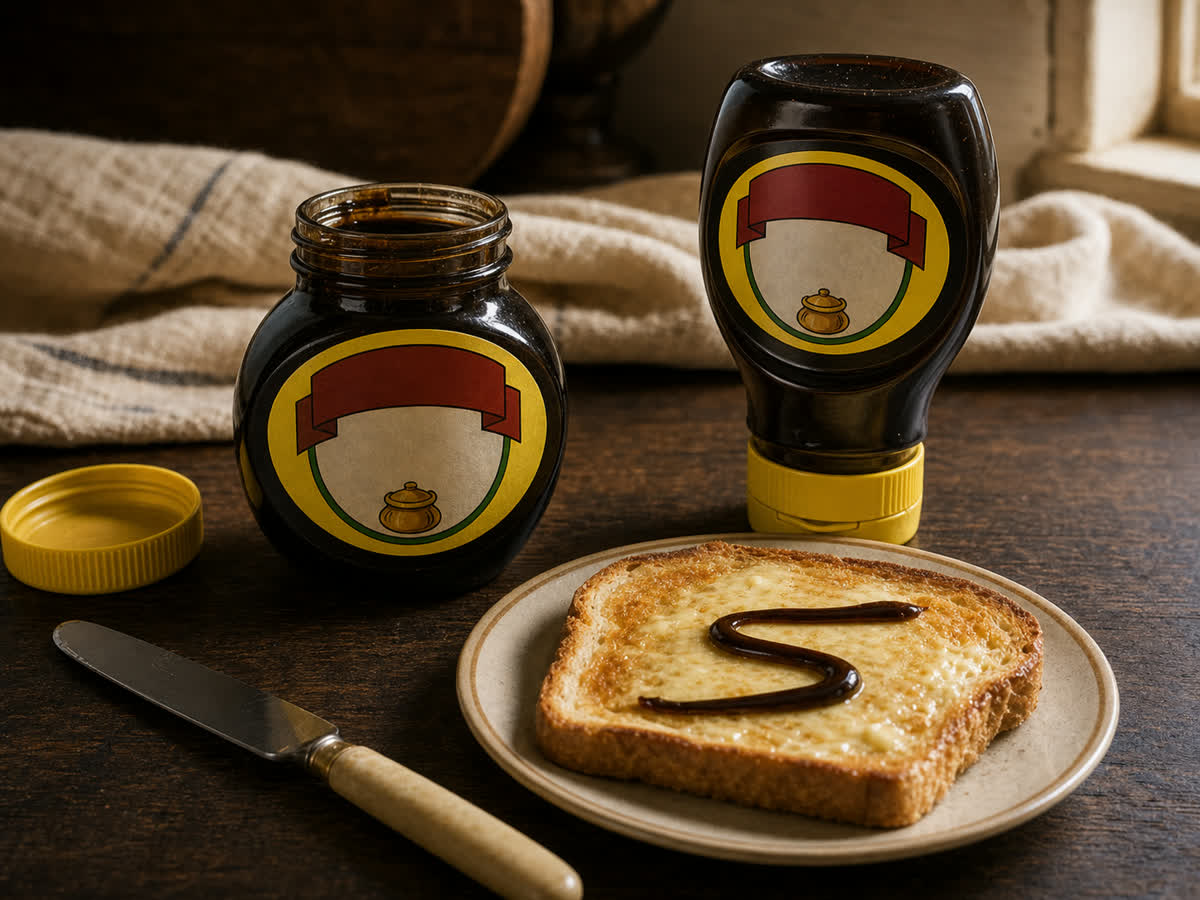
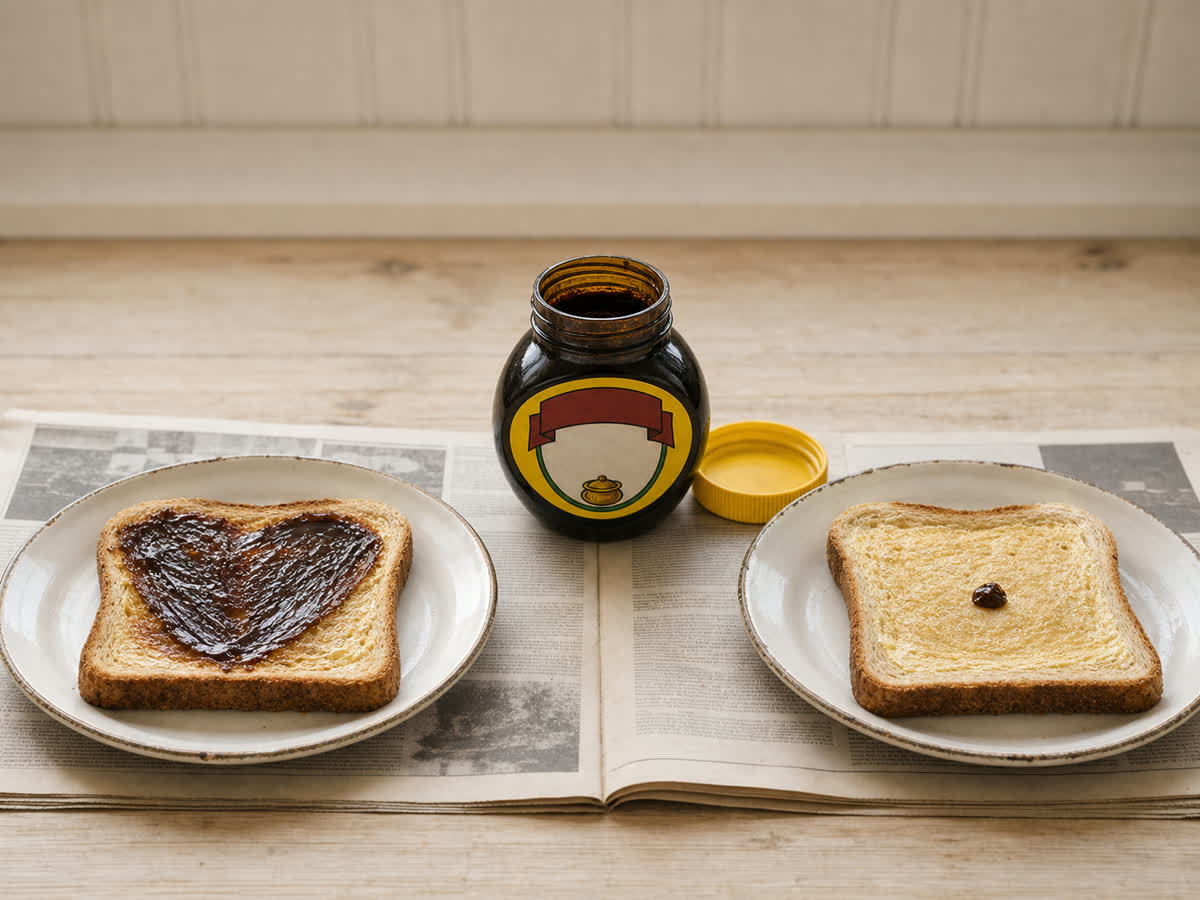
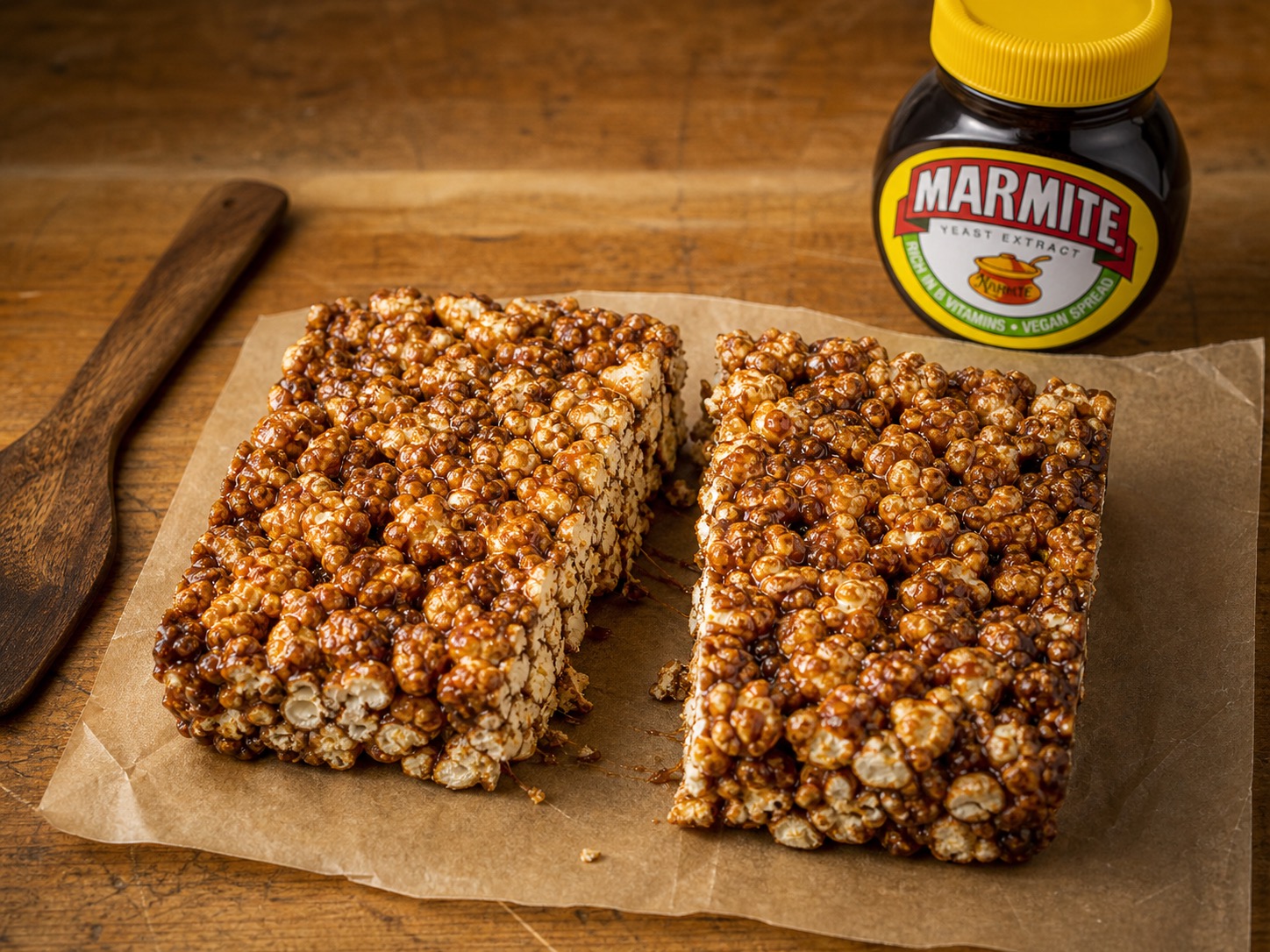
For most of these, you can do a home version, and it is often better. Homemade Marmite popcorn gives you a denser flavour hit than anything off the shelf. Marmite-glazed peanuts are a five-minute pan job. And Marmite-buttered toast cut into soldiers is, if we are being honest, the original Marmite snack and the one most British households still reach for.
The bagged products are good for what they are: a way to get a Marmite hit without opening a jar. For the genuine Marmite obsessive, the jar is still the better buy.