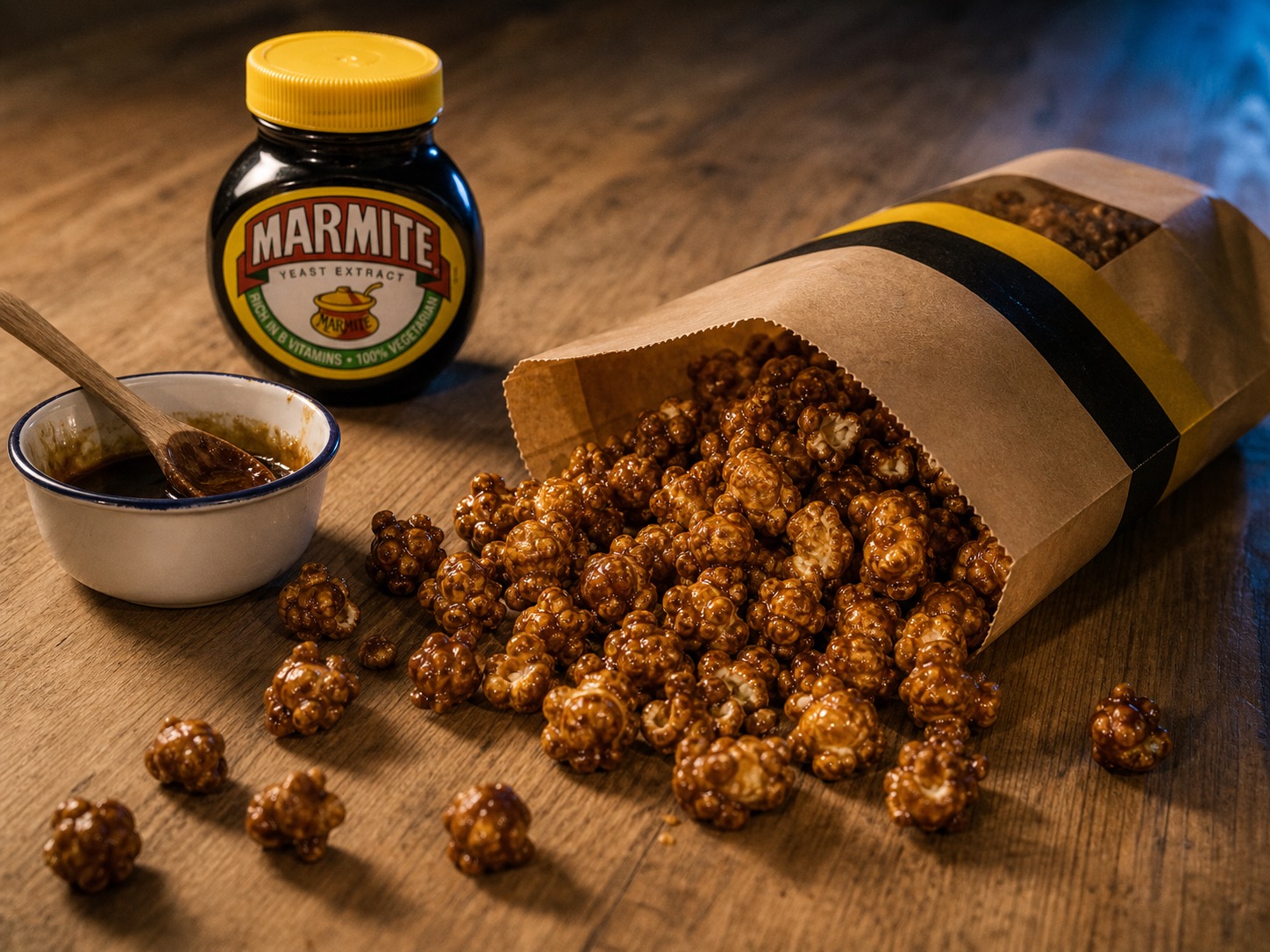

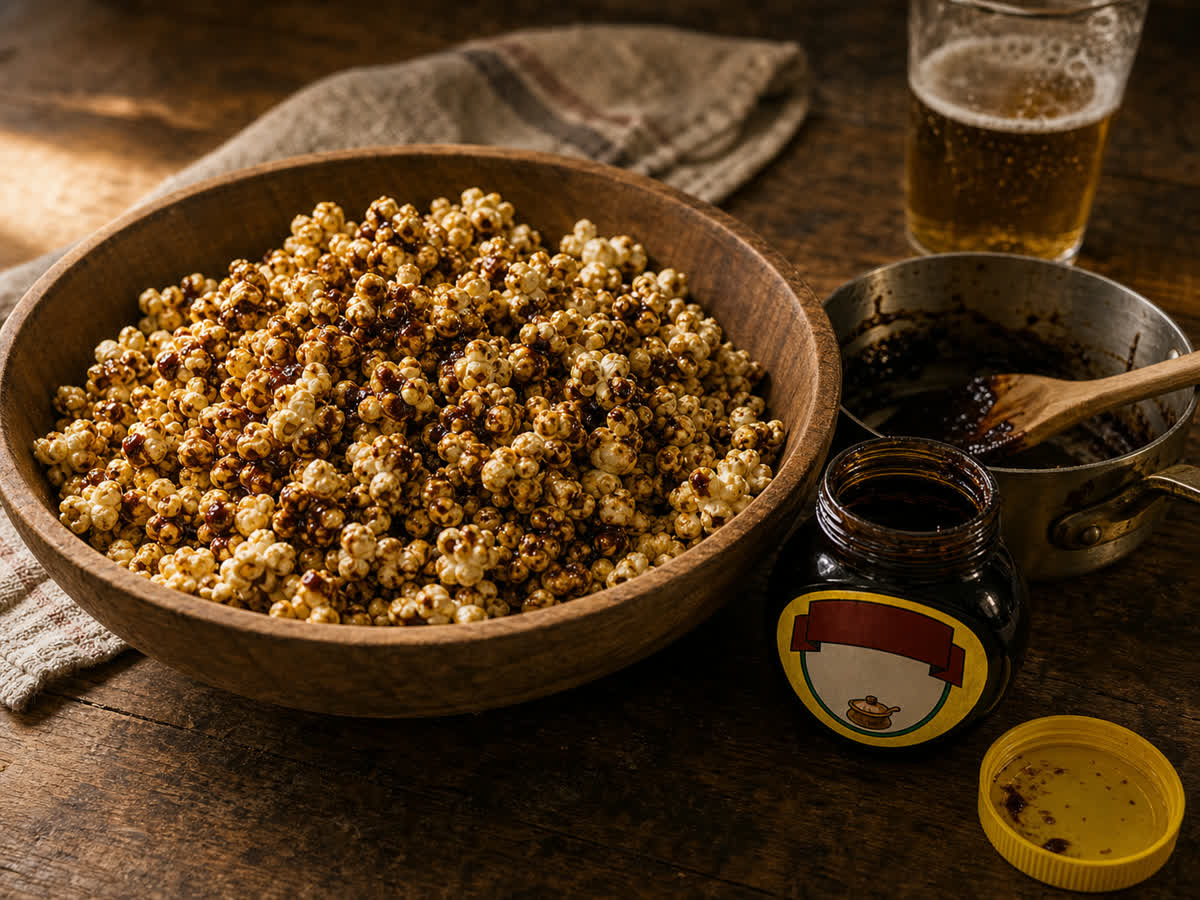
Popcorn comes in two flavours, near enough: sweet and salty. A third option has been sitting in millions of British kitchen cupboards the whole time, and the small band of people who pop their own at home have spent the last few years working out how to use it. Marmite popcorn is the answer to a question not enough people have been asking, and it is simple enough that you can have a bowl ready in ten minutes.
Why it works
Popcorn is mostly air, starch, and a thin coating of whatever you season it with. The kernel itself has almost no flavour. Salt sticks because the surface is faintly oily and crystalline. Sugar sticks because it dissolves in the leftover moisture and re-crystallises. Marmite, melted into butter, sticks because the butter is the carrier, and the Marmite does what it does best: it loads glutamates onto a surface that badly needs them.
The result is popcorn that is not sweet, not just salty, but properly savoury. Yeasty, deep, faintly bitter at the edges. Much the same flavour as the brown crust of well-roasted toast. If you have ever wondered why the “savoury” popcorn at the fancier multiplexes tastes vaguely cheesy, it is because they have been doing this with yeast flakes for years. Marmite is the British version: stronger, glossier, more obviously itself.
The recipe, in twelve lines
For one large bowl, enough for two adults watching a film.
- 80g popcorn kernels
- 1 tbsp neutral oil for popping (sunflower, rapeseed, light olive)
- 40g unsalted butter
- 2 tsp Marmite
- A small pinch of flaky salt (optional, Marmite brings its own)
Heat the oil in a large lidded saucepan over medium-high heat. Add three kernels. When all three pop, the oil is ready. Add the rest, cover, and shake every ten seconds or so. When the popping slows to one pop every couple of seconds, take the pan off the heat.
In a small saucepan, melt the butter over a low flame. Add the Marmite and stir until it dissolves completely. It will not emulsify in the usual sense. You will have a dark, glossy buttery sauce with the Marmite dispersed through it. That is correct.
Pour the Marmite butter over the popcorn in three or four passes, tossing the bowl between each pass so the coating spreads evenly. Add the flaky salt if you want. Eat immediately.
The two mistakes to avoid
Don’t put Marmite on dry popcorn. Without the butter as a carrier, Marmite is too concentrated to spread evenly. You will end up with a few sticky lumps and a lot of bare popcorn. The butter is what lets the spread coat each piece.
Don’t melt the butter on a high flame. Marmite has sugars in it and will burn. A gentle melt and stir is enough. You are not cooking, you are dissolving. If the butter starts to brown, take it off and let the Marmite go in once it has cooled slightly.
Variations worth trying
Once the basic technique is in your head, the variations more or less suggest themselves.
- Add a fistful of grated parmesan while the popcorn is still hot from the butter. Doubles down on the umami. A classic move.
- A teaspoon of smoked paprika in the butter gives a deeper, slightly barbecue note. Works particularly well with films set in deserts.
- Black pepper and lemon zest added at the end lifts the heavier flavours and turns the bowl into something genuinely interesting.
The one that does not work, in my experience, is anything sweet. Marmite and sugar argue with each other on popcorn in a way they do not on toast. Stick to savoury additions.
Why the brand has not, yet, made this
There is no Marmite-flavoured popcorn on UK supermarket shelves as of mid-2026, which is mildly surprising given the Walkers crisps deal has been running for years and Marmite-flavoured rice cakes turned up briefly in 2023. The licensing logic behind those products would seem to apply just as well to popcorn, and the firms behind bagged microwave popcorn are forever chasing a new flavour.
The likeliest reason is industrial. Marmite is a wet ingredient, and spreading it evenly over dry popped corn at factory scale is harder than dusting on a dry seasoning. A powdered version, yeast extract dehydrated and milled, does exist and is what most savoury-popcorn brands use, but it tastes only loosely like Marmite. The brand has so far chosen not to license a powdered approximation that would water down the name.
That is the right call for the brand and a slightly disappointing one for the snack. In the meantime, the home version is easy and better than any factory version would be.
What this means for the cinema-at-home crowd
The streaming era has, almost by accident, turned savoury home popcorn into a proper genre. People watching a three-hour series at home want something to eat that does not interrupt the watching, and a bag of microwave popcorn has been the default for a generation. That default is starting to shift towards people popping their own kernels and treating the seasoning as part of the fun.
In that light, Marmite popcorn is a useful next step. The kernels cost almost nothing, the method is forgiving, and the result is genuinely different from anything you can buy. If you already have a jar of Marmite in the cupboard, you have, in effect, a small jar of savoury popcorn-flavour concentrate that nobody told you about.