
Every so often a study comes along that Marmite’s marketing team could not have written better themselves. The University of York’s brain research in 2017 was one of those, and for a week the papers were full of the idea that a daily spoonful was making the nation cleverer. The truth is more modest, more interesting, and worth getting straight, because “Marmite is good for your brain” is not quite what the scientists said.
What they actually did
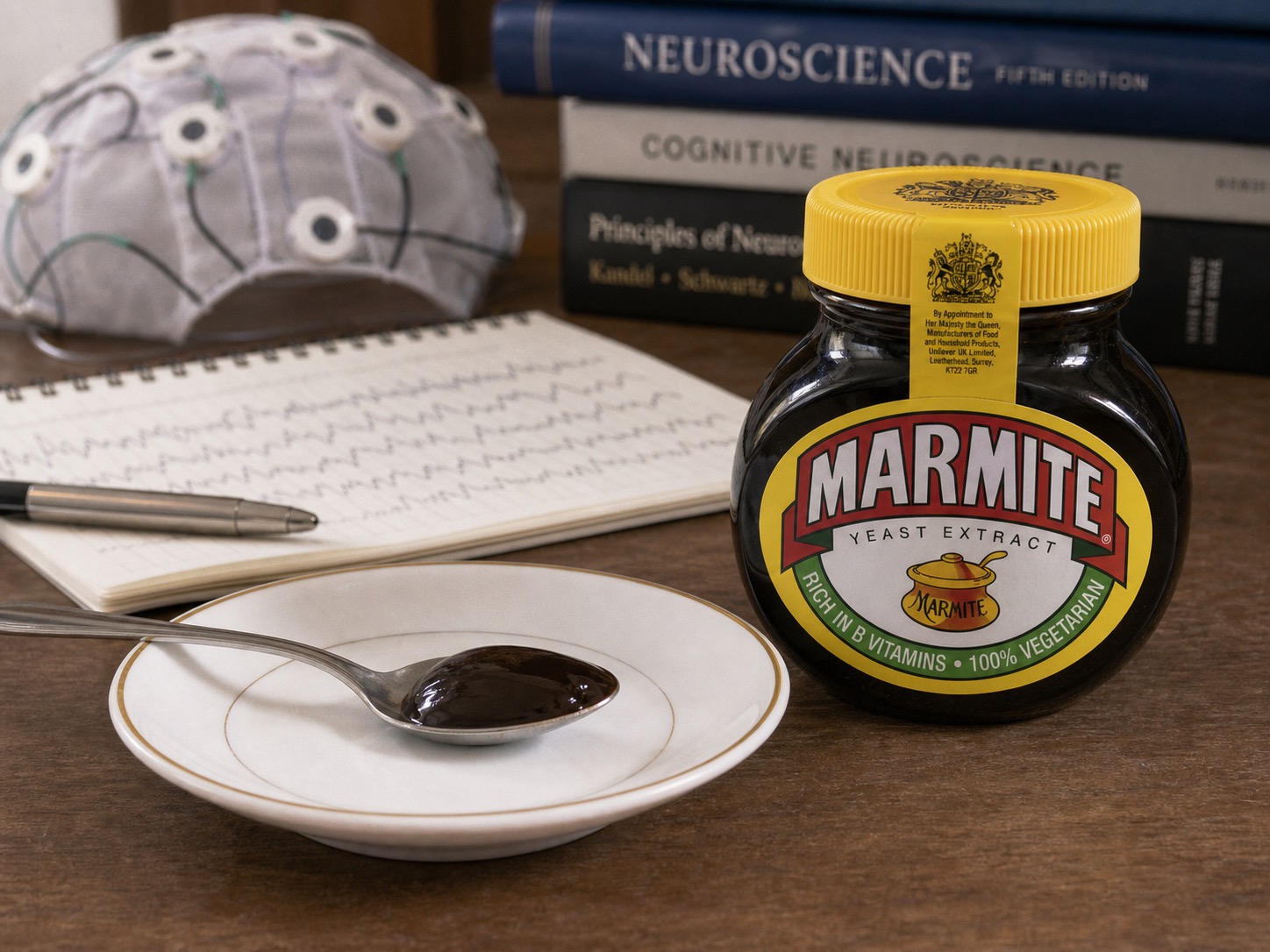
The York team, led by researchers including Daniel Baker and Anika Smith, ran a small randomised trial. Twenty-eight people ate either a teaspoon of Marmite or a teaspoon of peanut butter every day for a month. The peanut butter group were the control. Throughout, the volunteers wore a non-invasive cap of electrodes that measures electrical activity in the brain, while looking at a flickering striped pattern on a screen, a standard way of measuring how strongly the visual part of the brain responds.
The result: the Marmite eaters showed roughly a 30 per cent reduction in their brain’s electrical response to that visual stimulus, compared with the peanut butter group. The work was published in the Journal of Psychopharmacology in April 2017.
What it means, and what it does not
Here is the part the headlines skated over. A reduced response is not obviously “better”. The researchers linked the effect to GABA, a chemical messenger that calms neural activity down, turning the volume of the brain’s responses down rather than up. The likely driver was Marmite’s high level of vitamin B12, which the body uses in making GABA. A more tightly regulated, less jumpy visual response is associated with healthy brain function, which is why this is a genuinely interesting finding. But “your brain reacts less to a flickering pattern” is a long way from “Marmite makes you smarter”, which is roughly where the tabloids parked it.
And the study itself was careful to stay small. Twenty-eight people is not a population. The effect was measured weeks after eating, hinting at something that builds up rather than a quick hit. The authors did not claim Marmite prevents anything, treats anything, or boosts anything. They found a measurable, repeatable change in brain activity tied to a nutrient Marmite happens to be loaded with, and they said so plainly. It was the rest of us who reached for the word “superfood”.
So should you eat it for your brain?
Eat it because you like it. A teaspoon of Marmite is a real and useful source of B12, which matters, especially for vegetarians and vegans who can struggle to get enough, and B12 genuinely is involved in keeping the nervous system working properly. That is a fair, grounded reason to keep a jar in the cupboard.
What you should not do is treat one neat little study from 2017 as a doctor’s note. The York research is a lovely example of how a careful, honest piece of science gets dressed up into a health miracle by the time it reaches the front page. The scientists measured a calmer brain response. Everyone else heard “Marmite makes you brainy”. Both the lovers and the haters, for once, were given exactly the headline they wanted.