
The First World War
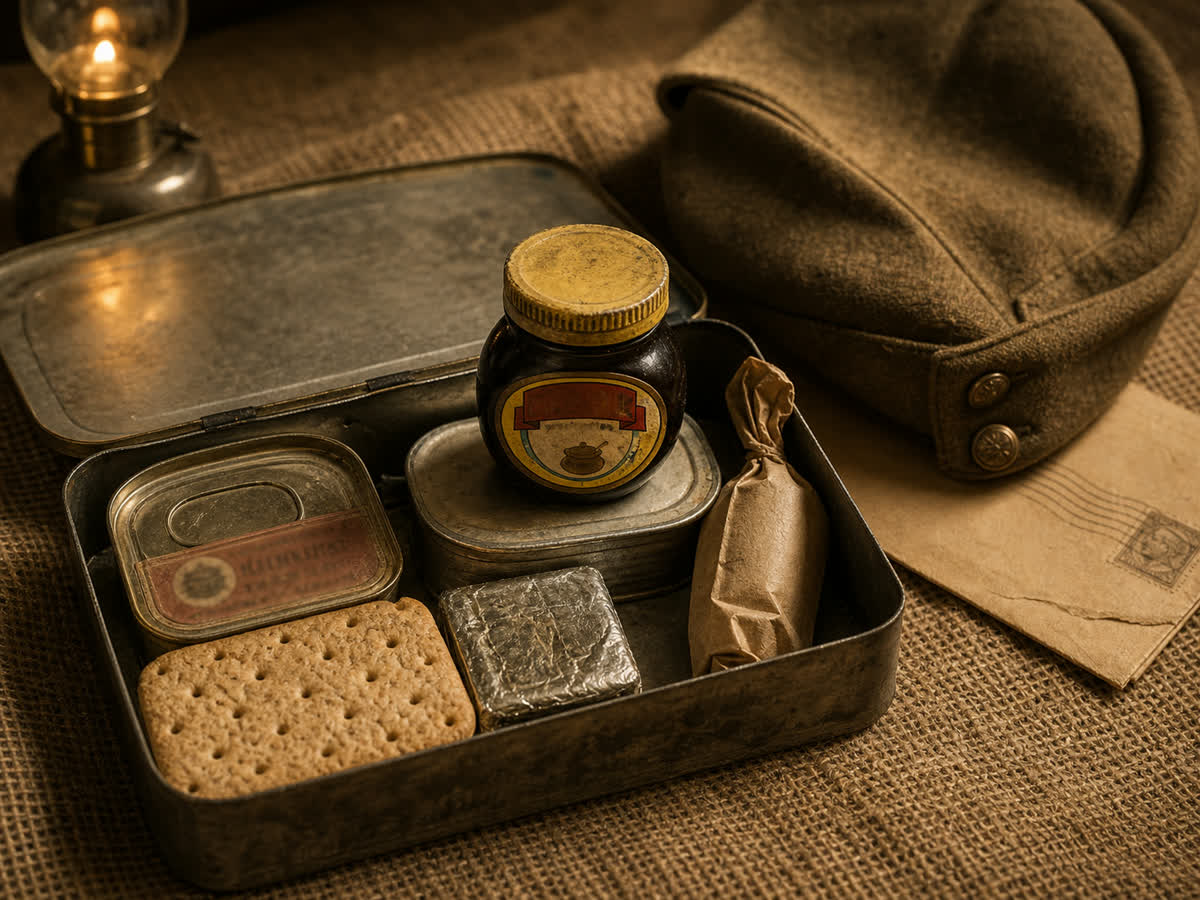
By 1916, the British Army Medical Corps had a problem. Soldiers in the trenches were developing beriberi, a nerve disease caused by thiamine (vitamin B1) deficiency. The military diet of biscuit, tinned bully beef, tea, and the occasional jam ration was perfectly calorific but desperately short on B vitamins, and beriberi was taking men out of action at a rate the army could not afford.
Marmite, by that point in production for fourteen years and well-established as a B-vitamin-rich product, was the obvious answer. The Army Medical Corps started adding small portions of Marmite to ration packs as a public health measure. A teaspoon a day was enough to keep thiamine levels in the safe range.
The decision was unromantic and quietly transformative. Thousands of British soldiers who would otherwise have been invalided out with nerve damage instead carried on, in part because somebody had thought to include a yeast extract in their tin.
The Second World War
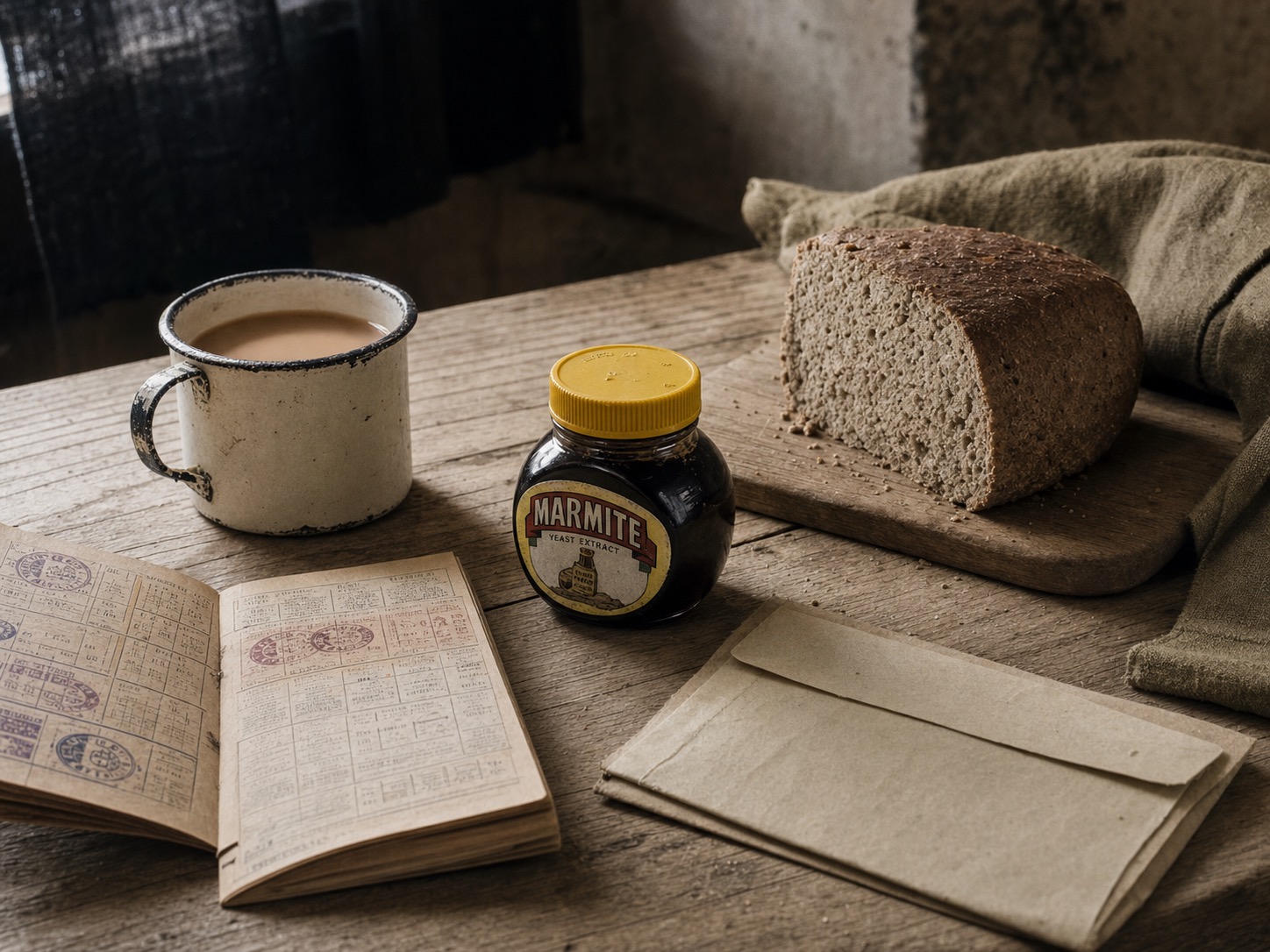
The lesson was not forgotten. By 1939, Marmite was already on the standard ration-pack inclusion list, and it remained there throughout the war. British soldiers in North Africa, Italy, Burma and across the European theatre carried small portions of Marmite alongside their other rations.
It also had a civilian role. The wartime nutrition advisors at the Ministry of Food repeatedly promoted Marmite to British households as a way of stretching restricted ingredients while maintaining vitamin intake. Wartime recipe pamphlets carried Marmite-based recipes specifically for malnourished children, pregnant women, and the elderly, who were the populations most at risk from rationing-related deficiencies.
The Lucy Wills story (separately important)
In the 1930s, between the wars, the English physician Lucy Wills did the work that would eventually lead to the discovery of folic acid. She was studying anaemia in pregnant textile workers in Bombay, and she found that Marmite was an effective treatment (see the folic acid story for the full story). The “Wills factor” she identified turned out to be folate (vitamin B9), and her work fed directly into the wartime nutritional case for Marmite as a folate source for pregnant women on rations.
So Marmite’s military CV is not just about thiamine and beriberi. It is also about folate, anaemia, and infant nutrition. The jar was, in a small but real way, doing public health work across the entire reproductive cycle.
What this leaves us with
A jar of Marmite is a small object. Its place in twentieth-century British public health is, on a per-cubic-centimetre basis, larger than that of almost anything else in your kitchen cupboard.
This is the kind of thing the brand could shout about more than it does, and politely chooses not to. It is also the reason older British households have a quiet, unshakable loyalty to the jar that newcomers sometimes struggle to understand. Marmite was, for a generation, a thing the Ministry of Food was telling people to eat for serious reasons, not a thing the marketing team was telling them to enjoy for trivial ones.
That history is worth remembering when the McCormick-era new owners arrive in 2027 and decide what to do with the brand.
Source: Imperial War Museums; War Office ration records; Ministry of Food wartime publications; the Wikipedia history page on Marmite.