
Britain has finally found a hill it will die on
A country that cheerfully sold off its car industry, most of its utilities, the bulk of its airports, large chunks of its football, a fair amount of the West End, and a long list of things it probably should not have, has discovered, in 2026, that the line it will defend to the last is a sticky brown spread made in Staffordshire.
This is, on the face of it, ridiculous. It is also, if you squint, completely reasonable. Bear with me.
The trending moment
Some people love this deal and some people hate it.PM_THE_REAPER, r/unitedkingdom
By Tuesday lunchtime, less than twenty-four hours after the Unilever announcement, “you can’t sell Marmite to the Americans” was the most-quoted phrase on what we are still, against all evidence, calling X. The Twitter that was. People who had not posted about food in years were posting about Marmite. People who actively dislike Marmite were posting about Marmite, on the principle that even if they personally cannot eat it, they would prefer it not to be Americanised. The Hate Party, briefly, joined the Love Party at the barricades.
LBC dedicated three hours to it. The Today programme led with it on Wednesday. A petition started doing the rounds, the way petitions do, with no clear addressee and no obvious mechanism for actually achieving anything. By Thursday it had a quarter of a million signatures, mostly from people who, I would gently suggest, do not eat Marmite especially often.
It is the most pure expression of British food nationalism I have seen since the Great British Bake Off accidentally moved to Channel 4. And the deal in question, to be clear, is for £33.5 billion, or $45 billion in US dollars. Nobody is saving up to outbid them.
The Cadbury parallel that does fit
You cannot easily Americanise it without changing what it is. Which is what people, even people who do not actively eat the stuff, are angry about.
Every article will reach for Cadbury. Most will use it lazily, as if “American buys British food brand” is a sufficient comparison. The reason Cadbury still stings, sixteen years later, is more particular than that.
Cadbury was a brand with a specific civic story. The Cadbury family were Quakers. The factory was at Bournville, which was a model village they built for their workers. The chocolate had been associated with social conscience for over a century by the time Kraft arrived in 2010. When Kraft promised to keep the Somerdale plant open and then closed it within days of completing the deal, the offence was not simply that an American company had bought a British one. It was that an American company had quite specifically broken the promise that made the deal politically viable, and then carried on as if nothing much had happened.
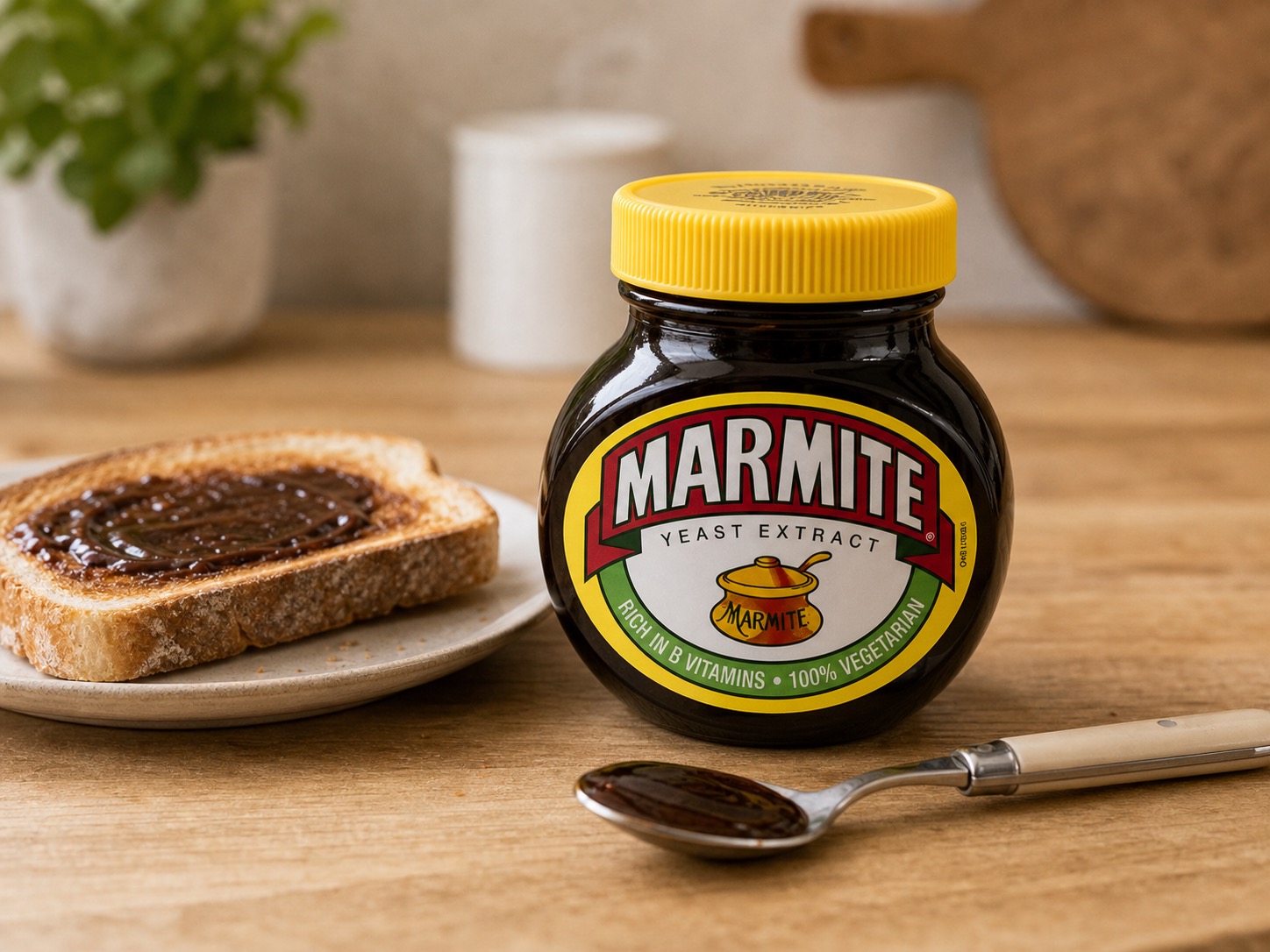
Marmite is not Bournville. There is no model village. But the brand carries a similarly specific identity. It is made in one place. It uses a by-product of a vanishing local industry. It has been British for 124 years. Its advertising for the last twenty has been built around the idea that not everyone has to like you, which is, when you think about it, a very British piece of self-knowledge.
You cannot easily relocate that. You cannot easily Americanise it without changing what it is. Which is what people, even people who do not actively eat the stuff, are angry about.
What is actually being defended
Strip away the noise and the petition signatures, and what Britain is loudly defending is a small bundle of things that are not, individually, very large.
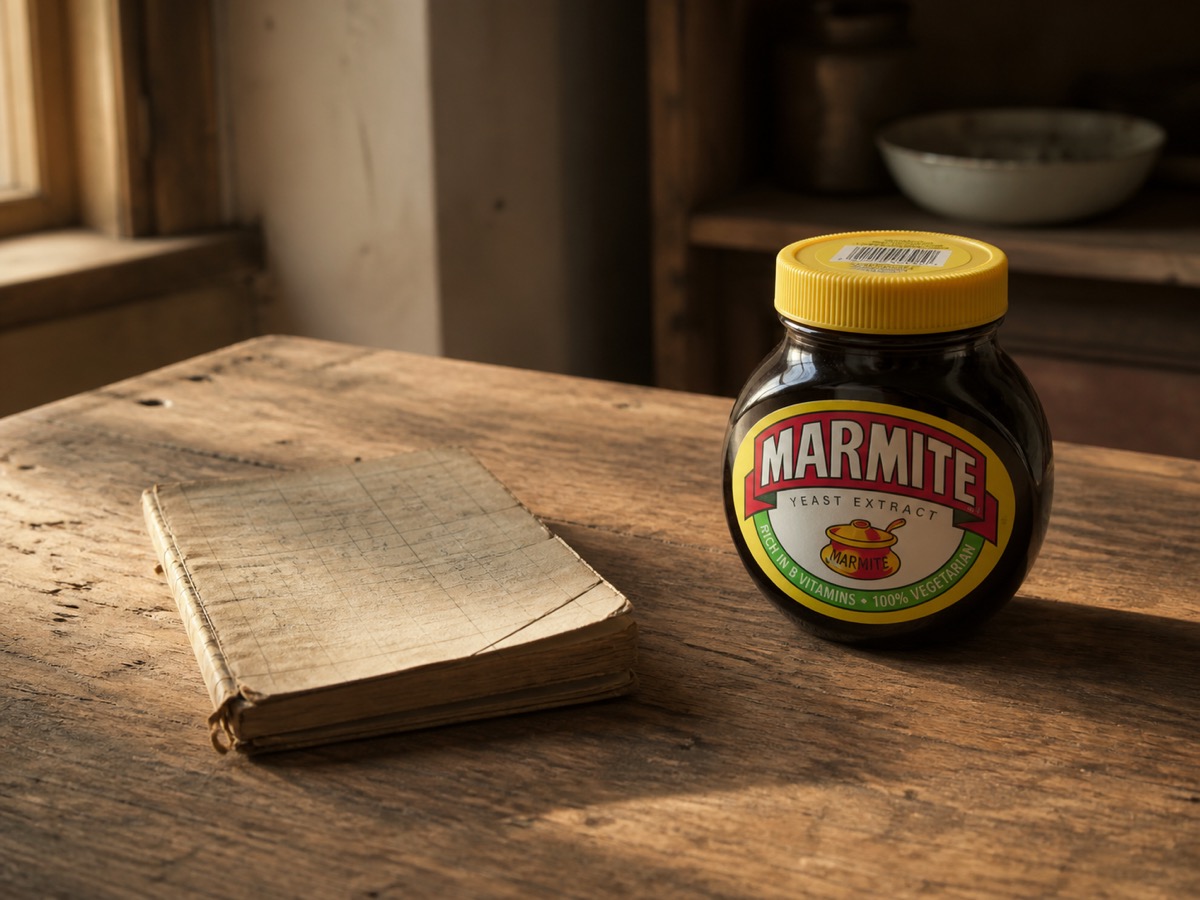
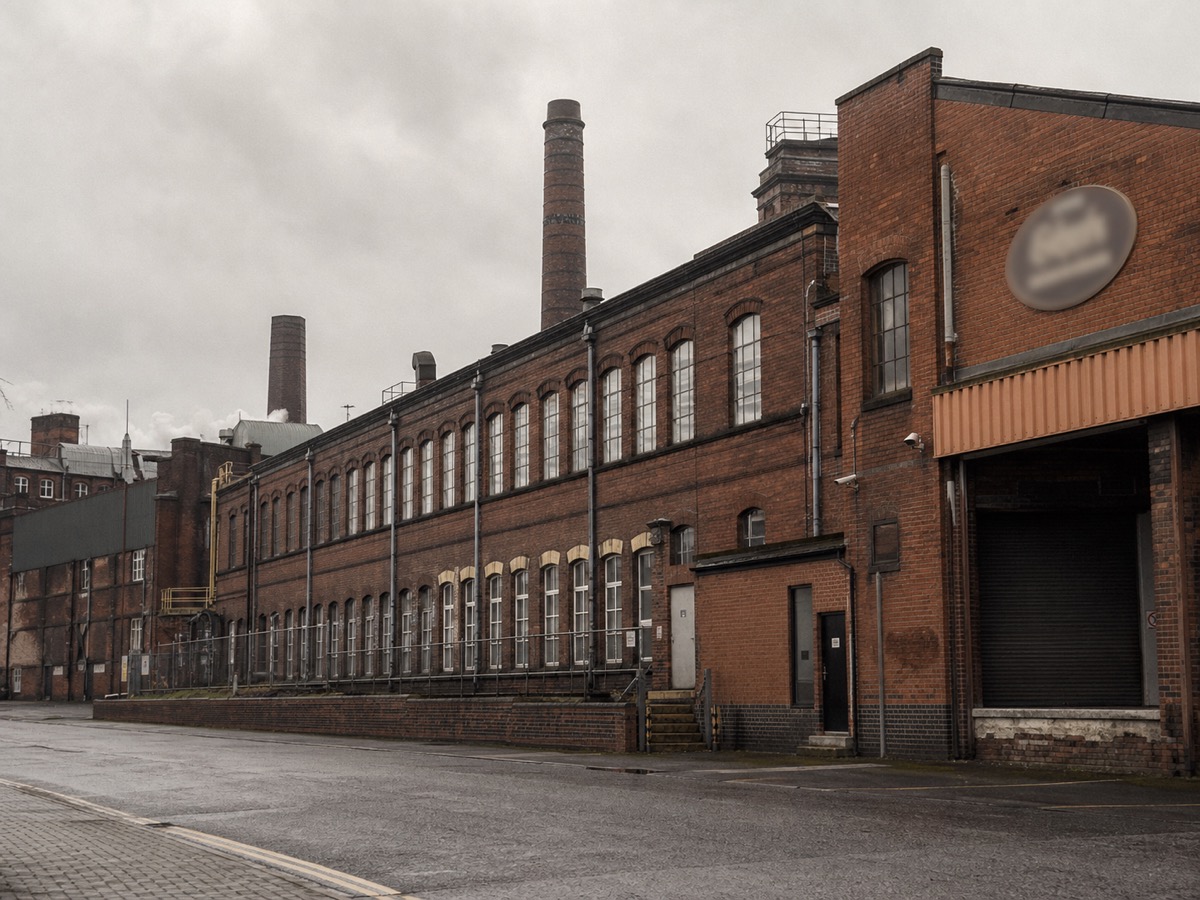
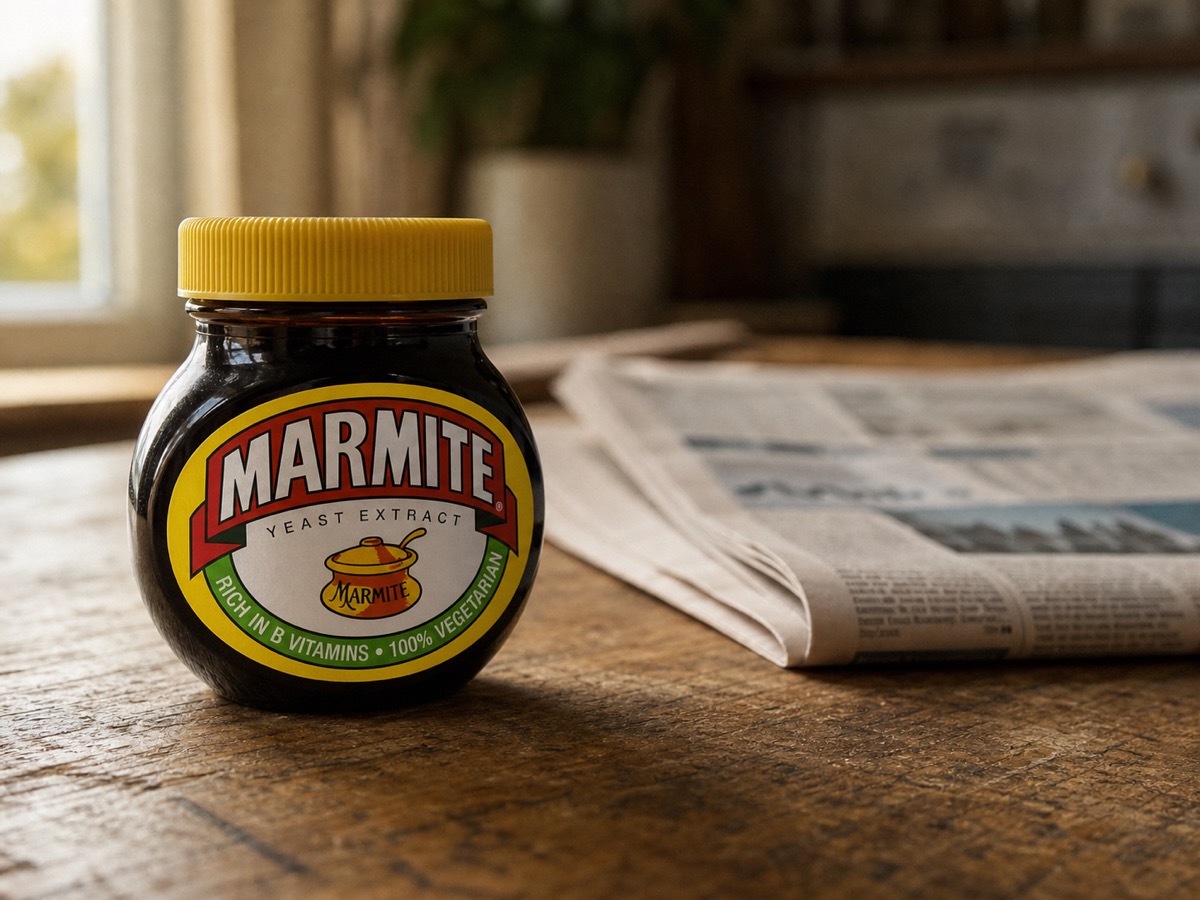
It is defending a factory in Burton-on-Trent and the 240 jobs in it. It is defending a recipe that has not changed meaningfully since the early twentieth century. It is defending a label design that you could pick out blindfolded at fifty paces. It is defending the right of a country to keep one or two of its food brands as actual heritage objects, rather than as line items in the next industry consolidation.
These are not stupid things to defend. They are also, individually, quite small. The £45 billion deal is going through. McCormick is going to own Marmite. The realistic version of this row is not about whether the sale happens. It is about whether the British government extracts any guarantees, in writing, before approving it.
There is, while we are here, a piece of the actual press release worth dropping into the row. The British coverage has, almost without exception, treated Marmite as a named brand in the McCormick transaction. It is not. The official announcement names exactly two Unilever Foods brands, Knorr and Hellmann’s, which between them account for around 70 per cent of Unilever Foods sales. Marmite, Bovril, Colman’s, Pot Noodle and the rest of the British heritage portfolio are bundled under the phrase “a wide array of local brands across EMEA, Latin America and APAC”. Brendan Foley, the McCormick chief executive who will run the combined business, has not so far mentioned Marmite in any prepared remarks. Neither has Marcos Gabriel, his finance chief. The deal is a Reverse Morris Trust structured around the Knorr-and-Hellmann’s revenue base, with the combined company keeping the McCormick name, a NYSE listing, a Hunt Valley global headquarters and an international headquarters in the Netherlands. Marmite is, structurally, a long-tail piece of the transaction. Which is, depending on how you read the politics, either reassuring (nobody at McCormick wakes up thinking about Marmite, so nobody at McCormick is thinking about closing Burton) or alarming (nobody at McCormick is thinking about Marmite at all, which is how Cadbury’s Somerdale started).
That is the part of the conversation that is currently missing from the noise. The noise is doing the cultural work, but the policy work is what will actually matter in three years. The closest thing to a serious policy framing this week has, depressingly, come from a man who has been dead for sixty years: when I sat the Mnemonicon’s Winston Churchill down about the rumoured sale, before the McCormick name was known, he asked the question the live politicians have been carefully avoiding. “What do we wish Britain to be? A manufacturer, with factories and workers and the pride of productive skill? Or a rentier nation, living upon the sale of inherited assets while others make things and prosper?” That is the row. The petition signatures are a long way of arriving at the same question.
A British-American writes in
I should probably declare an interest at this point. I am British and American, well, American (first) and then British (literally lived in the UK all my life except 0 - 2), which on a normal day is mostly an admin headache and a bracket of tax forms. This week it means I get to watch both sides of the same argument and feel somewhat insulted by both.
The British half is angry on the obvious grounds. The American half is mildly insulted by the assumption that McCormick is going to ruin Marmite simply by being American. McCormick is a serious company. They are not Kraft. They are unlikely to do a Somerdale on Burton, partly because they have learned from Cadbury and partly because they have no incentive to make a politically toxic move in a country that buys most of their finished product.
The American half is also slightly amused by the assumption that any change McCormick might make would automatically be bad. American companies have, on occasion, done excellent things with British brands. They have also, on occasion, done what Kraft did. The realistic answer to “what will the Americans do with Marmite” is “we will not know for several years, and the answer is contingent on what the British government negotiates now”.
So both halves of me are mildly cross with the discourse, which feels about right.
What this row tells us about 2026
Marmite is the line. Cadbury was the line and it was crossed.
Britain in 2026 is a country that has accepted, more or less, that almost everything is foreign-owned and that the Treasury can no longer afford the alternative. Cars, banks, energy, water, ports, telecoms, the lot. Thats not true, Candy Crush, OnlyFans, Wise, Revolut, GTA, Temple Run, ASOS, DeepMind, ARM (look it up, its in your phone and your car) and even Formula 1 are all UK companies and products.
However, what it absolutely not accepted is that food brands, the deeply local ones with a town attached, are part of that. Marmite is the line. Cadbury was the line and it was crossed. Walkers crisps would be the line if it ever came up. Branston Pickle was tested and largely passed without incident, but only because nobody noticed in time.
This is not a coherent foreign-investment policy. It is a national sentiment, which is something else, and it is mostly carried by people who do not eat the products in question. But it is real, and it is what McCormick has accidentally provoked.
The row will fade. The deal will close. Marmite will, in the medium term, probably be fine. But the row will be remembered the next time a British food brand of a certain age is up for sale. Which is, given the current rate of consolidation in the food industry, going to be sooner than anyone thinks.