
A 125th birthday with the in-laws watching
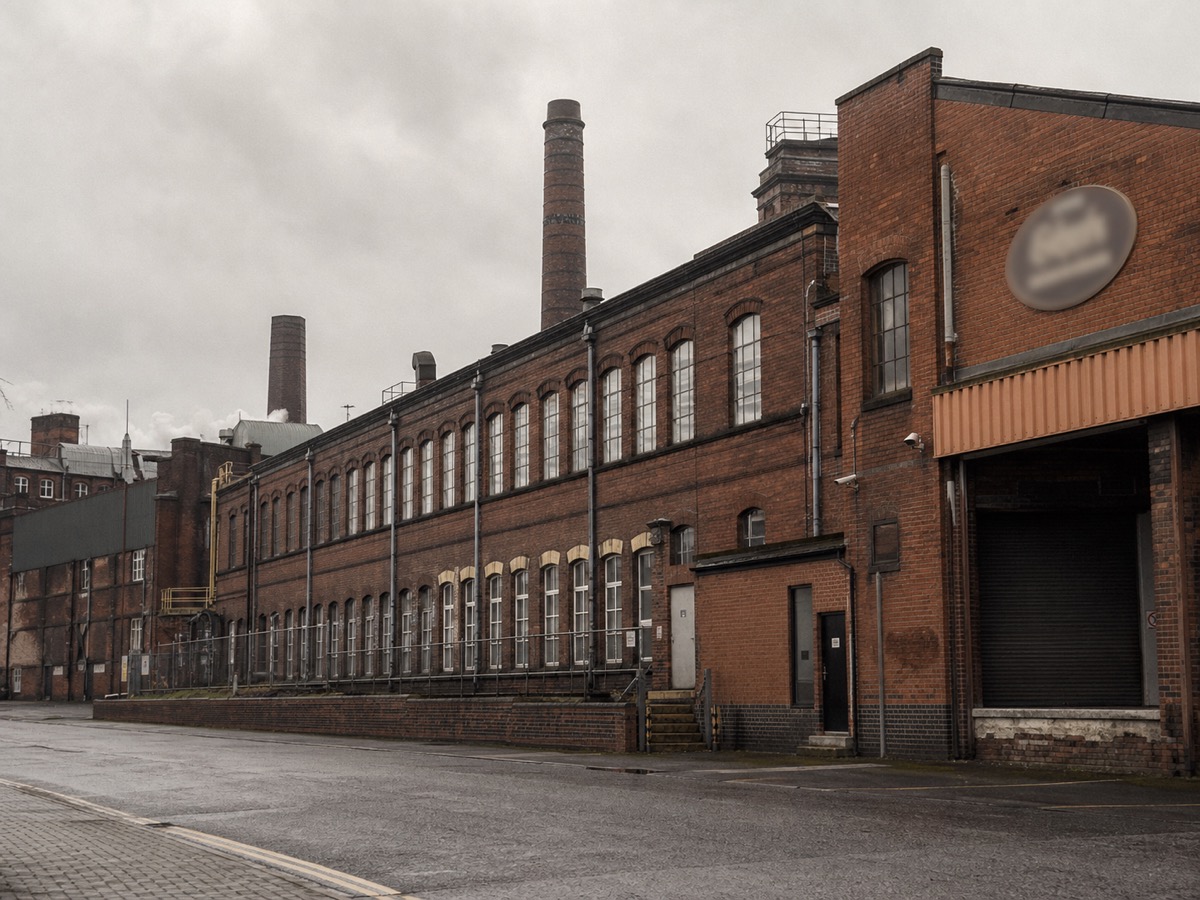
In 1902, in a converted brewery building on Cross Street in Burton-on-Trent, a small company called the Marmite Food Extract Company produced the first jars of Marmite for sale to the public. The recipe was based on Justus von Liebig’s work on yeast paste, the raw material was free, and the bet was that the British would eat almost anything if you put it on toast and called it healthy.
That bet, give or take, worked out. Marmite turns 125 in 2027. By the time the candles are out, the brand will, regulators willing, no longer be British-owned. The McCormick deal is timed to close in mid-2027, almost exactly at the moment the anniversary lands.
So the question is what McCormick does with a 125th birthday they have just inherited and barely paid for yet.
What we now know about the in-laws
By way of getting our bearings, here is what the 31 March 2026 press release actually says, two months on. The deal is structured as a Reverse Morris Trust, which is the legal armature that lets Unilever fold its food business into McCormick without generating US federal income tax for Unilever or its shareholders. The combined company will keep the McCormick name, the NYSE listing, the Hunt Valley global headquarters, and a second international headquarters in the Netherlands. Brendan Foley, McCormick’s chief executive, stays in the top job. Marcos Gabriel stays as chief financial officer. Unilever appoints four of the combined board’s twelve members.
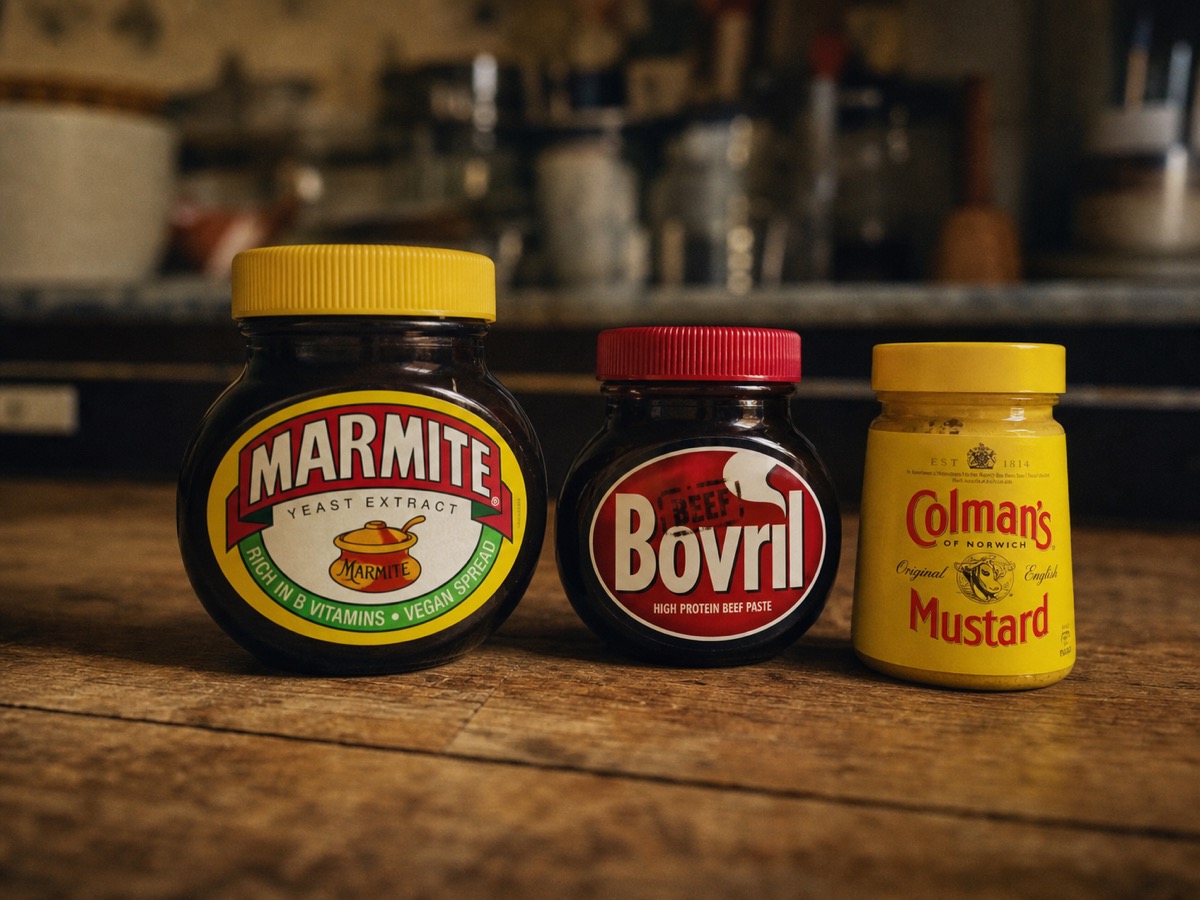
For the British reader looking for Marmite in any of this, the answer is “not by name”. The press release explicitly names exactly two Unilever Foods brands: Knorr (in 90 countries, sold as a household name worldwide) and Hellmann’s (in 65 countries). Together they account for around 70 per cent of Unilever Foods sales. Marmite is bundled, with Bovril, Colman’s, Pot Noodle and the other British heritage brands, under the phrase “a wide array of local brands across EMEA, Latin America and APAC”. The Indian foods business, the Nepalese and Portuguese foods operations, the Lifestyle & Nutrition arm (Horlicks), Buavita in Indonesia, and the Lipton Ready-to-Drink joint venture are explicitly excluded. They stay with what Unilever’s chief executive Fernando Fernández has described as “a €39 billion pureplay HPC company”.
What that means for the 125th anniversary is the awkward bit. Marmite is going to its anniversary as a long-tail piece of a deal whose headline rationale is mostly about Knorr and Hellmann’s. The new owners will be friendly, professional, and, if my reading of their public statements is anything to go by, mostly thinking about something else.
What an anniversary year should actually look like
The 125th is the anniversary of being well-enough run to not need rescuing.
The grown-up answer is that big food brand anniversaries are marketing opportunities first and cultural moments second. Coca-Cola did 125 years in 2011 and turned it into a year-long museum-and-merch fest. Heinz did 150 in 2019 with a limited-edition tomato ketchup that, by all accounts, tasted exactly like the regular ketchup. Cadbury did 200 in 2024, by which time it had been American for fourteen years, and the anniversary felt slightly hollow as a result. Notice the pattern.
A serious 125th for Marmite would include, at minimum: a limited-edition jar design that does not embarrass anyone, a properly produced documentary that takes the Burton history seriously, a factory open day that the public can actually attend, a small archive of advertising history made publicly available, and a charitable element that connects to something other than the brand’s own celebrity. The Elton John AIDS Foundation partnership showed what good looks like. The bar is set.
A bad 125th would include any of the following: an NFT, a celebrity endorsement that nobody asked for, a “reimagined” recipe, a special-edition flavour that nobody wanted, a TikTok challenge timed to the launch date, or any sentence containing the phrase “reaching new audiences”.
I would put the odds at about even.
Oh, and I should be in there too as I did tonnes of stuff for marmite from its 100th anniversary until life got too hectic ;) There is one further observation worth lifting out of the Mnemonicon’s Churchill interview before we go on, because it bears on what the 125th is actually celebrating. Asked whether the Marmite factory had ever crossed his desk during the war, Sir Winston said it had not, and then said the more interesting thing: “Marmite endured, in fact, precisely because it was peripheral. Its very peripherality spared it from my interventions, and one suspects it was the better for it.” That is, on inspection, the entire case for the 125th. The brand has reached this milestone because successive owners, successive governments, and successive marketing departments have left it largely alone for a century and a quarter. The 125th is the anniversary of being well-enough run to not need rescuing. The danger of a new American owner is not the closure of Burton. The danger is the sudden attention.
What McCormick has to work with
The danger of a new American owner is not the closure of Burton. The danger is the sudden attention.
McCormick are, on paper, not a bad inheritor of this. They are 137 years old themselves, so they understand brand longevity. They are headquartered in Hunt Valley, Maryland, which is not London but it is not Silicon Valley either. They have a corporate culture built around taste, ingredients, and food culture rather than around fast iteration.
They also, however, are not a brand-marketing company. McCormick is a flavour-and-ingredients business that has spent the last decade buying other people’s brands and then mostly leaving them alone. French’s mustard, Frank’s RedHot, Cholula: these have all done fine under McCormick, but none of them has been the subject of the kind of cultural moment that Marmite’s 125th could be.
The fairest prediction is that McCormick will do something competent and unmemorable. A nicely produced limited-edition jar, a quiet marketing push, a press release with the Burton heritage in the second paragraph. Probably no factory open day. Probably no documentary. Probably no archive. Probably no harm done, but no advantage taken either.
Which would be, in its own way, a missed opportunity.
What the brand could be at 130
Look forward five years and the more interesting question is what Marmite turns into under American stewardship by 2032.
Option one is that McCormick treats it as a curiosity for the global flavours portfolio. Marmite shows up in their seasoning blends, their savoury sauce range, possibly an umami paste for restaurants. The jar on the British supermarket shelf does not change much. Burton stays open, partly because it makes commercial sense and partly because nobody at McCormick has the appetite to be the executives who closed the factory.
Option two is that they get more ambitious. Marmite goes on a serious push into the US, where it has always been a curiosity. It appears in a Whole Foods near you, on a higher price point, marketed as a “British heritage umami paste”. It picks up some American adopters and loses no British ones. The Burton factory expands slightly to handle US demand. This is the scenario where McCormick justifies the $45 billion (£33.5 billion) by actually growing the food business they bought.
Option three is the bad one. The brand is squeezed for margin, the Burton workforce shrinks year on year, production quality dips slightly but in ways the brand-loyal core can detect, and by 2032 Marmite is technically still made in Britain but emotionally has stopped being a British product. This is the Cadbury-Bournville scenario, replayed for yeast spread.
Realistically, the outcome is some mix of one and two, with the British government and the union doing the work to head off option three. Or that is what we should hope.
What we should do anyway
Regardless of what McCormick decides to do for 2027, there is a small thing the rest of us can do, which is mark the anniversary properly ourselves. Buy the jar. Use it for cooking, not just for toast. Tell someone under twenty-five what Marmite tastes like and let them try it. Take a photograph of the label, because brand identities do drift over time and you might be glad of the record in ten years.
If the Hate Party are reading, the same applies. You can mark the 125th by not buying Marmite, with renewed conviction, and pointing at the jar with the same patient disgust you have shown for years. Continuity matters on both sides of the line.
This is the last full year of Unilever ownership. The 125th will arrive under new management. What the brand actually is, in 2027 and beyond, depends partly on McCormick, partly on the regulators, partly on the workforce in Burton, and partly on whether the rest of us still care enough to notice.
I think we will. But we should probably keep checking.
A small coda, from the Mnemonicon
I cannot resist this. Back in March, before the deal was announced, I asked the Marmite Mnemonicon’s Winston Churchill what he would write for the 125th anniversary in 2027 if he were asked. He declined, properly, on the grounds that he had written no such thing in life and was not about to invent one. Pressed, in speculation mode, he produced this. It is not a Churchill quotation. It is what the Mnemonicon, trained on his papers, says he would probably have written. I think it is the best thing I have read on the subject of the 125th anniversary, and you can blame me, or the Mnemonicon, or Sedasoft, depending on how you feel about the genre.
Here stands an object of peculiar British significance: a substance born from the surplus of one industry that became, through ingenuity and labour, the foundation of another. That a by-product of the brewer’s craft should be transmuted into a food of such durability, nourishing millions across a century and a quarter, speaks to the genius of the British people for turning scarcity into sufficiency, and waste into worth.
Marmite endures because it embodies a principle I have long cherished: that the British character reveals itself not in grand gestures alone, but in the quiet persistence of useful things. This is the true glory of Britain. Not rhetoric, but manufacture. Not proclamation, but provision.
One hundred and twenty-five years outlasts empires in their grandeur. Yet Marmite survives, not by imperial decree, but by the simple loyalty of people who found in it something of value. That is the truest monument.
Whatever McCormick chooses to do with the brand in 2027, that is the bar.