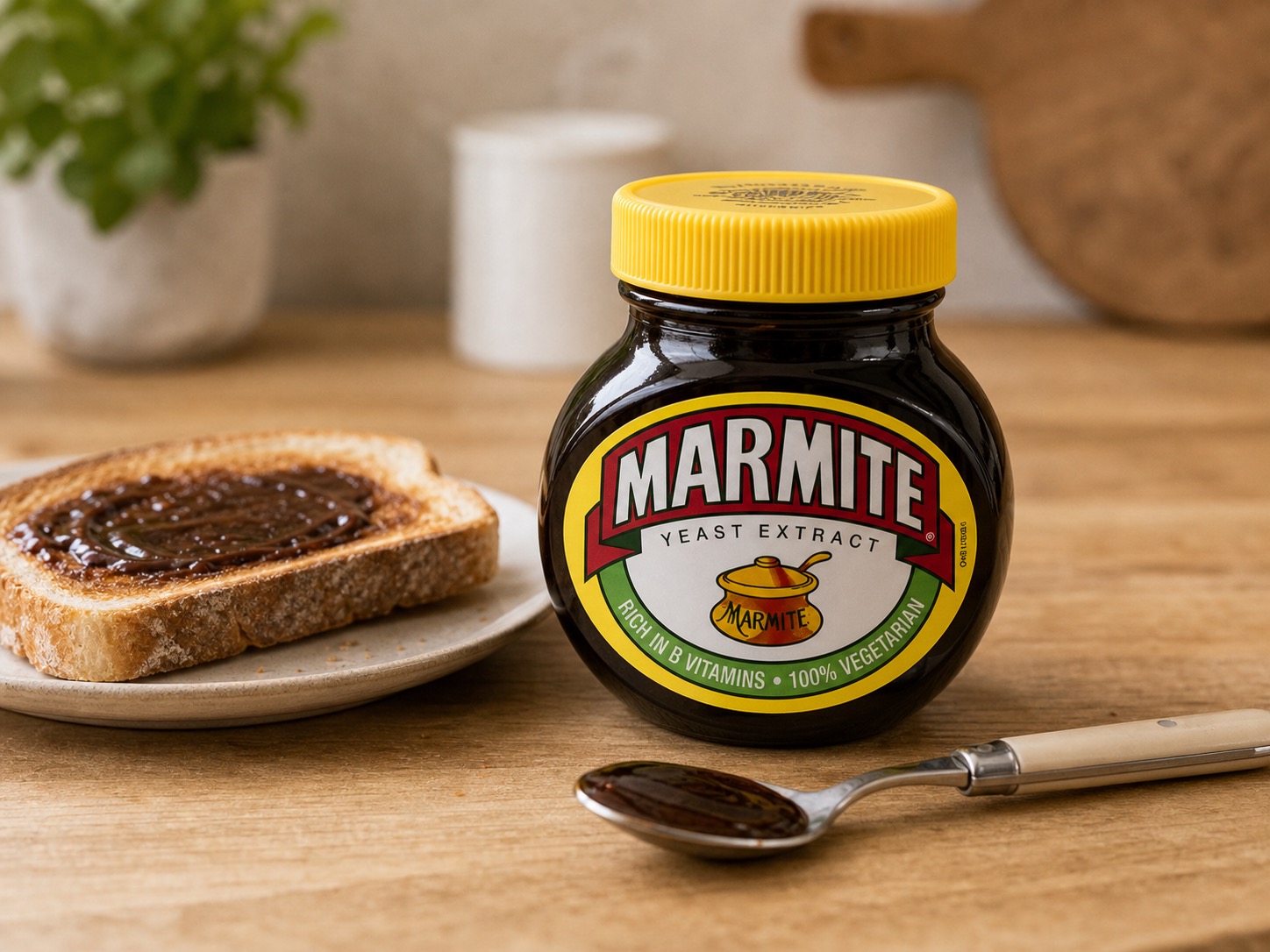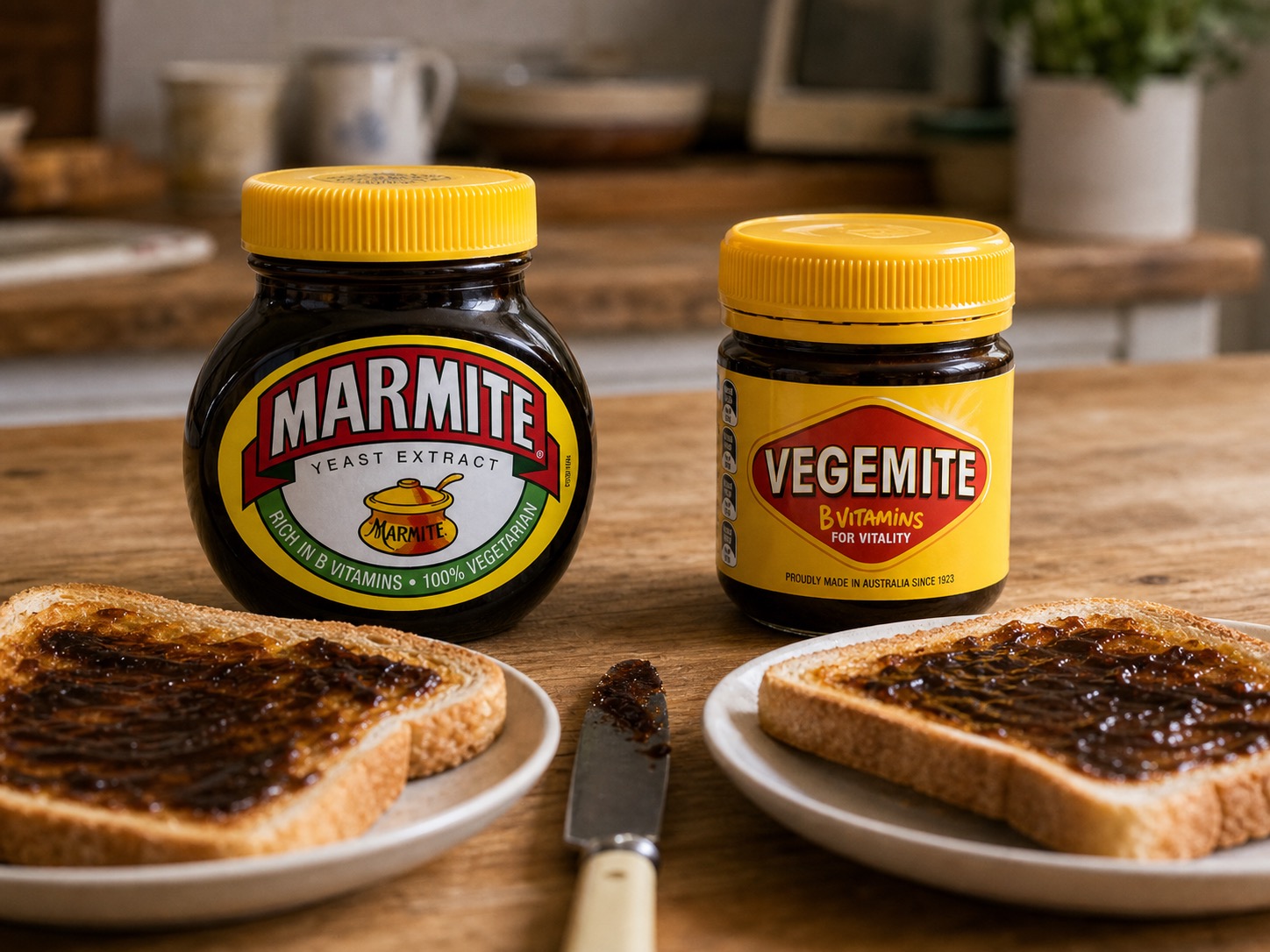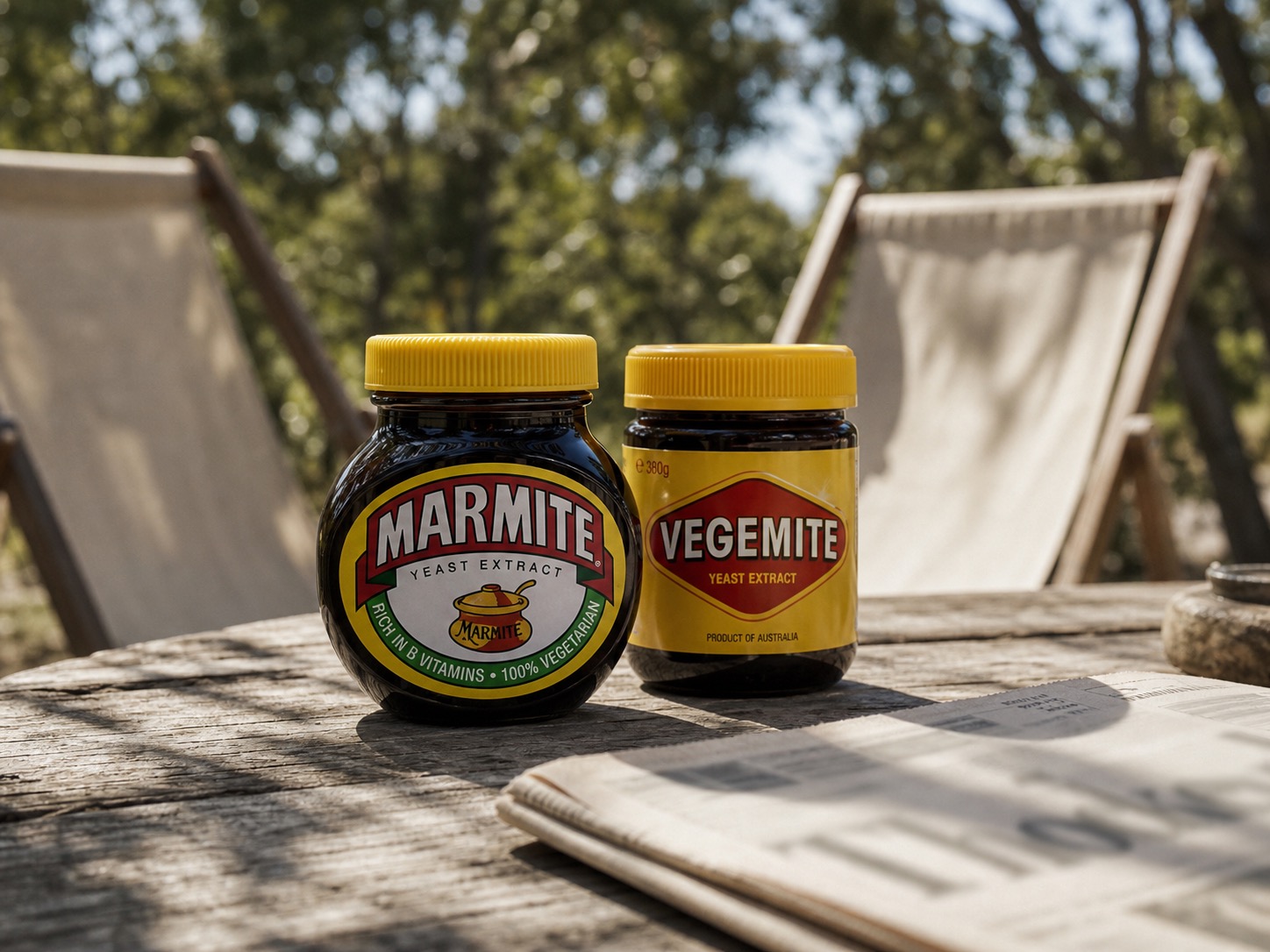

Could Vegemite buy Marmite?
Yes, technically. Probably not. Definitely not in any way Britain would survive.
Bear with me. This is the most fun thought experiment in the whole McCormick story, and it ends in a place that says something useful about why the yeast-extract category is shaped the way it is.
When the McCormick deal closes in mid-2027, Marmite, Bovril, Colman’s and Pot Noodle will sit inside one American spice portfolio. McCormick will, briefly, own roughly all of the British yeast-extract category. That is the moment a competition lawyer might wonder whether McCormick is going to keep going. There are, after all, only a handful of meaningful yeast extracts in the world. Each is owned by somebody else. Each could, in theory, be bought.
So I made a list. Four hypothetical takeovers, none of which will happen, for reasons that are more interesting than the answer. One of them, the Vegemite one, would almost certainly start a Commonwealth-grade incident if it did.
The candidates
The global consumer-facing yeast-extract category has roughly four serious brands outside the now-McCormick stable:
| Brand | Country | Owner | Status |
|---|---|---|---|
| Vegemite | Australia | Bega Group | Bought back from Mondelez in 2017 |
| Cenovis | Switzerland | Hero AG | Privately-held conglomerate |
| Vitam-R | Germany | VITAM Hefeprodukt GmbH | Family-owned since 1925 |
| Sanitarium NZ Marmite | New Zealand | Seventh-day Adventist Church | Religious-mission ownership |
Plus Promite (Mars/Masterfoods, Australia), AussieMite, Mighty Mite, and a few South American variations. The big four, structurally, are Vegemite, Cenovis, Vitam-R and Sanitarium NZ Marmite.
Now imagine McCormick, post-2027, decides to keep shopping. Or, more interestingly, imagine someone other than McCormick comes shopping for Marmite.
Scenario one: McCormick buys Vitam-R

Vitam-R is the German organic yeast extract, produced in Hameln since 1925 by VITAM Hefeprodukt GmbH (and I say this in a whisper….I like it a LOT). They are a family-owned business that has spent a century proudly not being acquired by anybody. The product is deep organic, vegan, low salt. The opposite of Marmite’s mass-market industrial heritage. In the UK, the organic version is distributed by the Essential Trading Cooperative, which has its own anti-consolidation politics.
Picture the press release. Union Flag fading into the German tricolour, a Marmite jar in front, a slogan running across the top: “Marmite, mit deutscher Effizienz.”
It will not happen. VITAM are a family business that has explicitly built its identity around not being a Schwartz-style multinational subsidiary. The revenue is rounding error for McCormick. The cultural mismatch with Marmite (organic-purity positioning versus love-it-or-hate-it mass market) is total. And the family are not selling.
The German organic shopper keeps buying Vitam-R. The Marmite drinker keeps drinking Marmite. The flag mashup remains a thought experiment.
Scenario two: McCormick buys Cenovis

Cenovis is the Swiss yeast extract, produced since 1931 and now part of Hero AG, the privately-held Swiss conglomerate best known for Hero baby food. It is small, expensive, exclusive and Swiss. In marketing terms that is roughly the same as saying neutral, expensive, exclusive and Swiss.
Picture this one as the Union Jack alongside the white cross on red of the Swiss flag, a jar of Cenovis sitting in a snowdrift, the slogan “Marmite, made in Switzerland”.
It will not happen either. Hero AG is not a yeast-extract company. It is a baby-food empire that happens to own a small heritage savoury brand on the side. Hero would only sell Cenovis if forced to by competition regulators or by a corporate restructuring, and even then McCormick would not be the natural buyer. Nestlé would be, on geographic-strategic grounds. The Swiss-domestic market for yeast extract is small enough that the deal would not move McCormick’s quarterly needle by a basis point.
The Swiss shopper keeps buying Cenovis. The Marmite drinker keeps drinking Marmite. The Alps remain unbothered.
Scenario three: Vegemite buys Marmite. The shitstorm.

Right, this is the one.
Vegemite, the Australian national-icon yeast extract, was bought back from Mondelez by Bega Cheese in January 2017 for AU$460 million. The 2017 deal was a re-acquisition. Vegemite had been founded in Melbourne in 1922, sold to American Kraft in 1935, and was finally returned to Australian ownership eighty-two years later. The headline at the time was “Vegemite is coming home”. Australia treated it as a small piece of national-pride restoration.
Now imagine McCormick, four years into Marmite ownership, decides Marmite is not a strategic fit. The UK marketing team has been offshored to the Netherlands. Burton is on its fourth efficiency review. The brand is rumoured to be quietly margin-squeezed. McCormick puts it on the block.
Bega Cheese, fresh from a successful decade of Vegemite stewardship, makes an offer.
Bega buys Marmite.
Picture the press release. Union Jack and the Southern Cross overlapping, a Marmite jar and a Vegemite jar nose to nose, the slogan: “Marmite, now under new Australian management.”
You can see the reaction immediately. The British press would not survive it. The phrase “you can’t sell Marmite to the Americans” was bad enough. “You can’t sell Marmite to the Australians, especially not the people who make Vegemite” would be apocalyptic. The petition hits a million signatures in twelve hours. Questions in Parliament about Commonwealth food sovereignty. The Daily Mail front page basically writes itself. The Sydney Morning Herald runs “Vegemite buys Marmite: Britain’s revenge for 1788 finally complete”, which is the cleverest thing they have run in a decade. Trans-Tasman comment threads melt the internet for a fortnight.
The funniest part is that, on industrial logic alone, Bega owning both Marmite and Vegemite would make more sense than McCormick owning either. Bega understand yeast extracts. They have run a successful national-treasure brand for a decade. They have the cultural fluency to keep Marmite British in its marketing while running the Burton factory more efficiently than Unilever ever did. Bega are, on paper, the right owner.
Nobody in Britain would care about the industrial logic. The story would be that Australia had bought Britain’s brown spread. That would be the story for about six months.
It will not happen, mostly because McCormick will not sell Marmite. The Schwartz precedent is forty-two years and counting, and McCormick do not flip their heritage acquisitions. But if McCormick ever did, Bega is the buyer. Sleep well, Burton.
Scenario four: McCormick buys Sanitarium NZ Marmite

This is the cleanest acquisition on paper and the most impossible in practice.
Sanitarium Health Food Company has produced New Zealand Marmite under licence in Christchurch since the 1910s. The recipe is sweeter, less salty, more caramel noted than the British version. Have you ever tried Kiwi Marmite? The NZ stuff is fine if that is what you grew up with, but let us not pretend it is the same product.
Sanitarium is owned by the Seventh-day Adventist Church and operates as a religious-mission food company. Profits go to church and welfare causes, not shareholders.
Picture this one as Union Jack alongside the New Zealand flag, two Marmite jars side by side, the British darker and the Kiwi slightly amber. Slogan: “Reunited at last.”
The corporate logic is obvious. McCormick already owns the British Marmite brand globally. A single owner of both Marmites simplifies international marketing. The deal is also structurally impossible. Sanitarium is not for sale. The Seventh-day Adventist ownership structure has been in place for over a century. A church-owned food company does not get acquired by a Maryland spice giant on commercial logic.
New Zealand keeps its sweeter Marmite. Britain keeps its salty one. The 2011 Marmageddon shortage stays a Christchurch story.
Why none of this will happen, the boring version
The four flags-and-jars thought experiments are entertaining, but they all hit the same structural wall.
The category is too small. The global consumer yeast-extract market is somewhere between $300 million and $500 million in annual revenue. McCormick paid $45 billion for Unilever Foods. Consolidating the rest of the category would not move the needle on a McCormick quarterly call.
Production is geography locked. Each major yeast extract uses local brewer’s or baker’s yeast and tastes the way it does because of that. You cannot move Vegemite production to Burton, or Marmite production to Melbourne, and have either brand still be itself. The raw materials are not transferable. The tap water is not transferable. The factory is not the brand, but the brand is locked to the factory.
The cultural identity is non-transferable. Each brand is the national yeast extract of one country. Combining them under one owner damages each brand’s nationalist marketing without producing any meaningful synergy.
The owners are wrong. Family businesses (VITAM), privately-held baby-food empires (Hero), religious missions (Sanitarium) and Australian listed companies that have just bought their brand back (Bega) are not natural sellers.
The regulators would look. McCormick plus Marmite plus Bovril plus Vegemite plus Cenovis plus Vitam-R equals a single-owner global yeast-extract monopoly. Brussels, Bern, Berlin and Canberra would all have something to say. The deal would not survive a competition review.
So the four takeovers do not happen, the global yeast-extract map stays the way it is, and the only consolidation that has actually occurred is the one we already know about. McCormick owning Marmite and Bovril together from 2027.
The smaller story McCormick actually faces
The interesting strategic question for McCormick is not what else can we buy. It is what they do with the one yeast-extract pairing they already own.
Marmite and Bovril, post-deal, will sit in the same portfolio for the first time in over thirty years. Bovril was bought from Bovril Limited by CPC in 1971 and has changed hands a few times since. Marmite has been under Unilever since 2000. Both are British national-treasure savoury spreads. Both are made in the UK. Both have overlapping consumer demographics and zero recipe overlap.
McCormick could do something interesting with that pairing. A heritage-British-spreads marketing line, a co-promotional campaign, a Marmite-and-Bovril breakfast product extension. That is the deal-level consolidation question worth taking seriously, and it requires no acquisitions, no flag mashups and no comment-thread meltdowns.
The international yeast-extract roll-up makes a better article. The Marmite-plus-Bovril pairing makes a better business case. Both are, on this evidence, more likely than the flag-mashup scenarios.
Sleep well, Burton. The Australians are not coming.
Sources: Bega Cheese ASX announcement of the Vegemite acquisition (January 2017); VITAM Hefeprodukt GmbH company history; Hero AG corporate filings; Sanitarium Health Food Company about-us; Mondelez SEC filings; McCormick & Company 31 March 2026 announcement combining with Unilever’s foods business.