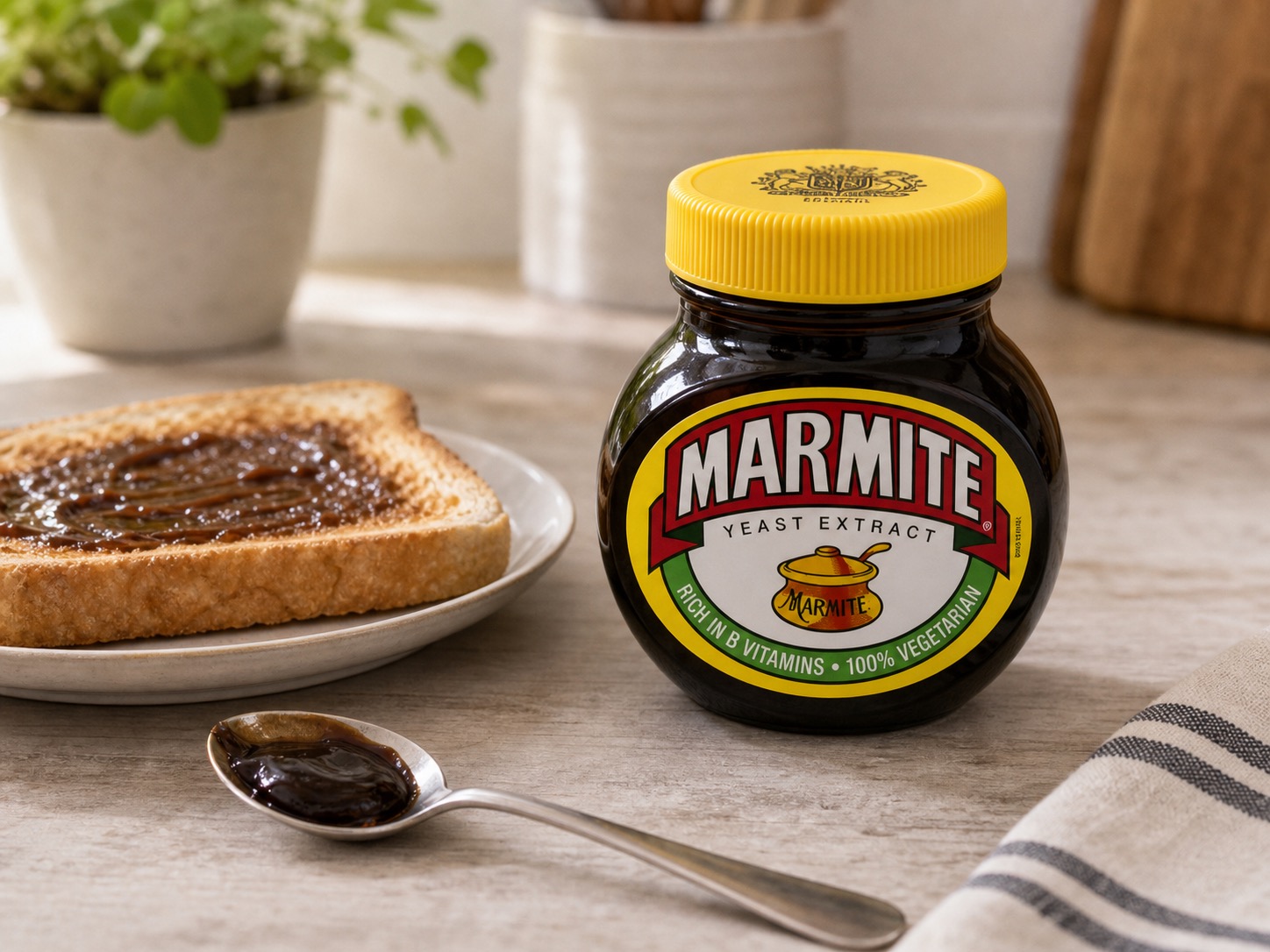

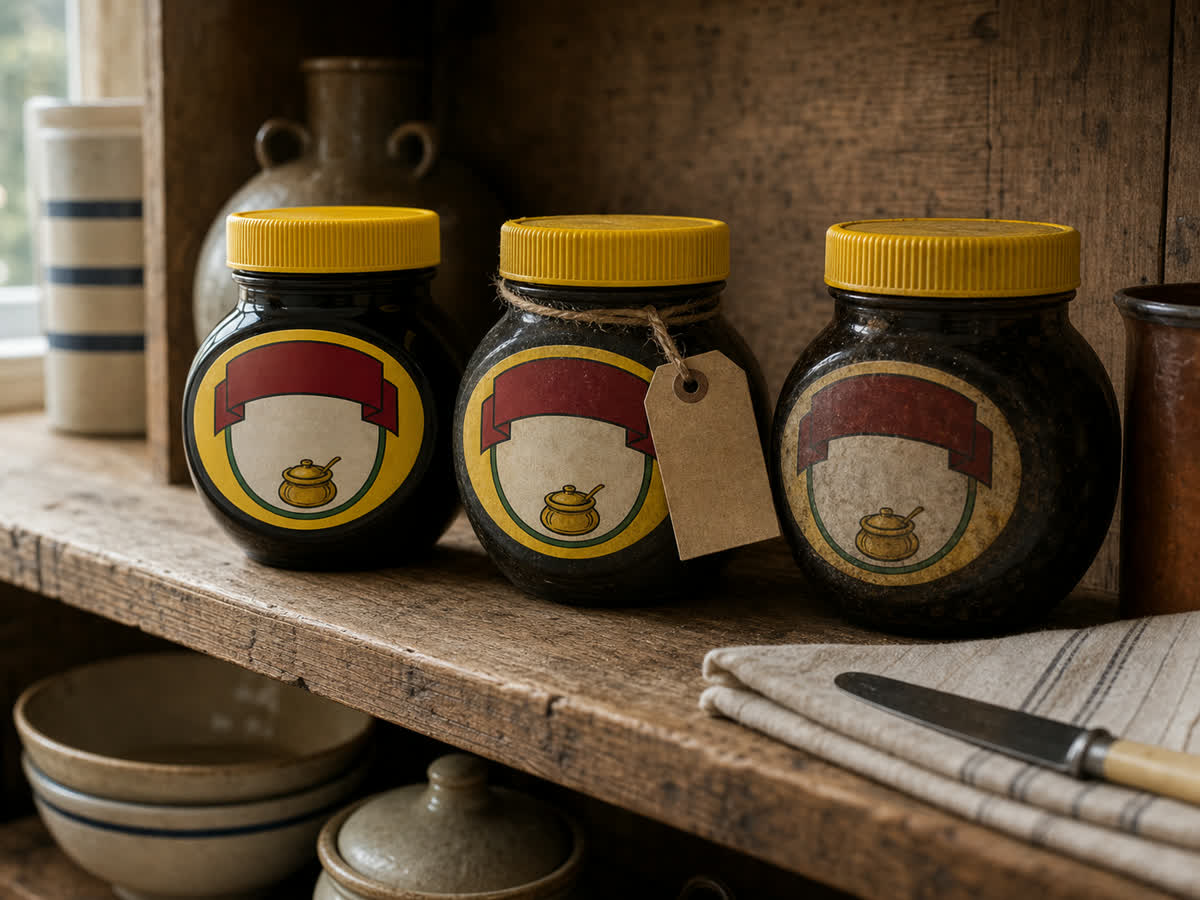
Marmite is one of those store-cupboard things people inherit from a previous flatmate, find at the back of a parents’ larder, or buy once a year for a single recipe. So the question “is this jar still alright?” comes up rather a lot. The short answer is: almost certainly yes. The longer answer is more interesting.
The headline numbers
A sealed jar of Marmite, kept somewhere reasonable, will easily last two years past its best-before date and probably longer. The printed date is conservative. Unilever sets it on the basis of guaranteed flavour and colour, not safety.
An opened jar lasts about as long, give or take. Keep the lid on and use a clean knife, and an opened jar at room temperature will hold its quality for roughly two years from opening. It does not need to go in the fridge. Most people who refrigerate it do so out of a habit inherited from jams and pickles, where refrigeration genuinely matters. With Marmite it does not.
If those two facts already answer your question, you can stop reading. The rest is for the people who like to know why.
Why Marmite is, biologically speaking, very hard to kill
Marmite is roughly 60% water by weight, which on first glance sounds like it ought to spoil. It does not, because the water is in a salt and glutamate solution so concentrated that very little can live in it. Salt content sits somewhere around 10% by weight, which is well into the range food microbiologists call “preservative”. Most bacteria, moulds, and yeasts cannot establish a colony in that environment. They dehydrate before they get going.
There is also a pH point. Marmite sits at around pH 5, slightly acidic, which closes off another set of spoilage organisms that prefer something more neutral. On top of that, Marmite has effectively been pre-fermented. The yeast extract is what is left after Saccharomyces has been broken down and concentrated, so the product has already had most of its biological action wrung out of it during manufacture.
The technical phrase for this kind of food is “low water activity”, meaning there is plenty of water present but very little of it is biologically available. Honey is the same. Soy sauce is similar. So is concentrated tomato paste. All of them last roughly forever.
What the “best before” date is actually telling you
The best-before date on a Marmite jar is a quality date, not a safety date. By law in the UK, foods that pose a microbiological risk if eaten too late carry a “use by” date. Foods that simply degrade in flavour or texture carry a “best before”. Marmite carries the second kind because, in practice, the spread does not become unsafe. It only becomes less good.
Past the best-before, what changes is mostly colour and flavour intensity. The yeast extract continues to caramelise very slowly at room temperature. A jar three or four years past its date will be noticeably darker, slightly more bitter, and a bit less salty on the palate than a fresh one. Some people prefer it that way. The brand does not advertise this. Marmite enthusiasts do.
When you should actually throw a jar out
There are three signs to look for, and only three.
Mould on the surface. This is rare but not impossible. If a jar has been left open at the back of a warm cupboard, or contaminated by a buttery knife that introduced biological matter, you might find a thin spotted layer of mould. Throw the jar out. The mould will not have penetrated the body of the spread, but the safe option is to bin it rather than scrape and carry on.
A strong off smell. Marmite has a strong smell anyway. What you are looking for is different: a sour, alcoholic, or sharply yeasty note that was not there before. This is fermentation restarting, and it signals contamination.
A bulging or hissing lid. This means gas has built up inside, which means something living is producing it. Do not open it. Bin the jar.
None of these is common. In thirty years of writing about Marmite I have seen one moulded jar (a friend’s, left open at the back of an Australian beach house) and zero hissing lids. The product is genuinely robust.
The fridge question, properly answered
Marmite does not need refrigeration. The fridge does no harm, but it makes the spread thicker and harder to get out of the jar, which is a small daily annoyance for no preservation benefit. The advice on the label is “store in a cool dry place”, which means the larder or a kitchen cupboard, not the fridge door.
The Squeezy bottle is the same. It is engineered to flow at room temperature. In the fridge it becomes treacle-thick and the dispensing nozzle goes sticky. Out of the fridge it works as intended.
What happens to flavour over time
Within the first year of opening, you will not notice any change. Between one and two years, a sensitive palate will pick up that the spread is a touch darker and a touch less sharp. Beyond two years the change is more obvious, but it is a change, not a fault. The same way an aged cheese is different from a young cheese, an aged Marmite jar is different from a fresh one. Whether you prefer the aged version is a matter of taste.
Industrial pastry chefs who use Marmite in stocks, gravies, and brown sauces sometimes keep an older jar around on purpose, for that very reason. The caramelisation gives a slightly more complex depth to long-cooked dishes. Most home cooks will never notice.
A quick storage cheat-sheet
- Unopened, in the cupboard: indefinitely, with quality slowly drifting after about two years.
- Opened, lid on, in the cupboard: about two years of full quality, then a gentle decline.
- In the fridge: lasts as long, but unnecessary and inconvenient.
- Squeezy bottle: treat it like the jar. Room temperature is correct.
- Every other format: the same rules hold across the full Marmite range, from the 70g jar upwards.
- A buttery knife in the jar: the single most common contamination route. Use a clean spoon or knife each time, or accept that the jar may need binning sooner.
What this means in practice
Found a jar at the back of the cupboard with a best-before date from 2022? It is almost certainly fine. Open it. Smell it. If it smells like Marmite, it is Marmite. If the colour is a shade darker than the jar you remember from childhood, that is the caramelisation doing its slow work. Spread some on toast. The world will not end. And if a jar really does have to go in the bin mid-recipe, there are workable substitutes for Marmite that will cover the savoury note.
And if you have a habit of refrigerating it, you can stop. The fridge is for things that actually spoil. Marmite is not really one of them.
How long does Marmite last once opened?
An opened jar of Marmite keeps for a very long time, usually well over a year and often much longer. Its high salt content and low water content make it a hostile place for the microbes that spoil most foods, so it does not deteriorate the way an opened jam or sauce would. Keep the lid on and the rim reasonably clean and it will be fine for many months.
Does Marmite go off?
Marmite very rarely goes off the way perishable foods do. It is too salty and too dry for bacteria or mould to take hold easily, which is why a jar can sit in the cupboard for years. It can slowly darken, thicken and lose a little of its sharpness over time, but that is a change in quality, not safety.
Can you eat Marmite after the best before date?
Almost always, yes. The date on a Marmite jar is a “best before” date, which is about quality at its peak, not a “use by” safety deadline. A jar a few months, or even a year, past its best before is normally perfectly safe to eat, though it may taste slightly less bright.
Does Marmite need to be kept in the fridge?
No. Marmite is made to live in the cupboard and does not need refrigerating, before or after opening. The fridge does no harm, but it makes the spread stiffer and harder to scrape, so most people keep it at room temperature.
How do you know if Marmite has gone bad?
Genuine spoilage is rare, but bin a jar if you see actual mould, smell anything sour or off, or find moisture or bubbling inside, usually a sign that water got in from a wet knife. Simple darkening or thickening is not a reason to throw it out.