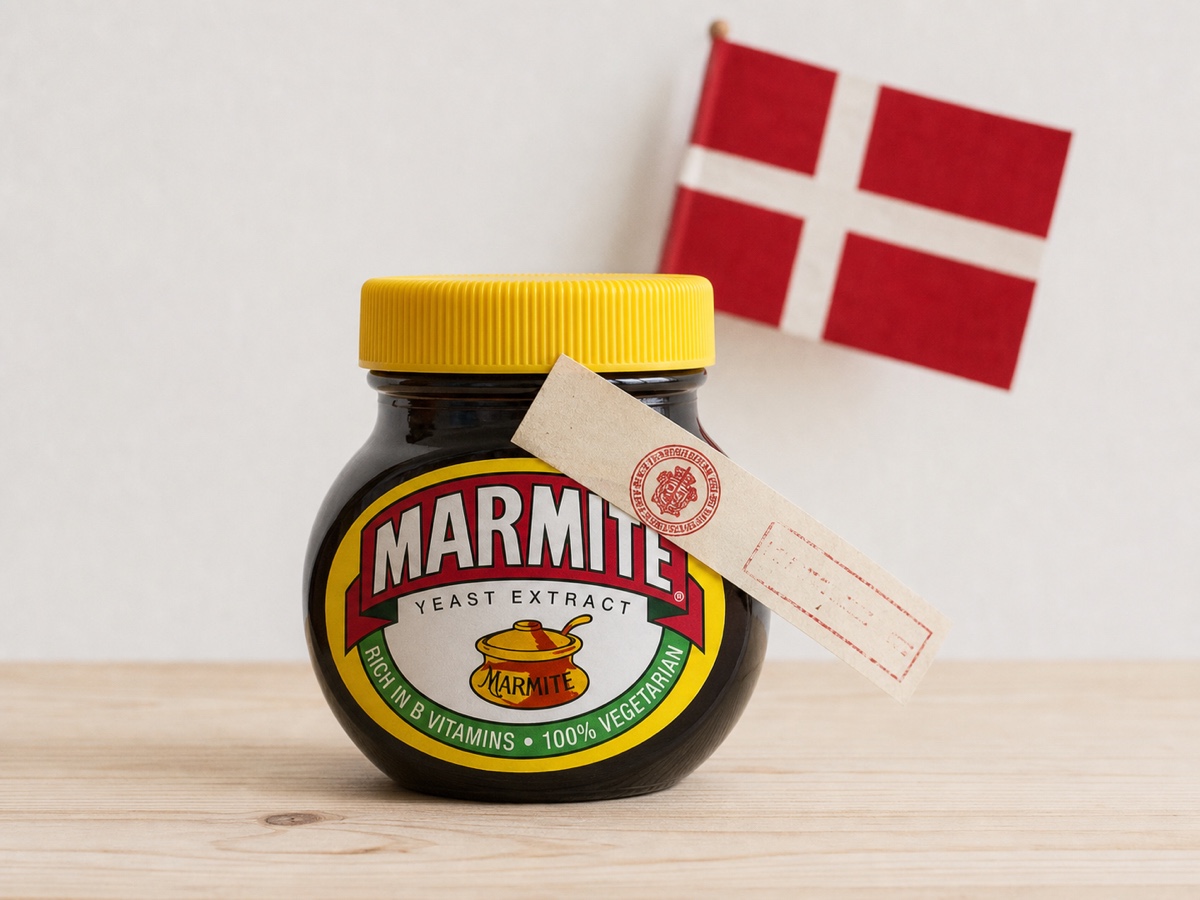

The claim arrives the way these claims always do, second-hand and confident: Margaret Thatcher loved Marmite. It is a good line, because it sounds right. Of course the most divisive figure in modern British politics ate the most divisive thing in the British cupboard. The two belong together so neatly that the fact feels as though it ought to be true.
I went looking for the jar, and it is not there.
What she actually ate
Thatcher’s diet is unusually well documented, because she left an enormous archive and because a Prime Minister’s habits get written down. The picture is consistent across all of it. Breakfast was grapefruit and one or two eggs, with black coffee or weak tea, and no cereal. Before the 1979 election she went on a now-notorious egg-heavy regime, the Mayo Clinic diet, and got through something like twenty-eight eggs a week trying to lose weight for the steps of Number 10. Lunch and dinner ran to lamb, roast beef, fish, salad, the occasional gooseberry soufflé. The reconstructed contents of her larder, pieced together from archive photographs, are tins of Heinz baked beans, salmon, corned beef, peaches and gooseberries. Her one real indulgence was whisky, Glenmorangie and Glenlivet, a late glass with soda in the bad nights of the Falklands.
Nowhere in any of it is there a jar of Marmite. Not in the biographies, not in Carol Thatcher’s memoir, not in the household records, not in a single sourced anecdote. The most thorough catalogues of what the woman put in her mouth simply do not include it. On the evidence, she was a grapefruit-and-eggs person who would probably have regarded a spoonful of yeast extract as a waste of a perfectly good piece of toast.
So the popular version, that she loved the stuff, looks like a myth. Why does a myth that wrong stick so well?
The closest she ever got
She never set foot in the Marmite factory. But she came within a brewery wall of it once, and probably did not know or even care.
In the run-up to the 1992 election she made a surprise visit to Marston’s Brewery in Burton-on-Trent, campaigning for the local Conservative MP Ivan Lawrence. It is in the Burton papers, and the local Sentinel still has the footage of the Iron Lady being walked round the vats. A standard bit of campaign theatre, a brewery in a marginal, a photo opportunity with the workforce.
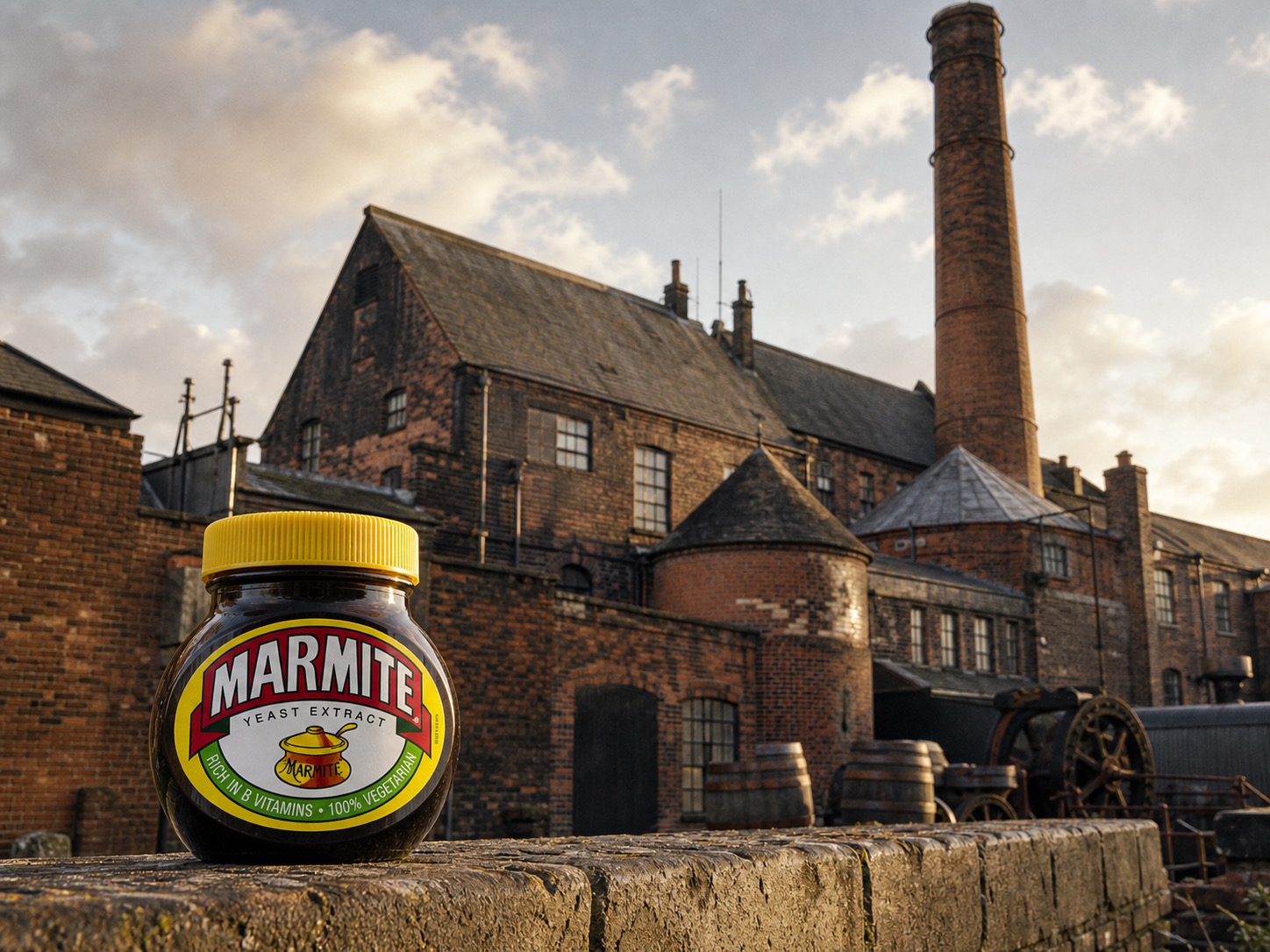
Marmite is made from the spent yeast left over from brewing beer, and it has been scraped out of Burton’s breweries since 1902, Bass’s at first, with Marston’s among the breweries that keep the factory fed today. Something like fifty thousand tonnes of brewer’s yeast goes through the Marmite gates in Burton every year, most of it from a short drive away. The yeast in the vats Margaret Thatcher was shown round in 1992 was, in the most literal sense available, raw Marmite, and it is a safe bet nobody on the tour thought to mention it. She saw the front end of the supply chain, shook the hands, and went home. One step from the jar, as ever, and never quite touching it.
The brewery she dropped in on for votes later got its own Marmite, as well. In 2009, yeast from Marston’s Pedigree, the ale, went into a limited-edition Pedigree Marmite in a jar shaped like a red cricket ball, half a million of them, timed for the Ashes.
Marston’s turned out to be not just a supplier to Marmite but a collaborator with it. Thatcher had been and gone seventeen years earlier, one brewery tour short of the connection everyone now assumes she had. For the full story of why Marmite is made in Burton in the first place, that has a piece of its own.
The link runs the other way
Thatcher is not remembered as a woman who loved Marmite. She is remembered as a woman who was Marmite. She is, arguably, the original. When people reach for something to explain what “a bit Marmite” means, she is the example that needs no explaining.
This is not a stretch invented after the fact. It was the standard shorthand for her in life and especially in death. The Welsh first minister Rhodri Morgan, among many others, called her a “Marmite” figure, and the obituaries in 2013 were thick with the comparison: love her or hate her, you could not be neutral, the same way nobody is neutral about the jar. The phrase did a particular job. It let people who hated her, and people who revered her, agree on one thing, that she provoked, that she was never bland, that indifference was the one response she never got.
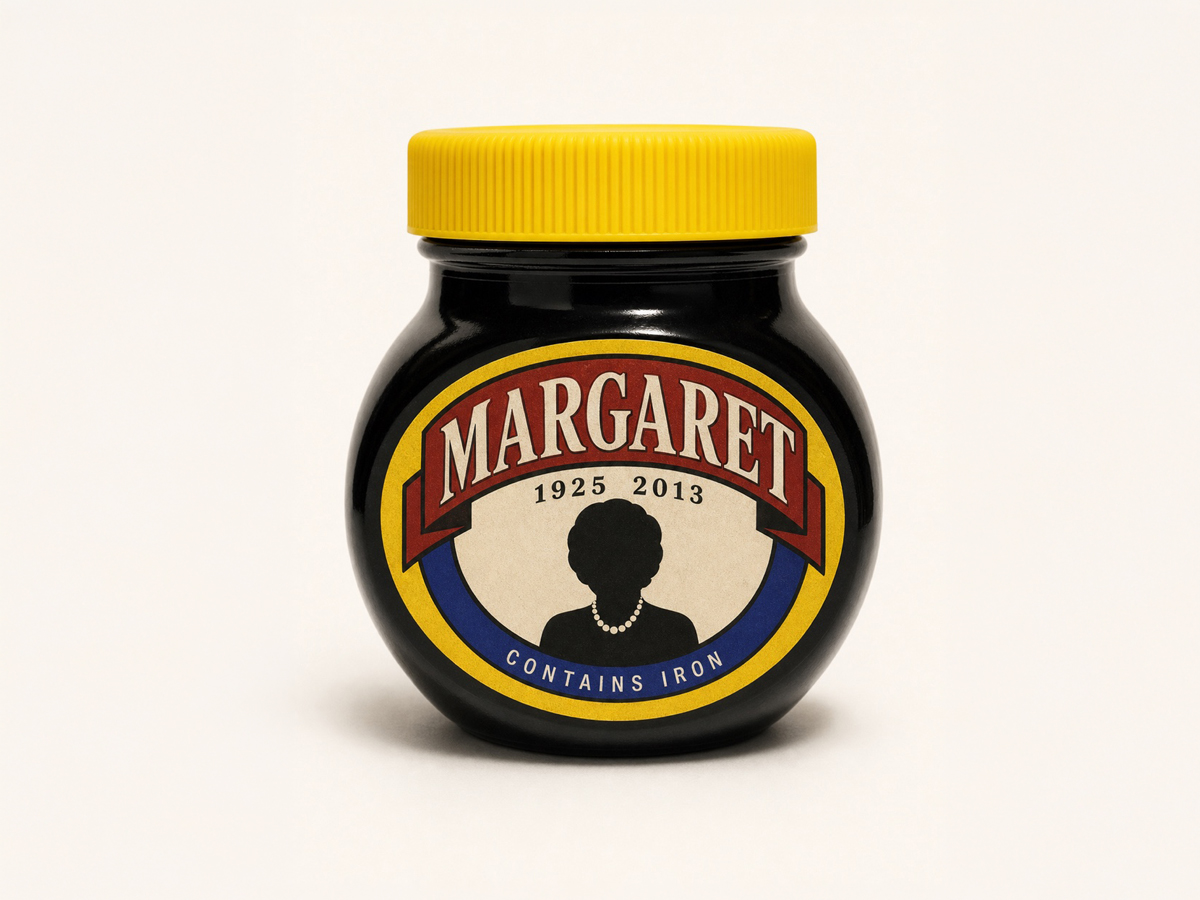
The cleverest use of it came from the Guardian, which marked her death in 2013 with an advert built entirely on the parallel. It put her on a real Marmite jar, the famous bulbous shape and the yellow lid, the label restyled in the genuine red-and-blue oval but reading MARGARET, with her dates, 1925 to 2013, a small photograph of her where the spoonful of spread usually sits, and the line CONTAINS IRON. Underneath, the only caption it needed: “One woman, a nation divided”. It was trailing the paper’s coverage, a Posy Simmonds piece on Thatcher’s life that weekend, and it did the whole job in one image. The love-it-or-hate-it spread, the Iron Lady, and a nation split down the middle, with nothing to explain. That is how completely the equation of Thatcher and Marmite had settled into the national shorthand by the time she died.
She was Marmite before Marmite was
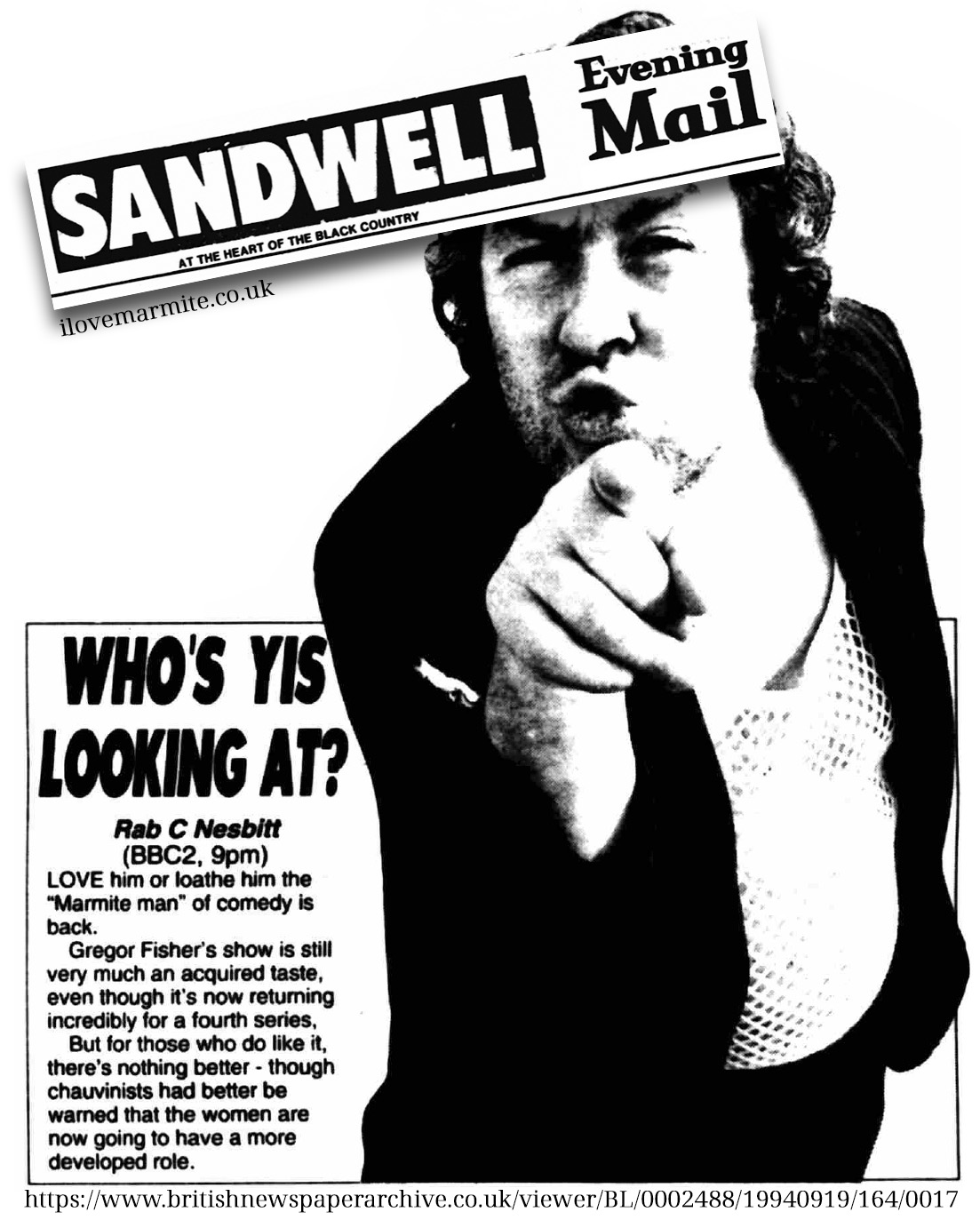
The dates make the comparison stranger still. Marmite did not sell itself on being divisive until 1996, the year the advertising team at BMP DDB coined “you either love it or hate it” and built the whole modern identity of the brand around the half of the country that could not stand the taste. But the word had slipped its jar even before that. We did the digging on this in a separate piece, and the earliest recorded use of “Marmite” as an adjective, the one the Oxford English Dictionary actually cites, is from 1994: a Sandwell Evening Mail review calling Gregor Fisher’s Rab C Nesbitt “the Marmite man of comedy”. Two years before the famous slogan, a string-vested Glaswegian drunk was already the thing you either loved or could not stand.
You can almost date British divisiveness the way historians date everything else, before and after a fixed point. Call it Before Nesbitt and After Nesbitt if you like, because the dictionary does. And by that reckoning Thatcher is firmly BN. She left office in 1990, four years before the word was first written down as an adjective and six before the slogan made it a national reflex. She had been the most polarising figure in the country for over a decade before “Marmite” meant any of this.
Which raises a genuine chicken-and-egg question. When a sub-editor in Sandwell reached in 1994 for a single word that meant splits-the-room, and when the copywriters reached for the same idea two years later, the most complete example of that thing in living British memory was already sitting there, fresh, enormous, and named Margaret. It is not provable that she shaped the metaphor. But she is the purest specimen of what the metaphor describes, she got there first, and the word arrived afterwards to fit a shape British public life already knew.
So the spread did not lend its divisiveness to her. If anything it was the other way round. By the time Marmite started selling itself on being loved and hated in equal measure, the country had already spent the eighties learning exactly what that felt like.
Why the myth attaches anyway
Which brings it back to the jar that was never there. The reason people are so ready to believe Thatcher loved Marmite is that the association is real, it is just an association of character rather than appetite. The divisive figure attracts the divisive condiment. It feels like it must have been literal, because the metaphor is so exact that a coincidence of taste would be almost too perfect, and the mind quietly upgrades the metaphor into a fact.
It is a small lesson in how these stories form. A true thing, that Thatcher was the human embodiment of love-it-or-hate-it, hardens over time into a false but tidier thing, that she sat down and ate it. The truth is better, and a little colder, like the woman. She did not love Marmite. She was Marmite, and she was it before the jar ever claimed the word.
For the 1994 Rab C Nesbitt citation that the dictionary actually rests on, see our piece on Gregor Fisher, the original Marmite man. For how “a bit Marmite” became a phrase the OED now recognises, there is the piece on the meaning, and for the 1996 campaign that turned it into a national reflex, the love-it-or-hate-it slogan has its own history.