
The toast figure is the story
Buried in the press notes for Marmite’s new “Dishes of Love and Hate” campaign is a number that should not be there: UK toast consumption has fallen 62 per cent in the last fifteen years. Sixty-two per cent!!!. Whatever you think of the campaign, this is a brand quietly admitting that the platform it was built on has been crumbling for the better part of two decades, and that something has to change.
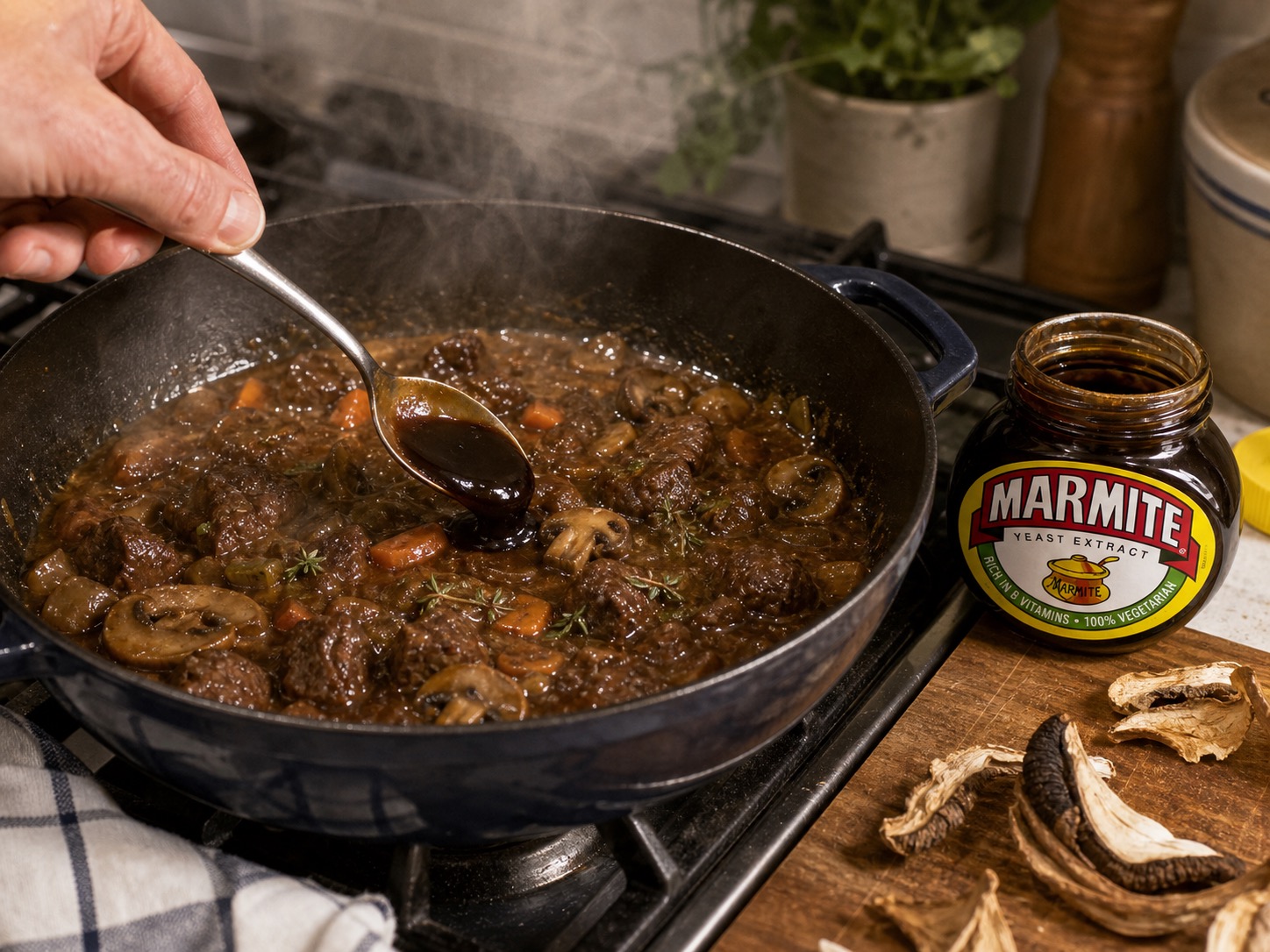
The campaign itself is by adam&eveDDB (I promise you, thatisNOTatypo), which has done good work for the brand before. It launched last week across TV, outdoor, and social. Nigella Lawson, Monica Galetti, and Sat Bains are all in it, each cooking a dish where Marmite is the secret ingredient rather than the headline. Pizza base, pasta sauce, smash burgers. The strategic gist is: stop spreading it, start cooking with it.
The pareidolia gimmick
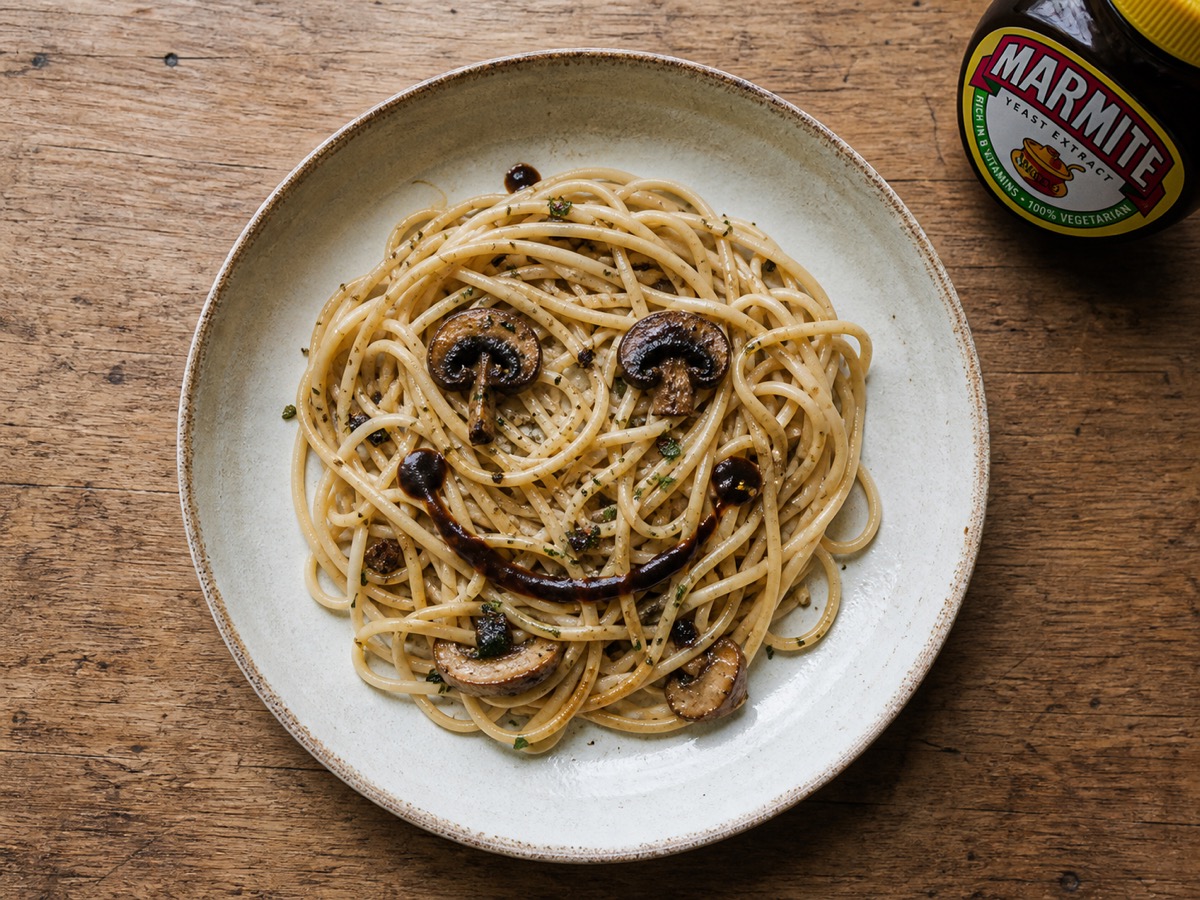
The creative gag is pareidolia, which is the technical term for seeing faces in random arrangements. Each shot is composed so the finished dish, looked at the right way, forms either a smiling face or a grimacing one. Love or hate, made out of pasta and burger.
This is either very clever or slightly silly, and which one depends on how much of the campaign you have looked at. The TV cut works. The print posters are excellent. The social content is, predictably, the weakest piece, because pareidolia on a phone screen reads as “wait, is that a face” rather than “ha, a face”. It does not matter much. The campaign is mostly a TV and outdoor exercise, and it carries the gag well enough across both.
The strategic reason
Here is the part the brand will not say in the press release. The “love it or hate it” advertising platform that Marmite has run since 1996 has aged into the brand’s biggest creative restriction. It assumes the audience is mostly people deciding whether to put Marmite on toast, and as the toast number tells you, that audience is shrinking.
Repositioning Marmite as an umami booster for cooking does two things at once. It gives the brand a route to the people who already use Marmite in stews and pasta sauces and would buy it more often if the marketing acknowledged them. And it opens up a new use case for younger cooks who do not eat toast much and would not naturally think to buy a Marmite jar for any other reason.
This is sensible. It is also, I think, slightly overdue.
Will it work
In the short term, yes. The campaign is well-made, the chefs are well-chosen, and the recipes are credible enough that home cooks will probably try one or two. Sales should bump.
In the longer term, the question is whether Marmite can establish itself as a kitchen-cupboard cooking essential rather than a love-it-or-hate-it toast topping. That is a multi-year reposition, and one campaign will not do it alone. The next two or three creative cycles will need to keep nudging in the same direction.
The thing that could derail this, of course, is the McCormick deal. Whoever is making the marketing decisions in 2027 may have a completely different view of the brand’s future, and may not feel like inheriting a multi-year repositioning that was set up under Unilever. That is not adam&eveDDB’s problem to solve, but it is worth flagging.
The Nigella factor
Nigella Lawson has been quietly using Marmite in recipes for at least fifteen years. She does an excellent Marmite spaghetti that involves butter, pasta water, and a great deal more Marmite than you think is sensible. It is, in fact, the recipe most cited by people who use Marmite as a cooking ingredient.
Putting her into the campaign is therefore the easy bit. The campaign is, in a quiet way, catching up to what Nigella has been doing for years. The interesting part is that they have also booked Monica Galetti and Sat Bains, both of whom are working chefs at proper restaurants. That is a more serious signal than a single Nigella endorsement. The brand is asking professional kitchens, by proxy, to take Marmite seriously as an ingredient.
If the next campaign follows up with two or three more chefs in the same register, the reposition will have legs. If it does not, “Dishes of Love and Hate” will end up as a one-off creative flourish, and the toast number will keep falling.