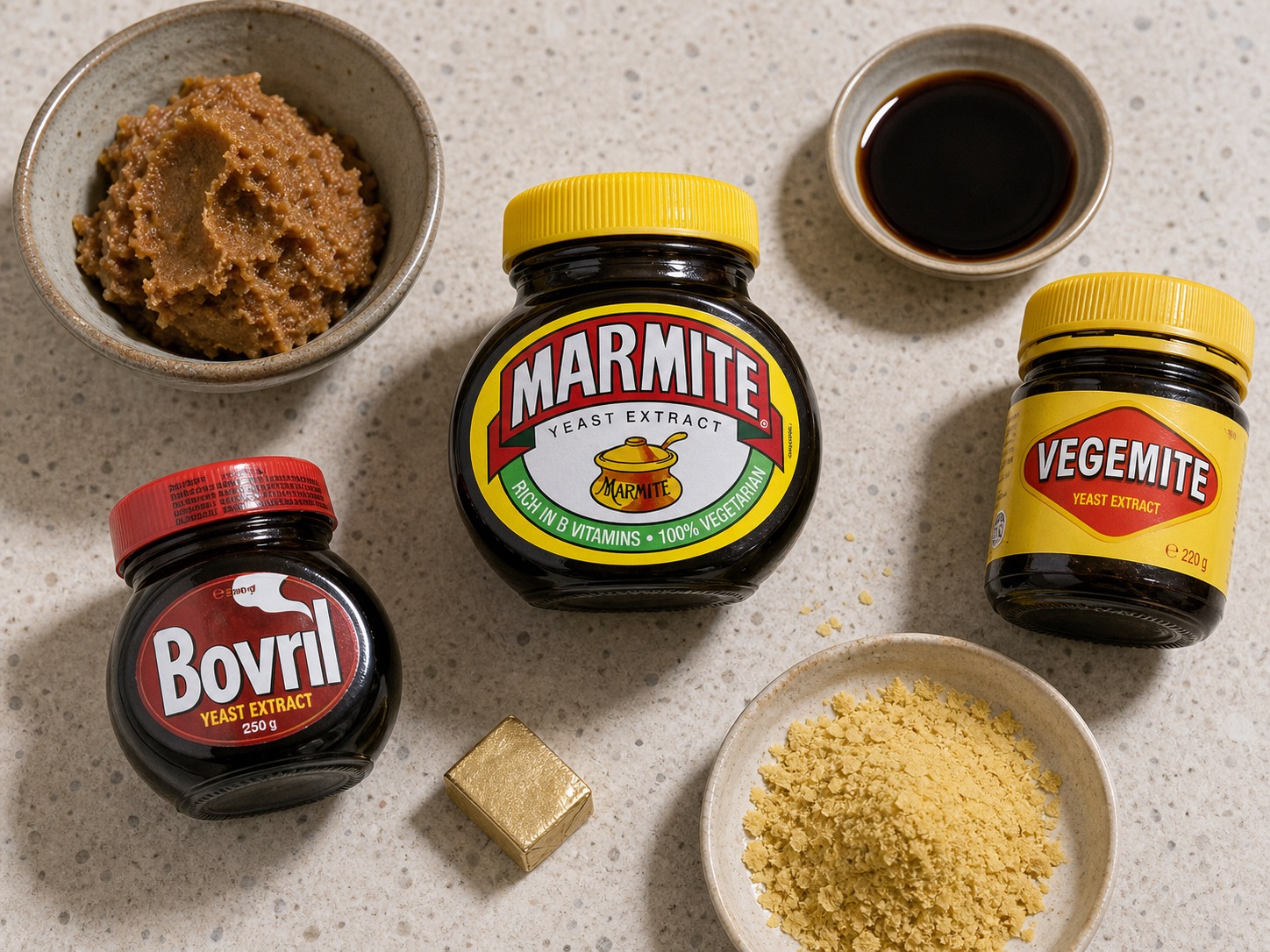

Marmite tastes the way it does because it is one of the most concentrated hits of savoury flavour you can buy. The big driver is natural glutamate, the compound behind the savoury taste we call umami, backed up by a lot of salt and the dark, malty, faintly bitter notes that come from heating concentrated yeast. Nothing about it is subtle, and that is deliberate.
Here is what is actually going on in the jar.
The umami: natural glutamate
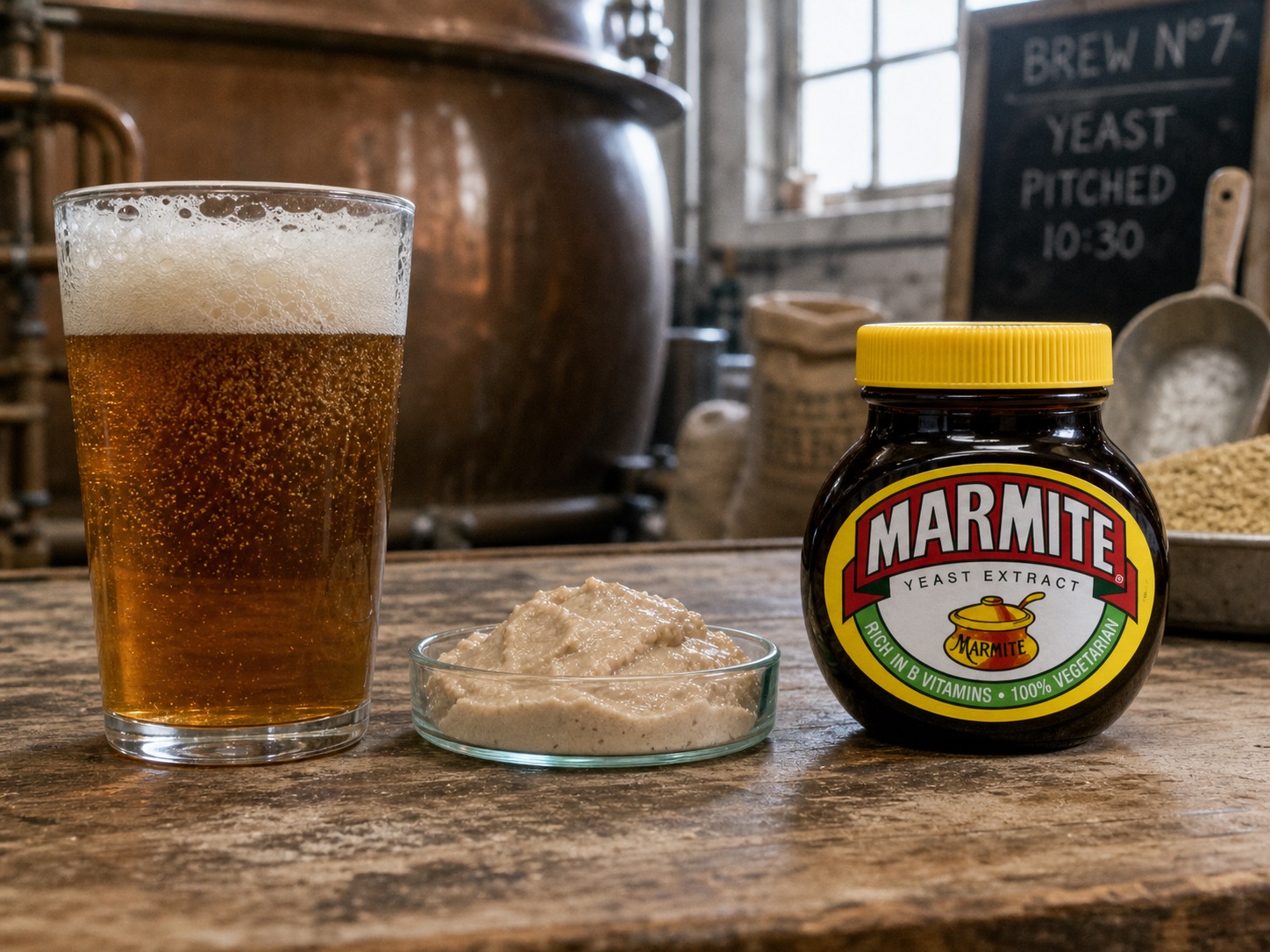
Marmite is made by breaking down brewer’s yeast, a process called autolysis in which the yeast’s own enzymes digest its proteins into much smaller pieces. One of those pieces is glutamic acid, the natural form of the flavour enhancer better known as monosodium glutamate, or MSG.
That free glutamate is the heart of Marmite’s taste. It triggers the savoury, mouth-filling sensation of umami, the so-called fifth taste alongside sweet, sour, salty and bitter. Marmite is essentially pure umami in spreadable form, which is why a tiny amount tastes of so much. If you want the full process, see how Marmite is actually made.
The salt
Marmite is also very salty, and the salt does two jobs. It is part of the production process, the thing that triggers the yeast to break down in the first place, and it sharpens and carries the savoury flavour. The saltiness is a big part of why a thin scrape is plenty and a thick layer is overwhelming.
The dark, malty, bitter edge
The other half of the flavour is what happens when you concentrate and heat the yeast extract down into a thick paste. That heating produces the deep brown colour and the roasted, malty, slightly bitter notes that sit underneath the savoury hit. It is the same family of browning reactions that give toast, coffee and dark beer their depth. This bitter-malty edge is the part that some people love and others cannot stand.
Why it divides people so sharply
Put those together, intense umami, high salt, and a dark bitter edge, and you have a flavour with no middle ground. Most foods are designed to be broadly likeable. Marmite is the opposite: it is so concentrated and so distinctive that people tend to either lock onto the savoury richness and love it, or catch the salt and bitterness and recoil.
Some of that really is wired in. Bitter perception in particular varies from person to person for genuine genetic reasons, which is part of why Marmite became the textbook “love it or hate it” food, and why the brand once ran a whole campaign trying to prove there was a Marmite gene. There is more on that in the 2017 Marmite Gene Project.
Why a little does so much
The reason a half-teaspoon transforms a stew is the same chemistry. Marmite’s glutamates multiply the savoury taste of whatever they meet, especially meat and mushrooms, an effect called umami synergy. It is covered in why a teaspoon of Marmite makes everything taste better.
Quick answers
Why is Marmite so savoury? It is packed with natural glutamate, the compound behind umami, produced when brewer’s yeast is broken down. Glutamate is the same thing that makes MSG taste savoury.
Why is Marmite so salty? Salt is part of how it is made and is a big part of the flavour. That is why a thin scrape is enough.
Why is Marmite bitter? The dark, malty, slightly bitter notes come from concentrating and heating the yeast extract, the same browning that gives toast and coffee their depth.
Why do some people hate Marmite? Its intensity leaves no middle ground, and genuine genetic differences in how people taste bitterness mean the same jar reads as delicious to one person and unbearable to another.
What does Marmite taste like?
Marmite tastes intensely savoury. The dominant note is umami, the deep savoury taste you get from natural glutamate, layered over a strong salty hit and a dark, malty, slightly bitter edge from the concentrated yeast. It is rich and powerful rather than subtle, closer to a very concentrated stock or soy sauce than to a mild spread.
What is Marmite meant to taste like?
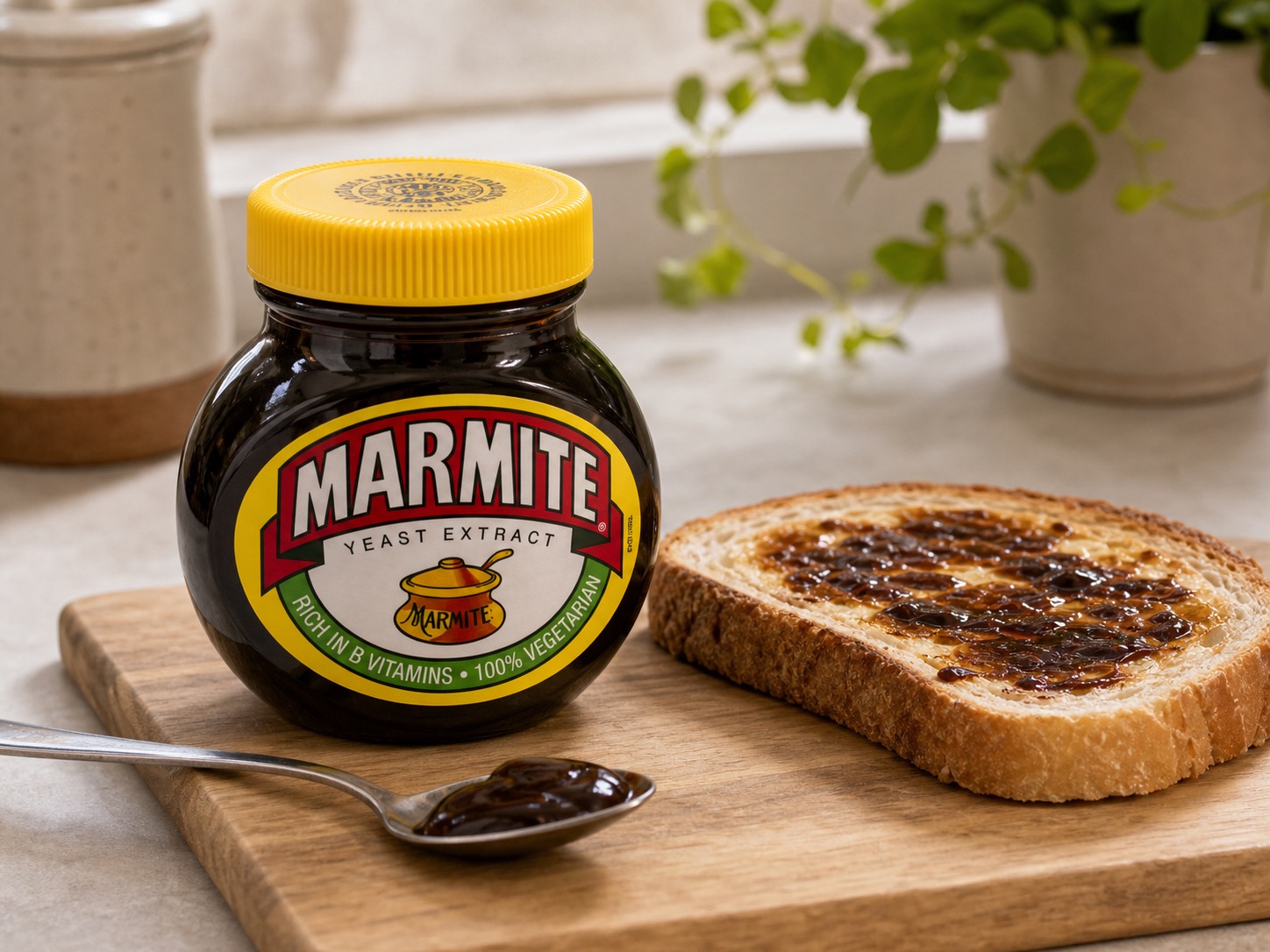
Eaten the way it is designed to be, a thin scrape on hot buttered toast, Marmite is meant to read as a rich, salty, savoury background rather than an overwhelming hit. Spread it thickly and it becomes too much for most people, which is part of how the “love it or hate it” reputation came about. The intensity is deliberate, and a little is meant to go a long way.