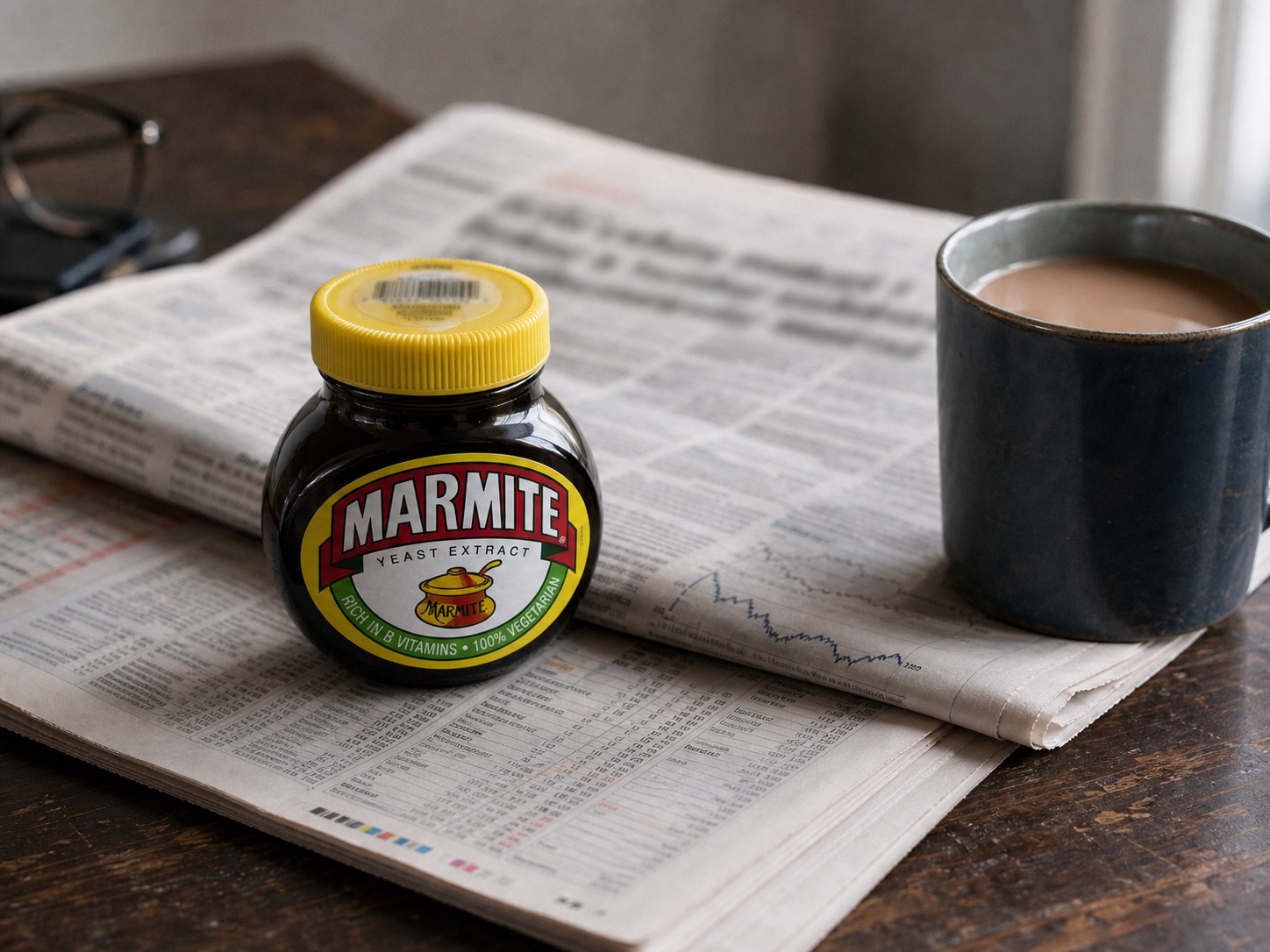

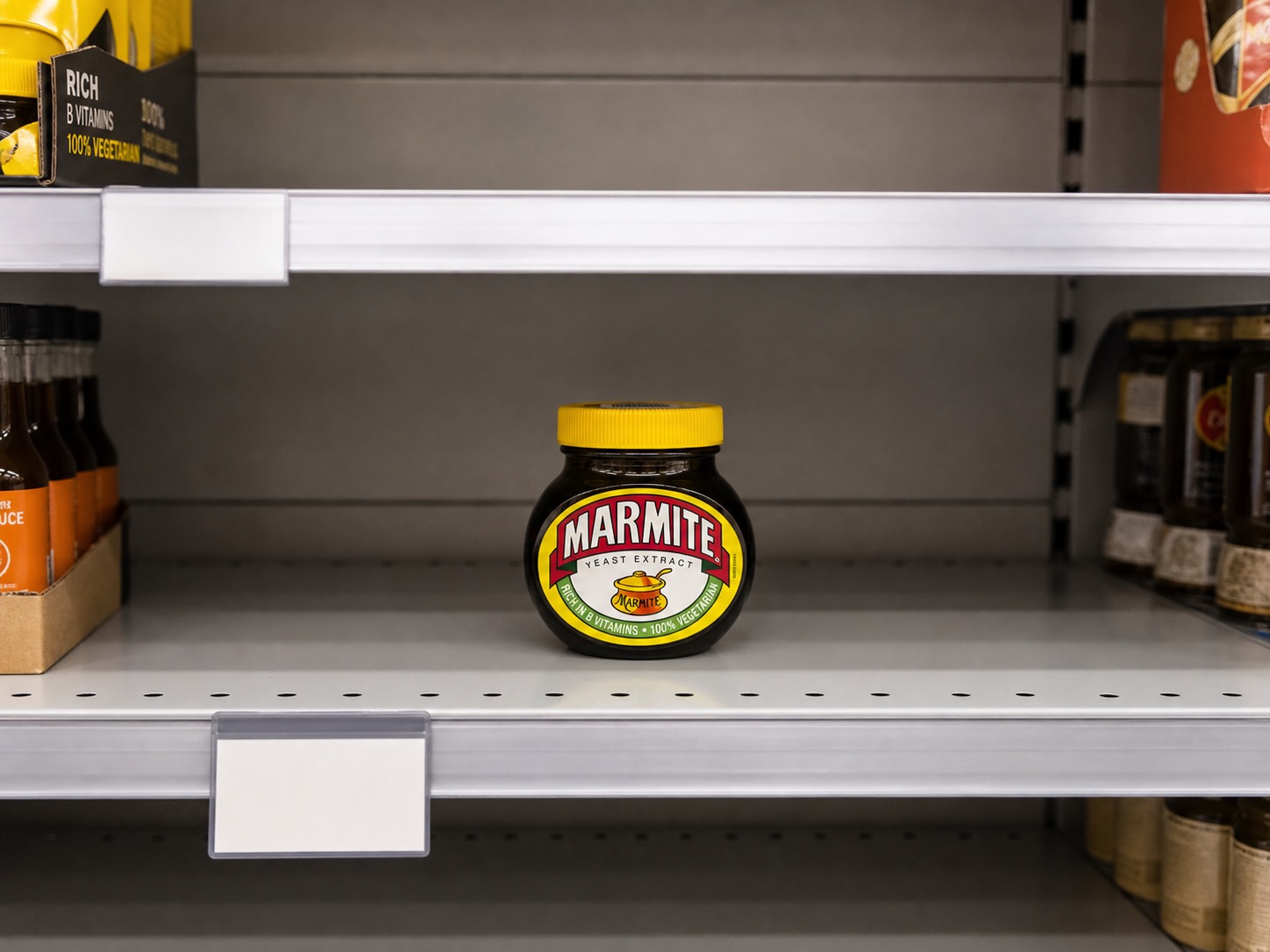
Of all the things lockdown took away in 2020, this is the one that felt most absurdly British: for a few weeks that summer, you could not reliably buy Marmite. The big jars, the little jars, the squeezy bottles, mostly gone. All that survived on the shelf was the standard 250g.
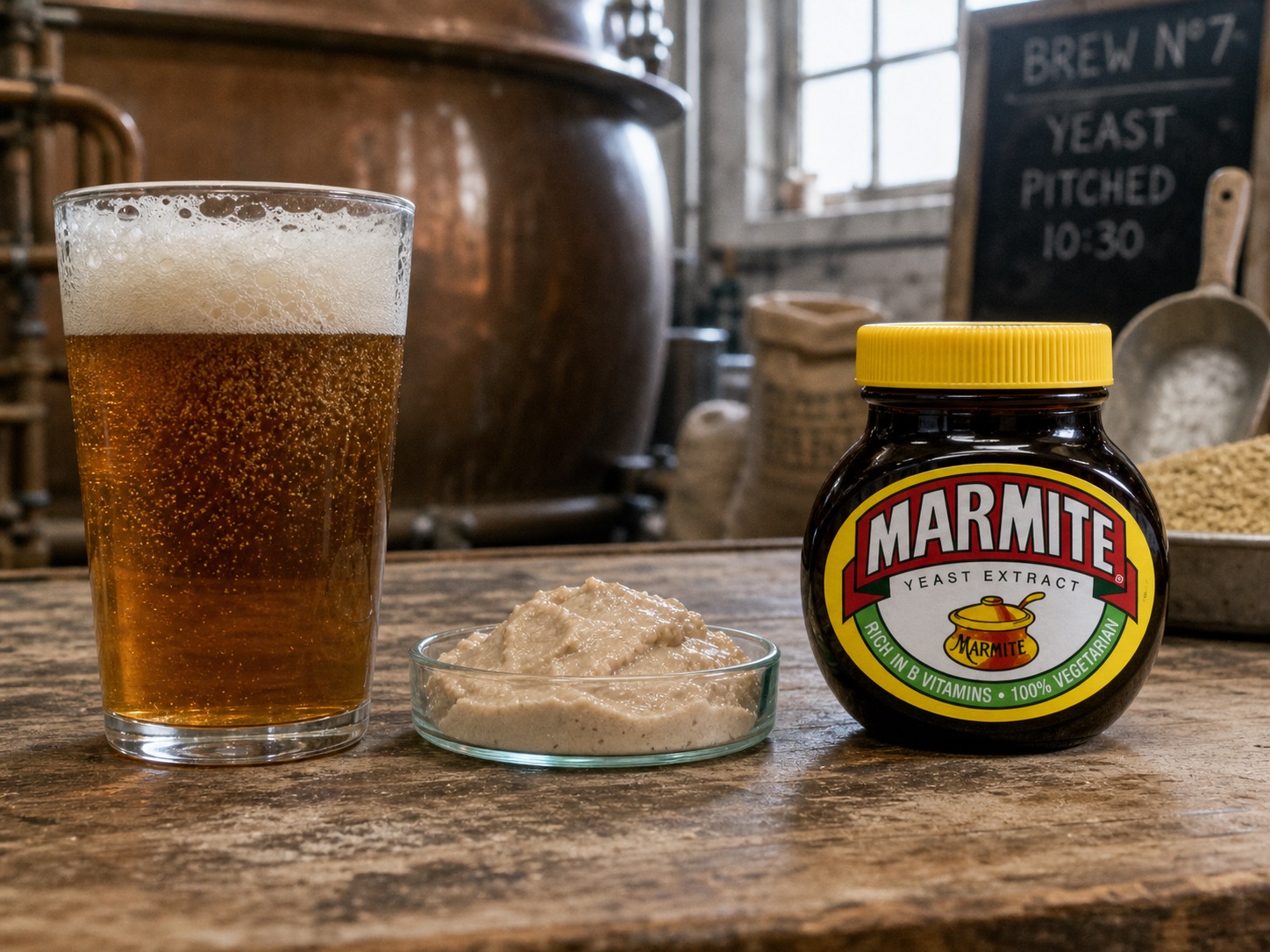
The reason is a small lesson in how the jar is actually made, and it is the sort of thing that makes you love the product a bit more once you know it. Marmite is a by-product of brewing. It is built from the spent yeast that breweries have finished with. So the supply of Marmite is quietly chained to the supply of beer. In spring 2020 the pubs shut, the country stopped drinking draught, the breweries throttled right back, and the leftover yeast that normally flows to Burton-on-Trent slowed to a trickle. No pints, no spread. The two things you might have reached for in a difficult year turned out to be the same thing.
What Unilever actually did
Faced with the squeeze, and with everyone panic-buying store-cupboard staples at the same time, Unilever made a sensible call. It paused production of the other pack sizes and concentrated what yeast it had on the 250g jar, the size most households buy. Better to keep one format on the shelf than to spread thin supply across six and run out of all of them. It was reported widely at the time, including by NPR over in the States, who clearly found the idea of a national Marmite crisis irresistible.
The breweries to the rescue
The nice part of the story is how the trade rallied. Carlsberg’s brewery at Northampton ended up sending the overwhelming majority of its surplus yeast to Marmite, something like 87 per cent of it, and the volume it shipped climbed steeply through the spring as everyone worked out how serious the pinch was. The numbers that did the rounds had the supply rising by almost half in March, then far more in April and May.
And then there was BrewDog, who could never resist a moment like this, offering up yeast from Punk IPA to help keep the nation in Marmite. Whether a single jar was ever made from Punk yeast I genuinely do not know, but it was the right kind of gesture and exactly the headline BrewDog wanted. Beer rescuing the thing that beer makes. You could not script it better.
How worried should anyone have been?
Not very, in the end. This was a wobble, not a collapse. The 250g jar stayed available, the squeeze eased as breweries came back online, and the full range returned to the shelves over the following weeks. Nobody had to ration the toast for long.
But it is one of those moments that explains the product better than any advert. Marmite does not come from a factory that simply makes Marmite. It comes from the end of the beer, and when Britain stopped going to the pub, the jar felt it. Of all the supply chains to be reminded of in 2020, that is a fairly cheerful one.