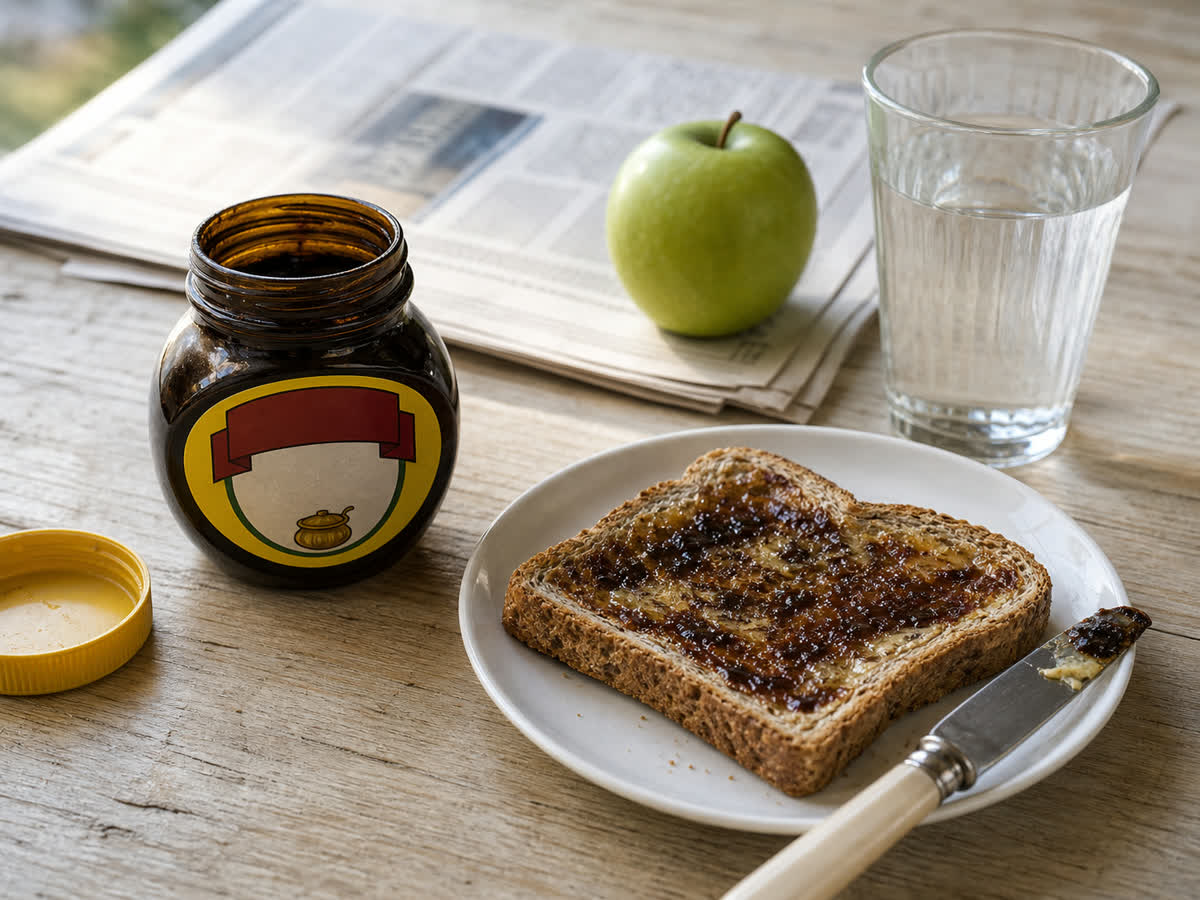

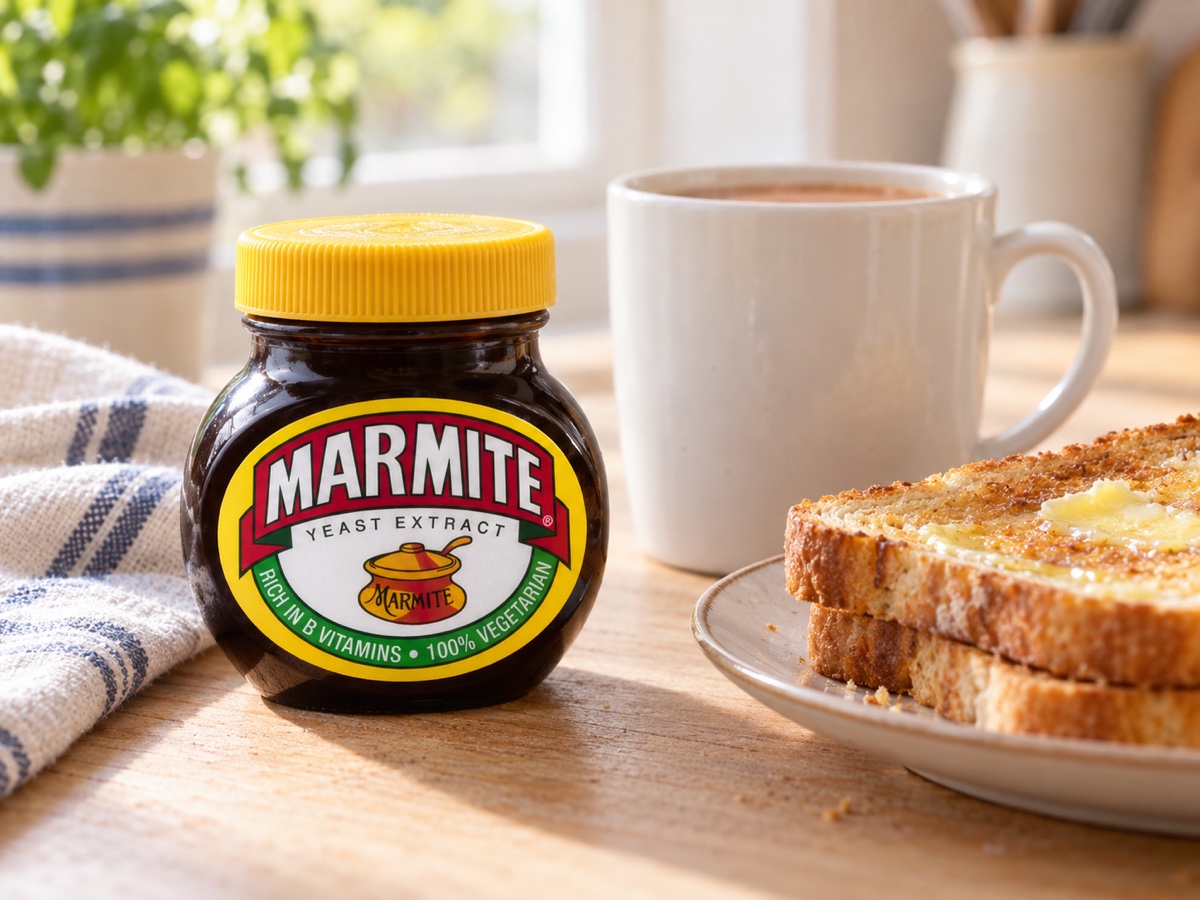
Yes. Next question.
That’s the honest short answer, and I’m putting it at the top because the search results for this are a mess of hedging and half-warnings and people who clearly haven’t looked at a jar. Marmite is safe in pregnancy. It isn’t on any avoid list. It isn’t soft cheese or pate or an undercooked egg.
What makes it interesting rather than just permitted is that Marmite is a real source of folate, and folate is one nutrient that genuinely matters in early pregnancy.
Why folate is important
Folate is the naturally occurring form of vitamin B9. Folic acid is the synthetic version you get in supplements. Both do the same job, and in the first weeks of pregnancy that job is neural tube development, which is why the NHS advice is to take a 400 microgram folic acid supplement every day while trying to conceive and through the first twelve weeks.
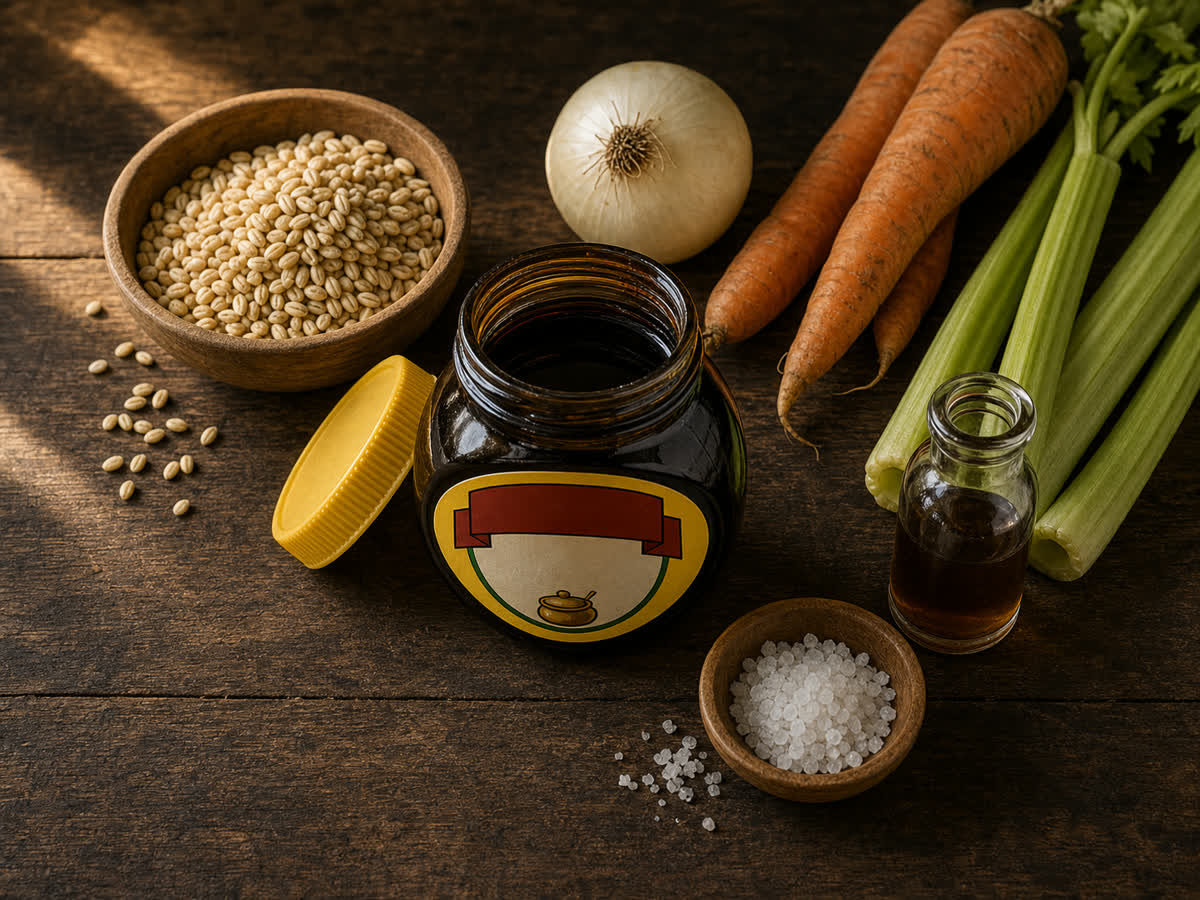
yeast extract is one of the better dietary sources of folate, which is a straightforward consequence of what Marmite is: concentrated spent brewer’s yeast, and yeast is rich in B vitamins. That’s also where the wartime reputation came from, and it’s why the stuff was issued to troops.
So a scrape on toast is a small useful contribution.
What people get wrong
A contribution isn’t a replacement. You still should take the supplement.
I’ve seen this framed both ways online and both framings are wrong. One says Marmite is so rich in folate that it can stand in for folic acid, which it can’t, because the supplement dose is deliberately set at a level you would struggle to hit through diet. The other treats it as some sort of risk, which it also isn’t. It sits in the perfectly ordinary category of foods that help a bit and are nice to eat.
Salt* is the actual caveat
If there’s anything to watch, it’s sodium, and it’s a mild thing rather than a warning.
An 8g serving carries about 0.86g of salt, which is roughly 14 per cent of an adult’s daily reference intake. That’s a lot per gram, because Marmite is a lot of everything per gram. It isn’t a lot per serving, because a serving is a scrape. The number only becomes a problem if you’re laying it on like jam, or if you have been told to watch your sodium for other reasons, in which case follow that advice rather than mine.
The reduced salt version exists if you would rather not think about it.
What about the beer connection?
Marmite is made from spent brewer’s yeast, which people occasionally hear as “made from beer” and then worry about alcohol. There’s no alcohol in the finished product. The yeast is a by-product of brewing, it’s autolysed and concentrated, and what you end up with is a savoury paste, not a drink.
The genuine consideration for a small number of people is that brewing yeast comes from barley and wheat, so Marmite isn’t gluten free in any meaningful sense. If you’re coeliac that matters in pregnancy exactly as much as it matters the rest of the time, which is to say quite a lot. See the dietary status rundown for the full picture.
And the cravings thing
Anecdotally, a lot of people who could take or leave Marmite develop a serious thing for it while pregnant, and a smaller number find they suddenly can’t be near it. I’ve no evidence for why and I’m not going to invent a mechanism. Taste changes in pregnancy are well documented in general; Marmite specifically just seems to be a product that people either lunge at or recoil from anyway, so it may simply be that pregnancy turns up a dial that was already there.
The messages I get about this run overwhelmingly in the craving direction, for whatever that’s worth, which isn’t much.
Can you eat Marmite when pregnant?
Yes. Marmite is safe to eat during pregnancy and is not on any NHS avoid list. It is also a useful dietary source of folate, the naturally occurring form of vitamin B9, which supports neural tube development in early pregnancy.
Does Marmite replace folic acid tablets in pregnancy?
No. NHS guidance is to take a 400 microgram folic acid supplement daily while trying to conceive and for the first twelve weeks of pregnancy, regardless of diet. Marmite contributes folate but the supplement dose is set at a level that is difficult to reach through food alone, so eat it as a useful extra rather than a substitute.
Is Marmite too salty to eat in pregnancy?
An 8g serving of Marmite contains around 0.86g of salt, about 14 per cent of an adult’s daily reference intake. That is high per gram but modest per serving, because a normal serving is a thin scrape. It is only a concern if you eat it very thickly or have been advised to restrict sodium, in which case follow that advice. A reduced salt version is available.
Does Marmite contain alcohol?
No. Marmite is made from spent brewer’s yeast, a by-product of the brewing process, but the finished spread contains no alcohol. It does contain gluten from barley and wheat, so it is not suitable for anyone who is coeliac.