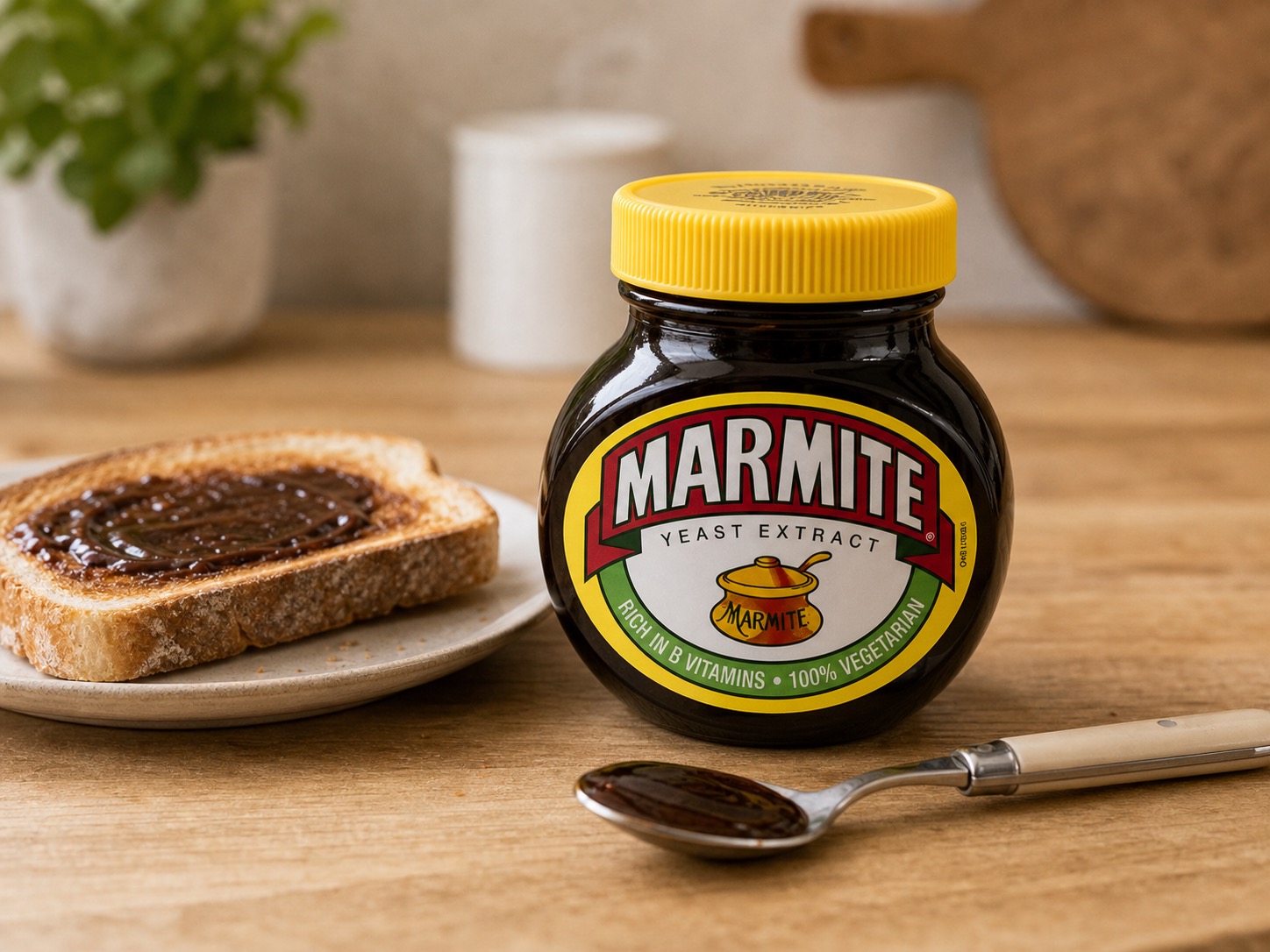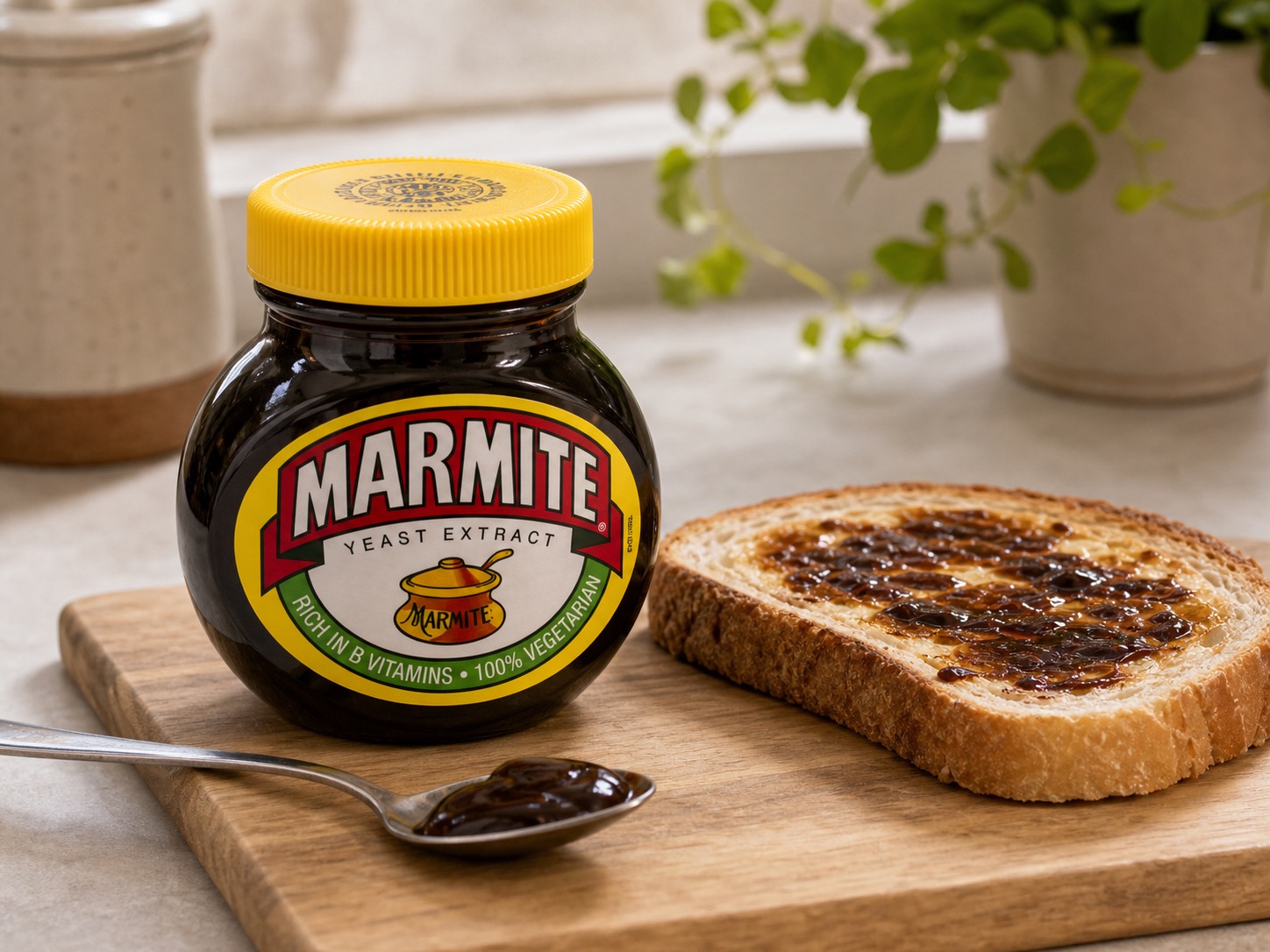

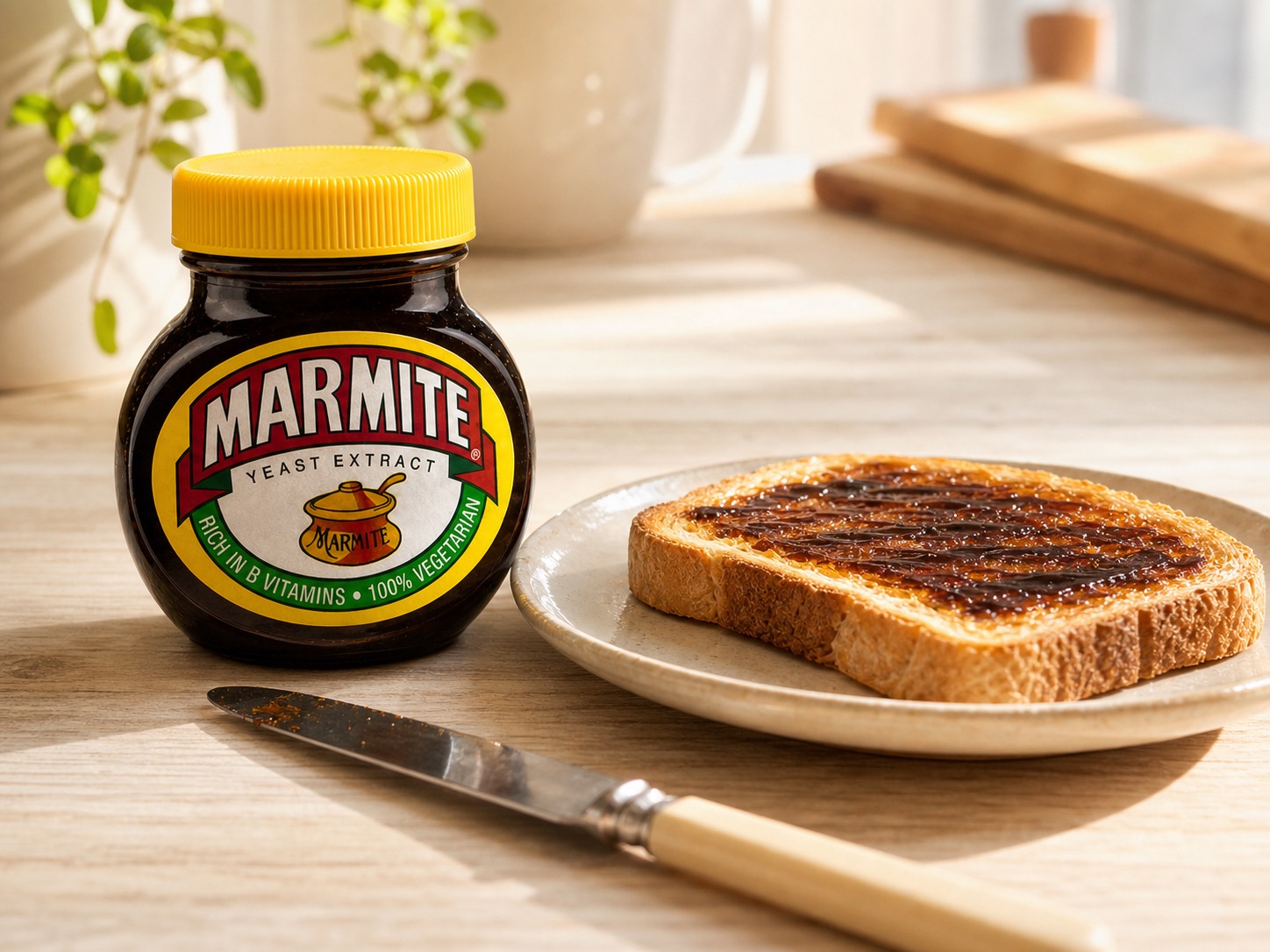
Marmite is a thick, dark brown savoury spread made from yeast extract. It is a British food, first made in Burton-on-Trent in 1902, and it is eaten mostly at breakfast, spread thinly on buttered toast. It is famous for two things: an intense, salty, savoury flavour, and a marketing line that turned out to be simply true, that you either love it or hate it. This page is the short version, with links to the detail if you want to go deeper.
What is Marmite?
Marmite is a yeast extract spread, which means its main ingredient is the concentrated, broken-down remains of yeast. That base is dark, salty and packed with the savoury taste called umami. It is sold in a distinctive round jar with a yellow lid, has been certified vegan friendly for years, and is naturally rich in B vitamins. A little goes a long way, which is the single most useful thing to know before you try it.
It is owned today by Unilever and made in Burton-on-Trent, the same Staffordshire brewing town where it started, because the original recipe used the spent yeast left over from the town’s breweries.
What it is made of
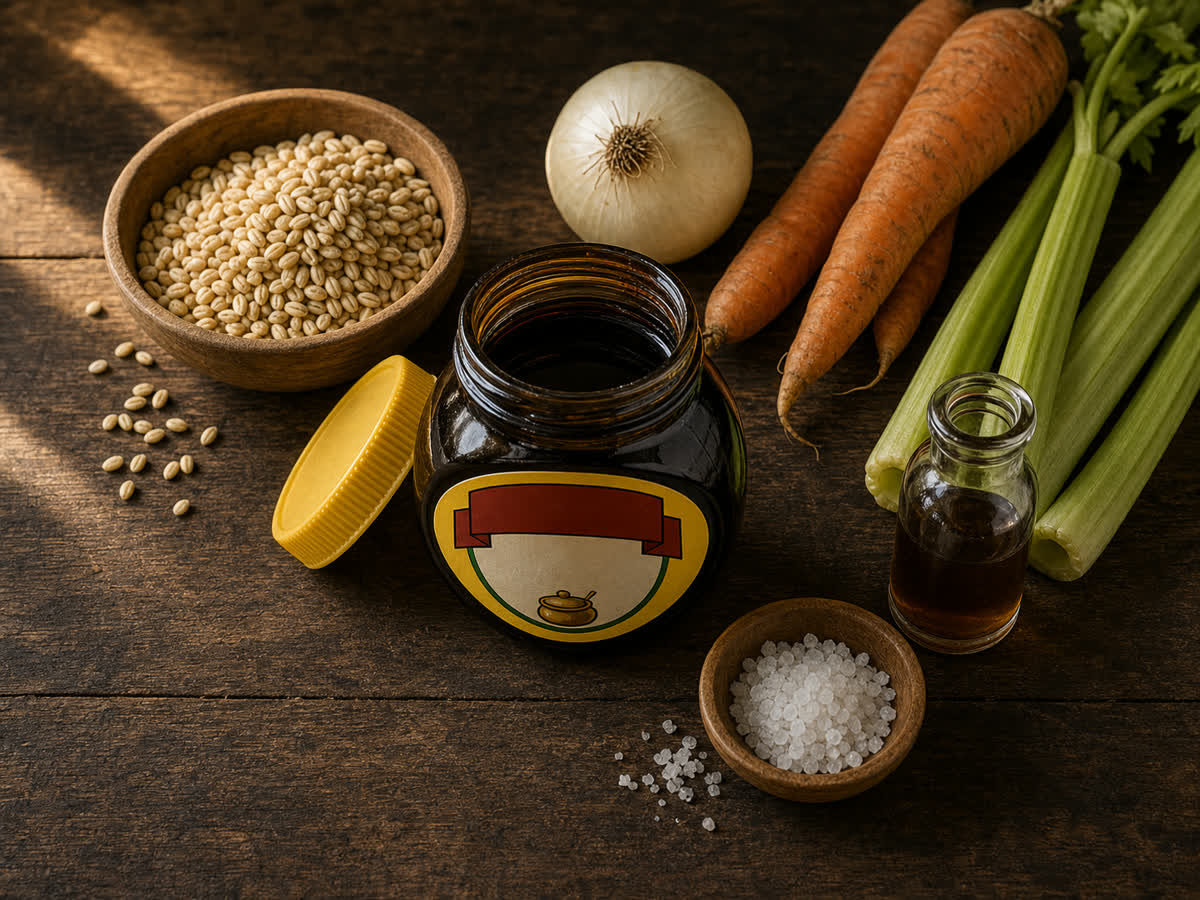
The full ingredients list is short: yeast extract, salt, a little vegetable juice concentrate, added B vitamins and a natural flavouring that contains celery. That is unusually simple for a modern food, and most of those ingredients are doing more than one job. For the full breakdown, see what Marmite is actually made of.
What it tastes like
Marmite is intensely savoury and salty, with a dark, malty, faintly bitter edge. It is closer to a concentrated stock than to a mild spread, which is exactly why it divides people. There is a fuller explanation of why Marmite tastes the way it does.
What is Marmite used for?
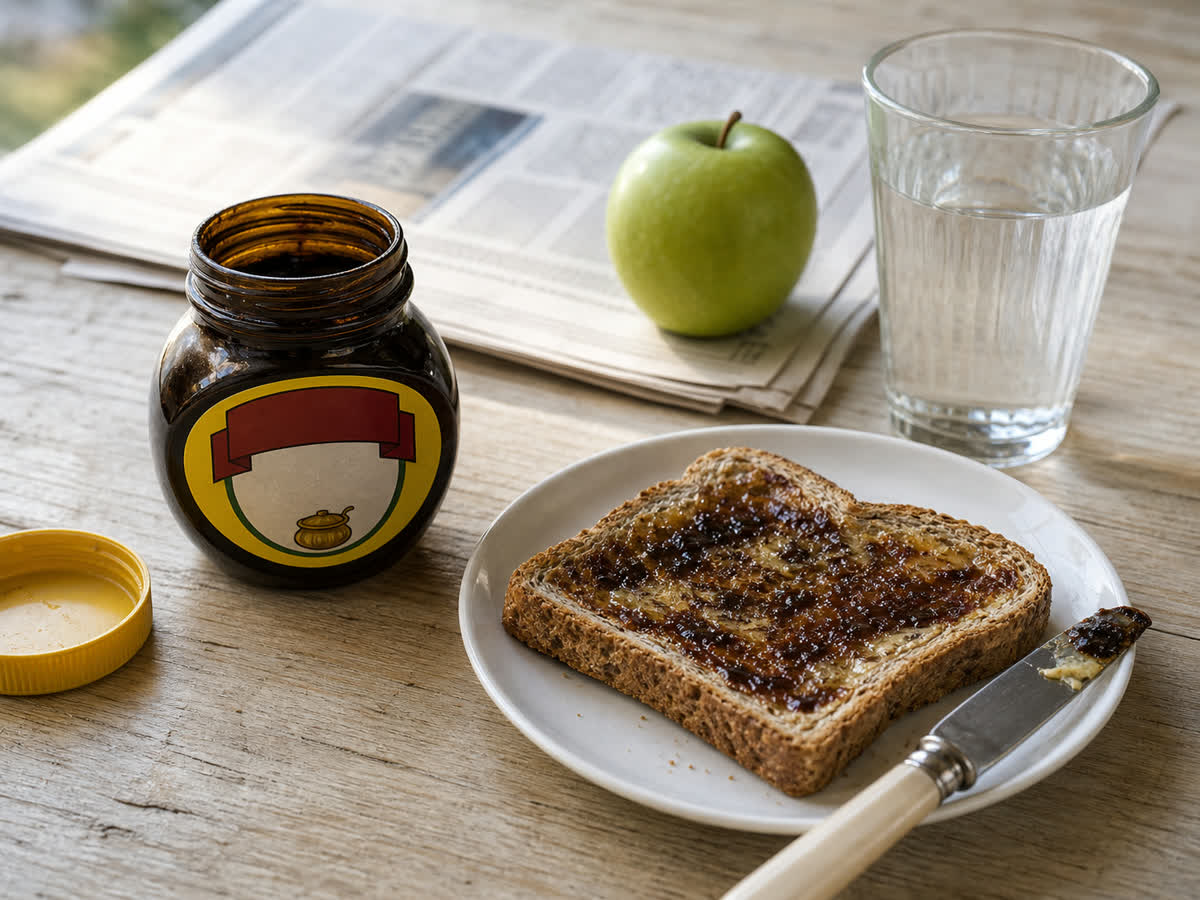
Most people eat Marmite spread thinly on hot buttered toast, but it has a second life as a cooking ingredient. Because it is concentrated umami, a small spoonful deepens the savoury flavour of stews, gravies, pasta sauces, roast potatoes and cheese dishes. Chefs use it the way they would use a stock cube or a dash of soy sauce. So it is both a breakfast spread and a flavour booster, and the cooking use has grown a lot in recent years.
Where it comes from
Marmite was first produced in 1902 by the Marmite Food Extract Company, set up next to Bass Brewery in Burton-on-Trent to use the brewery’s surplus yeast. The name comes from a French cooking pot, the marmite, which is why early jars were pot-shaped and why the pot still appears on the label. The full story is in the history of Marmite.
Why “love it or hate it”?
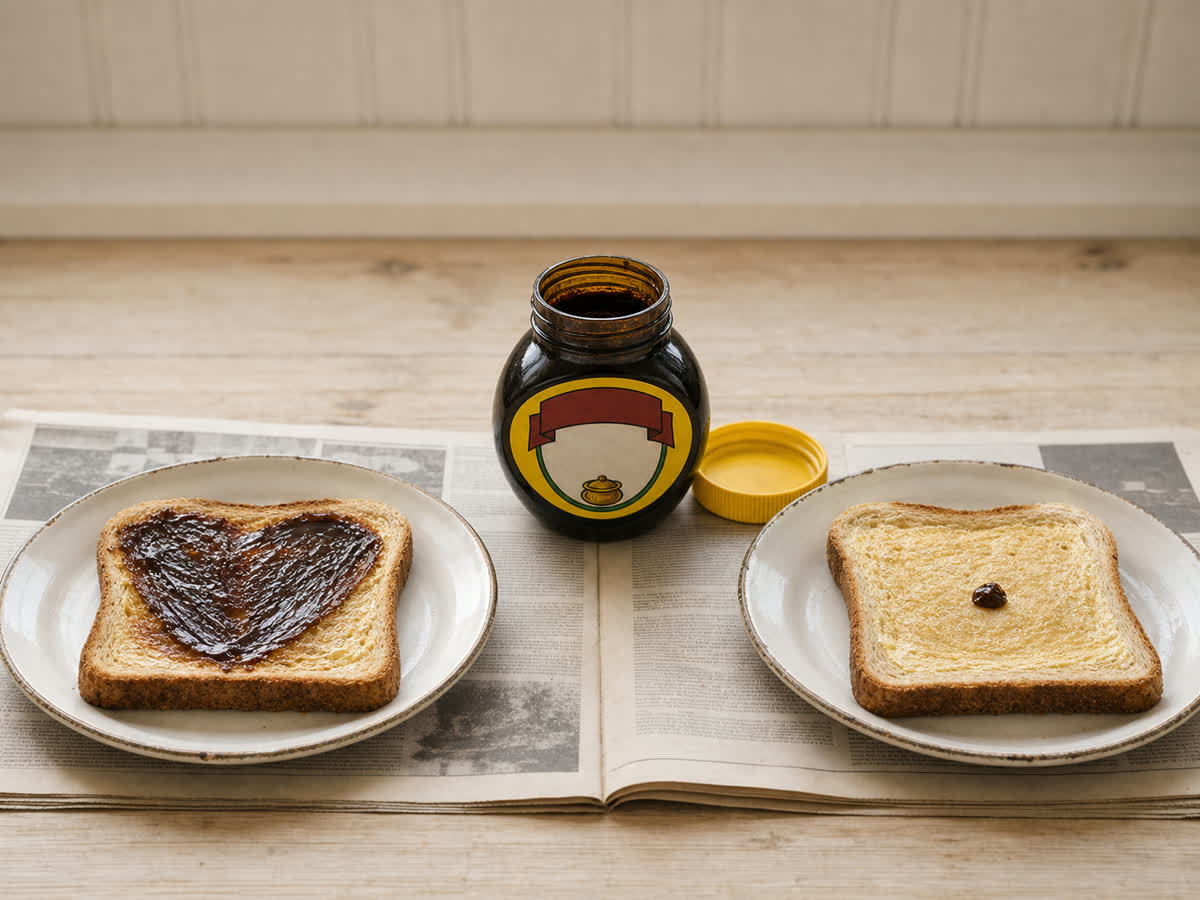
The phrase started as an advertising campaign in 1996 and stuck because it is accurate. Marmite’s flavour is so concentrated that there is very little middle ground, and there are genuine genetic differences in how strongly people taste the bitter and savoury notes. The result is that the same jar reads as delicious to one person and unbearable to the next, and “a bit Marmite” has since entered everyday English as shorthand for anything that splits opinion.
Related reading
- What is Marmite actually made of?
- Why does Marmite taste like that?
- Is Marmite good for you?
- How to eat Marmite on toast
- Who owns Marmite?
- Why is it called Marmite?
- Is Marmite British?
- The “love it or hate it” slogan, and where it came from
- Fifteen things you probably did not know about Marmite
- The north-south Marmite divide, in numbers