

Almost every food brand advertises by telling you its product is nice. In 1996 Marmite started telling half the country that they were going to hate it, and has been running variations on that idea for thirty years.
It’s a genuinely strange strategic position and it has produced some of the best British advertising of the period. Ranked, then, worst to best of the good ones.
10. Marmite Gold and the Oxford Street lights (2012). More stunt than campaign, but it got a special gold jar onto the Oxford Street Christmas lights switch-on, in the brand’s 110th anniversary year. The flecks in it were gold-coloured rather than gold, whatever the coverage said at the time, and I have gone into that elsewhere. I was there for the briefing and again for the switch-on, courtesy of Splendid Communications, which remains one of the odder things this site has got me into.
9. The Monumite (Burton). A Marmite shrine unveiled in Burton town centre, in the town that actually makes the stuff. Local, physical, permanent, and it drew a proper crowd. Advertising that stays put after the budget runs out is rarer than it should be.
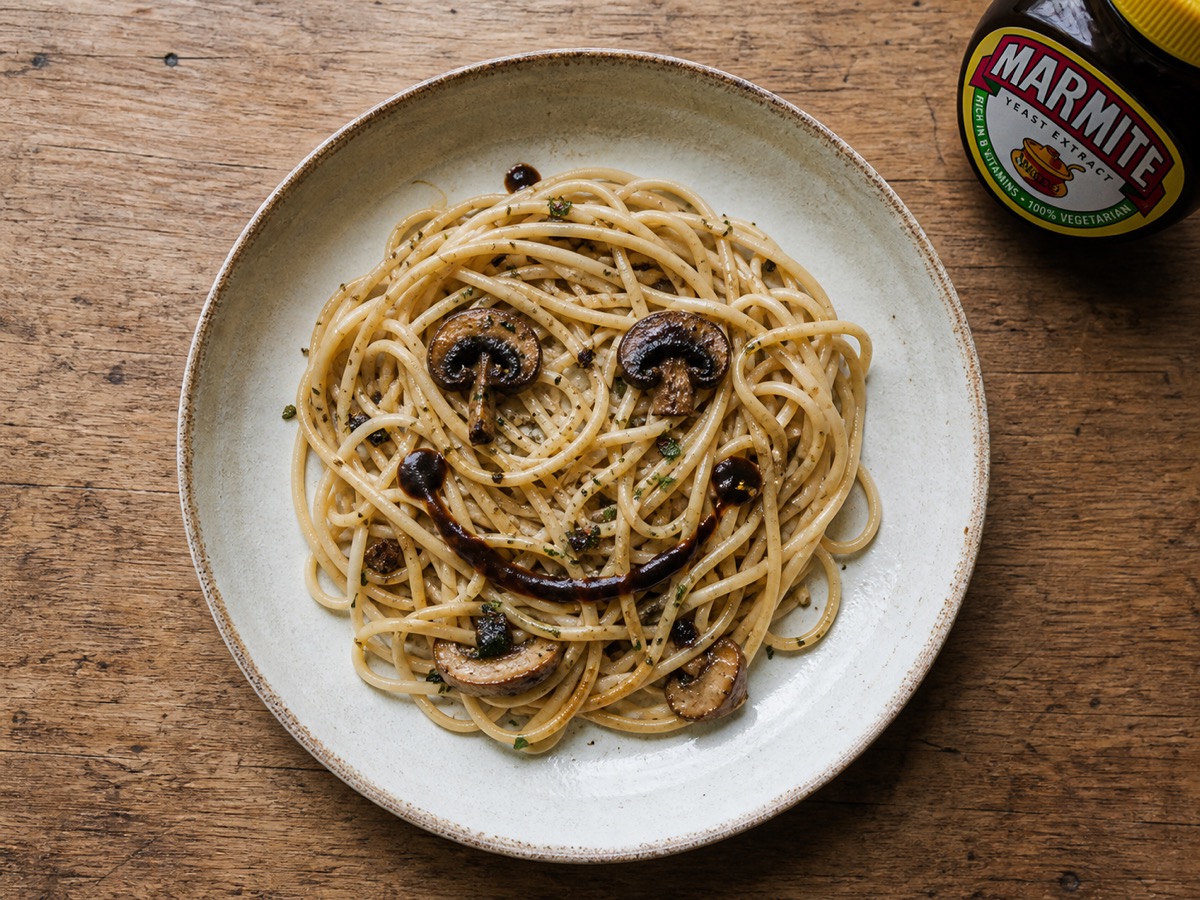
8. Dishes of Love and Hate (2026). The current work, quietly repositioning Marmite as a cooking ingredient rather than a spread. It’s a defensive campaign underneath, because toast consumption is falling hard, but it’s a well-executed one and the food photography does the persuading.
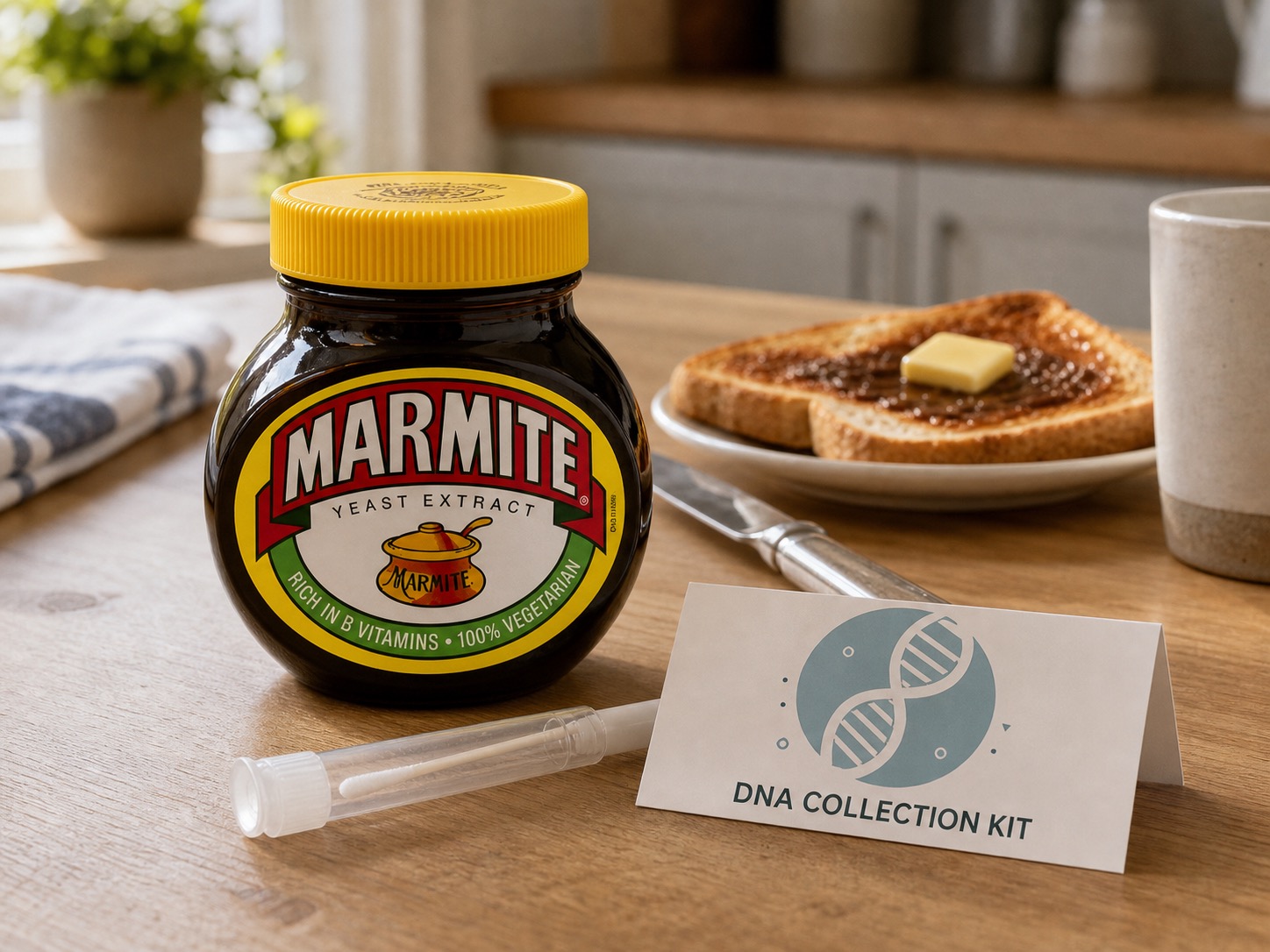
7. The Marmite Gene Project (2017). A DNA test, sold as an explanation for why you love or hate it. The science was thinner than the campaign implied. As a piece of marketing it was excellent, because it took the brand’s central joke and dressed it as research.
6. The wartime factory campaign. The workers’ posters, which are where the whole “keeps you going” idea comes from and the reason people still half-believe Marmite is an energy food. It isn’t, as we’ve gone into, but the advertising was doing an honest job at the time: this is a vitamin supplement and you’re short of vitamins.
5. WeMite (2026). Renaming the entire brand for a World Cup and sizing the jars by how far you thought England would get. Reach the Quarters, Reach the Semis, Go and Win It. Brands don’t usually attach their jokes to a result that arrives in a fortnight.
4. Paddington Switches to Marmite. The first one is the one that mattered, because taking the most marmalade-associated character in British culture and having him defect is exactly the right size of joke. He came back later, and the second run was fine without ever recapturing the surprise.
3. The Love Party versus the Hate Party (2010). Marmite fought the general election. Two rival parties, actual manifestos, an electoral dance-off, and enough of a straight face to get John Bercow, then Speaker of the Commons, to sit for an interview. Taking the brand’s central divide and running it as party politics during a real election is the most committed thing on this list, and it spawned the Marmarati, who are still going.
2. End Marmite Neglect (2013). A £2 million spoof documentary following a rescue team going into people’s homes to recover neglected jars from the backs of cupboards, played completely straight and narrated by Michael Buerk, whose voice British audiences knew from the 1984 Ethiopia famine reports. That casting is the whole joke and it’s why it landed as hard as it did.
The integrated campaign came out of Splendid Communications, and I’m not a neutral party here: Splendid are the people who brought me in on the Oxford Street lights and the flashmob, so I saw a fair bit of this one from closer than a reader might assume. Credit sometimes goes to adam&eveDDB, who handled the broadcast creative. The wider campaign that turned it into an event rather than an advert was Splendid’s.
It drew around 250 complaints to the ASA within 24 hours and 504 in total, with objections that it trivialised the work of animal welfare and child protection charities. The RSPCA raised concerns directly. The ASA declined to investigate, judging it “unlikely to cause serious or widespread offence”, and Unilever donated £18,000 to the RSPCA anyway.
The numbers underneath the outrage are the part that gets forgotten: value sales up 14 per cent and volume up 15 per cent year on year across the eight weeks after the August launch. It was revived in revamped form later, which tells you what the client made of it.
1. Love it or hate it (1996). The line that started it, and everything above is a variation on it.
It’s hard to overstate how odd this was at the time. Brands didn’t tell you that half the population would find the product disgusting. Marmite did, made the hatred part of the identity, and turned a limitation into the only interesting thing about a spread. It has outlived the agency relationships, the ownership changes and the product line, and it’s now so embedded in the language that “a bit Marmite” means divisive in general conversation about things that aren’t food.
Thirty years on, no other brand has managed the trick. Several have tried.
The one I would have included
My personal favourite isn’t in the top three and I know it. The list above is an attempt at a fair ranking rather than a list of things I like, which aren’t the same exercise, and the gap between them is most of what makes ranking anything worthwhile.
The declared interest, in full: I did a fair amount with Marmite from the 100th anniversary in 2002 until life got too busy, a good deal of it through Splendid, so the middle years of this list aren’t something I can pretend to have watched from a distance.
What is Marmite’s most famous advert?
The “Love it or hate it” campaign, launched in 1996, is by far the most famous and the most influential. It was one of the first major brand campaigns built on the premise that a large proportion of consumers actively dislike the product, and the phrase has since entered general English usage to describe anything divisive.
When did the Marmite “love it or hate it” campaign start?
- The line has been the brand’s central advertising idea ever since, surviving multiple agency changes, ownership changes and product launches, and generating spin-offs including the Love Party and Hate Party campaigns and the Marmite Gene Project.
Which adverts featured Paddington Bear?
Marmite ran a campaign in which Paddington Bear, a character overwhelmingly associated with marmalade, switches to Marmite. It was successful enough that Paddington returned in later Marmite television advertising.