
A teaspoon of Bovril carries about 1.4g of salt, which is 23 per cent of the daily maximum for UK adults. Asked to talk up its health perks, nutritionist Rob Hobson said it is "too high in salt to be considered a health food" and dietitian Nichola Ludlam-Raine warned about blood pressure. The B vitamins come from the yeast extract, not the beef, and on her reckoning Marmite has the edge, though not by much.
Bovril
Beef extract alternative: Bovril's history, vegetarian/non-vegetarian versions, differences from Marmite, and uses.
Category: Bovril | View all articles

What is Bovril, and what is actually in it?
Bovril is a beef and yeast extract paste: 50 per cent beef broth, 27 per cent yeast extract, which makes it a quarter of the way to being Marmite. It was invented in the 1870s by a Scottish butcher in Canada to fill Napoleon III's order for a million cans of beef, was originally called Johnston's Fluid Beef, and takes its name from the Latin for ox plus a fictional energy source from an 1871 science-fiction novel.
Is Bovril vegetarian? No, but for two years it was
No. UK Bovril is 50 per cent beef broth, plus 1 per cent beef powder. But from July 2004 to 2006 Unilever made it without any beef at all, using a yeast mix running at 45 per cent yeast extract. The reason was not vegetarians: it was BSE, an export ban on British beef, and collapsing sales in Malaysia, China and Singapore. The beef came back in 2006 because the bans lifted and sales recovered, not because the vegetarian version failed.
Marmite vs Bovril: what is the difference between the two brown jars?
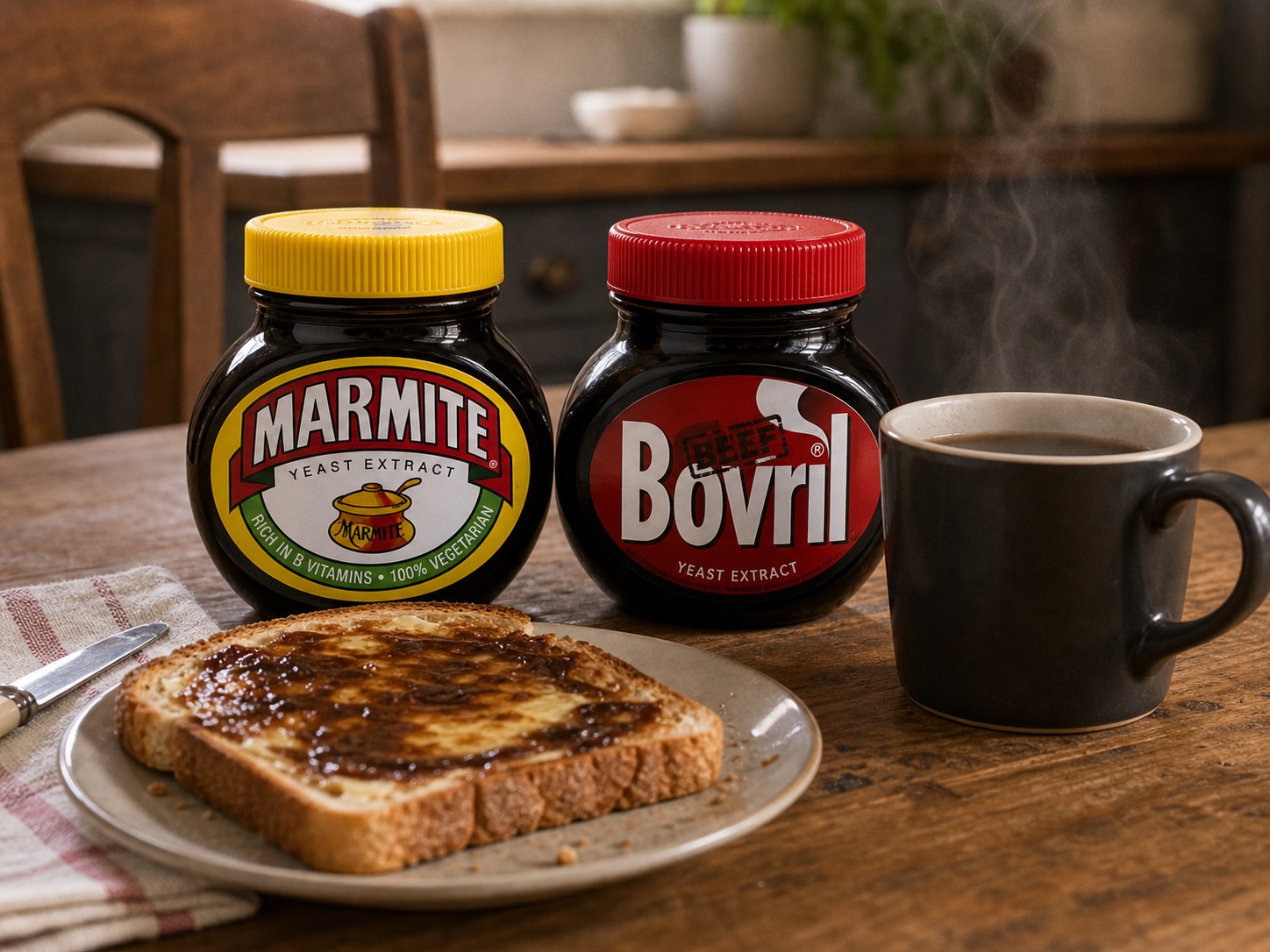
Marmite and Bovril are both dark, salty British savoury pastes owned by Unilever, and people mix them up. The difference that matters: Marmite is yeast extract (vegan and vegetarian); Bovril is beef extract and is not. One is for spreading, one for drinking.
Page 1 of 1